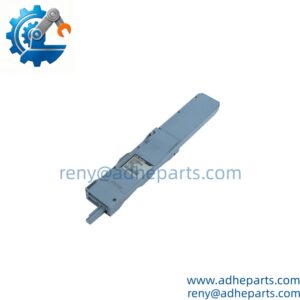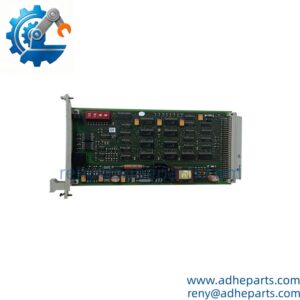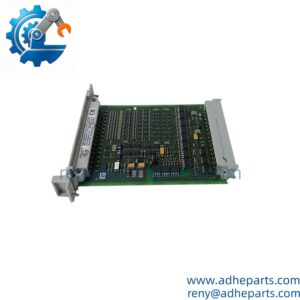
Description
Note: Many products are not yet listed. Please contact us for more product information. Our supply channels are constantly expanding, and we currently have 20 stable shared supply channels. Please confirm the model, product, price, and all other necessary information with customer service before placing an order. We offer new, refurbished, and used products, and prices are adjusted according to the year of the item you require.
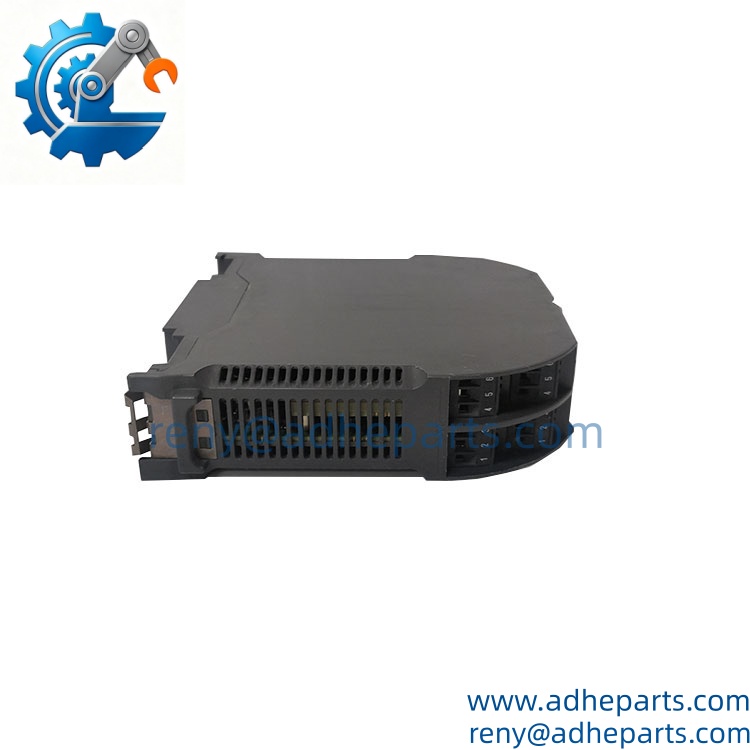
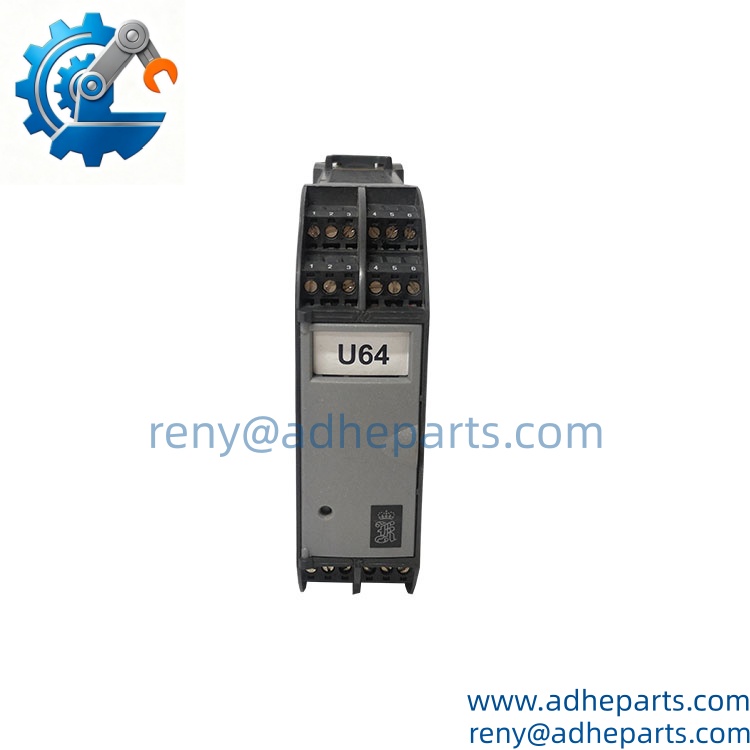
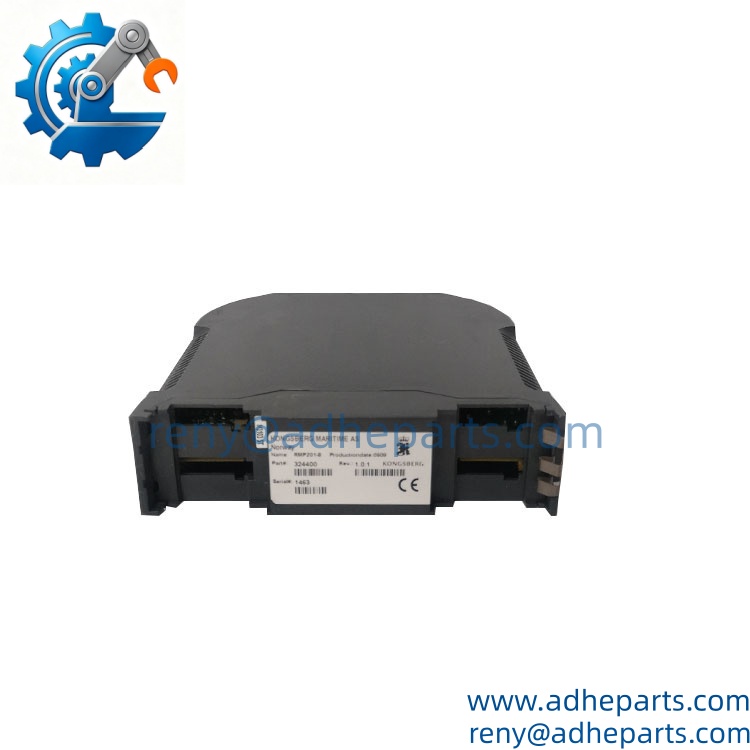
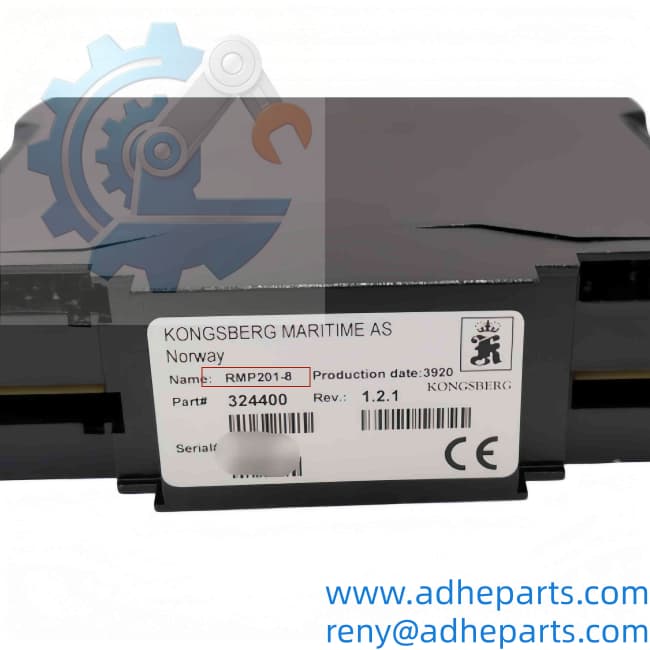
RMP201-8 KONGSBERG
Key Technical Specifications
| Parameter | Value |
|---|---|
| Model | RMP201-8 |
| Brand | KONGSBERG |
| Product Family | RMP200 Series (Remote Multifunction Processing) |
| I/O Channels (Total) | 8 (individually configurable) |
| Channel Type | Configurable as digital input (24V DC sink/source) or digital output (0.5A per channel) |
| Digital Input Voltage | 18 – 36V DC (logic threshold > 15V) |
| Digital Output Rating | 0.5 A per channel (resistive load), short-circuit protected |
| Total Output Current (Max) | 4.0 A (across all 8 channels) |
| Fieldbus / Communication | CAN-based proprietary protocol (compatible with Kongsberg AutoChief, C20, and Alarm & Monitoring systems) |
| Communication Speed | 125 kbps – 1 Mbps (auto-bauding / configurable) |
| Isolation | 1500V AC (field bus to I/O logic) |
| Diagnostics | Short-circuit detection, over-temperature, under-voltage lockout, open-wire detection (inputs) |
| Status LEDs | Power (green), Bus-OK (green), Fault (red), Channel status (yellow) per channel |
| Mounting | DIN rail (TS 35) or bulkhead mounting (integrated mounting tabs) |
| Power Supply (Module) | 24V DC (nominal), 18 – 36V DC range |
| Power Consumption | 3W (idle) / 8W (all outputs energized) |
| Connectors | Spring-clamp terminals (field wiring) + D-sub (bus and power) |
| Operating Temperature | –25 °C to +70 °C (maritime rated) |
| Storage Temperature | –40 °C to +85 °C |
| Ingress Protection | IP20 (open cabinet) |
| Vibration Resistance | IEC 60068-2-6 (5g, 10–150 Hz) |
| Weight | Approx. 0.3 kg (0.66 lb) |
| Certifications | DNV GL, ABS, BV, LR (marine type approval) |
Product Introduction
The KONGSBERG RMP201-8 is a compact, 8-channel remote I/O module from the RMP200 series, engineered specifically for distributed automation architectures on vessels and offshore installations. It interfaces directly with Kongsberg’s AutoChief propulsion control, C20 bridge systems, and alarm and monitoring platforms, bridging the gap between field devices—sensors, switches, and solenoid valves—and the main control network.
Here is the catch: this is not a generic industrial I/O brick. The RMP201-8 runs on a proprietary CAN-based fieldbus protocol optimized for deterministic, high-integrity communication in electrically noisy engine rooms. Each of the 8 channels can be configured individually as a digital input or an output, giving you flexibility for mixed applications. The module also features automatic thermal derating on the output stage—if the ambient temperature climbs above 55 °C, the module scales back the total output current to prevent catastrophic failure, a feature we have seen save installations in poorly ventilated cabinets.
RMP201-8 KONGSBERG
RMP201-8 KONGSBERG
Application Scenarios & Field Experience
Part 1 – Narrative Paragraph
The biggest pain point in marine automation is not the hardware itself—it is the remote I/O losing communication during high-vibration events or when the engine room temperature spikes. I have debugged false engine trip alarms that traced back to a noisy RS-485 bus. The RMP201-8 solves this with its robust CAN physical layer and built-in error-checking. If a frame gets corrupted, the module automatically retransmits, and the onboard buffer holds the last valid state so the propulsion control system doesn’t see a sudden “bad data” condition. When you are navigating a narrow strait, that deterministic behavior matters.
Part 2 – Numbered List (Application Scenarios)
- Marine – Engine Room Alarm & Monitoring – The RMP201-8 reads digital inputs from pressure switches (lube oil, cooling water) and temperature alarms on the main engine. The outputs drive local alarm horns and strobe lights. The DNV GL type approval gives surveyors confidence during annual inspections.
- Offshore – Pump Control Modules – Mounted on skids for firewater or crude oil transfer pumps, the module collects run-permissive signals (vibration probes, temperature thermostats) and drives contactor control relays for start/stop sequences. The -25 °C rating handles North Sea deck conditions.
- Bridge Navigation – Rudder Feedback Monitoring – The inputs capture limit switch positions (hard-over port / starboard) while outputs annunciate steering gear faults to the integrated bridge system. The deterministic communication speed ensures feedback arrives within the same PLC scan cycle.
- HVAC – Distributed Air Handling Units – On passenger vessels, multiple RMP201-8 units are deployed across decks to monitor filter clog switches and damper end-switches, while driving actuator enable signals. The short-circuit protection prevents a single failed actuator from taking down the entire zone.
Part 3 – Short Field Story
A ferry operator in the Baltic Sea had a recurring “Engine Overspeed” alarm on the port main engine—but only during heavy weather. We pulled the event logs and saw that the digital input feeding the overspeed trip switch was toggling for 20 ms, just long enough to trigger the alarm, but too short for the mechanical switch. The existing generic I/O module was filtering out the bounce. We replaced it with an and configured the input debounce filter to 50 ms. The nuisance alarms stopped, the crew stopped writing non-conformity reports, and the chief engineer finally trusted the automation again.
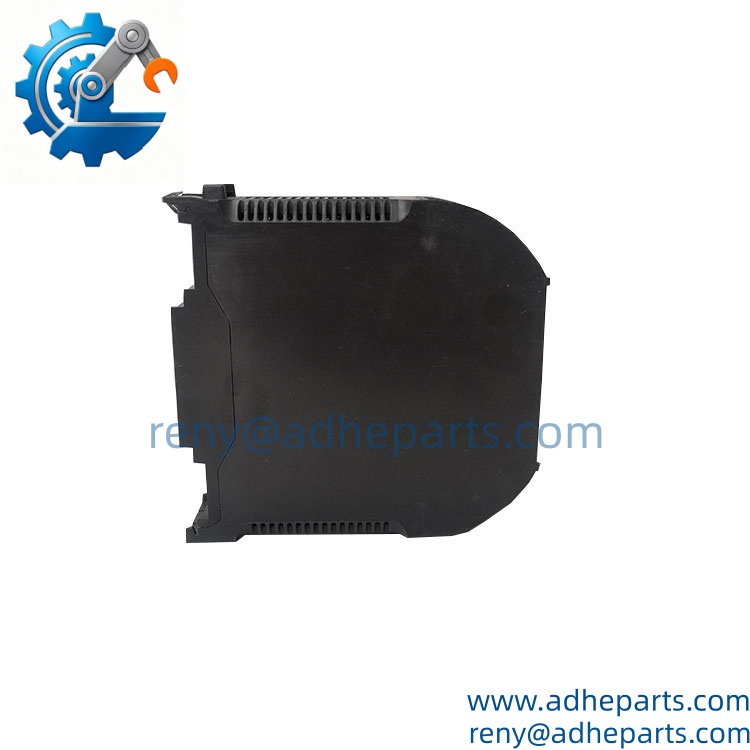
RMP201-8 KONGSBERG
Standard Operating Procedure (SOP) for Quality Control
Every module goes through our marine-grade QC checklist before shipment:
- Visual & Origin Inspection – We verify the Kongsberg serial number, the CE and DNV GL approval marks, and the conformal coating under UV light. We check all spring-clamp terminals for mechanical integrity. Units with re-soldered connectors or non-factory markings are rejected.
- Power-Up & Initialization – The module is connected to our test fixture (24V DC supply and CAN interface). We verify the module boots, the LEDs cycle through their power-up sequence, and the firmware version matches the factory tag (typically v2.x or higher).
- Input Channel Test – We apply 24V DC to each of the 8 inputs and verify the module reports the correct status over the bus. We then toggle the signal at 5 Hz to validate the bus scan rate. We also test the open-wire detection by disconnecting the field wiring—the module must set a diagnostic flag.
- Output Channel Test – We command each channel from the host controller to turn on and off, measuring the voltage drop across a 24V 0.5A resistive load. We verify the drop stays under 1.5V at rated current. We also intentionally short each output to ground to confirm the short-circuit protection trips within 2 ms and automatically recovers after the fault is removed.
- Bus Communication Stress Test – We run a 2-hour communication test where we send 1,000 messages per minute while varying the ambient temperature from 25 °C to 60 °C using a heat gun. We monitor for dropped packets or bus-off errors.
- ESD-Safe Packaging – The module is cleaned, placed in a moisture-barrier anti-static bag with desiccant, and packed in a corrugated carton with fitted foam. We include a printed pinout reference card and a warning sticker to ensure the field wiring is terminated correctly.
Frequently Asked Questions (FAQ)
Q1: Can I use the as a drop-in replacement for a newer RMP203-8?
A: Mechanically, yes—same housing, same terminals. Electrically, check your system’s firmware compatibility. The communicates on the older CAN protocol, while the RMP203-8 might support Ethernet/IP or a newer CAN variant. If your master controller (AutoChief or C20) expects the specific node-ID handshake of the RMP201, a newer module might not wake up. Compare the bus protocol settings in your configuration tool.
Q2: What happens if I load all 8 outputs simultaneously at 0.5A each?
A: The module will draw 4.0A total. The internal PCB tracks and terminal blocks are rated for that. However, at ambient temperatures above 55 °C, the thermal protection will kick in and reduce the total allowable current to about 3.0A. We recommend derating to 0.4A per channel if your cabinet runs hot. Do not exceed 4.0A continuous—the overcurrent protection is a fast-blow electronic limiter, but persistent overload will shorten the module’s lifespan.
Q3: This unit has a 9-pin D-sub connector for the bus. Is pinout standard CAN?
A: No—Kongsberg uses a specific pin assignment on that D-sub. Pin 1 is CAN_H, Pin 2 is CAN_L, Pin 3 is GND, and Pin 9 is V+ (for powering the communication transceiver). If you connect a standard CAN cable wired to the CiA 303-1 standard, you will get a bus-off error. We provide the exact pinout diagram with each module. Verify the wiring before applying power.
Q4: What is the warranty on this unit, and is there a return policy if it doesn’t work on my vessel?
A: We offer 12 months from the date of shipment covering manufacturing defects—failed inputs, non-functional outputs, and bus transceiver failure. We do not cover damage from incorrect wiring (reverse polarity will blow the internal diode), water ingress (IP20 is not waterproof), or physical impact. If the module passes our QC test, it works. We do not accept returns for software incompatibility—check your system specs before ordering.
Q5: The module keeps flashing a red fault LED on startup. What does that mean?
A: The red fault LED indicates either a firmware checksum error or a bus configuration mismatch. First, power cycle the unit and wait 10 seconds. If the red light stays on, the module failed its self-test—this could mean the internal flash memory is corrupt (rare, but happens). If the red light flashes in a 2-second pattern, it means the module is configured for a node ID that the master controller is not polling. You will need the Kongsberg configuration tool to set the node ID via the service port.
Pre: Emerson KJ2221X1-BA1 | DeltaV SIS SIL 3 Compliant Network Repeater Module
Next: Mitsubishi R28TB | RS-422 Robot Programming Pendant