Description
Note: Many products are not yet listed. Please contact us for more product information. Our supply channels are constantly expanding, and we currently have 20 stable shared supply channels. Please confirm the model, product, price, and all other necessary information with customer service before placing an order. We offer new, refurbished, and used products, and prices are adjusted according to the year of the item you require.
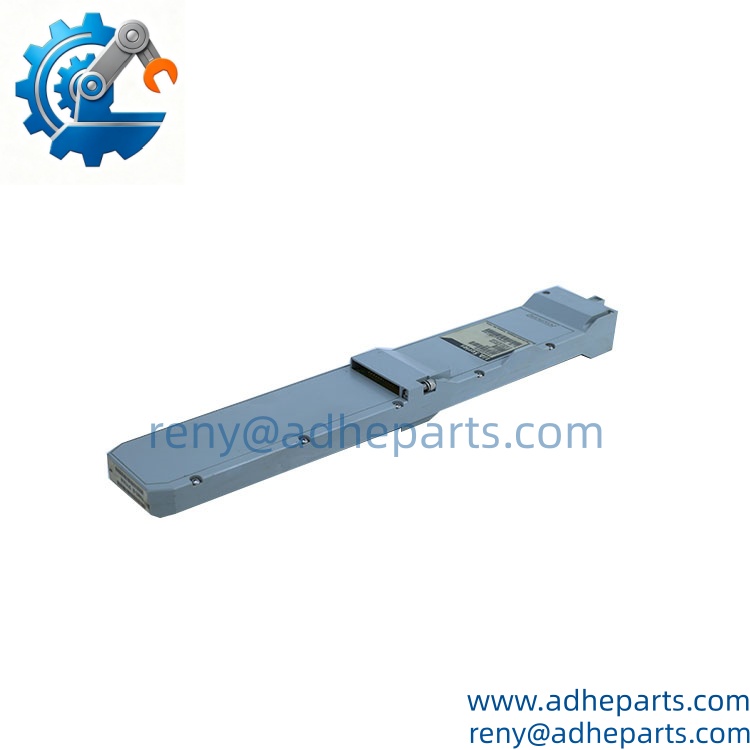
The Foxboro P0903ZE is an I/A Series Fieldbus Isolator used within Foxboro’s legacy low-speed fieldbus architecture. Schneider Electric’s technical documentation explicitly identifies P0903ZE as the fieldbus isolator used with 268.75 Kbps I/A Series low-speed fieldbus networks.
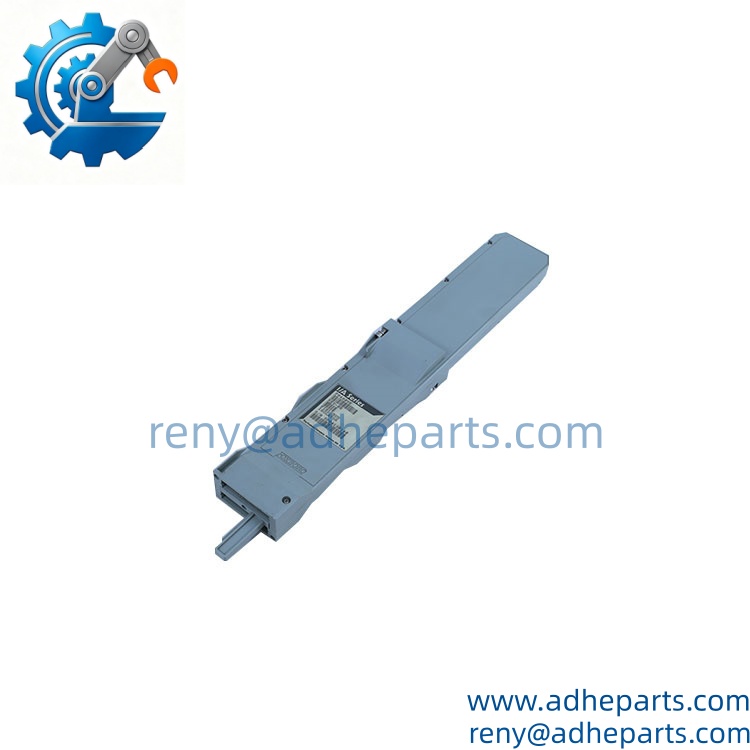
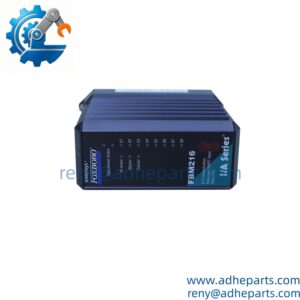
FOXBORO–P0903ZE front
Key Technical Specifications
| Parameter | Value |
|---|---|
| Brand | Foxboro |
| Model | P0903ZE |
| Product Type | Fieldbus Isolator Module |
| Product Family | I/A Series |
| Primary Function | Fieldbus electrical isolation |
| Fieldbus Type | I/A Series Low-Speed Fieldbus |
| Communication Rate | 268.75 Kbps |
| Typical Network | I/A Series fieldbus |
| Associated Hardware | FBI10E / fieldbus communications architecture |
| Typical FBM Support | Y-Module form-factor FBMs |
| Isolation Function | Electrical isolation between fieldbus sections |
| Certification | CSA / FM certifications documented for specified applications |
| Application | Industrial DCS fieldbus communications |
| Status | Legacy / discontinued product |
The official I/A Series documentation shows the P0903ZE between the FBI10E and the 268.75 Kbps low-speed fieldbus network. The same diagram shows Y-module FBMs such as FBM01 and FBM02 connected downstream of the isolator.
Foxboro’s enclosure certification documentation also identifies P0903ZE as a Fieldbus Isolator Module and lists CSA and FM certification information for specified installations.
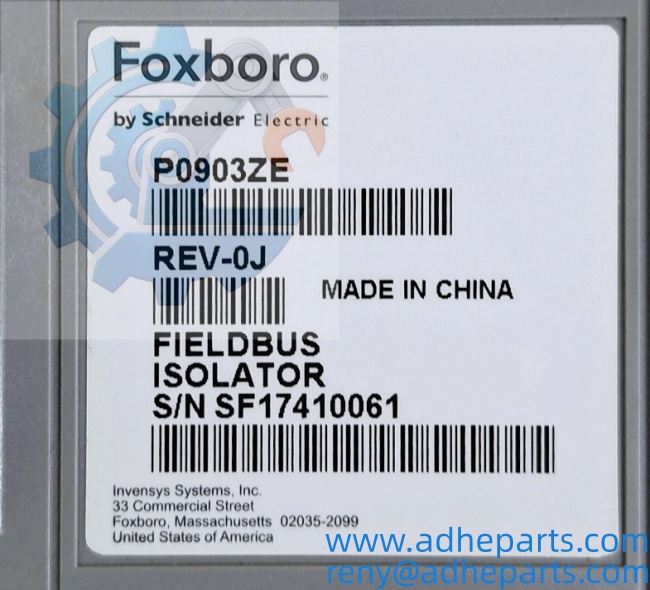
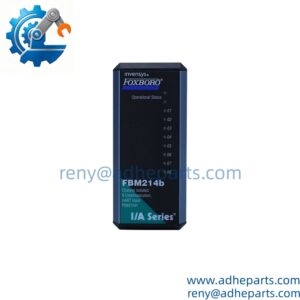
FOXBORO–P0903ZE label
Product Introduction (Anti-Template)
A fieldbus problem is not always caused by the controller or the FBM itself. In older Foxboro installations, the isolation point between network sections can be just as important. The P0903ZE performs this isolation function within the I/A Series low-speed fieldbus architecture, helping separate fieldbus sections while allowing communication to continue between the associated control equipment and field modules.
The module is associated with the 268.75 Kbps I/A Series low-speed fieldbus, rather than the newer high-speed Ethernet-based architectures. That distinction matters when sourcing a replacement. A modern-looking fieldbus interface is not automatically a functional substitute for this legacy isolator.
QC, Procurement & Logistics SOP
- Inbound Verification
- Confirm the complete identification: .
- Check the product label, revision marking, serial number, and visible Foxboro identification.
- Inspect connectors, housing, mounting points, and exposed electrical interfaces.
- Confirm that the customer’s system uses the legacy I/A Series low-speed fieldbus architecture.
- Verify the associated FBI10E and fieldbus configuration before shipment.
- Live Rig Testing
- Verify power input under controlled conditions.
- Check module startup and diagnostic indications where applicable.
- Test communication across the fieldbus isolation boundary.
- Verify representative fieldbus traffic at the specified low-speed network rate.
- Check for abnormal communication loss or intermittent behavior.
- Where possible, test with compatible FBM hardware rather than performing only a power-on test.
- QA & Anti-Static Packaging
- Photograph the model and revision markings before packing.
- Use ESD-safe packaging.
- Protect all fieldbus connectors against impact.
- Use rigid cushioning to prevent movement during transportation.
- Add moisture protection for international shipment.
- Global Logistics & Export Compliance
- Prepare the commercial invoice, packing list, product description, country-of-origin information, and applicable HS classification.
- Describe the item accurately as an industrial DCS fieldbus isolator module.
- Air freight is generally practical for a single electronic module.
- Use anti-static and moisture-resistant packaging for air or sea freight.
- Confirm the final HS classification with the destination customs broker before export declaration.
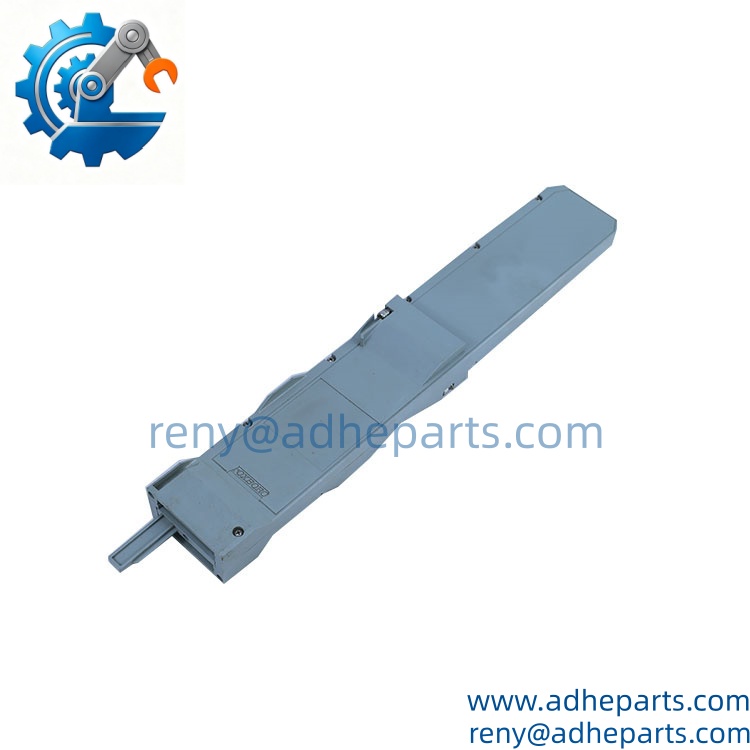
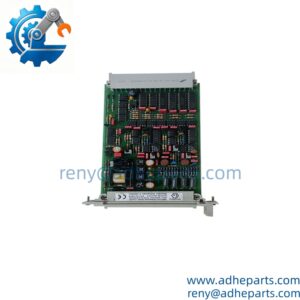
FOXBORO–P0903ZE backside
Technical Pitfalls & Integration Warnings
1. Do Not Confuse Low-Speed Fieldbus With Newer Ethernet Architectures
The is associated with the 268.75 Kbps I/A Series low-speed fieldbus.
If a customer says “fieldbus isolator,” ask what generation of Foxboro system is installed. A generic Foundation Fieldbus H1 isolator is not automatically compatible with this architecture.
2. Verify the FBI10E Arrangement
The Foxboro documentation places the within the network architecture associated with the FBI10E, with the isolator connecting toward the low-speed FBM network.
A replacement should therefore be evaluated as part of the complete communication path. Do not judge compatibility from the module dimensions alone.
3. Certification Can Matter
The Foxboro certification documentation specifically lists under Fieldbus Modules and provides CSA/FM certification information.
For installations in hazardous or regulated areas, verify that the replacement’s actual markings and certification status meet the plant’s requirements. A functionally equivalent communication device may still be unacceptable for the installed area classification.
4. Intermittent Communication Can Be Misdiagnosed
Suppose several downstream FBMs intermittently disappear from the DCS. Replacing one FBM at a time may not solve the problem if the actual fault is at the fieldbus isolation point. Check the , associated connectors, cable condition, and network topology before condemning multiple FBMs.
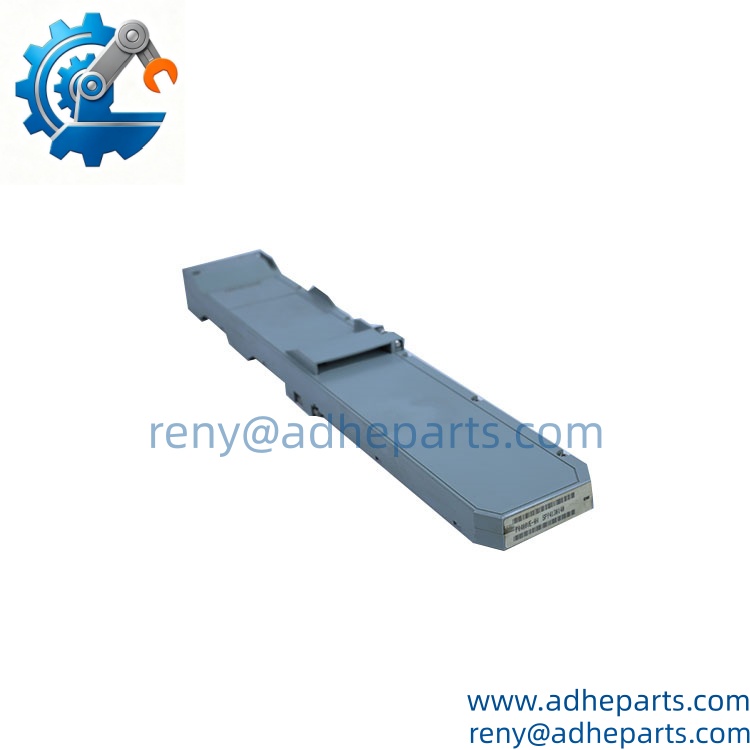
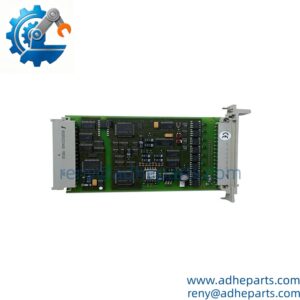
FOXBORO–P0903ZE sideview
Frequently Asked Questions (FAQ)
Q1: What is the Foxboro ?
The is an I/A Series Fieldbus Isolator Module. It is used to electrically isolate sections of the Foxboro low-speed fieldbus network while maintaining communication between the associated network segments.
Q2: What fieldbus speed does support?
The Foxboro I/A Series documentation identifies the associated low-speed fieldbus as 268.75 Kbps.
Q3: Is an FBM?
No. It should be treated as a Fieldbus Isolator, not as a conventional analog or digital FBM I/O module. Foxboro documentation identifies it separately from the FBM devices connected to the low-speed fieldbus.
Q4: What is used with?
The documented network architecture shows used with FBI10E fieldbus infrastructure and low-speed I/A Series fieldbus devices, including Y-module form-factor FBMs.
Q5: Is still manufactured?
Available industrial inventory records identify the as a discontinued legacy Foxboro product.
That makes condition and revision especially important when sourcing a replacement. For an outage-critical application, tested surplus stock can be a practical procurement route.
Q6: Can I hot-swap the ?
Do not assume hot-swapping is permitted simply because some third-party descriptions claim it. The correct procedure depends on the specific I/A Series fieldbus architecture and plant maintenance procedure.
If the isolator is part of an operating control network, determine the effect of removing it before physically disconnecting the module.
Q7: What information should I provide when ordering ?
For a proper compatibility check, provide:
- complete identification
- Revision marking
- Photograph of the existing module
- I/A Series system information
- model
- Fieldbus architecture
- Connected FBM types
- Current communication fault or diagnostic message
Q8: What is the most important thing to verify before purchasing?
Verify that the customer’s system actually uses the legacy 268.75 Kbps I/A Series low-speed fieldbus architecture.
That single check prevents one of the most common sourcing mistakes: replacing a legacy Foxboro fieldbus component with a physically similar module designed for a different communication architecture.
Pre: FOXBORO P0400VE | Fieldbus Isolation Module
Next:GE VMIACC-5595-208 | 8-Port Reflective Memory Hub