Description
Product Introduction (Anti-Template)
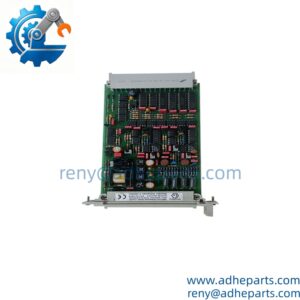
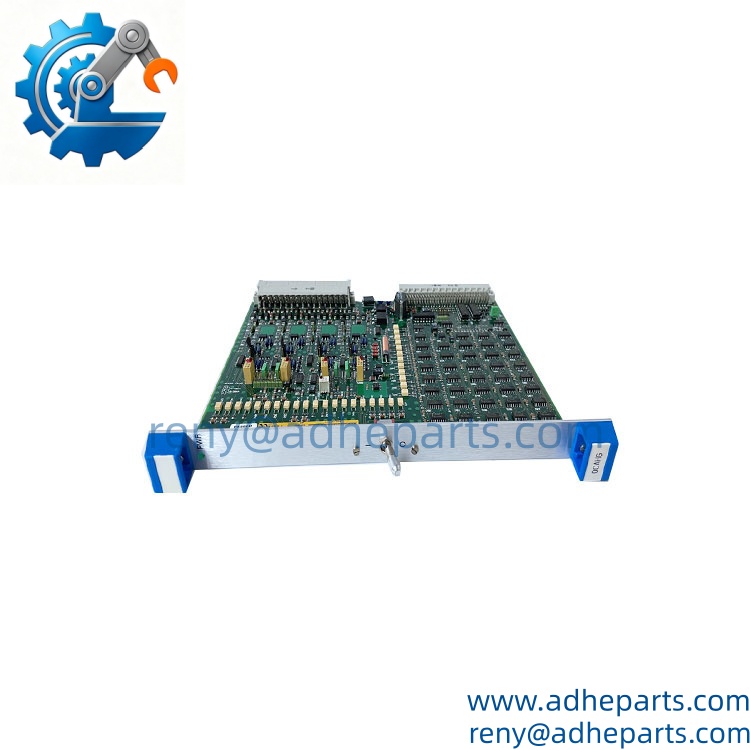
When a control system needs to command a valve, actuator, or other analog field device, the output board becomes the final electrical link between control logic and the process. ABB OCAHG 492838402 is a four-channel analog output board used within ABB Satt Rack I/O architectures.
Each channel can be configured for voltage or current output, including 0–10 V and 0–20/4–20 mA signals. The analog circuitry is electrically isolated from the digital control logic and control system, while the four output channels are not galvanically isolated from one another.
Key Technical Specifications
| Parameter | Value |
|---|---|
| Manufacturer | ABB |
| Model | OCAHG |
| Part Number | 492838402 |
| Product Type | Analog Output Board |
| I/O Family | Satt Rack I/O |
| Number of Outputs | 4 |
| Voltage Output | 0–10 V |
| Current Output | 0–20 mA / 4–20 mA |
| Output Selection | Selectable by board straps |
| Resolution | 8 bits |
| Analog Circuit Isolation | Isolated from digital control logic and control system |
| Channel Isolation | Channels are not galvanically isolated from each other |
| Control Modes | Automatic DDC / Manual control |
| Manual Control | INCREASE / DECREASE inputs |
| Output Retention | Output values retained in the event of CPU failure |
| Approx. Net Weight | 0.3 kg |
| Customs HS Code | 85389091 |
ABB documentation identifies OCAHG as a four-output analog output board within the Satt Rack I/O family. The technical data specifies selectable 0–10 V, 0–20 mA, and 4–20 mA signal ranges with 8-bit resolution.
A useful detail for maintenance planning: the output circuits are isolated from the digital control side, but the individual analog channels are not galvanically separated from each other. That distinction matters when several field loops share the same board.
Field Application & Technical Pitfalls (The Engineer’s Guide)
The OCAHG is most valuable in older process-control installations where replacing an entire control architecture simply because an analog output board has failed would create unnecessary cost and downtime.
- Valve and actuator control
A 4–20 mA output can command a positioner or other analog-controlled field device. For a 0–10 V application, the same board can provide the corresponding voltage signal after the channel is correctly configured. - Process instrumentation
Four independent analog outputs allow the control system to send setpoints or control signals to field equipment. This can include flow, pressure, temperature, or level control loops, depending on the plant design. - Manual backup control
ABB’s documentation notes that OCAHG supports automatic control through DDC as well as manual control through INCREASE/DECREASE inputs. It can therefore remain useful even when the control system or CPU encounters a fault.
Three replacement pitfalls deserve attention:
- Output-range configuration: The signal type is selectable by straps on the board. Do not assume that a channel configured for 4–20 mA will automatically become a 0–10 V output after installation. Verify the board configuration before connecting the field device.
- Shared-channel grounding: The four channels are not galvanically isolated from one another. A grounding problem or wiring error on one loop can therefore affect the behavior of another channel.
- Load and loop verification: For a 4–20 mA circuit, check the complete loop—including the receiving instrument, cable resistance, barriers, and power arrangement—rather than testing the output board in isolation.
Do not change the board straps while the module is energized. Isolate the relevant power and follow the plant’s electrical maintenance procedure before changing the output configuration.
Lesson learned: A replacement board can pass a bench test and still produce the wrong process signal after installation. In a hypothetical case, a technician connected a 4–20 mA positioner to a channel configured for voltage output; the card itself was healthy, but the actuator never reached the commanded position.
Quality Control (QC) SOP & Transparency
- Inbound Verification
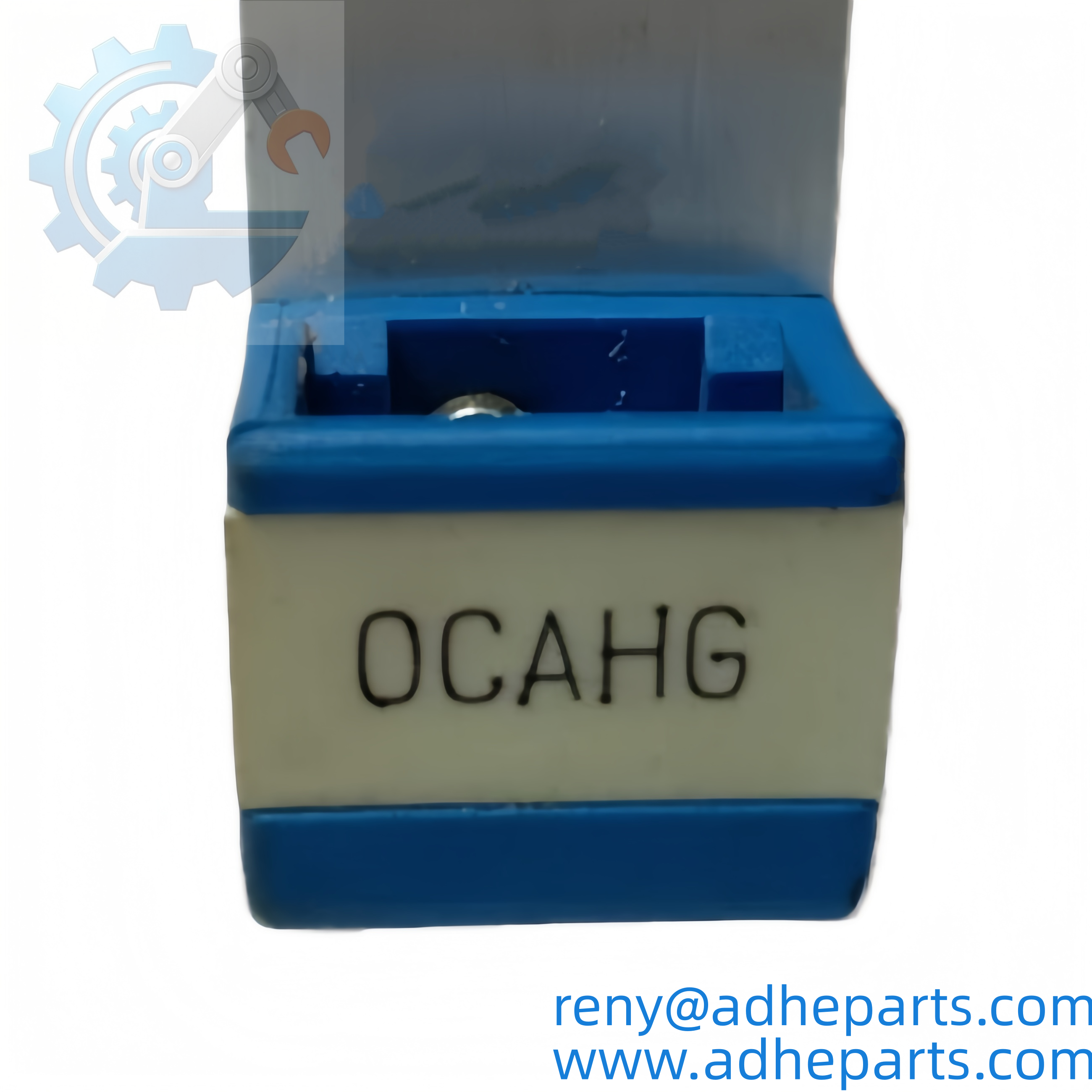
- Verify the ABB model designation OCAHG and part number 492838402.
- Check the PCB marking, revision information, connectors, and mounting hardware.
- Inspect for oxidation, cracked components, bent pins, repaired traces, or evidence of previous field installation.
- Compare the physical board against the expected four-channel OCAHG configuration.
- Record the actual condition of New Surplus inventory before shipment.
- Live Rig Testing
- Install the board in a compatible Satt Rack test environment where available.
- Apply controlled power according to the applicable rack configuration.
- Verify board startup and communication with the host control system.
- Test all four analog output channels individually.
- Check both voltage and current output modes when the available test fixture permits configuration changes.
- Parameter Testing
- Measure 0–10 V output response using a calibrated multimeter or signal analyzer.
- Verify 4–20 mA output across representative test loads.
- Check output stability at low, mid-range, and full-scale command values.
- Inspect electrical isolation between the analog circuitry and digital control side.
- Confirm there are no intermittent outputs, abnormal drift, or unexpected cross-channel behavior.
- Final QA & Packaging
- Record the exact model, part number, revision, and test status.
- Apply a QC-passed identification label.
- Place the board inside an anti-static bag.
- Use protective packaging around connectors and PCB edges.
- Provide a 12-month warranty under the agreed warranty terms.
Frequently Asked Questions (FAQ)
Q1. What type of board is ABB OCAHG 492838402?
It is a four-channel analog output board for ABB Satt Rack I/O systems. Its documented output ranges include 0–10 V and 0–20/4–20 mA.
Q2. Can every channel be configured for either voltage or current output?
The ABB technical documentation states that the output signals are selectable using straps on the board. The actual strap configuration should be checked before installation rather than assuming the board is configured for a particular signal type.
Q3. Is OCAHG the same as OCAH?
No. ABB lists OCAHG and OCAH as separate four-channel analog output board types within the Satt Rack I/O family. Do not treat the two designations as interchangeable without confirming the system documentation.
Q4. Can I hot-swap the OCAHG?
Do not assume so. Hot replacement depends on the specific rack and control-system architecture. Unless the applicable maintenance documentation explicitly permits live replacement, power down and isolate the relevant equipment first.
Q5. Does the board retain its outputs if the CPU fails?
Yes. ABB’s technical description states that OCAHG retains its output values in the event of a CPU failure. This behavior can be important for process continuity, although the complete system response should still be evaluated before relying on it as a safety function.
Q6. What is the difference between electrical isolation and channel isolation here?
The analog circuitry is electrically isolated from the digital control logic and control system, but the four analog channels are not galvanically isolated from each other. That distinction is important when troubleshooting ground loops or connecting multiple external devices.
Q7. What warranty is available for a replacement OCAHG?
A 12-month warranty can be provided under the agreed supply terms. For New Surplus units, the physical condition and QC test status should be confirmed before shipment, particularly when the spare is intended for a critical plant repair.
Recently popular products:
ABB LDMTR-01 | Industrial Drive Measurement Board
ABB LD800HSE 3BDH000320R0101 | HSE to H1 Gateway