Description
Note: Many products are not yet listed. Please contact us for more product information. Our supply channels are constantly expanding, and we currently have 20 stable shared supply channels. Please confirm the model, product, price, and all other necessary information with customer service before placing an order. We offer new, refurbished, and used products, and prices are adjusted according to the year of the item you require.
Product Introduction (Anti-Template)
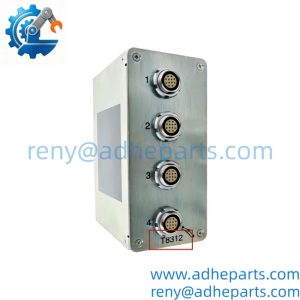
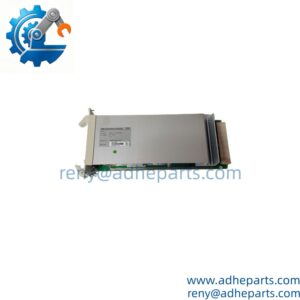
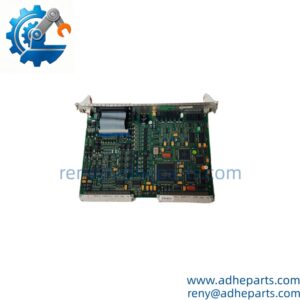
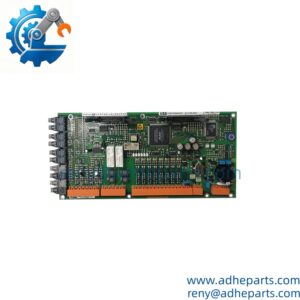
When a Mark V turbine protection card fails, the replacement is not simply a matter of matching the four-letter board acronym. The GE DS200TCEAG1ACB belongs to the TCEA Emergency Overspeed Board family used in the Mark V turbine control system’s protective architecture. Its job is associated with high-speed protection and the processing of critical turbine signals such as shaft-speed, flame-detection, and synchronization inputs before information is passed through the Mark V control network.
For maintenance teams supporting legacy gas or steam turbine installations, the complete part number matters. TCEA boards can exist in different functional and artwork revisions, while the surrounding TCEB, TCTG, TCQC, and IONET connections also affect replacement compatibility. DS200TCEAG1ACB should therefore be verified against the installed board, cabinet documentation, and protection-core configuration before shipment or installation.
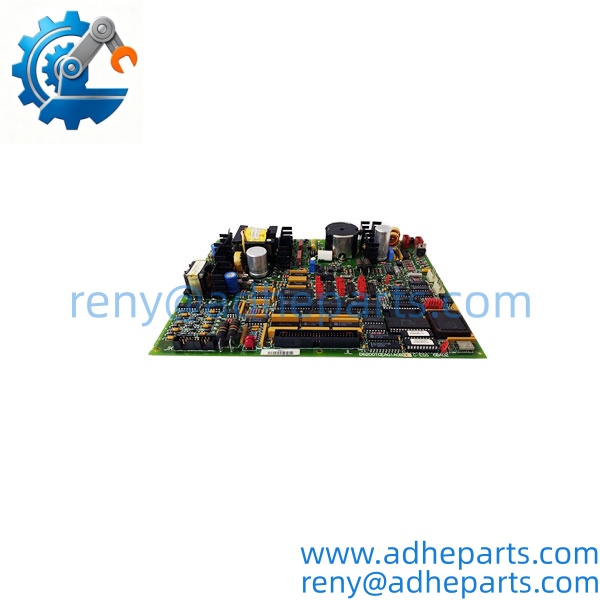
DS200TCEAG1ACB
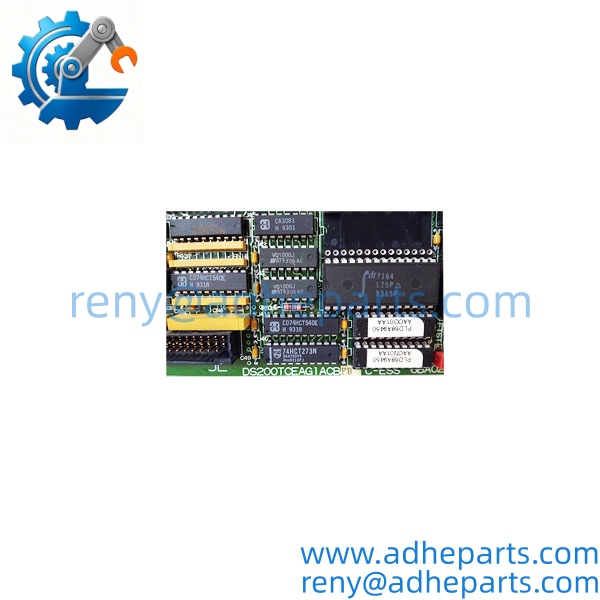
DS200TCEAG1ACB
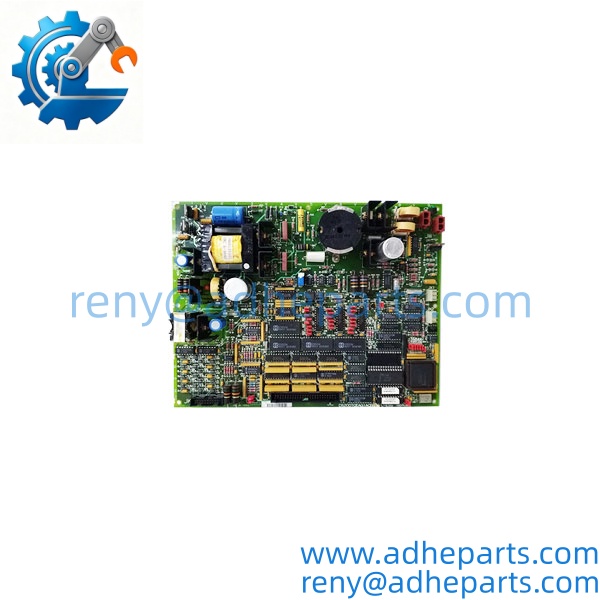
DS200TCEAG1ACB
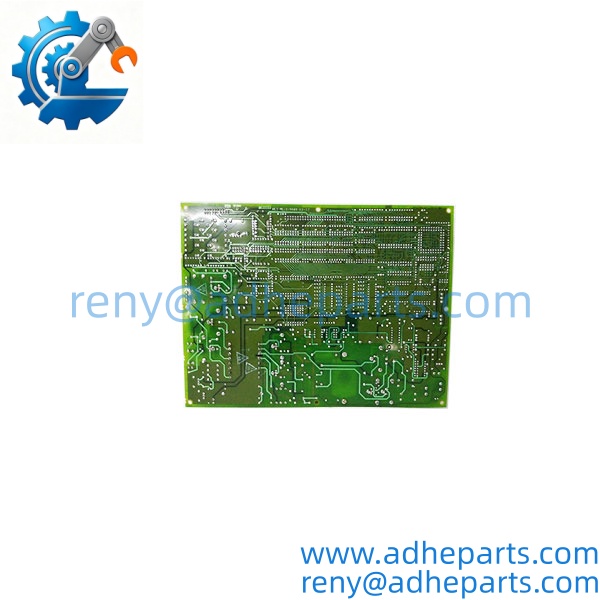
DS200TCEAG1ACB
Key Technical Specifications
| Parameter | Specification |
|---|---|
| Manufacturer | GE General Electric |
| Product Series | Mark V DS200 |
| Board Type | Emergency Overspeed Board |
| Functional Acronym | TCEA |
| System | GE Speedtronic Mark V |
| Primary Application | Turbine emergency overspeed / protective control |
| Installation Area | Mark V protective core |
| Signal Functions | Shaft speed, flame detection, synchronization and related protection signals |
| Network Interface | IONET within the Mark V architecture |
| Associated Boards | TCEB, TCTG, TCQC and related Mark V protection circuitry |
| Part Number | DS200TCEAG1ACB |
| Revision Control | Complete functional/artwork suffix must be verified |
| Documentation Reference | GE Mark V TCEA documentation, including GEH-6153 family documentation |
The TCEA family is described as a protective processor/emergency overspeed board. It receives and conditions selected turbine protection signals and communicates processed information through the Mark V architecture; the board can also participate in the emergency trip signal path.
Field Application & Technical Pitfalls (The Engineer’s Guide)
Application 1 — Gas and Steam Turbine Protection
TCEA boards are used in Mark V turbine control installations where high-speed protection must be handled independently within the turbine protection architecture. Typical monitored functions include high- and low-shaft-speed signals, flame detection, and automatic synchronization-related signals.
Application 2 — Legacy Mark V Maintenance
The DS200TCEAG1ACB is most relevant when maintaining an existing Mark V cabinet rather than redesigning the control system. For these installations, keeping the same hardware revision and connection arrangement can be considerably less disruptive than introducing an unverified substitute.
Application 3 — Emergency Trip Signal Chain
The TCEA circuitry is connected with other Mark V protection boards, including TCEB and TCTG-related circuitry. Its processed protection information can contribute to the turbine trip decision path. This is a protection-system component, so replacement should be treated differently from an ordinary non-critical I/O card.
Pitfall 1 — Matching only “TCEA” is not enough.
Several TCEA variants exist. A DS200TCEAG1A-family board with a different functional or artwork revision should not automatically be approved as a replacement for DS200TCEAG1ACB.
Pitfall 2 — Do not alter jumpers casually.
TCEA boards use hardware jumpers for functions including IONET addressing, termination, and overspeed-related configuration. Record the original jumper positions before removing the existing card and compare them with the replacement documentation.
Pitfall 3 — Check the complete protection-core architecture.
Connector arrangement and relationships with TCEB, TCTG, TCQC and other Mark V boards can determine whether a replacement actually fits the installed system. A visually similar TCEA card is not automatically functionally interchangeable.
Field lesson: A turbine maintenance team may have an apparently correct TCEA replacement in hand but still face a commissioning problem if the revision, jumper configuration, or associated board arrangement differs. For legacy Mark V equipment, spending a few minutes comparing the old board’s labels and jumper positions is usually cheaper than troubleshooting an unexplained protection-system fault after installation.
Quality Control (QC) SOP & Transparency
- Inbound Part-Number Verification — Record the complete DS200TCEAG1ACB identification, including all visible revision and artwork markings. Partial part-number matching is not accepted.
- Physical Inspection — Check the PCB, connectors, terminal areas, relays/components, labels, and board edge for cracks, corrosion, contamination, or evidence of improper handling.
- Revision Verification — Compare the functional and artwork revision markings against the customer’s installed board and required Mark V documentation.
- Configuration Review — Photograph and document jumper positions and other visible configuration points before any adjustment is considered.
- Connector Verification — Confirm connector labels and physical locations against the expected TCEA configuration, particularly where TCEB/TCTG and IONET connections are involved.
- Functional Testing — Where the required Mark V test environment is available, perform appropriate board-level and system-level verification rather than relying only on a visual inspection.
- Final QA — Record the inspection result, part-number photographs, revision information, and any observed condition notes before packing.
- ESD Packaging — Package the PCB in suitable anti-static protection with mechanical cushioning to reduce handling and transportation risk.
FAQ
It is a GE Mark V DS200 TCEA Emergency Overspeed Board used within the turbine protection architecture.
Q2: Is the TCEA a normal PLC I/O board?
No. Its role is associated with turbine protection and emergency overspeed functions rather than general-purpose PLC I/O.
Q3: Can any DS200TCEAG1A board replace ?
Not automatically. The complete suffix, functional revision, artwork revision, jumper configuration, and installed Mark V protection architecture should be checked before substitution.
Q4: What should I provide when requesting a replacement?
Ideally provide the complete part number, clear photographs of the board labels, revision markings, connector area, and jumper positions. A photograph of the existing Mark V cabinet or relevant card rack can also help verify the application.
Q5: Does the board work independently of the other Mark V protection cards?
No. TCEA operates as part of the broader Mark V protection architecture and has defined interfaces with associated circuitry.
Q6: Is available as new surplus or refurbished stock?
Legacy Mark V boards may be sourced as new surplus, engineering surplus, or refurbished units depending on inventory. The exact physical condition and revision should be confirmed before quotation.
Q7: What warranty can be provided?
A 12-month warranty can be offered for qualifying supplied units. Warranty terms should be confirmed with the quoted condition and inspection status before purchase.