Description
Note: Many products are not yet listed. Please contact us for more product information. Our supply channels are constantly expanding, and we currently have 20 stable shared supply channels. Please confirm the model, product, price, and all other necessary information with customer service before placing an order. We offer new, refurbished, and used products, and prices are adjusted according to the year of the item you require.
Key Technical Specifications
| Parameter | Value |
| Model / Ordering Code | USC329AE01 / 3BHB002483R0001 |
| Product Family | UNISO unit sequence control boards (HIEE card family) |
| Compatible Systems | ABB UNITROL excitation systems; hydro/thermal unit sequence control cabinets (verify against your cabinet’s wiring manual before ordering) |
| Supply Voltage | 24 V DC nominal, 18–32 V DC tolerance |
| Power Consumption | ≤ 15 W |
| Digital Inputs | 16 channels, passive contact, 24 V DC loop wetting |
| Analog Inputs | 4 channels, 4–20 mA, ±0.1% FS reported acquisition accuracy |
| Front Interfaces | RS-232 / RS-485 service ports (firmware download and diagnostics) |
| System Communication | Internal parallel backplane bus to the rack master controller |
| Operating Temperature | −20 °C to +60 °C (inside control cabinet) |
| Mounting | Standard rack/card-cage slot, Euro-terminal field wiring |
| Construction | Shielded aluminum card frame, IP20 (cabinet-internal installation) |
| Dimensions / Weight | Approx. 36 × 297 × 175 mm, approx. 0.6 kg |
Note: Published datasheets for this card are scarce, and third-party listings quote conflicting figures on I/O counts and interfaces. Confirm exact channel assignments and terminal layout against the OEM cabinet drawing for your installed firmware/hardware revision before swapping boards.
Product Introduction
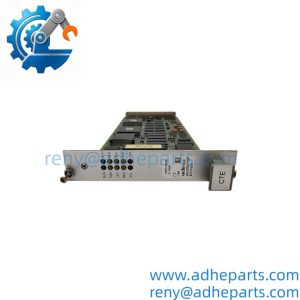
The ABB USC329AE01 (3BHB002483R0001) is a unit sequence control board from ABB’s UNISO card family, used inside UNITROL excitation systems and hydropower/thermal unit control cabinets. It collects field contact and 4–20 mA transmitter signals, conditions them, and passes the data upstream to the rack master controller over the internal backplane bus.
Its value is practical, not exotic: a shielded aluminum card frame that holds signal integrity in the electrically noisy environment inside an excitation cabinet, and concentrated front-panel field wiring that replaces scattered terminal blocks with one serviceable card. When one of these boards fails, the unit sequence stops — which is why plants keep spares on the shelf.
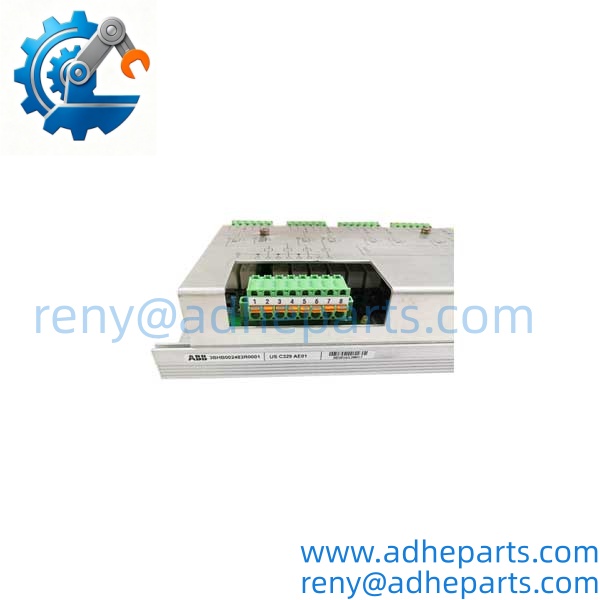
USC329AE01
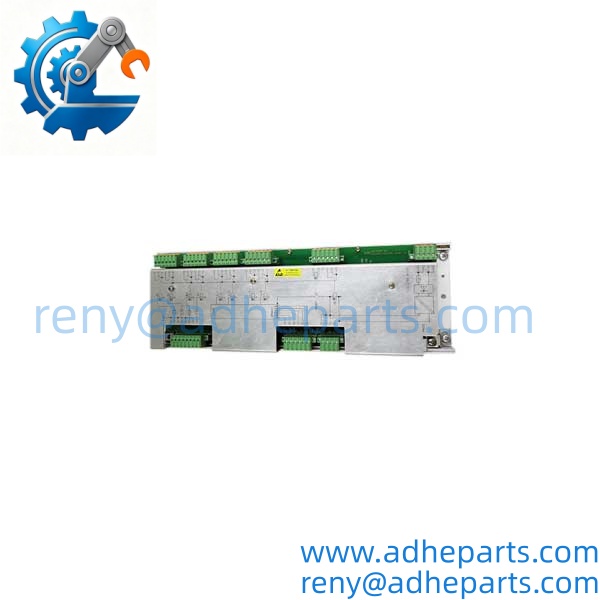
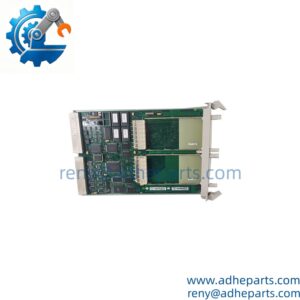
USC329AE01
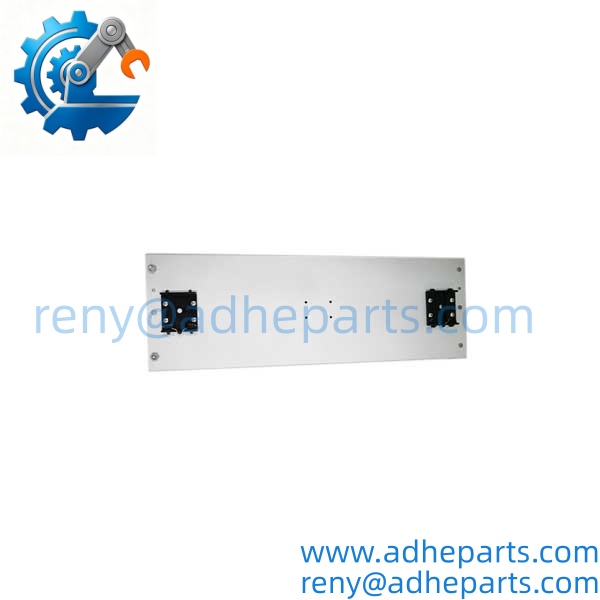
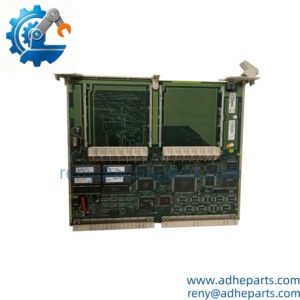
USC329AE01
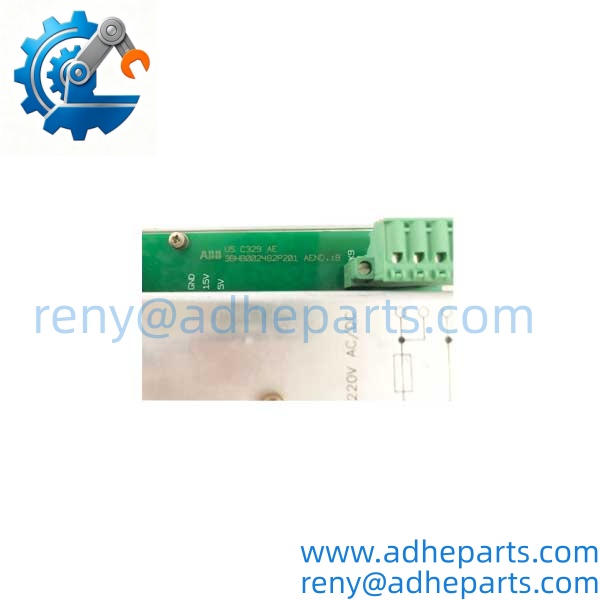
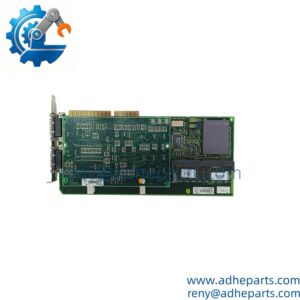
USC329AE01
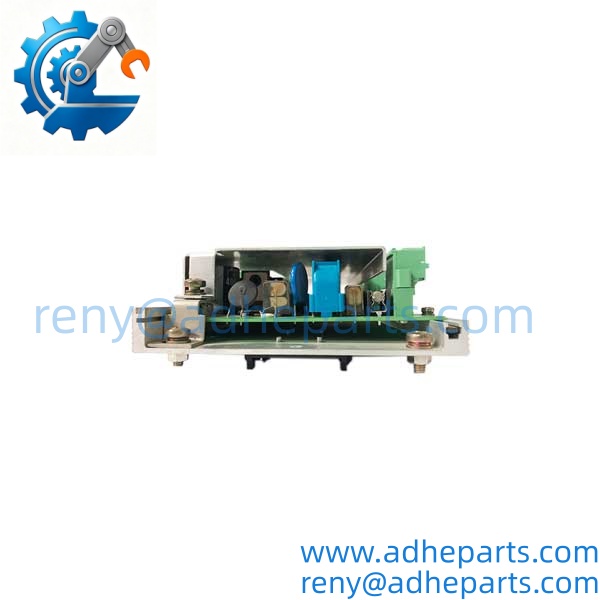
USC329AE01
Application Scenarios & Field Experience
In a running power plant, the unit sequence controller is the traffic cop between the operator’s start/stop commands and the physical device chain — breaker positions, gate or valve limits, excitation breaker states, and local/remote selection contacts. If this board drifts or dies, the sequencing logic reads false states, the unit refuses to start, or worse, trips mid-sequence. For stations running ABB UNITROL excitation hardware that has been in service for 15–20 years, board-level obsolescence is the real maintenance problem: you cannot substitute a modern I/O module for a UNISO card without rewiring the cabinet. A verified spare is the only clean answer.
Typical applications:
- Hydroelectric generation — Unit control cabinets sequencing gate position, breaker status, and excitation enable signals; required wherever the original UNISO card set is still installed and rewiring to a modern platform is not justified.
- Thermal power excitation control — UNITROL excitation cabinets where the sequence board interfaces field contact and transmitter signals to the excitation master; a failed board means the unit cannot energize.
- Industrial captive power plants — In-house generation units in process facilities running legacy ABB unit control, where the sequence controller must stay period-correct with the surrounding cabinet hardware.
- Maintenance spares programs — Utilities stocking tested spares for aging UNITROL/UNISO installations; the USC329AE01 is one of the cards most frequently requested for these refresh cycles.
Field story: A municipal hydro station called us after their Unit 2 dropped offline during an annual start sequence — the excitation breaker would close, then the unit would trip on a false “sequence fault” within seconds. The site electrician measured the field contacts and found them healthy. The cabinet’s sequence board had a cracked solder joint on one input channel from 20 years of thermal cycling, reporting a gate-limit contact as open when it was closed. We shipped a tested USC329AE01, they swapped it in under two hours, and Unit 2 started clean that same shift.
Standard Operating Procedure (SOP) for Quality Control
Every USC329AE01 that ships from our facility passes through this four-stage process:
- Visual & Origin Inspection
- OEM solder mask, silkscreen, and component markings checked against known-original UNISO board references.
- Anti-counterfeit screening: chip lot codes, date codes, and PCB revision marks reviewed for consistency.
- Board photographed and serialized; the record travels with the unit.
- Live Rig Testing
- Power-on self-test on a 24 V DC bench supply across the full 18–32 V tolerance band.
- Digital input channels exercised with active contact closures; analog channels injected with calibrated 4–20 mA loop signals.
- Communication ports (RS-232/RS-485 service interfaces) verified with protocol handshakes and diagnostic polling.
- Firmware Verification
- Exact firmware and hardware revision read from the board and documented on the test report.
- Revision mismatch flagged to the buyer before dispatch — never discovered at the cabinet.
- ESD-Safe Packaging
- Board sealed in anti-static bag with humidity indicator card.
- ESD-safe foam cushioning, then boxed for shock-protected transit.
- Grounded handling stations and wrist straps enforced throughout the packing area.
Frequently Asked Questions (FAQ)
Q1: Will the USC329AE01 work with my UNITROL excitation cabinet, or can I drop it into another DCS platform? A: It is built for the ABB UNISO/UNITROL card environment and the internal backplane bus of that cabinet family. It will not slot into an AC800M or Symphony system — the bus, connectors, and logic model are different. Before ordering, send us your cabinet’s board list or the marking on the card you are replacing; revision suffixes matter more than people expect.
Q2: What warranty do you provide? A: 12 months from shipment, covering functional failure under normal operating conditions. If the board fails on your bench or in your cabinet within that window, we replace it. We do not cover damage from incorrect field wiring or over-voltage events outside the 18–32 V input band.
Q3: Do you actually have this in stock, and how fast does it ship? A: Stock levels move daily, so we confirm availability at order time rather than promising a fixed number. If the board is on the shelf, it typically ships within 1–2 business days after payment confirmation; you receive the tracking number the same day. If we are out, we tell you the real lead time instead of taking your order and going quiet.
Q4: The firmware revision on my failed board looks different from yours. Is that a problem? A: Possibly. Sequence boards in these cabinets are sensitive to revision mismatches with the rack master. Our QC process documents the exact revision on every unit, and we compare it against your requirement before dispatch. If your cabinet needs a specific version and we cannot match it, we will say so — a mismatched board can cause sequence faults that look identical to a hardware failure, and nobody wants that debugging session.
Q5: Any installation pitfalls I should know about? A: A few. First, power the cabinet down before the swap — do not hot-swap this card, or you risk tripping the unit sequence or damaging the backplane. Second, photograph the terminal wiring before you pull the old board; field wiring on these cabinets has been modified by three generations of technicians more often than not. Third, verify the analog input loop configuration matches your transmitter wiring — 4–20 mA sourced versus passive loop differences will show up as bad readings, not clean errors.