Description
Note: Many products are not yet listed. Please contact us for more product information. Our supply channels are constantly expanding, and we currently have 20 stable shared supply channels. Please confirm the model, product, price, and all other necessary information with customer service before placing an order. We offer new, refurbished, and used products, and prices are adjusted according to the year of the item you require.
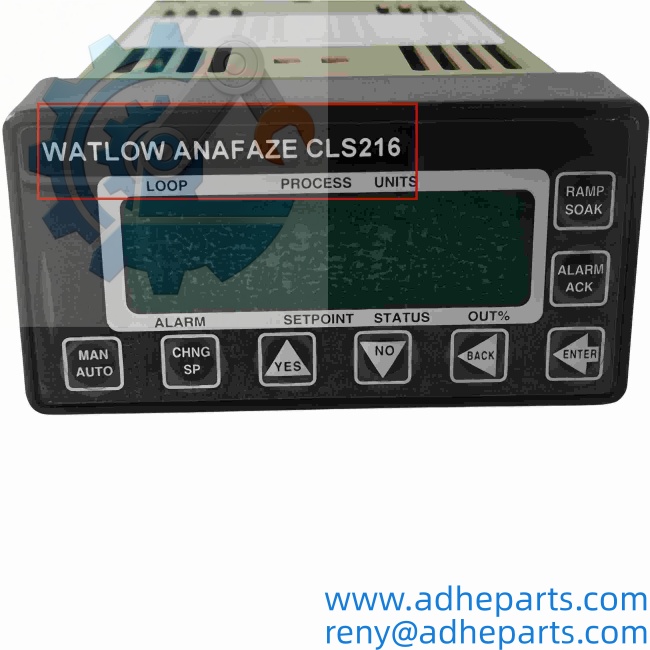
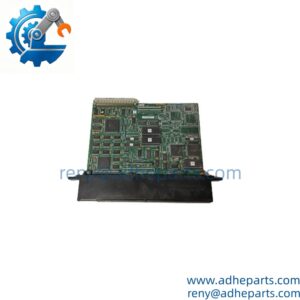
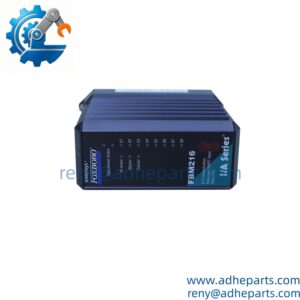
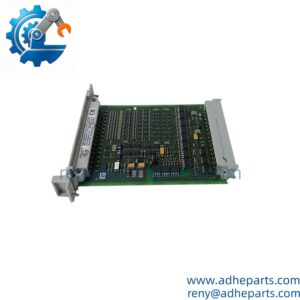
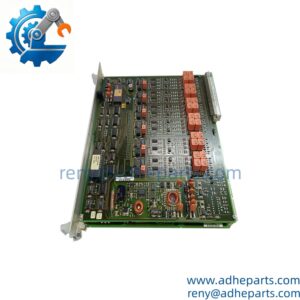
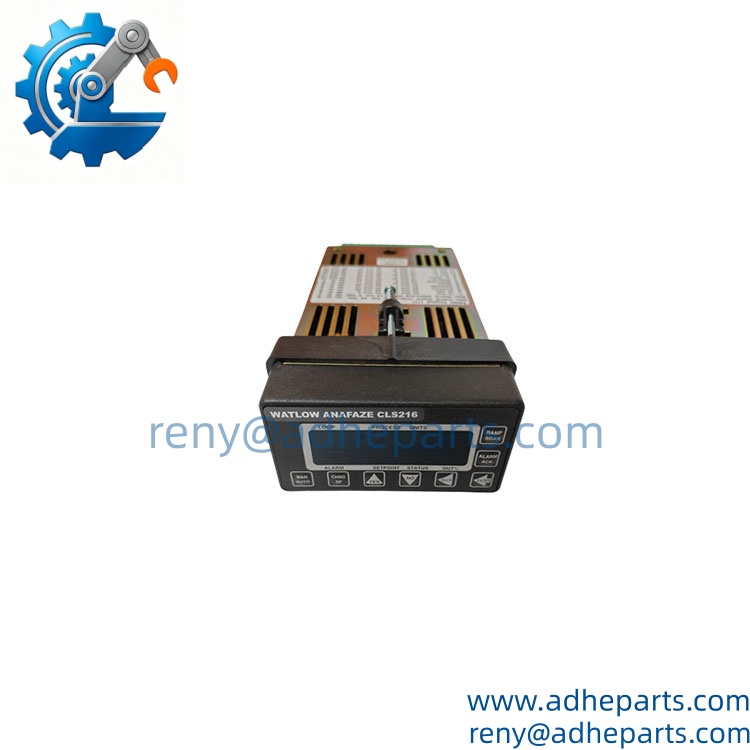
Watlow ANAFAZE CLS216
3. Key Technical Specifications
| Parameter | Value |
|---|---|
| Model | CLS216 |
| Brand | Watlow |
| Series | ANAFAZE CLS |
| Number of Control Loops | 16 |
| Input Types | Thermocouple (J, K, T, E, N, B, R, S), RTD (100Ω Pt), linear (0-10V, 4-20mA) |
| Input Resolution | 16-bit |
| Output Types | Relay (SPST), solid-state relay (SSR) drive, 4-20mA, 0-10V |
| Output Rating | Relay: 2A @ 250V AC; SSR: 24V DC @ 20mA; Analog: 4-20mA into 500Ω max |
| Control Modes | PID, PI, PD, on/off, cascade |
| Auto-Tuning | Yes, adaptive and one-shot |
| Alarm Outputs | 16 (configurable as high/low/deviation) |
| Communication | RS-485 (Modbus RTU), optional Ethernet (Modbus TCP) |
| Display | 4-line LCD with keypad |
| Power Supply | 85-264V AC, 47-63 Hz |
| Operating Temperature | 0 to 50°C |
| Mounting | 1/4 DIN panel mount |
| Weight | Approx 1.2 kg |
4. Product Introduction
The Watlow ANAFAZE CLS216 is a 16-loop temperature and process controller that replaces a wall full of single-loop controllers with one 1/4 DIN panel unit. It reads thermocouples, RTDs, or linear signals on all 16 inputs and drives relays, SSR inputs, or analog outputs on all 16 outputs. Each loop runs its own PID algorithm, so you can heat a 16-zone mold or oven without cross-talk between zones.
What sets the CLS216 apart is the adaptive auto-tune. It watches the process response and calculates PID terms without injecting a step change that would scrap product. The RS-485 port speaks Modbus RTU, so a PLC or HMI can read all 16 process values and write setpoints over one twisted pair. For a 16-zone application, that is a fraction of the wiring a discrete controller bank would need.
Watlow ANAFAZE CLS216
5. Application Scenarios & Field Experience
Part 1 – Narrative Paragraph
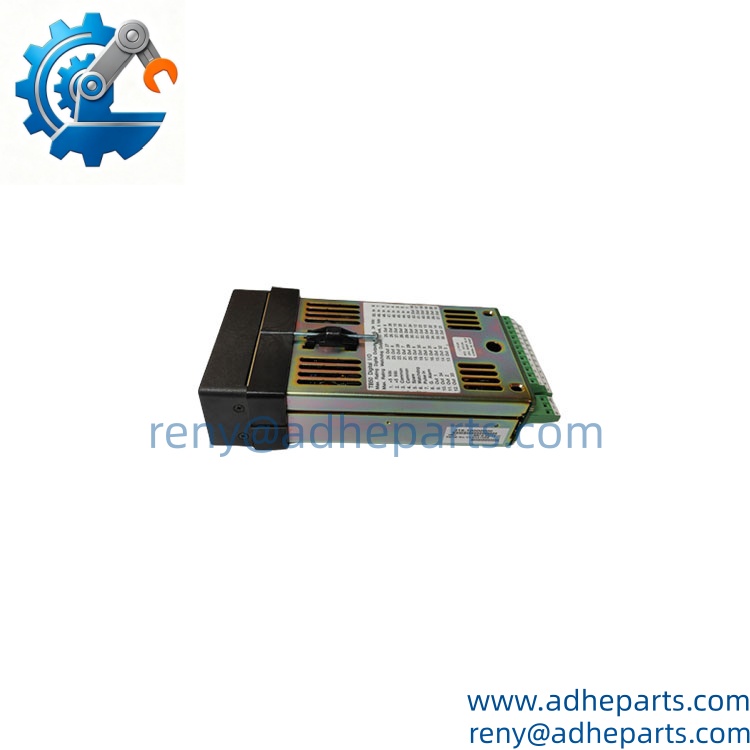
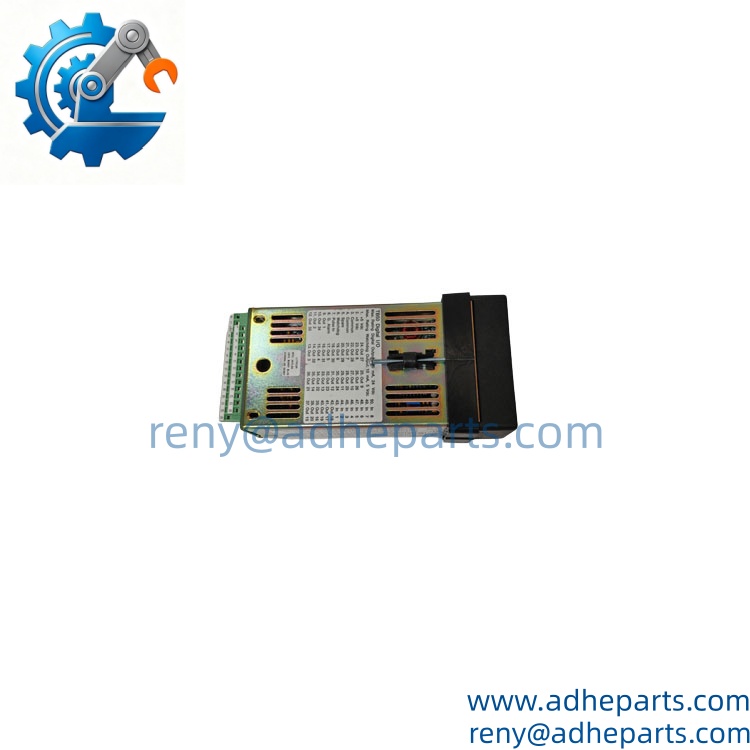
The headache with multi-zone heating is not the PID math—it is the wiring. Sixteen discrete controllers mean sixteen power supplies, sixteen sets of sensor wires, and a panel that looks like a rat’s nest. I have watched electricians spend two days terminating a 12-zone oven because each controller had its own terminal block and its own 120V feed. The CLS216 consolidates all of that into one panel cutout and one power drop. The backplane handles the sensor inputs and output drives on plug-in terminals, so a zone swap takes minutes instead of hours. In my experience, that labor savings alone pays for the controller on the first installation.
Part 2 – Numbered List (Application Scenarios)
- Plastics Injection Molding – The CLS216 controls 16 heater bands on a hot-runner manifold. Each zone runs its own PID loop, and the adaptive auto-tune adjusts for the thermal coupling between adjacent zones without operator intervention.
- Packaging Heat Sealing – Used on form-fill-seal machines to control seal bars across multiple lanes. The 4-20mA outputs drive solid-state relays for precise temperature control, and the alarm outputs trip the machine if any zone drifts out of tolerance.
- Semiconductor Wafer Processing – The controller manages 16 zones on a diffusion furnace. The 16-bit input resolution resolves 0.1°C changes, and the RS-485 Modbus port lets the host SCADA log all zone temperatures for statistical process control.
- Food Processing Ovens – Multi-zone tunnel ovens use the CLS216 to hold separate temperature profiles for proofing, baking, and finishing. The on/off control mode handles the large thermal mass, while the deviation alarms catch a failed burner before product is lost.
Part 3 – Short Field Story
A medical device manufacturer had a 10-zone thermoforming oven that ran three shifts a day. One Monday morning, zone 7 drifted 15°F low and the operator did not catch it until a full shift of trays was scrapped. The existing controllers had no communication, so there was no data log. We replaced the bank with a . The next time a heater failed, the Modbus log showed the exact minute the zone lost power. The maintenance tech swapped the heater and the SSR in 20 minutes. The scrap rate dropped because the trend data proved the zone was stable after the repair.
Watlow ANAFAZE CLS216
Watlow ANAFAZE CLS216
6. Standard Operating Procedure (SOP) for Quality Control
Every Watlow ANAFAZE goes through this QC process before it leaves our dock:
- Visual & Origin Inspection – We verify the Watlow label, the model marking, and the serial number. We inspect the terminal blocks for cracked housings and check the LCD for scratches or dead pixels. Any unit with a damaged keypad membrane is rejected.
- Power-Up & Self-Test – The controller is powered with 120V AC. We verify the LCD backlight illuminates and the unit completes its internal self-test without an error code. We record the firmware revision from the configuration menu.
- Input Channel Verification – We connect a calibrated thermocouple simulator and an RTD simulator to each of the 16 inputs. We step the simulator through 0°C, 100°C, and 200°C and verify the controller reads within ±1°C of the injected value. We also test a 4-20mA linear input on one channel.
- Output Channel Test – We command each of the 16 outputs to full on and full off. For relay outputs, we verify contact closure with a continuity meter. For SSR drive outputs, we measure the 24V DC pulse. For analog outputs, we measure the 4-20mA signal into a 250Ω load.
- Communication & Firmware Check – We connect to the RS-485 port with a Modbus RTU master and poll all 16 process variables. We verify the baud rate and parity settings match the factory default (9600, 8-N-1). We also confirm the firmware version supports the required Modbus register map.
- Thermal Soak – The controller runs at 80% output for 2 hours in a 50°C chamber. We monitor for display flicker or communication dropouts.
- ESD-Safe Packaging – The controller is wrapped in anti-static film, placed in a foam insert, and packed in a double-wall carton with a printed pinout reference card.
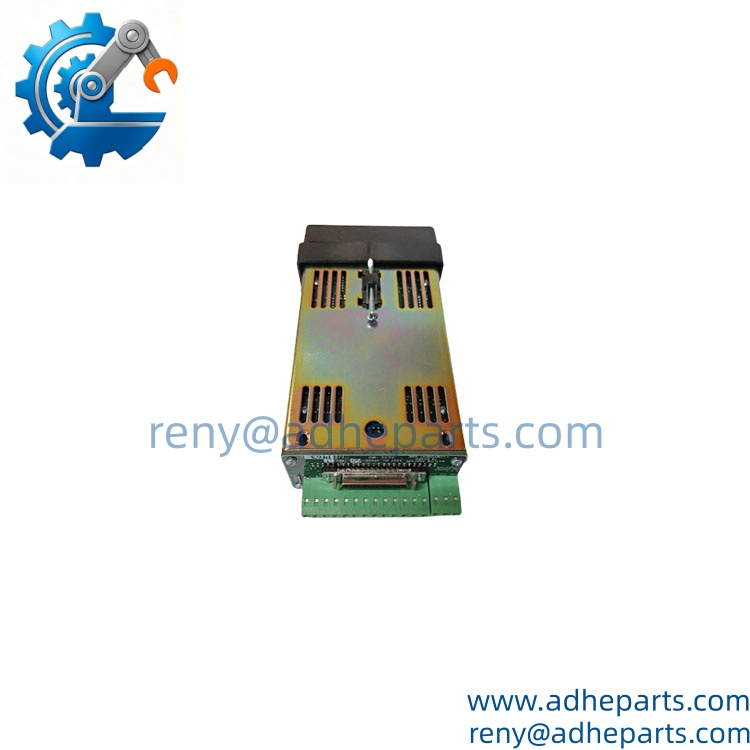
Watlow ANAFAZE CLS216
7. Frequently Asked Questions (FAQ)
Q1: Can I replace an older ANAFAZE CLS208 with the without rewiring?
A: Mechanically, both are 1/4 DIN panel mount, but the terminal layout changed between the CLS208 and . You will need to move wires to the new terminal positions. The input and output types are compatible, but the uses a higher-density connector. Check the pinout diagram we include with the shipment. The Modbus register map is also different—if your PLC reads the CLS208 registers, you will need to update the addressing.
Q2: What is the warranty on this controller?
A: We offer a 12-month warranty from the ship date. It covers display failure, input channel drift beyond ±2°C, output driver failure, and communication port failure under normal operating conditions. It does not cover damage from connecting 240V AC to a thermocouple input, water ingress, or physical damage to the LCD. The warranty is void if the unit has been opened or repaired outside our facility.
Q3: Do you have the in stock, or is it a lead-time item?
A: We maintain stock of the for same-day or next-day shipping. Inventory moves quickly because this is a popular 16-loop model. If we are out, we will give you a realistic restock date, not a placeholder. For quantities above five units, contact us for a stock check before ordering.
Q4: My process uses type B thermocouples. Will the read them accurately?
A: Yes, the supports type B thermocouples, but with a caveat. Type B has very low output below 600°C, so the controller’s accuracy in that range is limited. For process temperatures below 600°C, use type K or N instead. Above 600°C, the type B input reads within ±2°C. Verify the input type is set correctly in the configuration menu—if you leave it on the factory default (type J), the reading will be wrong.
Q5: Any installation pitfalls I should watch for?
A: Two important ones. First, the is not hot-swappable. Power down the panel before inserting or removing the controller. Second, the RS-485 wiring must be daisy-chained, not star-wired. If you run a separate pair to each controller, you will get reflections and communication errors. Use a single twisted pair with 120Ω termination at both ends of the bus. Also, keep the thermocouple wires away from the 120V power wiring—if you bundle them together, you will inject noise into the input and see erratic readings.
Pre: WATLOW 997D-11CC-JURG | ±0.1% High-Precision 1/4 DIN Industrial Temp Control Unit
Next: Yaskawa CPS-150F | XRC and NX100 Control Power Supply