Description
Note: Many products are not yet listed. Please contact us for more product information. Our supply channels are constantly expanding, and we currently have 20 stable shared supply channels. Please confirm the model, product, price, and all other necessary information with customer service before placing an order. We offer new, refurbished, and used products, and prices are adjusted according to the year of the item you require.
Key Technical Specifications
| Parameter | Value |
|---|---|
| SoC | Xilinx Zynq-7020, dual-core ARM Cortex-A9 667 MHz |
| FPGA Logic Cells | 85,000; 220 DSP blocks |
| Memory | 512 MB DDR3 DRAM, 512 MB nonvolatile storage |
| Operating System | NI Linux Real-Time (32-bit) |
| Digital I/O | 96 channels, 3.3 V LVTTL |
| Communication | Gigabit Ethernet, CAN bus, RS-232, USB 2.0 Hi-Speed |
| Sync Standard | IEEE 802.1AS hardware time synchronization |
| Supply Voltage | 9 V to 30 V DC, max 29 W |
| Operating Temperature | −40 °C to +85 °C local ambient |
| Expansion | High-speed RIO Mezzanine Card (RMC) connector |
| Supported Toolchains | LabVIEW FPGA, C/C++ under Eclipse |
Product Introduction
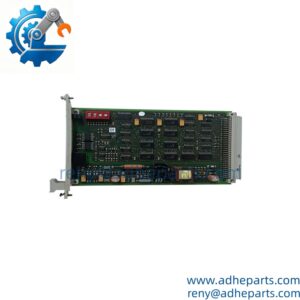
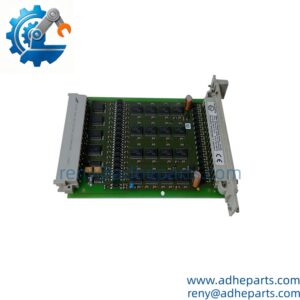
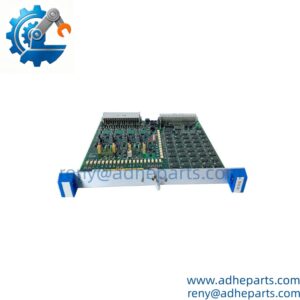
The NI sbRIO-9607 is a single-board CompactRIO controller built for OEM embedded systems. It combines a real-time Linux processor and a user-programmable FPGA on one PCB, with native digital I/O and standard industrial communication ports. The RMC header lets designers add custom analog or power drive mezzanine cards. It delivers low-jitter FPGA-based loop control without the bulk of a full cRIO chassis, which fits tight enclosure layouts for volume production.
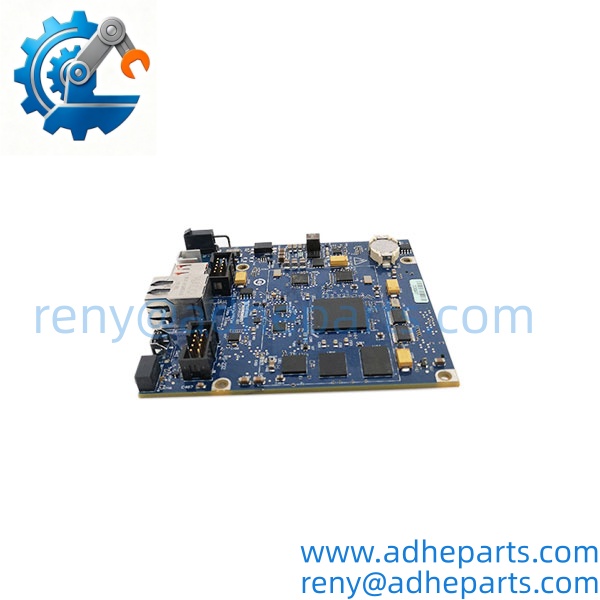
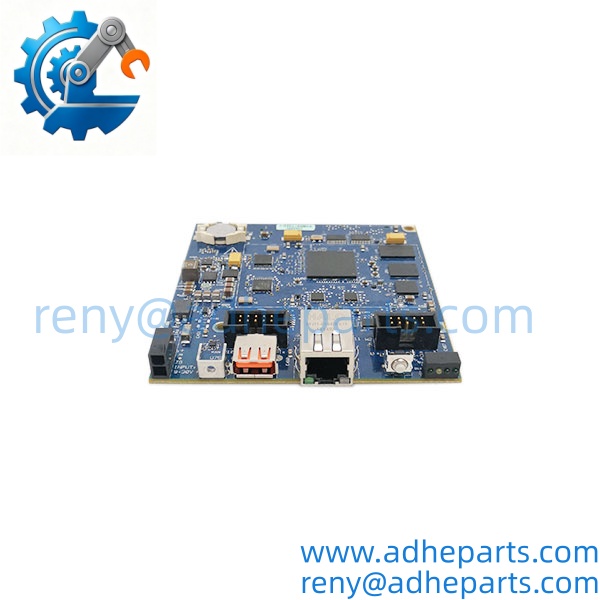
sbRIO-9607
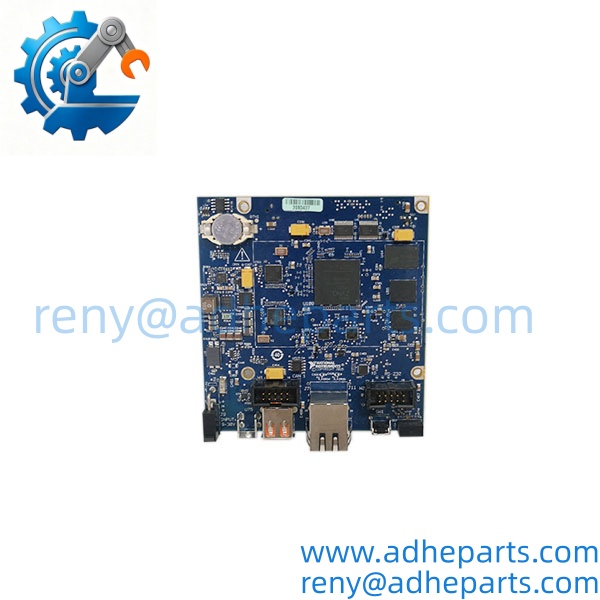
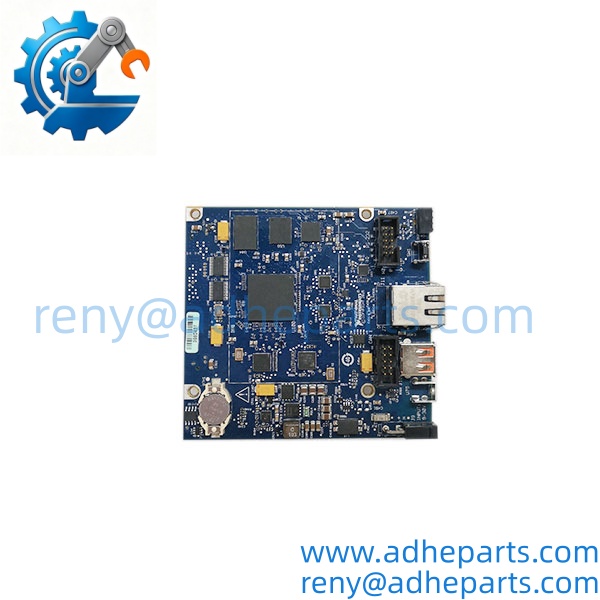
sbRIO-9607
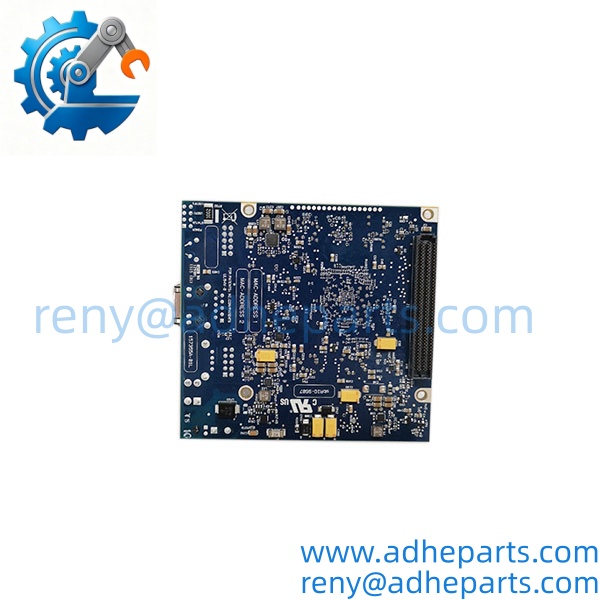
Application Scenarios & Field Experience
Many OEM power converter and motion control systems struggle with latency and limited I/O expansion when using off-the-shelf PLCs. Standard controllers cannot execute sub-microsecond PWM or custom trigger logic at the hardware level. This board moves timing-critical loops into FPGA fabric while the real-time core handles state management and network communications.
- Renewable energy OEMs: Grid-tied inverter control, requires high-speed current loop and CAN-based status telemetry.
- Industrial test benches: HIL simulator hardware for motor drives, synchronized signal generation and fault injection.
- Automated packaging machinery: High-speed digital sequencing and encoder capture for multi-axis indexing.
- Battery test equipment: Cell monitoring and charge/discharge control with custom safety interlock logic.
In my experience, a drive OEM had a sbRIO-9607 fail after repeated ESD events on the RMC interface. The engineering team loaded the compiled FPGA bitfile and real-time application to the replacement unit, reconnected the CAN and Ethernet links, and validated PWM outputs on an oscilloscope. The prototype test bench returned to operation within 35 minutes, and they added transient protection to the mezzanine I/O afterward.
Standard Operating Procedure (SOP) for Quality Control
- Visual & Origin Inspection: Verify OEM labeling, serial number, PCB condition, connector pin integrity, and conformal coating for coated variants.
- Live Rig Testing: Power on at 24 V DC, confirm boot sequence and RT OS startup, validate DIO toggle and CAN/Ethernet link handshake.
- Firmware Verification: Record the installed NI Linux Real-Time build, FPGA bitfile ID, and driver revision matched to the board variant.
- ESD-Safe Packaging: Place the board inside static shielding bag, add rigid foam edge protection, seal in anti-static carton with ESD warning labels.
Frequently Asked Questions (FAQ)
Q1: Can sbRIO-9607 work with other CompactRIO chassis modules? A: It is a standalone single-board controller. It does not plug into standard cRIO backplanes. You extend I/O exclusively via the RMC connector or external bus interfaces. Q2: What warranty applies to this NI sbRIO-9607? A: We offer a 12-month warranty. Warranty covers hardware failure under rated operating conditions. Damage from ESD, overvoltage on RMC pins, or incorrect bitfile loading is excluded. Q3: Is this exact board variant available for immediate shipment? A: Stock status changes frequently. Confirm lead time before locking in prototype build or factory outage plans. Some factory-configured coated versions carry longer lead times. Q4: Can I flash a newer NI Linux Real-Time image to this board? A: Image upgrades are possible, but you must recompile and re-test your FPGA bitfile and application code. Mismatched toolchain versions can cause I/O timing faults or boot failures. Q5: Can I hot-plug the RMC mezzanine card while the sbRIO-9607 is powered? A: Do not hot-plug the RMC connector. The high-speed FPGA I/O lines have no built-in hot-swap protection. Hot insertion can damage the FPGA bank and trigger unpredictable output states.