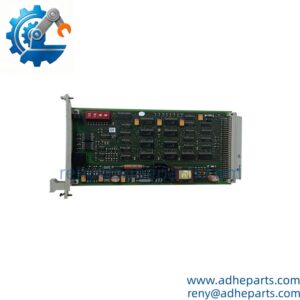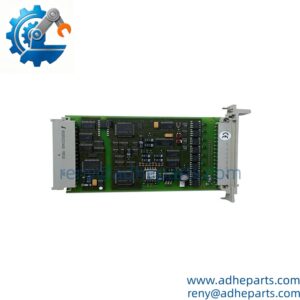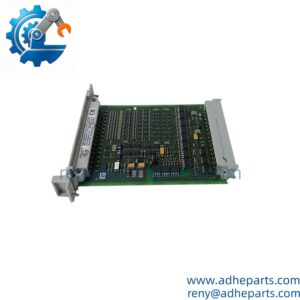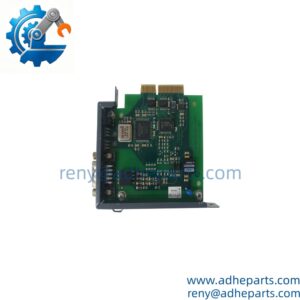
Description
Note: Many products are not yet listed. Please contact us for more product information. Our supply channels are constantly expanding, and we currently have 20 stable shared supply channels. Please confirm the model, product, price, and all other necessary information with customer service before placing an order. We offer new, refurbished, and used products, and prices are adjusted according to the year of the item you require.
3. Key Technical Specifications
Do not order against this table alone. I cannot confirm the input voltage range, output type, or channel count from the model number. Match every line against the OEM datasheet and the label on your existing unit.
| Parameter | Value |
|---|---|
| Model | 8121-DI-DC |
| Brand | MTL (Eaton) |
| Product Family | MTL 8000 series |
| Module Type | Digital input isolator |
| Input Signal Type | Digital (switch contact, proximity sensor, or voltage source) — verify |
| Input Voltage Range | Verify with OEM datasheet — confirm on your unit label |
| Input Current | Verify with OEM datasheet |
| Output Type | Relay or transistor — verify on your unit label |
| Output Rating | Verify with OEM datasheet |
| Number of Channels | Verify with OEM datasheet — confirm on your unit label |
| Isolation | Galvanic isolation between input and output — verify isolation voltage |
| Power Supply | 24V DC nominal — verify range and current draw |
| Mounting | DIN rail (TS 35) |
| Terminal Type | Screw or spring clamp — verify on your build |
| Status Indicators | Power and channel status LEDs — verify arrangement |
| Operating Temperature | –20 °C to +60 °C (typical — verify) |
| Storage Temperature | –40 °C to +85 °C (typical — verify) |
| Humidity | 5% – 95% RH, non-condensing |
| Protection Rating | IP20 (open equipment) |
| Weight | Verify with OEM datasheet |
| Certifications | CE, UL, ATEX/IECEx (if intrinsic safety rated) — verify on the unit label |
4. Product Introduction
The MTL 8121-DI-DC is a DIN-rail mounted digital input isolator from the MTL 8000 series. It accepts a digital signal from a field device — a switch contact, a proximity sensor, or a voltage source — and passes it to the control system through a galvanically isolated output. The isolation breaks ground loops and protects the control system from transients on the field wiring.
The engineering value is the isolation barrier. In my experience, the most common cause of a false digital input on a shared-ground card is a ground loop between two field devices at different potentials. The 8121-DI-DC breaks that path. The module also provides status indication, so a technician can see at a glance whether the input is active and whether the module is powered.
One thing to verify before you order: the output type. Some MTL 8000 series modules provide a relay output, others a transistor output. The two are not interchangeable — a relay output can switch AC or DC loads, while a transistor output is typically limited to a specific voltage and polarity. Check the label on your existing unit and match it exactly.
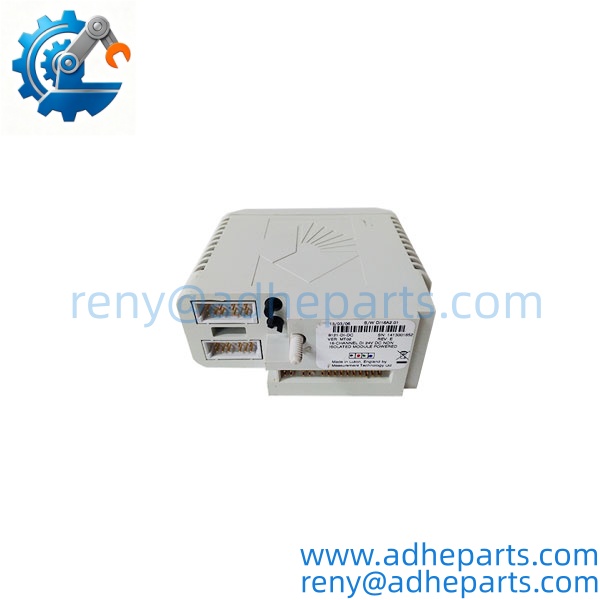
8121-DI-DC
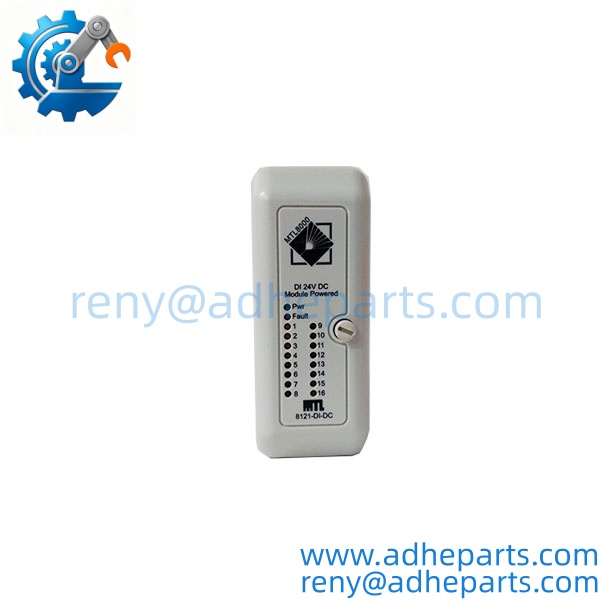
8121-DI-DC
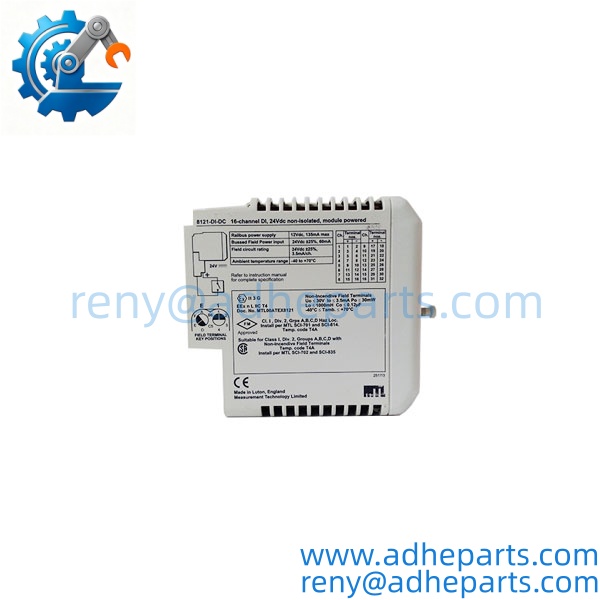
8121-DI-DC
5. Application Scenarios & Field Experience
Part 1 – Narrative Paragraph
The failure that wastes the most time on a digital input isolator is a channel that reads on when the field device is off, or reads off when the device is on. I have seen a plant chase a “stuck input” for two shifts because the isolator was picking up a ground loop from a nearby drive. The field device was fine, the wiring was fine, and the control system was fine. The isolator was doing its job — it was just installed without a proper ground reference. When you replace an MTL 8121-DI-DC, verify the input threshold and the ground reference before you connect the new module. A module that reads correctly on the bench can still misread in a noisy panel.
Part 2 – Numbered List (Application Scenarios)
- Oil & Gas – Intrinsic Safety Interfaces – The module provides isolation between a field device in a hazardous area and the control system in the safe area. It limits the energy that can reach the hazardous area, which is the basis of the intrinsic safety protection concept.
- Chemical – Digital Input Isolation – Used to isolate switch contacts and proximity sensors on reactor systems. The galvanic isolation prevents a ground fault on one field device from affecting the control system.
- Power Generation – Turbine Auxiliary Monitoring – The module isolates digital inputs from limit switches and pressure switches on turbine auxiliary systems. The status LEDs let a technician verify the signal state without opening the cabinet.
- Water Treatment – Remote Pump Station Inputs – Used to isolate float switches and pressure switches at remote pump stations. The DIN rail mounting keeps the panel compact.
Part 3 – Short Field Story
A Gulf Coast refinery had a digital input on a compressor lube oil pressure switch that would read “low pressure” intermittently. The crew had replaced the pressure switch and the field wiring, and the fault kept coming back. We asked them to check the input isolator’s ground reference. The isolator was mounted on a DIN rail that was not bonded to the panel ground, and the input was picking up a floating reference that shifted with the plant’s electrical load. The plant bonded the rail and replaced the isolator with a fresh unit. The intermittent low-pressure reading stopped. The original isolator had been functioning correctly — the installation was the problem.
6. Standard Operating Procedure (SOP) for Quality Control
- Visual & Origin Inspection – We verify the MTL marking, the 8121-DI-DC model string, and the date code. We inspect the terminals and the housing for cracks, corrosion, or moisture ingress. A module with a damaged terminal or evidence of rework is rejected.
- Part Number and Revision Documentation – We read and photograph the full model string, the input voltage range, the output type, and the date code. That record ships with the module so you can compare it against the unit you are replacing.
- Power-Up Self-Test – The module is powered on a bench fixture at the specified supply voltage. We verify the power LED illuminates and the module initializes without a fault.
- Input Channel Verification – We apply a digital input signal to each channel at the specified voltage and verify the module reports the correct state. We test at the threshold voltage and at the rated voltage.
- Output Verification – For relay outputs, we verify contact closure with a meter. For transistor outputs, we verify the output voltage and polarity into a calibrated load. A module that reads the input correctly but does not switch the output is rejected.
- Isolation Test – We apply the rated isolation voltage between the input side and the output side. Leakage current must stay below the datasheet limit.
- LED Verification – We confirm each status LED illuminates when its channel is active. A module with a dead LED passes the electrical test but gives the technician no field indication.
- ESD-Safe Packaging – The module is wrapped in anti-static film, seated in a conductive foam insert with the terminals protected, and packed in a double-wall carton with static warning labels.
7. Frequently Asked Questions (FAQ)
Q1: What is the difference between a relay output and a transistor output on this module?
A: The output type determines what the module can switch. A relay output has dry contacts that can switch AC or DC loads within the contact rating. A transistor output is a solid-state switch that is typically limited to a specific voltage and polarity. The two are not interchangeable. Read the label on your existing module and match it exactly before you order.
Q2: Is this module intrinsically safe?
A: The MTL 8000 series includes modules rated for intrinsic safety applications, but not every model in the series carries that rating. Check the label on your unit for the ATEX or IECEx marking. If your application requires intrinsic safety, verify the certification before you order. A module without the rating cannot be used in a hazardous area installation.
Q3: What is the warranty on this module?
A: We offer a 12-month warranty from the ship date. It covers input channel failure, output failure, isolation breakdown, and power supply failure under normal operating conditions. It does not cover damage from connecting the wrong supply voltage, reversed input polarity, or physical damage to the terminals. We test every module on a bench fixture before it ships.
Q4: Do you have this in stock?
A: MTL 8000 series inventory moves and varies by build. Confirm availability before you plan an outage. If we are out of the variant you need, we will tell you what we actually have rather than quote a date we cannot hold.
Q5: Any installation pitfalls I should watch for?
A: Four. First, verify the input voltage range and the output type on the replacement match the module you are removing. Second, verify the DIN rail is properly bonded to the panel ground — a floating rail causes the exact problem the isolator is supposed to prevent. Third, keep the field wiring separate from the power wiring to avoid induced noise on the input signal. Fourth, after the swap, verify the input state and the output state at the field terminal before you return the loop to service. A module that powers up is not necessarily reading or switching correctly.