Description
Note: Many products are not yet listed. Please contact us for more product information. Our supply channels are constantly expanding, and we currently have 20 stable shared supply channels. Please confirm the model, product, price, and all other necessary information with customer service before placing an order. We offer new, refurbished, and used products, and prices are adjusted according to the year of the item you require.
Key Technical Specifications
| Parameter | Value |
|---|---|
| Processor | 1 GHz industrial processor |
| User RAM | 64 MB battery‑backed RAM |
| Flash Memory | 64 MB non‑volatile flash memory |
| Redundancy Mode | Hot‑Standby (HSB), dual‑CPU synchronization |
| Max Switchover Time | 1 logic scan cycle; typical 3.133‑3.66 ms |
| Redundancy Data Transfer | Up to 2 MB shared reference data list |
| Embedded Serial Ports | RS‑232, RS‑485; Modbus RTU Slave, SNP, Serial I/O |
| I/O Capacity | 32K discrete bits, 32K analog words |
| Program Blocks | Up to 512 blocks; max 128 KB per block |
| Backplane Draw | 1.0 A @ +3.3 VDC, 1.2 A @ +5 VDCvi.nordwel… |
| Operating Temperature | 0 °C to 60 °C (32 °F‑140 °F)vi.nordwel… |
| Storage Temperature | −40 °C to 85 °C (−40 °F‑185 °F) |
| Compliance | IEC 61131‑3; dual RX3i back‑plane bus support |
| Required Sync Hardware | IC695RMX128 redundancy link modules |
Product Introduction
The GE Fanuc IC695CRU320 is a rack‑mount hot‑standby CPU built for PACSystems RX3i hardware. It executes user control logic, manages local and distributed I/O, and synchronizes runtime state to a matching backup CPU for automatic fail‑over.
In my experience, this processor eliminates full‑system halt when the primary controller fails. It maintains synchronized reference memory between primary and standby hardware so switch‑over happens mid‑scan without resetting process outputs. Mismatched firmware revisions will break redundancy sync even if hardware part numbers match.
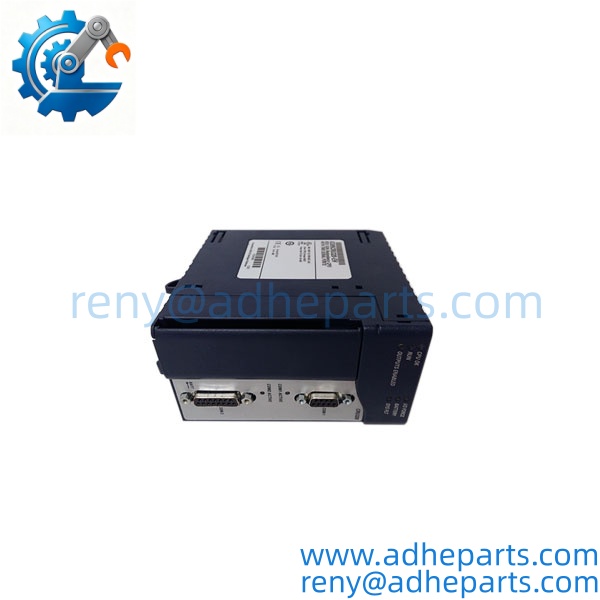
IC695CRU320
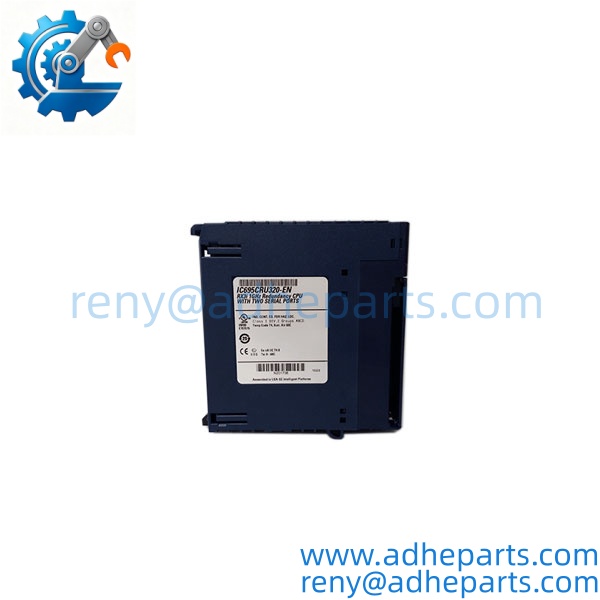
IC695CRU320
IC695CRU320
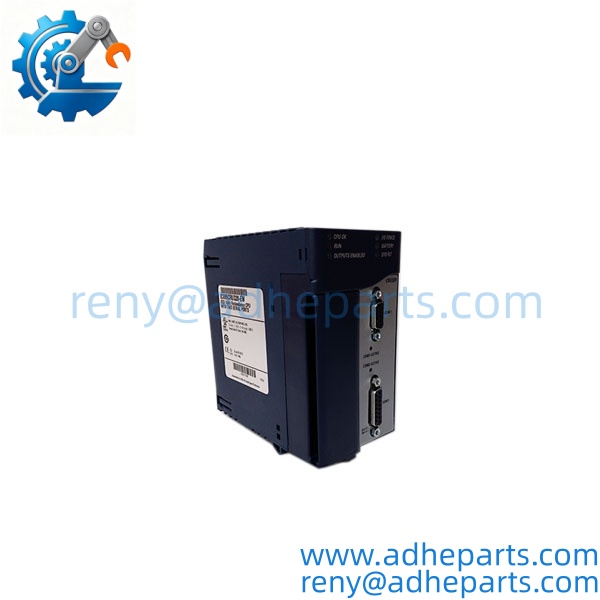
IC695CRU320
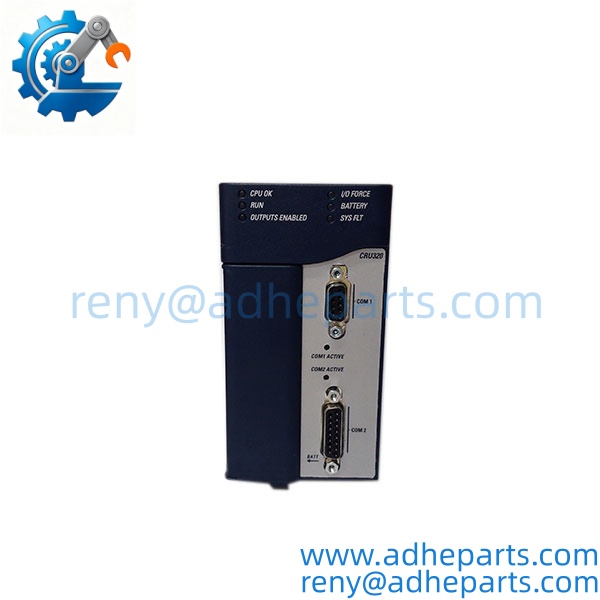
IC695CRU320
Application Scenarios & Field Experience
Unplanned primary CPU failure can shut down continuous‑run plants. Many legacy RX3i redundant systems rely exclusively on matched‑pair IC695CRU320 units. Using a non‑redundant CPU model in a hot‑standby rack disables all fail‑over logic; spare parts must match exactly, and both CPUs must run identical firmware builds.
- Power generation auxiliary control: Boiler feed‑water and burner management; prevents plant trips from single‑controller fault.
- Petrochemical process units: Distillation and blending skids; maintains closed‑loop regulation during CPU hardware faults.
- Municipal water‑treatment plants: High‑rate filter and chemical‑feed control; avoids unplanned service interruption.
- Pulp & paper mill: Continuous pulp digester lines; preserves set‑points and interlock logic on controller switch‑over.
I supported an unplanned outage at a pulp mill several years ago. One IC695CRU320 primary unit triggered an internal hardware fault and dropped off the back‑plane. The standby CPU did not take over because the two CPUs held different firmware revisions. Operators had to place the unit into manual control while maintenance sourced a tested spare. After installing our pre‑tested IC695CRU320, technicians flashed matching firmware to both controllers, re‑established redundancy sync, and restored automatic hot‑standby protection. Normal automatic process control resumed within 42 minutes.
Standard Operating Procedure (SOP) for Quality Control
- Visual & Origin Inspection: Verify OEM labeling, serial number integrity; reject units with scratched, altered or replaced labels; inspect back‑plane connector pins for bending or corrosion.
- Live Rig Testing: Install into RX3i test rack; run power‑on self‑test; validate back‑plane communication; execute scan cycle stress tests. Where possible, pair with a second matching unit to verify redundancy link hand‑shake.
- Firmware Verification: Read and document installed firmware revision. Cross‑reference against target system minimum firmware requirements; flag units that require field‑side flash update.
- Memory and Clock Validation: Confirm RAM and flash memory pass internal checks; verify time‑of‑day clock function.
- ESD‑Safe Packaging: Seal module inside static‑shield bag; use foam rack inserts for transit shock protection.
Frequently Asked Questions (FAQ)
Q1: Can I pair IC695CRU320 with IC695CPU320 for hot‑standby redundancy? A: No. Hot‑standby operation requires two identical IC695CRU320 units. Non‑CRU CPUs cannot run redundancy sync logic. Verify exact part number and firmware with the OEM datasheet before spare‑part ordering.
Q2: What warranty applies to units? A: We provide a 12‑month hardware warranty. Warranty does not cover damage from over‑voltage, incorrect battery installation, or running mismatched firmware in redundant pairs.
Q3: What is real‑world stock and lead‑time status for this CPU? A: Stock status is validated at order entry. Units in local inventory ship under standard processing time. Units not in stock require lead‑time. Never schedule a critical plant shutdown without confirming part availability ahead of time.
Q4: Redundancy link shows sync fault after module replacement. What should I check first? A: Mismatched firmware between primary and standby CPU is the most common root cause. Both controllers must run identical firmware revisions. Also inspect IC695RMX128 sync cables and link modules for damage. Mismatched reference‑data list size also triggers sync alarms.
Q5: Can I hot‑swap the CPU while the rack stays powered? A: You may remove/replace the standby CPU without system interruption. Never remove the active primary CPU before placing the system into manual safe state. Removing active primary without valid standby will drop all controlled I/O and can trigger process trips.