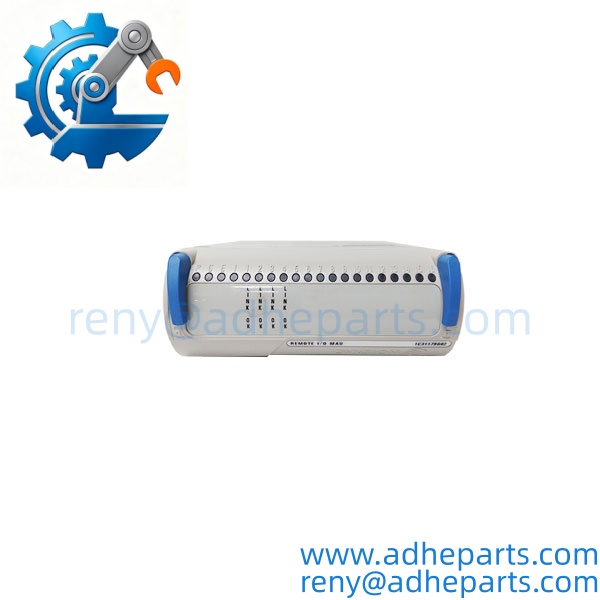
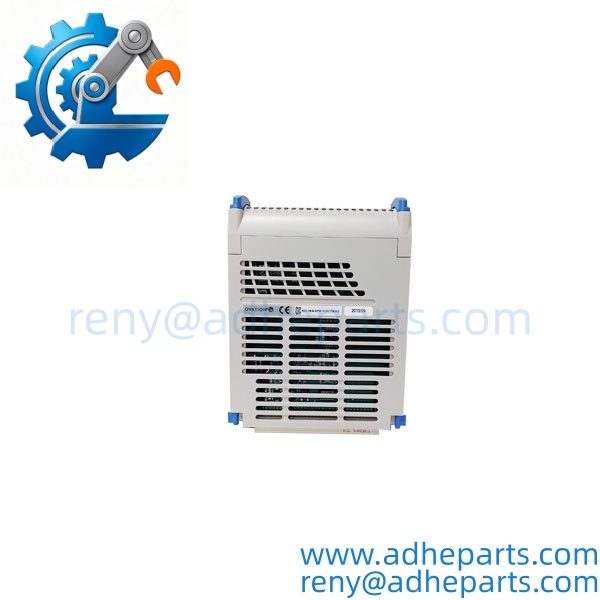
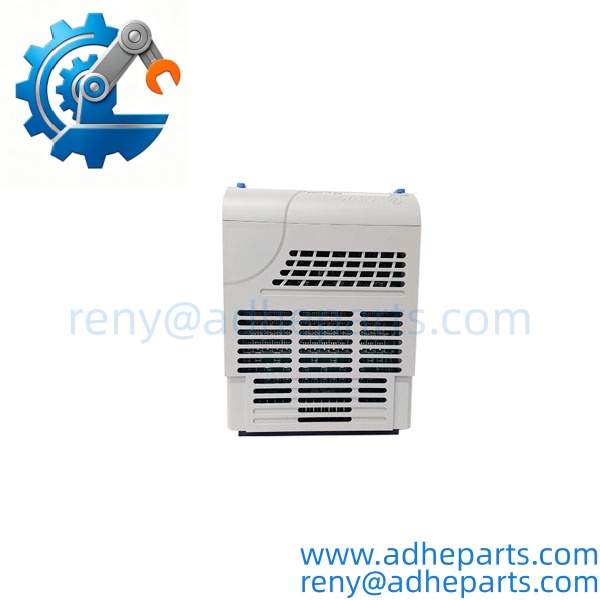
Description
Note: Many products are not yet listed. Please contact us for more product information. Our supply channels are constantly expanding, and we currently have 20 stable shared supply channels. Please confirm the model, product, price, and all other necessary information with customer service before placing an order. We offer new, refurbished, and used products, and prices are adjusted according to the year of the item you require.
Product Introduction
When a large power plant Ovation DCS system loses all remote field I/O communication across multiple distributed I/O racks mid-operation, the root cause almost always traces back to a failed remote I/O master unit that cannot maintain stable high-speed data transmission after a single communication link fault.
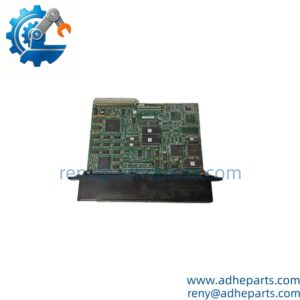
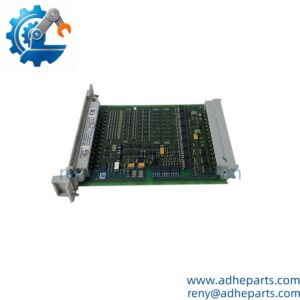
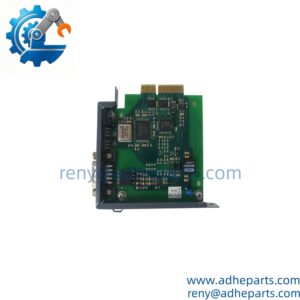
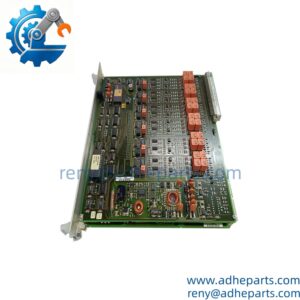
Purpose-built for Emerson Ovation distributed control systems, this 1C31179G02 remote I/O MAU module features 16 dedicated digital input channels and 8 high-current digital output channels, with each output channel rated for 500mA continuous load capacity. Its built-in slave watchdog safety mechanism automatically clears all inputs to zero and forces the system into a predefined safe state if communication with the main DCS controller is lost, preventing unplanned process hazards. It supports multiple industrial communication protocols including Profibus DP, Modbus RTU and RS485, delivering maximum 100Mbps high-speed data transmission performance. The module is fully qualified for -40°C to +85°C extreme wide temperature operation, with IP67 dust and water-resistant protection rating, making it suitable for deployment directly in harsh field industrial environments without extra protective enclosures.
Key Technical Specifications
| Parameter | Value |
|---|---|
| Product Model | 1C31179G02 |
| Compatible Platforms | Emerson Ovation Distributed Control System (DCS) |
| Total Digital Inputs | 16 independent digital input channels |
| Total Digital Outputs | 8 independent digital output channels |
| Per Channel Output Current | 500 mA continuous |
| Power Supply Range | 24 VDC to 48 VDC |
| Input Impedance | 10 kΩ |
| Communication Protocols | RS-232, RS-422, RS-485, Modbus RTU, Profibus DP |
| Max Data Transmission Speed | 100 Mbps |
| Operating Temperature Range | -40°C to +85°C |
| Protection Rating | IP67 (dust and water resistant) |
| Dimensions | 12.1 cm × 5.1 cm × 14 cm |
| Net Weight | ~0.3 kg |
| Agency Approvals | CE, UL industrial process control certified |
Field Application & Technical Pitfalls
This part runs three non-negotiable production-critical roles.
First, it acts as the core remote I/O communication unit for large thermal power plant Ovation DCS systems, connecting all distributed field I/O racks across the entire power generation facility to the central DCS controller.
Second, it serves as the field interface module for offshore oil and gas platform process control systems, maintaining stable remote I/O operation under extreme high-vibration and wide temperature offshore conditions.
Third, it functions as the direct retrofit replacement for older Ovation remote I/O MAU units, restoring full system operation without requiring any major DCS network architecture rework.
⚠️ Slave Watchdog Timeout Configuration Mismatch Risk: The slave watchdog timeout value is determined by two 1-255 range parameters. If you set the timeout value too short, the module will unnecessarily trigger the safe state even during normal temporary network latency.
⚠️ Profibus DP Node Address Conflict Risk: Every device on the same Profibus DP bus must have a unique node address. If two 1C31179G02 modules are assigned the exact same node ID, you will trigger severe network conflict that causes all connected remote I/O devices to lose communication.
⚠️ Per Channel Output Overload Risk: Each output channel is only rated for 500mA continuous current. If you connect a field actuator that draws more than 500mA directly to the channel, you will trigger the built-in overcurrent protection and potentially damage the output driver circuit.
I watched a senior DCS network tech skip the watchdog timeout validation check last winter. He installed this 1C31179G02 module on a power plant remote I/O rack, accidentally set the watchdog timeout value too short, and the module kept triggering the safe state randomly during normal operation. The team spent 2 hours troubleshooting before they found the configuration error. That 1-minute oversight forced the remote I/O rack to run on limited manual operation for half a shift.
Quality Control (QC) SOP & Transparency
- Inbound Verification: Cross-check the OEM serial number against Emerson’s official Ovation part revision database, run anti-counterfeit validation on the module’s laser-etched serial label, and confirm no damaged communication ports or bent field wiring terminals.
- Live Rig Testing: Mount the module in a certified Ovation remote I/O test rack, connect 16 simulated digital input signals and 8 500mA output loads, and verify 4 hours of stable continuous full-load operation.
- Parameter Testing: Confirm 100Mbps high-speed data transmission zero packet loss, verify slave watchdog safety mechanism triggers correctly on communication loss, and validate all 16 inputs and 8 outputs function meet factory specifications.
- Final QA & Packaging: Seal the fully tested module in a static-shielding anti-static bag, apply a unique QC passed serial label, and pack it in ESD-dissipative foam with a printed hard copy of the full remote I/O communication performance test report.
Frequently Asked Questions
- Can I hot-swap this module while the remote I/O rack is powered on? No. Standard Ovation remote I/O MAU modules do not support certified hot-plug. Pulling the module live will instantly cut all remote I/O communication with the central DCS controller.
- What exact Emerson systems does this part work with? It is fully compatible with Emerson Ovation DCS platforms. It will not establish native stable communication with Emerson DeltaV or legacy non-Ovation distributed control systems.
- How long is the standard warranty for this new surplus unit? It carries a full 12-month functional warranty. If it fails within that window under specified operating conditions, we cover all return shipping and bench replacement costs.
- How do I tell a genuine OEM unit apart from a refurbished clone? Genuine units have the Emerson Ovation hologram sticker on the side of the PCB, and the main communication control chip carries the official Emerson part number marking. Refurbished clones usually skip the official hologram and use generic lower-performance communication chips that cannot deliver the rated 100Mbps zero-latency data transmission performance.
- Will this 1C31179G02 directly replace an older Ovation remote I/O MAU unit? No. Older Ovation remote I/O variants may have different firmware versions. You will need to re-verify all Profibus DP node address and slave watchdog timeout configuration settings in the Ovation engineering software after swapping.
- What’s the maximum safe continuous operating temperature at full 8-channel output load? It will hold stable remote I/O performance up to 85°C, though your mileage may vary if the field enclosure cooling airflow drops below 10 CFM and internal communication circuit temperatures spike 15°C above ambient.