Description
Note: Many products are not yet listed. Please contact us for more product information. Our supply channels are constantly expanding, and we currently have 20 stable shared supply channels. Please confirm the model, product, price, and all other necessary information with customer service before placing an order. We offer new, refurbished, and used products, and prices are adjusted according to the year of the item you require.
3. Key Technical Specifications
|
Parameter |
Value |
|---|---|
|
Product Type |
EtherNet/IP Enhanced Web Server Module |
|
Manufacturer |
Rockwell Automation |
|
Brand |
Allen-Bradley |
|
Model |
1756-EWEB |
|
Product Family |
ControlLogix |
|
Communication Protocol |
EtherNet/IP / TCP/IP |
|
Ethernet Speed |
10/100 Mbps |
|
Ethernet Interface |
1 copper RJ45 port |
|
Maximum TCP Connections |
64 |
|
Maximum CIP Connections |
128 |
|
CIP Unconnected Messages |
128 backplane + 128 Ethernet |
|
Web Server Function |
Browser-based access to ControlLogix system information |
|
Socket Services |
Supported |
|
SNMP Support |
Supported; password required |
|
Backplane Current Draw |
700 mA @ 5.1 VDC; 3 mA @ 24 VDC |
|
Power Dissipation |
3.7 W |
|
Thermal Dissipation |
12.6 BTU/hr |
|
Isolation Voltage |
30 V continuous, Ethernet-to-backplane |
|
Slot Width |
1 slot |
|
Operating Temperature |
0°C to 60°C |
|
Storage Temperature |
-40°C to 85°C |
|
Relative Humidity |
5–95%, non-condensing |
|
Firmware Version Listed |
V5.001 |
The 1756-EWEB is a web server and communication module, not a conventional EtherNet/IP scanner or general-purpose controller. Its primary purpose is browser-based access to information from the ControlLogix system.
4. Product Introduction
The Allen-Bradley 1756-EWEB is an EtherNet/IP Enhanced Web Server Module designed for the ControlLogix 1756 platform. It provides browser-based access to information from a ControlLogix system through a single 10/100 Mbps Ethernet connection.
Supporting up to 64 TCP connections and 128 CIP connections, the module provides web server and socket communication capabilities for established automation installations. It is particularly relevant to legacy ControlLogix systems that use browser-based monitoring, custom web pages, or application-specific Ethernet services.
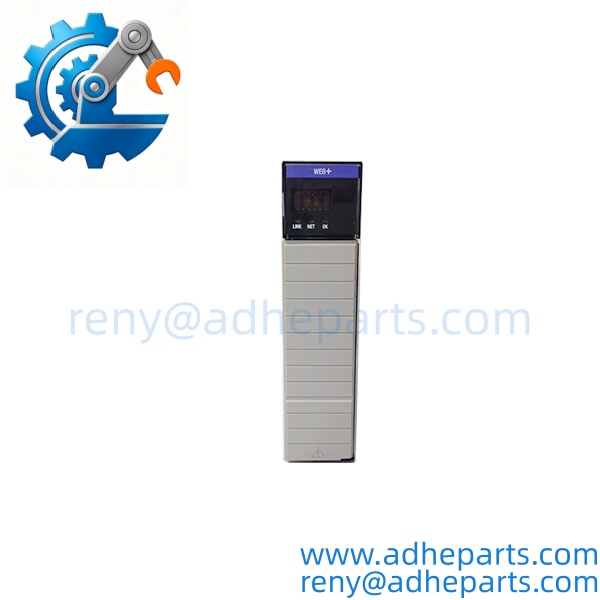
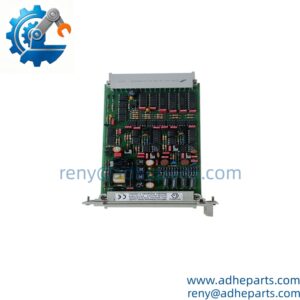
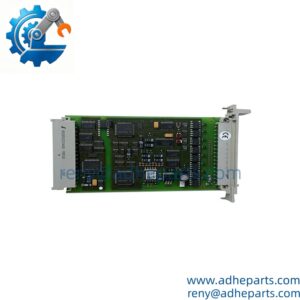
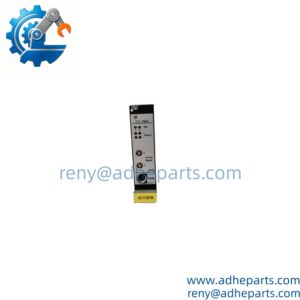
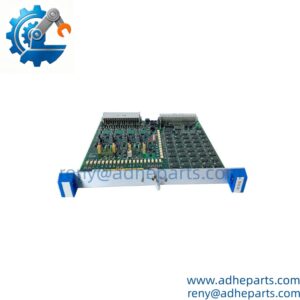
1756-EWEB
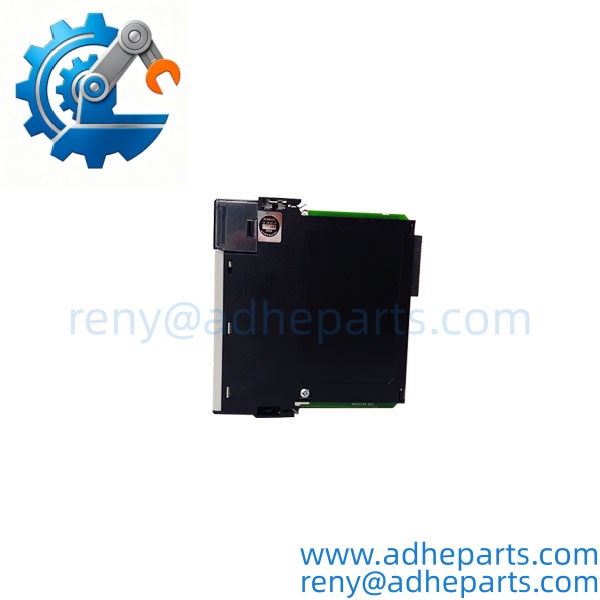
1756-EWEB
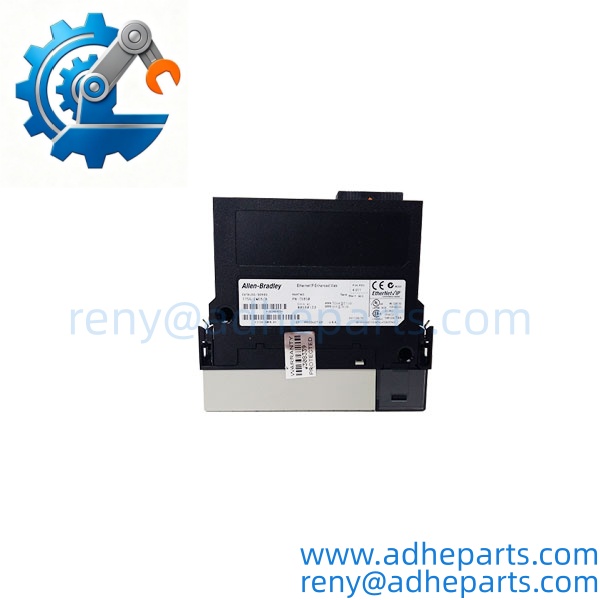
1756-EWEB
5. Application Scenarios & Field Experience
In an established ControlLogix installation, maintenance personnel may need to access controller information without relying exclusively on programming workstations. The 1756-EWEB provides an embedded web server for this purpose. When replacing a failed unit, engineers should verify the module’s IP configuration, firmware revision, web page settings, and any custom socket applications. A replacement module with the same catalog number does not automatically inherit the original network configuration or custom application setup.
Typical application scenarios
-
Manufacturing Production Lines — Provides browser-based access to selected ControlLogix system information for maintenance and equipment monitoring.
-
Water and Wastewater Treatment — Supports web-based access to controller information in established plant automation networks.
-
Power Generation — Provides an Ethernet communication interface for accessing selected control-system information and configured services.
-
Oil and Gas Facilities — Supports legacy ControlLogix installations that use embedded web pages or socket-based communication applications.
Illustrative engineering scenario, not a documented customer installation: A plant’s maintenance team loses browser access to information hosted by a ControlLogix web server module. The team checks the Ethernet cable, IP address, network configuration, and module diagnostics before identifying a possible hardware fault. A replacement 1756-EWEB is checked against the original module revision and application requirements. After installation, the team verifies browser access, configured web pages, and any application-specific socket communication before closing the maintenance task.
6. Standard Operating Procedure (SOP) for Quality Control
1. Visual & Origin Inspection
-
Verify the Allen-Bradley label, full catalog number, serial number, and hardware series.
-
Inspect the RJ45 Ethernet port, backplane connector, display, and module housing.
-
Check for damaged contacts, corrosion, cracks, or signs of unauthorized repair.
-
Review available OEM packaging and origin documentation.
2. Functional Testing
-
Where a compatible ControlLogix chassis is available, verify module startup and backplane recognition.
-
Check diagnostic indicators and the module’s four-character display.
-
Verify Ethernet connectivity through the RJ45 interface.
-
Where a suitable test network is available, check IP address assignment and browser access.
-
Test configured web pages or socket services where the original application configuration is available.
-
Record the actual test results and any functions that could not be verified.
3. Firmware & Configuration Verification
-
Record the hardware series and installed firmware revision.
-
Check compatibility with the existing ControlLogix system.
-
Verify IP address, subnet mask, gateway, and DHCP/static addressing requirements.
-
Check the web server configuration, user access settings, and custom application requirements.
-
Confirm whether the installation depends on firmware-specific features. Rockwell lists firmware V5.001 for this model.
4. ESD-Safe Packaging
-
Handle the module using appropriate electrostatic-discharge precautions.
-
Protect the Ethernet port and backplane connector.
-
Use anti-static packaging and protective cushioning during transportation.
5. Pre-Shipment Documentation
-
Provide actual product photos and a clear identification-label photo.
-
Confirm the catalog number and hardware revision.
-
Provide available inspection records and test results for checks actually completed on the specific unit.
7. Frequently Asked Questions (FAQ)
Q1: Can the 1756-EWEB replace a standard 1756-ENBT or 1756-EN2T module? A: Not as a direct functional replacement. The 1756-EWEB is primarily an embedded web server module, while the ENBT and EN2T are EtherNet/IP communication modules used for controller and device network communication. Confirm the required communication role before selecting a replacement.
Q2: What warranty do you provide for the 1756-EWEB? A: We offer a 12-month warranty, subject to confirmed order terms. Product condition and warranty coverage will be stated in the order confirmation.
Q3: Is the 1756-EWEB available for immediate shipment? A: Stock availability and condition must be confirmed before ordering. For confirmed available stock, our usual arrangement is shipment within one week after payment. Product photos and live video inspection can be arranged before shipment.
Q4: Does firmware compatibility matter when replacing the 1756-EWEB? A: Yes. Firmware revision can affect supported functions and compatibility with existing applications. Verify the installed revision, web server configuration, and any custom socket services before replacement. Do not assume that the replacement automatically retains the original module’s configuration.
Q5: What should engineers check before installing a replacement? A: Record the original IP settings, firmware revision, web server configuration, and custom application requirements. Confirm the available chassis slot and backplane power budget. After installation, verify Ethernet connectivity and browser access before returning the system to normal operation.
Lifecycle note: The 1756-EWEB was discontinued on June 30, 2023. Rockwell identifies the 1756 Compute Module family, including 1756-CMS1B1 and 1756-CMS1C1, as engineered replacement options. These require application migration and compatibility assessment; they are not automatic plug-in replacements.