Description
Note: Many products are not yet listed. Please contact us for more product information. Our supply channels are constantly expanding, and we currently have 20 stable shared supply channels. Please confirm the model, product, price, and all other necessary information with customer service before placing an order. We offer new, refurbished, and used products, and prices are adjusted according to the year of the item you require.
3. Key Technical Specifications
Confirm each line against the OEM datasheet and the marking on your existing module before ordering. The input configuration and range selection depend on the module’s DIP switches and the processor’s configuration.
| Parameter | Value |
|---|---|
| Model | 1746-NI16I |
| Brand | Allen-Bradley |
| Product Family | SLC 500 (1746 I/O) |
| Module Type | Isolated analog input |
| Input Channels | 16 (single-ended) or 8 differential — verify configuration on your build |
| Input Signal Ranges | Current: 4–20 mA, 0–20 mA; Voltage: 0–10V, ±10V, 0–5V, 1–5V — verify supported ranges on the label |
| Resolution | Verify with OEM datasheet — 16-bit class |
| Accuracy | Verify at 25 °C against the OEM datasheet |
| Isolation | Channel-to-channel and channel-to-backplane — verify isolation voltage |
| Input Impedance | Verify — current and voltage modes have different impedance |
| Backplane Current (5V DC) | Verify with OEM datasheet |
| Backplane Current (24V DC) | Verify with OEM datasheet |
| Compatible Controllers | SLC 5/02, 5/03, 5/04, 5/05 — verify firmware support |
| Chassis Compatibility | 1746-A4, A7, A10, A13, A16 and 1746 expansion chassis |
| Terminal Block | Removable — verify spare part number |
| Status Indicators | Per-channel and module status LEDs — verify arrangement |
| Operating Temperature | 0 °C to +60 °C |
| Storage Temperature | –40 °C to +85 °C |
| Humidity | 5% – 95% RH, non-condensing |
| Certifications | UL 508, CSA C22.2, CE — verify on the unit label |
4. Product Introduction
The Allen-Bradley 1746-NI16I is a sixteen-channel isolated analog input module for the SLC 500 platform. It reads current and voltage signals from transmitters, transducers, and process instruments and passes the digitized values to the SLC processor. Each channel is isolated from the others and from the backplane, which prevents a ground loop on one field device from corrupting the readings on adjacent channels.
The engineering value is the channel density and the isolation. Sixteen inputs on one SLC slot reduces the number of cards in a crowded chassis, and the per-channel isolation protects the readings when field devices sit at different ground potentials. In my experience, the most common cause of a drifted reading on a shared-ground analog card is a ground loop between two transmitters; the 1746-NI16I breaks that path.
One thing to verify before you order: the input configuration. The module supports single-ended and differential wiring, and the range is selected by DIP switches and the processor configuration. A module wired for single-ended inputs with differential field wiring will read incorrectly.
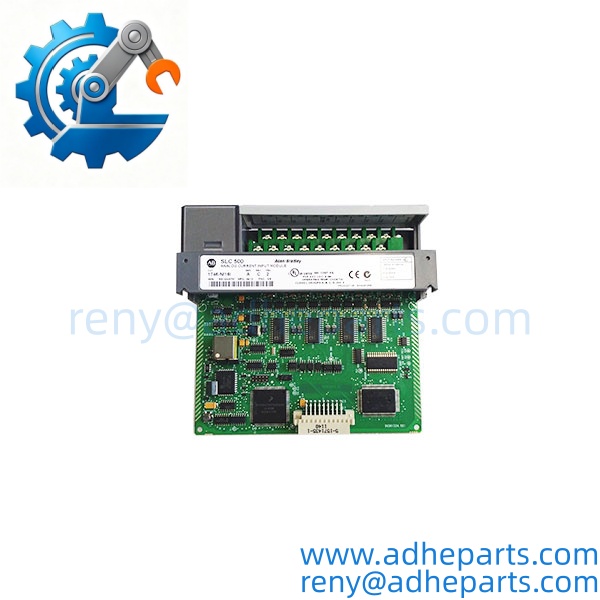
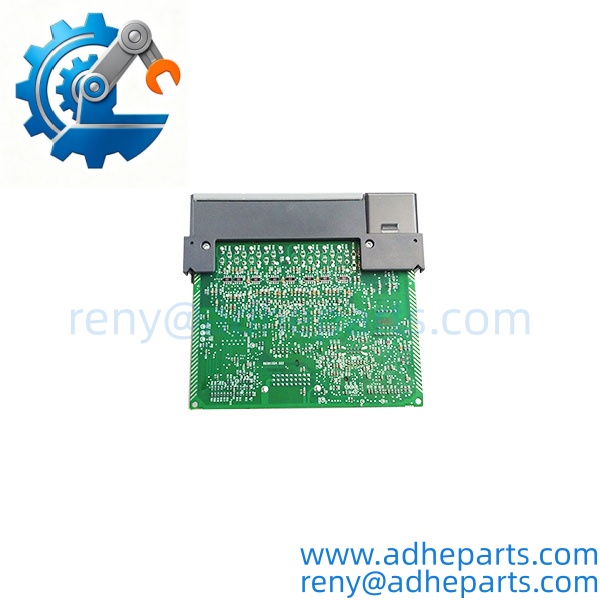
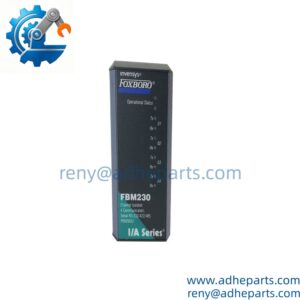
1746-NI16I
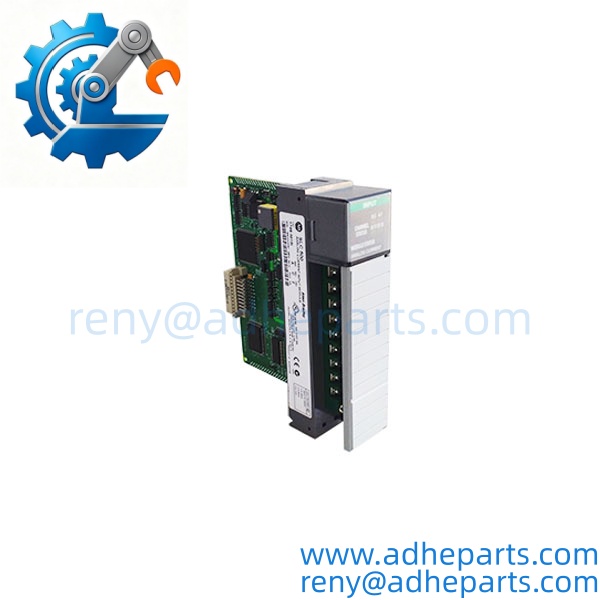
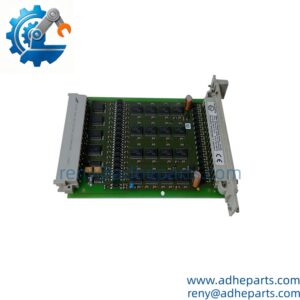
1746-NI16I
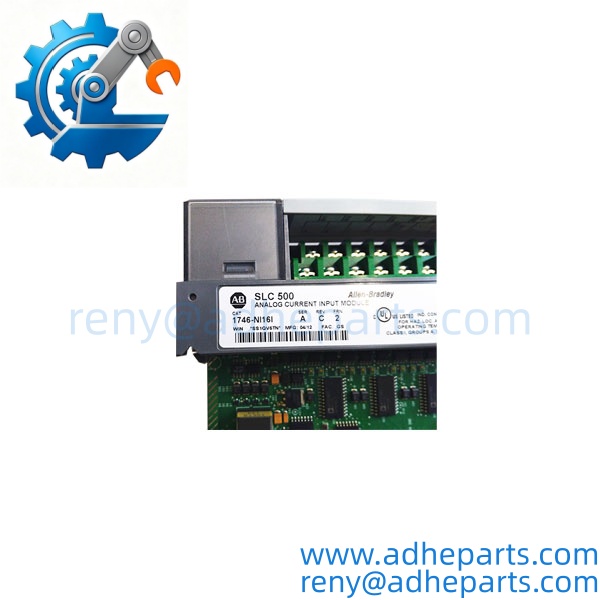
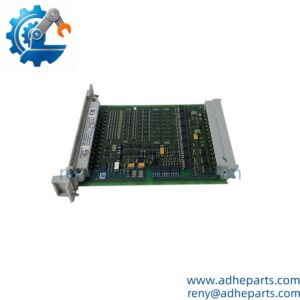
1746-NI16I
5. Application Scenarios & Field Experience
Part 1 – Narrative Paragraph
The failure that wastes the most time on an analog input card is a channel that drifts instead of dying. The transmitter still works, the loop still reads a value, but the reading is off by 2% and the control loop no longer holds its setpoint. Operators see it as a process problem. In my experience, the card is rarely the first suspect, and by the time it is pulled, the crew has already recalibrated the transmitter twice. When you replace a 1746-NI16I, record the channel assignment, the signal type, and the transmitter calibration before you pull the old card. A replacement with the same scaling but a different field device calibration will introduce a fresh error that looks like a bad module.
Part 2 – Numbered List (Application Scenarios)
- Water Treatment – Process Instrumentation – The module reads flow, level, and pressure transmitters across a treatment plant. The per-channel isolation prevents a ground loop between a transmitter in a wet pit and one on a dry skid.
- Packaging Machinery – Tension and Temperature Inputs – Used to read tension load cells and temperature transmitters on a form-fill-seal line. The 16 channels cover a full machine section on one card.
- Chemical Processing – Reactor Loop Inputs – The module acquires analog signals from temperature, pressure, and level transmitters on exothermic reactors. Accurate input scaling is critical because the control loop depends on the measured value.
- Power Generation – Auxiliary System Monitoring – Used to read pressure and temperature transmitters on boiler and turbine auxiliary systems. The channel-level diagnostics report an open loop before the control loop loses its input.
Part 3 – Short Field Story
A water plant had a filter control loop that would not hold setpoint after a maintenance outage. The crew had recalibrated the flow transmitter and checked the loop wiring. The loop still drifted. We asked them to check the analog input channel with a calibrated signal injector. The channel read 3.8% low at mid-scale. The transmitter was fine, the wiring was fine, and the control loop was correctly tuned. The plant replaced the 1746-NI16I module, transferred the channel configuration, and the loop held setpoint on the first run. The card had failed in a way that looked like a process problem.
6. Standard Operating Procedure (SOP) for Quality Control
- Visual & Origin Inspection – We verify the Allen-Bradley marking, the 1746-NI16I catalog number, and the date code. We inspect the edge connector for bent pins and the terminal block header for cracked plastic. A module with a damaged connector or evidence of moisture ingress is rejected.
- Revision Documentation – We read and photograph the full catalog number, the series letter, the DIP switch settings, and the date code. That record ships with the module so you can compare it against the unit you are replacing.
- Chassis Fit Verification – Each module is seated in a 1746 test chassis to confirm the edge connector engages fully and the retention screw holds. A module that fits loosely will cause intermittent backplane faults.
- Input Channel Verification – We inject calibrated current and voltage signals into each channel at 0%, 50%, and 100% of range. We verify the module’s reported values against the reference. Accuracy must stay within the OEM specification.
- Isolation Test – We apply the rated isolation voltage between channels and between each channel and the backplane. Leakage current must stay below the datasheet limit.
- Processor Recognition Test – The module is installed in a live SLC 500 chassis with a known-good processor. We verify the processor recognizes the module type and reads the channel data.
- Fault Reporting Test – We simulate an open input loop and verify the module reports the fault to the processor. A module that reads correctly but does not report faults is not acceptable.
- ESD-Safe Packaging – The module is wrapped in anti-static film, seated in a conductive foam insert with the edge connector protected by a rigid shroud, and packed in a double-wall carton with static warning labels.
7. Frequently Asked Questions (FAQ)
Q1: What is the difference between single-ended and differential wiring on this module?
A: Single-ended wiring uses one input terminal per channel referenced to a common. Differential wiring uses two terminals per channel and rejects common-mode noise. The 1746- supports both configurations, but the DIP switches and the field wiring must match. A differential configuration on a single-ended wiring scheme will read incorrectly. Verify the configuration against the OEM datasheet before you wire the module.
Q2: Will my SLC 5/03 processor recognize this module?
A: The 1746- is designed for the SLC 500 platform, but the processor firmware must support the module type. Older SLC firmware revisions may not recognize the high-density analog module. Check your processor model and firmware revision against the OEM compatibility list before you order. If you send us the processor model and firmware revision, we can confirm the match.
Q3: What is the warranty on this module?
A: We offer a 12-month warranty from the ship date. It covers input channel failure, isolation breakdown, backplane communication failure, and connector failure under normal operating conditions. It does not cover damage from connecting field supply voltage to the input terminals, reversed field wiring, or ESD damage from handling without a wrist strap. We test every module on a live SLC chassis before it ships.
Q4: Do you have this in stock?
A: The 1746- is legacy hardware and available only through surplus and refurbished channels. Stock varies week to week. Confirm availability before you plan an outage. If we are out, we will tell you what we actually have rather than quote a date we cannot hold.
Q5: Any installation pitfalls I should watch for?
A: Four. First, power down the chassis before inserting or removing the module — the 1746 backplane is not hot-swap capable. Second, record the DIP switch settings and the channel scaling before you pull the old module. Third, verify the field signal type and range match the module configuration before you connect any load. Fourth, after the swap, inject a known signal into each channel and verify the processor reports the correct value before you return the loop to service. A module that powers up is not necessarily reading correctly.