Description
Note: Many products are not yet listed. Please contact us for more product information. Our supply channels are constantly expanding, and we currently have 20 stable shared supply channels. Please confirm the model, product, price, and all other necessary information with customer service before placing an order. We offer new, refurbished, and used products, and prices are adjusted according to the year of the item you require.
Product Introduction (Anti-Template)
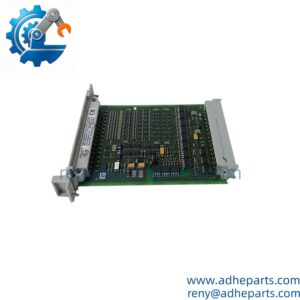
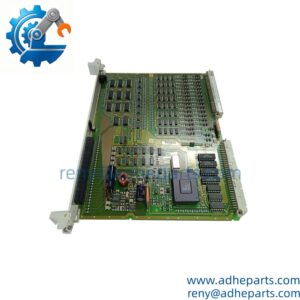
The ABB 216AB61 is a binary output unit used within the ABB RE.216 protection system to transfer signals generated by activated protection functions to the system’s auxiliary relay assemblies. Its 32 output channels are divided into two groups of 16, allowing a single 216AB61 unit to control two associated relay assemblies.
This is therefore not a conventional PLC digital-output card. It belongs to a legacy protection architecture in which electronic protection functions, binary output units, and physical auxiliary relays work together. The first output unit also has a specific role for system alarm channels, so rack position and jumper configuration matter during replacement.
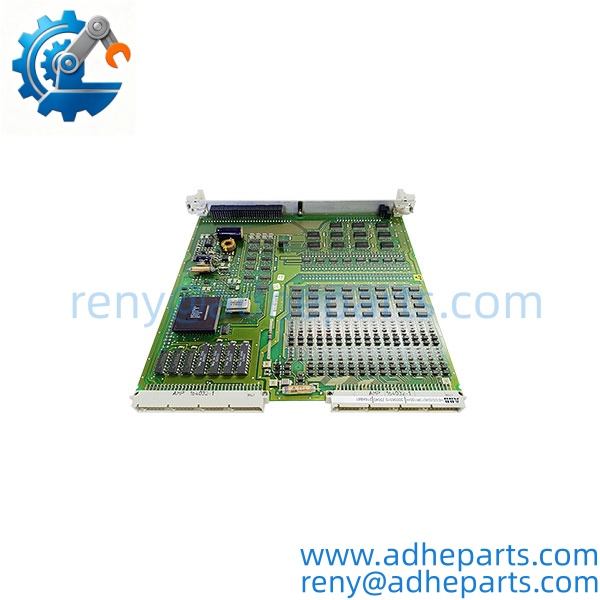
216AB61
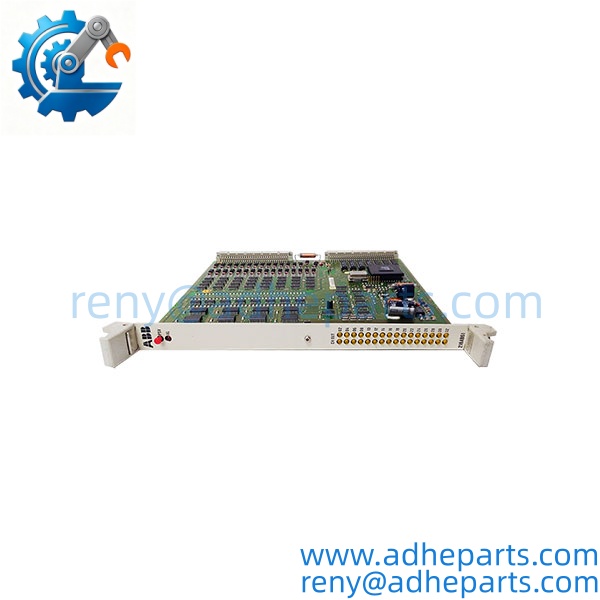
216AB61
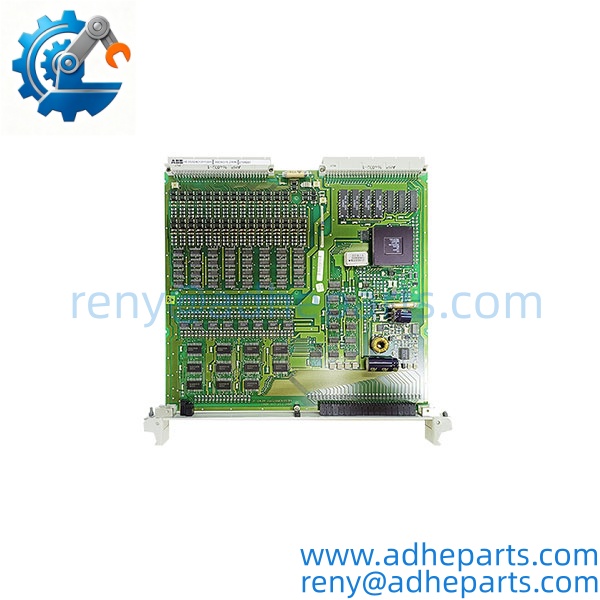
216AB61
Key Technical Specifications
| Parameter | Specification |
|---|---|
| Manufacturer | ABB |
| Model | 216AB61 |
| Product Family | RE.216 |
| System | ABB RE.216 Protection System |
| Product Type | Binary Output Unit |
| Output Channels | 32 |
| Channel Arrangement | 2 × 16 channels |
| Upper Connector | CHO01–CHO16 |
| Lower Connector | CHO17–CHO32 |
| Output Function | Protection signaling / relay control |
| Output Protection | Short-circuit protected |
| Front Indication | LEDs for activated outputs |
| Rack Requirement | 1 rack division |
| Associated Relay Assembly | 216GA61 / related output relay assemblies |
| Configuration | Via RE.216 system configuration |
| Condition | New Surplus / Refurbished |
ABB’s RE.216 manual specifically states that the 216AB61 has 32 output channels and that one unit can control two 216GA61 output relay units. The documentation also identifies CHO01–CHO16 and CHO17–CHO32 as the two connector groups.
Field Application & Technical Pitfalls (The Engineer’s Guide)
Application 1 — Protection Signaling
The 216AB61 receives output information from activated protection functions and passes these signals to auxiliary relay assemblies. This allows electronic protection decisions to be converted into physical relay operations for plant signaling and control.
Application 2 — RE.216 Substation Protection
Within an RE.216 installation, the binary output unit works alongside processing, measurement, binary-input, and relay modules. It should therefore be considered part of a complete protection chain rather than an isolated output card.
Application 3 — Remote Alarm and Status Indication
The output channels can be assigned to protection-related signaling functions. Importantly, ABB reserves CHO01 and CHO02 of the first 216AB61 unit for system alarm signals.
Pitfall 1 — Do not confuse 216AB61 with 216DB61.
The 216AB61 is primarily the 32-channel binary output unit, while the 216DB61 is a separate binary-input and tripping unit with 16 inputs and 8 trip outputs. They are not interchangeable.
Pitfall 2 — Rack position affects configuration.
For the first 216AB61/216AC61 output unit, ABB specifies a particular XJ1 jumper position so that the system alarm channels remain operational. Additional output units use a different XJ1 position. Do not copy jumper settings blindly from another rack position.
Pitfall 3 — Check the complete HESG number.
216AB61 appears with different detailed ABB part-number suffixes, including HESG324013R100 and HESG324013R101 in supply records. When replacing a legacy protection component, the complete marking on the installed unit should be compared rather than matching only “216AB61.”
Field lesson: With an old RE.216 cabinet, a replacement can appear electrically correct but still produce unexpected alarm behavior if it is installed in the wrong rack position or configured with the wrong jumper arrangement. The protection-system documentation should be checked before changing XJ1 or reassigned output channels.
Quality Control (QC) SOP & Transparency
- Full Part-Number Verification — Confirm 216AB61 and record the complete HESG identification printed on the unit.
- Rack Compatibility Check — Verify whether the customer requires the first output unit or an additional 216AB61 position.
- Physical Inspection — Check the PCB, connectors, front panel, LEDs, mounting points, and housing for damage or corrosion.
- Connector Verification — Confirm the CHO01–CHO16 and CHO17–CHO32 channel groups and inspect connector condition.
- Jumper Inspection — Record the XJ1 configuration before dispatch where visible and applicable.
- Output Circuit Inspection — Check the output circuitry and visible protection components for overheating, burn marks, or previous repair.
- Functional Testing — Where an appropriate RE.216 test environment is available, verify representative binary-output operation and LED indication.
- Configuration Review — Compare the required output-channel assignment with the customer’s existing system documentation.
- Final QA Record — Photograph the complete part number, revision markings, connectors, and test results.
- ESD-Safe Packaging — Use anti-static packaging and adequate mechanical protection for transportation.
FAQ
Q1: What is ABB 216AB61?
It is a 32-channel binary output unit used in the ABB RE.216 protection system.
Q2: How many outputs does the 216AB61 have?
It has 32 output channels, arranged as two groups of 16.
Q3: What does the 216AB61 control?
Its outputs transfer signals from the activated protection functions to the system’s auxiliary relay assemblies, such as the 216GA61.
Q4: Is 216AB61 the same as 216DB61?
No. The 216DB61 is a separate binary-input and tripping unit with 16 binary inputs and 8 tripping outputs.
Q5: What are CHO01–CHO32?
They are the 32 binary-output channels. The upper connector covers CHO01–CHO16, while the lower connector covers CHO17–CHO32.
Q6: Does rack position matter?
Yes. The first 216AB61/216AC61 output unit has specific system-alarm functionality, and ABB specifies different XJ1 jumper positions for the first and subsequent output units.
Q7: What should I provide when requesting a replacement?
Provide the complete 216AB61 identification, including the HESG number and suffix, plus photos of the front panel, connectors, rack position, and existing unit markings. This is especially important for legacy RE.216 protection systems.
Q8: What condition can be supplied?
Depending on stock, the unit may be available as new original surplus or refurbished. For a protection-system component, the exact physical condition and test status should be stated on the quotation.