Description
Note: Many products are not yet listed. Please contact us for more product information. Our supply channels are constantly expanding, and we currently have 20 stable shared supply channels. Please confirm the model, product, price, and all other necessary information with customer service before placing an order. We offer new, refurbished, and used products, and prices are adjusted according to the year of the item you require.
Key Technical Specifications
| Parameter | Specification |
|---|---|
| Manufacturer | ProSoft Technology |
| Model | MVI56-PDPMV1 |
| Product Type | PROFIBUS DPV1 Master Communication Module |
| Host Platform | Rockwell Automation ControlLogix |
| Chassis Interface | Single-slot 1756 backplane |
| Fieldbus Protocol | PROFIBUS DPV0 / DPV1 |
| Master Function | PROFIBUS master only |
| Maximum Slave Count | Up to 125 with a repeater |
| Cyclic Input Data | Up to 1,536 bytes |
| Cyclic Output Data | Up to 1,536 bytes |
| PROFIBUS Interface | Optically isolated RS-485 |
| Network Connector | 9-pin female D-sub |
| DPV1 Services | Acyclic read/write and alarm handling |
| Additional Functions | Sync, Freeze, multicast, and broadcast telegram support |
| Configuration Tools | ProSoft Configuration Builder and PROFIBUS comDTM |
Specifications are taken from the manufacturer’s documentation. The actual slave count and data capacity depend on the network design and configuration.
Product Introduction (Anti-Template)
Operating as a PROFIBUS DPV1 master for the Rockwell Automation ControlLogix platform, the ProSoft Technology MVI56-PDPMV1 transfers cyclic I/O data and acyclic parameter messages between the PLC processor and connected PROFIBUS devices. The module occupies one 1756 chassis slot and provides an optically isolated RS-485 network interface. Its DPV1 functions include parameter read/write services and alarm handling, making it suitable for applications involving remote I/O, drives, and other compatible field devices.
This module operates as a master, not as a PROFIBUS slave. For replacement projects, check the ControlLogix chassis, controller program, module firmware, slave GSD files, and configured data map. Honestly, matching the network configuration is just as important as matching the catalog number when restoring an established PROFIBUS installation.
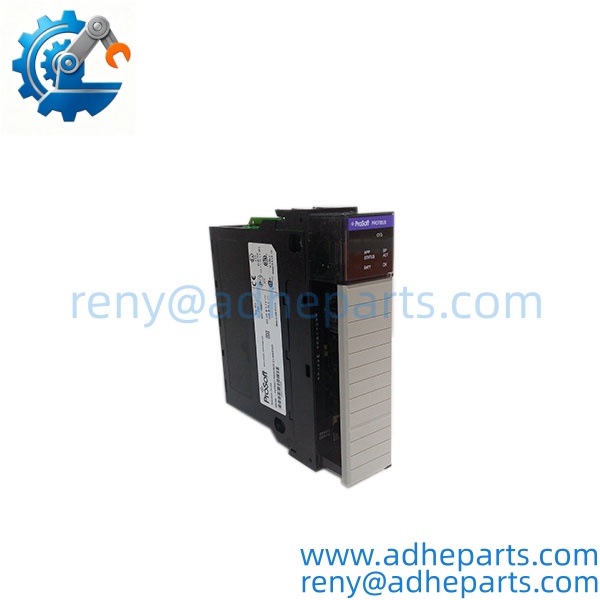
MVI56-PDPMV1
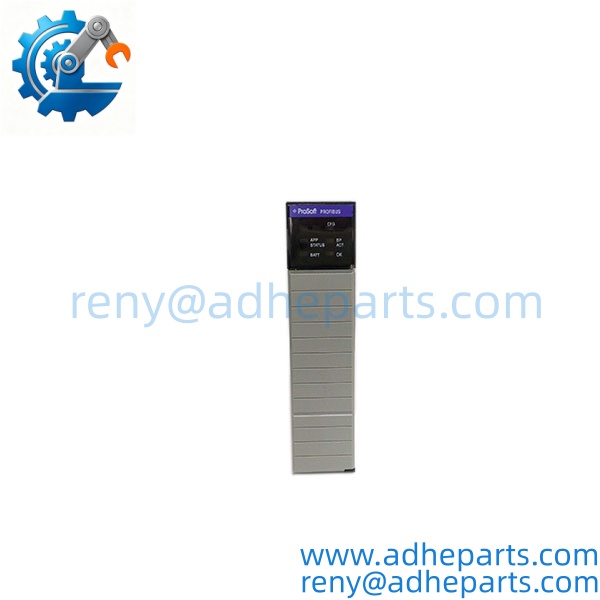
MVI56-PDPMV1
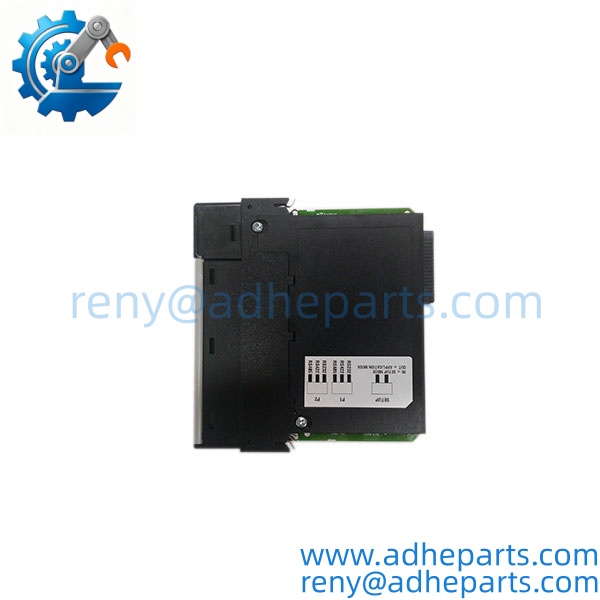
MVI56-PDPMV1
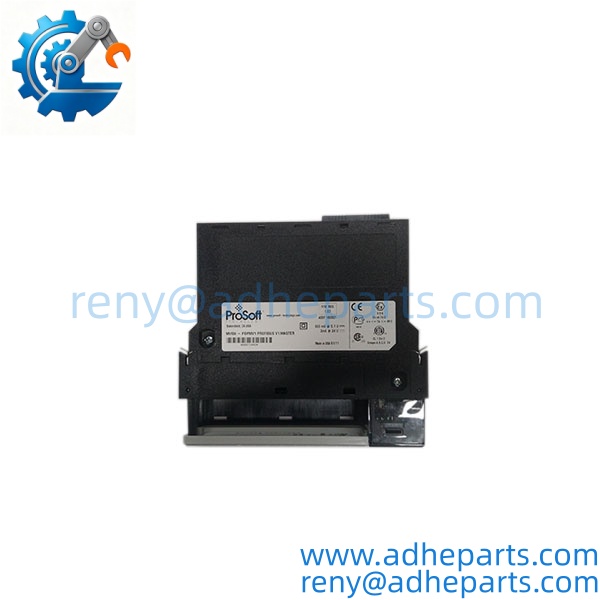
MVI56-PDPMV1
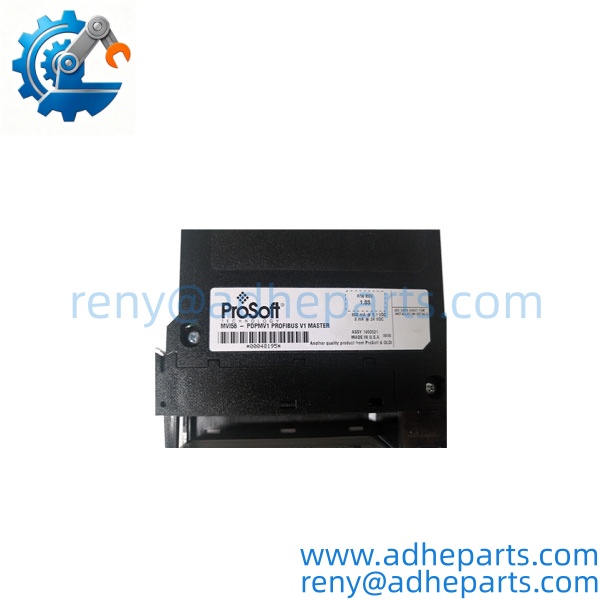
MVI56-PDPMV1
QC, Procurement & Logistics SOP
- Inbound Verification: Check the MVI56-PDPMV1 label, hardware revision, connector condition, and housing. Confirm that the requested module matches the customer’s ControlLogix chassis and existing PROFIBUS application.
- Live Rig Testing: Confirm test availability before purchase. Where compatible equipment is available, verify module startup, status indicators, configuration access, and communication with a suitable PROFIBUS test network.
- QA & Anti-Static Packaging: Inspect the module and network connector, record its condition, and package it in ESD-protective material to reduce handling damage.
- Global Logistics & Export Compliance: Confirm destination, shipping method, commercial documents, and applicable customs classification. Air and sea freight options can be discussed according to the order requirements.
Technical Pitfalls & Integration Warnings
- Firmware and Configuration Mismatch: The module’s firmware affects available functions and configuration modes. For example, Flex mode requires firmware version 1.21 or later and the corresponding application logic. Verify the firmware and the correct sample Add-On Instruction before commissioning.
- DIP Switch and Configuration Errors: Do not assume that physical switch settings control all network parameters. Check the configured PROFIBUS master address, baud rate, slave addresses, and data mapping in the configuration software. A duplicate address or incorrect configuration can prevent reliable communication.
- Connector and Bus Wiring Incompatibility: The module uses an optically isolated RS-485 PROFIBUS interface with a 9-pin female D-sub connector. Verify the connector pinout, cable impedance, shield grounding, bus termination, and segment design. A wiring or termination error can cause intermittent slave faults.
- ESD Damage During Handling: Static discharge can damage electronic components without visible marks. Use ESD protection and follow the chassis manufacturer’s insertion/removal procedures. Do not remove or install the module while energized unless the applicable documentation explicitly permits it.
Frequently Asked Questions (FAQ)
Q1: What does the MVI56-PDPMV1 do?
It connects a ControlLogix processor to PROFIBUS DP slave devices and exchanges cyclic I/O data and DPV1 parameter messages.
Q2: How many PROFIBUS slaves can it support?
The manufacturer specifies up to 125 slaves when a repeater is used. Actual network capacity depends on the network layout and device configuration.
Q3: Can it work as a PROFIBUS slave?
No. The MVI56-PDPMV1 operates as a PROFIBUS master only. It cannot be configured as a slave to another PROFIBUS master.
Q4: Is it compatible with every ControlLogix controller?
It is designed for the ControlLogix 1756 platform, but the chassis, controller application, firmware, slot configuration, and required communication paths must be checked. Remote-rack installations have additional network requirements.
Q5: Can I replace it while the PLC is running?
Do not assume hot-swap support for the complete application. Module replacement can interrupt fieldbus communication or affect process control. Follow the applicable chassis instructions and site isolation procedures.
Q6: What is the usual international delivery lead time?
Lead time depends on stock status, module condition, firmware revision, inspection requirements, and destination. Confirm availability and dispatch timing before placing an order.
Q7: Can you arrange international shipping and export documents?
Shipping options and commercial documentation can be discussed based on the destination and order requirements. Freight charges, estimated transit time, and required documents should be confirmed before dispatch.