Description
Note: Many products are not yet listed. Please contact us for more product information. Our supply channels are constantly expanding, and we currently have 20 stable shared supply channels. Please confirm the model, product, price, and all other necessary information with customer service before placing an order. We offer new, refurbished, and used products, and prices are adjusted according to the year of the item you require.
3. Key Technical Specifications
Confirm each line against the OEM datasheet and the label on your existing board before ordering. The rack revision and the system firmware version govern compatibility. The 3BSE000xxx order-code range is the earliest 3BSE numbering, consistent with late-1980s and early-1990s MasterPiece and Advant hardware — verify the exact build on the board label.
| Parameter | Value |
|---|---|
| Model | CS513 |
| Order Code | 3BSE000435R1 |
| Brand | ABB |
| Product Family | MasterPiece 200 / Advant Controller 450 |
| Module Type | MasterBus 300 (MB300) communication board |
| Protocol | MasterBus 300 — ABB proprietary token-passing bus |
| Bus Medium | Coaxial or twisted-pair — verify on the board label and the cabinet wiring |
| Data Rate | Verify with OEM datasheet — MB300 class |
| Connector | Verify — coaxial connector or terminal block depending on build |
| Node Address | Set by DIP switch or jumper on the board — record before removal |
| Redundancy | Dual-bus support — verify the cabinet wiring and the firmware revision |
| Isolation | Bus side to logic side — verify isolation voltage |
| Backplane Interface | MasterPiece 200 / Advant 450 backplane — verify slot assignment |
| Power Supply | From the rack backplane — verify voltage rail and current draw |
| Power Consumption | Verify with OEM datasheet |
| Status Indicators | Bus activity and fault LEDs — verify arrangement |
| Operating Temperature | 0 °C to +60 °C (typical — verify for your cabinet) |
| Storage Temperature | –40 °C to +85 °C (typical — verify) |
| Humidity | 5% – 95% RH, non-condensing |
| Mounting | Rack slot, plug-in board |
| Weight | Verify with OEM datasheet |
| Certifications | Verify on the specific unit’s label |
4. Product Introduction
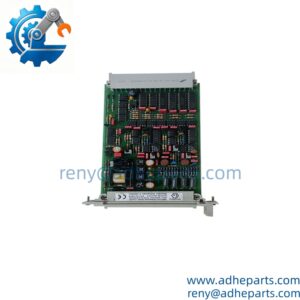
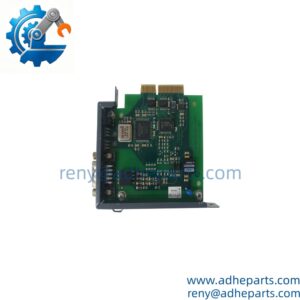
The ABB CS513 (order code 3BSE000435R1) is a MasterBus 300 communication board for the MasterPiece 200 and Advant Controller 450 platforms. It carries the MB300 network traffic between the controller and the operator stations, the engineering workstation, and the peer controllers on the same bus. It is the board that keeps the controller connected to the rest of the Advant system.
The engineering value is the bus architecture. MasterBus 300 is a token-passing network designed for deterministic communication in a process control environment. The CS513 handles the token rotation, the message framing, and the error detection, so the controller’s application program sees the network as a reliable data path. On a legacy Advant system, this board is often the only path between the controller and the operator interface — when it fails, the operator loses visibility on the process even though the controller keeps running.
Two things decide whether a swap works. First, the node address. It is set by DIP switches or jumpers on the board, and it must match the address the system expects. If you install a replacement with the factory default address, the controller will not appear on the bus. Second, the bus medium. Some installations use coaxial cable and some use twisted pair, and the board’s connector and termination depend on which one your cabinet is wired for. Read the label on the board you are removing and match it exactly.
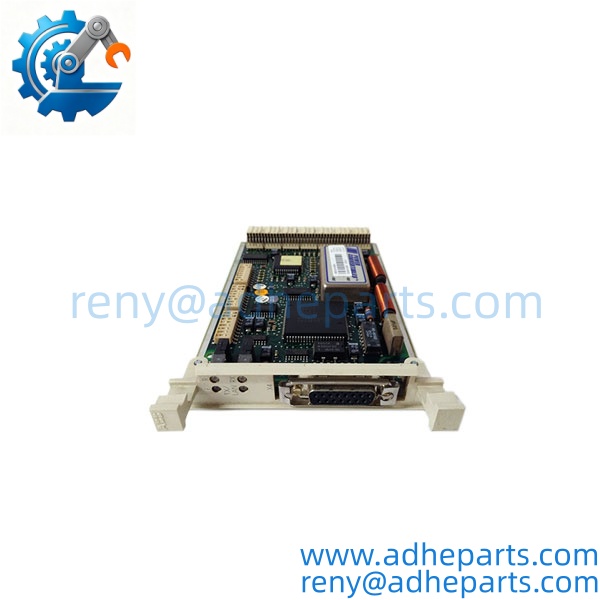
CS513
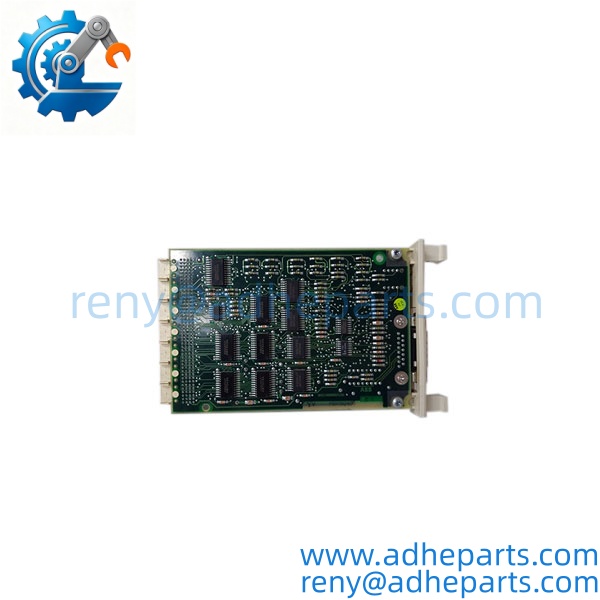
CS513
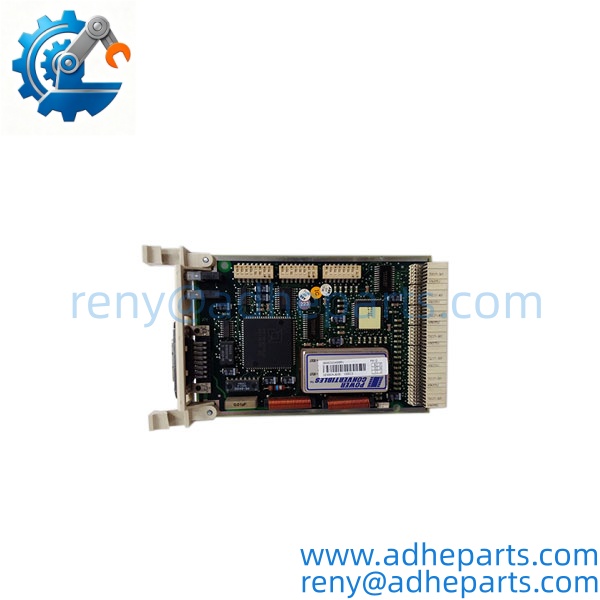
CS513
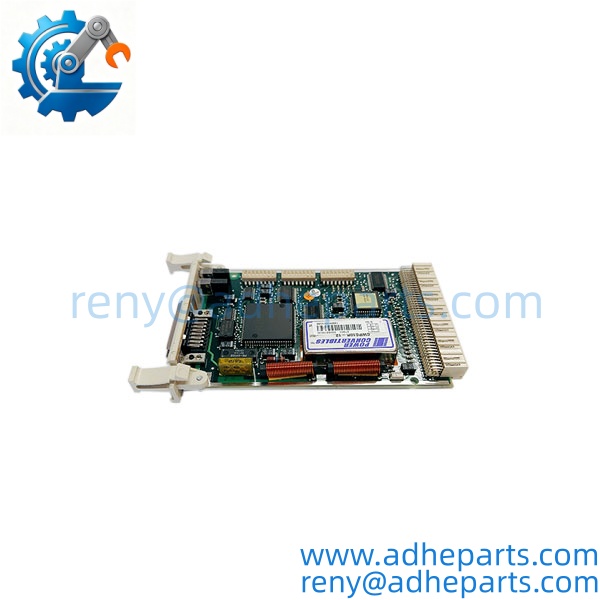
CS513
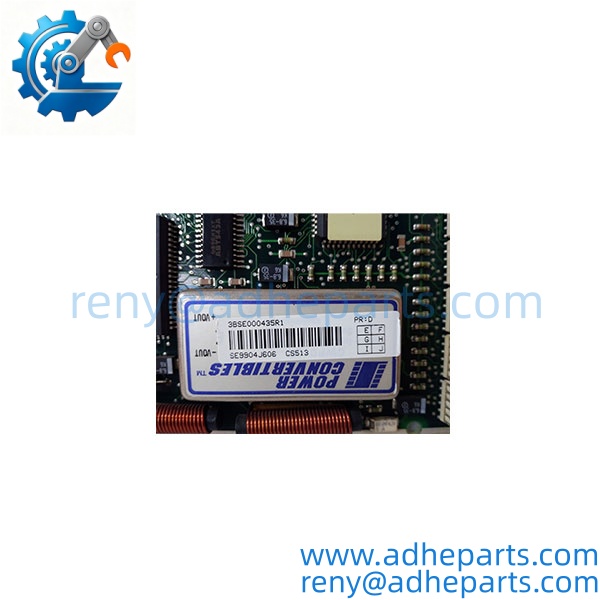
CS513
5. Application Scenarios & Field Experience
Part 1 – Narrative Paragraph
The failure that hurts most on a bus communication board is not a dead board — it is a board that drops frames under load. The controller runs, the operator station shows the process, and then the display freezes for a few seconds and recovers. The event log shows a bus error that clears on its own. I have seen that traced to a marginal transceiver on the communication board, not to a cable or a connector. The board passed every static test, and the fault only appeared when the bus traffic was high. On a legacy Advant system, that is the failure mode that keeps you guessing. When you replace a CS513, verify the node address and the bus medium before you power up, and check the bus error counters in the system log after the swap.
Part 2 – Numbered List (Application Scenarios)
- Power Generation – Operator Station Communication – The board carries the process data from the controller to the operator stations on the MB300 network. A failed board leaves the operator without a live view of the unit, even though the controller keeps scanning.
- Pulp & Paper – Controller-to-Controller Data Exchange – Used where multiple Advant controllers share data over the MB300 bus for coordinated control across a machine line. The CS513 handles the peer-to-peer traffic.
- Metals – Mill Line Controller Network – The board connects the mill line controller to the operator interface and the engineering workstation. The dual-bus support provides a redundant path when the cabinet is wired for it.
- Water Treatment – Plant-Wide SCADA Interface – Used where an Advant controller feeds a central SCADA system over the MB300 bus. The board’s diagnostics help isolate a bus fault to a specific node.
Part 3 – Short Field Story
A pulp mill in the Southeast had an Advant system where the operator station would freeze for a few seconds every few hours. The crew had replaced the bus cable and the terminator, and the freeze kept happening. We asked them to check the bus error counters in the system log. The error rate pointed to a single node — the controller with the CS513 board. The transceiver on the board had degraded, and it was corrupting frames under high traffic. The plant replaced the board, set the node address to match the original, and the freezes stopped. The board had passed every static test — the failure only showed up under load.
6. Standard Operating Procedure (SOP) for Quality Control
- Visual & Origin Inspection – We verify the ABB marking, the model string, the 3BSE000435R1 order code, and the date code. We inspect the backplane connector and the bus connector for bent pins or corrosion. A board with a cracked connector shroud or evidence of rework is rejected.
- Revision and Configuration Documentation – We read and photograph the full model string, the firmware revision, the node address DIP switch settings, and any jumper positions. That record ships with the board so you can set the replacement to match the unit you are removing.
- Backplane Fit Verification – Each board is seated in a compatible test rack to confirm the connector engages fully and the retention mechanism holds. A board that fits loosely will cause intermittent backplane faults.
- Power-Up Self-Test – The board is powered in a live rack and we verify it completes its boot sequence and that the controller recognizes the board type without a fault.
- Bus Communication Test – The board is connected to a MasterBus 300 test network with a known partner node. We run a continuous data exchange loop and log the bus error counters. Zero errors over the test period is the pass criterion.
- Node Address Verification – We verify the board responds at the configured node address and that the address matches the setting recorded from the original board.
- Connector Integrity Test – We mate and unmate the backplane connector and the bus connector ten times to confirm the contacts do not deform and the retention mechanism holds.
- ESD-Safe Packaging – The board is wrapped in anti-static film, seated in a conductive foam insert with the connectors protected by rigid shrouds, and packed in a double-wall carton with static warning labels.
7. Frequently Asked Questions (FAQ)
Q1: Is the the same as the CS513A or another revision?
A: The family includes several revisions, and the suffix on the board label determines which one you have. The 3BSE000435R1 order code identifies a specific build, but you must match the full string on your existing board before you order. A different revision may have a different firmware image or a different bus connector. If you send us a photo of the board label, we will confirm the match.
Q2: What is the node address setting, and do I need to change it?
A: The node address is set by DIP switches or jumpers on the board, and it identifies the controller on the MasterBus 300 network. The replacement board ships with a factory default address that will not match your system. Record the address from the board you are removing and set the replacement to match before you install it. An address mismatch will keep the controller off the bus.
Q3: What is the warranty on this board?
A: We offer a 12-month warranty from the ship date. It covers transceiver failure, backplane connector failure, and bus connector failure under normal operating conditions. It does not cover damage from hot-swapping the board with the rack energized, bent pins from forced insertion, or ESD damage from handling without a wrist strap. We test every board on a live MasterBus 300 network before it ships.
Q4: Do you have this exact order code in stock?
A: Legacy MasterPiece and Advant inventory moves and varies by build. Confirm availability before you plan an outage. If we do not have the 3BSE000435R1 variant, we will tell you what we do have and whether a different revision would suit your rack.
Q5: Any installation pitfalls I should watch for?
A: Four. First, power down the rack before inserting or removing the board — these boards are not hot-swap capable. Second, record the node address, the jumper settings, and the firmware revision from the old board before you remove it. Third, verify the bus medium — coaxial or twisted pair — matches the board’s connector and termination. Fourth, after the swap, check the bus error counters in the system log before you return the process to service. A board that powers up is not necessarily communicating correctly.