Description
Note: Many products are not yet listed. Please contact us for more product information. Our supply channels are constantly expanding, and we currently have 20 stable shared supply channels. Please confirm the model, product, price, and all other necessary information with customer service before placing an order. We offer new, refurbished, and used products, and prices are adjusted according to the year of the item you require.
Key Technical Specifications
| Parameter | Specification |
|---|---|
| Manufacturer | TRICONEX |
| Model | 3481 |
| Product Type | TMR Analog Output Module |
| System | Trident |
| Output Channels | 4 |
| Output Signal | 4–20 mA DC |
| Output Range | 0–22 mA over-range |
| Output Type | Commoned-return, DC-coupled |
| Architecture | Triple Modular Redundant (TMR) |
| Resolution | 12-bit |
| Output Accuracy | <0.25% of full-scale range within 4–20 mA |
| Diagnostic | Forced-Switch Diagnostic (FSD) |
| External Loop Power | 24 V DC nominal, 32 V DC maximum |
| Operating Temperature | 0 to 70°C |
| Typical Application | Final control elements and process actuators |
The published Trident documentation specifies four commoned-return 4–20 mA outputs, 12-bit resolution, TMR architecture, forced-switch diagnostics, and a 0–22 mA over-range capability. The specified accuracy is below 0.25% of full-scale range from 0 to 70°C.
Product Introduction (Anti-Template)
When a Trident system needs to send a controlled analog signal to a field device, the 3481 handles the output side of that loop. It provides four 4–20 mA channels using the Trident TMR architecture, with internal channel circuitry and diagnostics designed for safety-system operation.
This is not a general-purpose analog card for a conventional PLC rack. The module belongs to the Trident I/O architecture, so the exact baseplate, termination arrangement, field loop power, and installed system configuration should be checked before replacement.
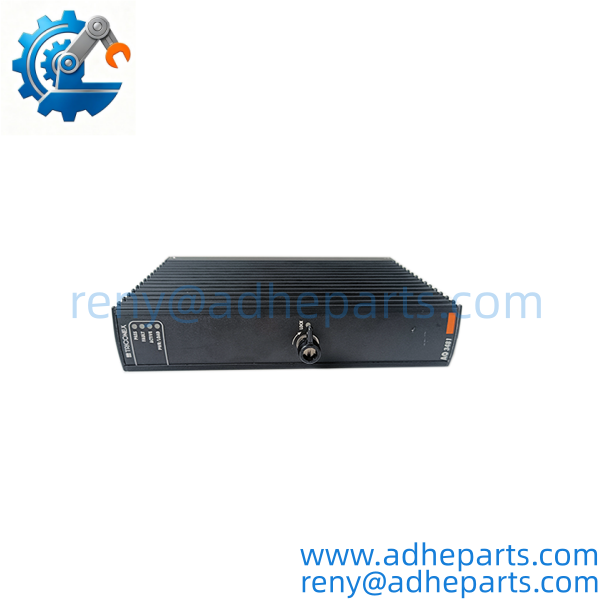
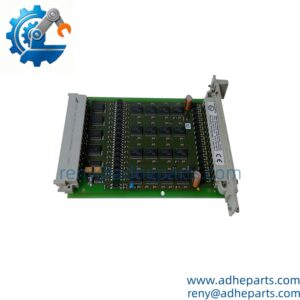
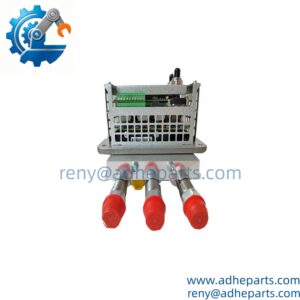
TRICONEX 3481
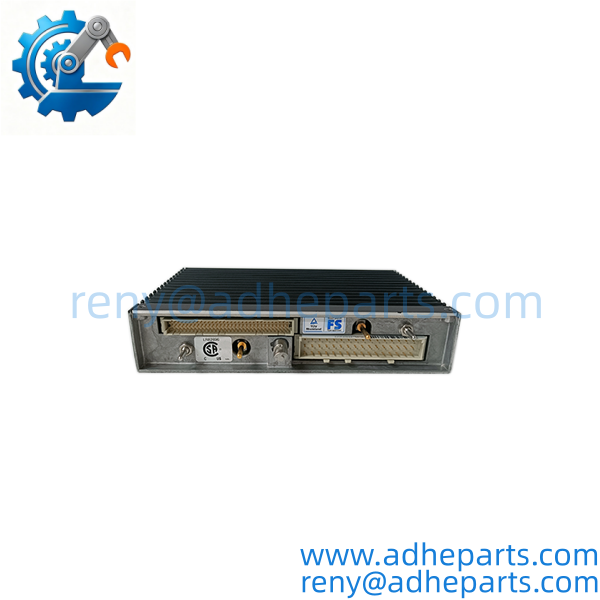
TRICONEX 3481
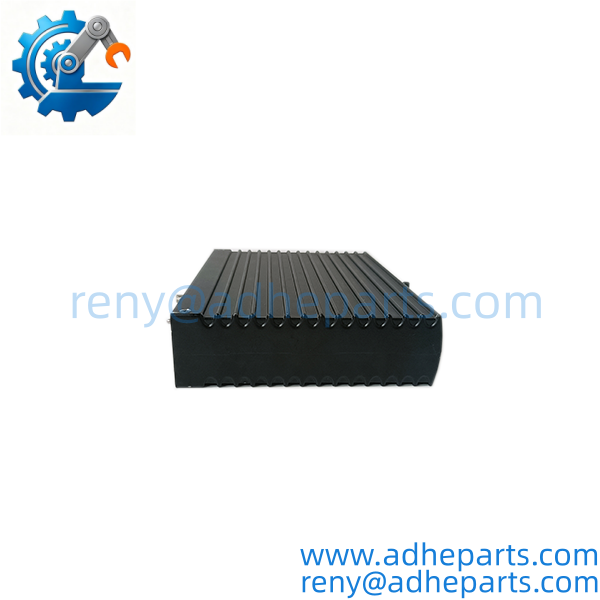
TRICONEX 3481
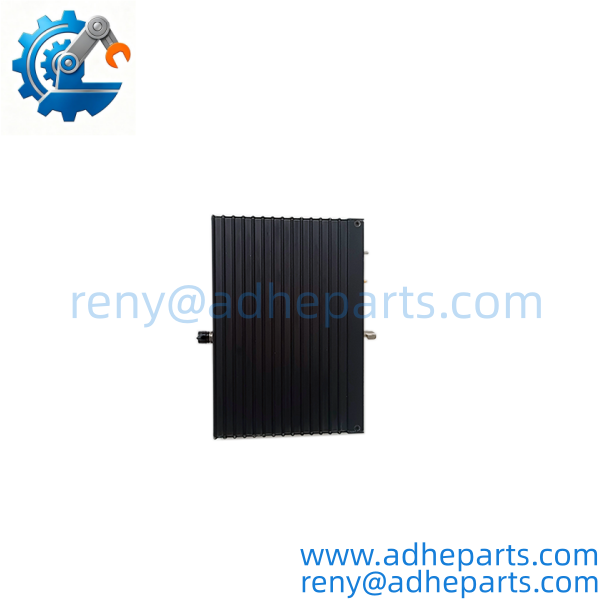
TRICONEX 3481
QC, Procurement & Logistics SOP
1) Inbound Verification
Verify the nameplate and module marking as TRICONEX 3481. Check the housing, connectors, terminal interface, labels, PCB condition, and revision information. For surplus inventory, the physical condition and exact part number should be recorded before shipment.
2) Live Rig Testing
Where the required test setup is available, verify module communication with the Trident I/O architecture and test the analog output channels against a controlled load. Check 4–20 mA output behavior and diagnostic response. Do not apply an improvised field voltage simply to “see if the card works”—the termination and loop-power arrangement matter.
3) QA & ESD Packaging
Use ESD-safe handling during inspection and packaging. Protect the connector area and PCB from impact, moisture, and static discharge. Record serial number, revision, test status, and packing condition before dispatch.
4) Procurement Check
Confirm that the customer’s existing system uses the appropriate Trident architecture and that the required baseplate/termination arrangement is compatible. Model 3481 is documented with Model 2481 as a typical analog-output baseplate; other termination configurations may be used depending on the installation.
5) Logistics & Export Compliance
For international shipments, confirm the commercial invoice description, country of origin, HS classification, declared value, and consignee import requirements before dispatch. The actual customs classification should be confirmed against the destination country’s tariff rules rather than copied blindly from another shipment.
6) Secure Air/Sea Packaging
For air freight, use anti-static protection plus rigid cushioning and a moisture-resistant outer package. For larger control-system orders, additional shock protection should be used so the module cannot move inside the carton during transportation.
Technical Pitfalls & Integration Warnings
1) Do not confuse 3481 with a communication module.
Some online listings incorrectly describe TRICONEX 3481 as a communication or serial interface module. The Trident planning documentation identifies 3481 as an Analog Output Module, while Model 3201 is the communication module.
2) Verify the loop-power arrangement.
The 3481 uses external loop power. The published specification gives 24 V DC nominal and 32 V DC maximum. Load resistance and available loop voltage must be checked before commissioning.
3) Check the termination/baseplate configuration.
A correct module number alone does not guarantee installation compatibility. The Trident I/O baseplate and field termination arrangement must match the customer’s existing hardware.
4) Do not assume another 348x module is interchangeable.
The 3482 is a different high-current analog output module, with two 4–20 mA and two 4–40 mA outputs. It should not be treated as a direct substitute for the 3481 without system-level verification.
Frequently Asked Questions (FAQ)
Q1: What does the TRICONEX 3481 do?
It is a four-point TMR analog output module for Trident systems, providing 4–20 mA analog signals.
Q2: Is TRICONEX 3481 a communication module?
No. The Trident documentation identifies 3481 as an Analog Output Module. The Trident communication module is Model 3201.
Q3: How many analog outputs does the 3481 have?
It provides four analog output points.
Q4: Does the 3481 support 4–20 mA?
Yes. Its specified output is 4–20 mA, with a 0–22 mA over-range capability.
Q5: Can I replace a 3481 with a 3482?
Not automatically. The 3482 has a different output configuration and higher-current capability. Confirm the application, wiring, baseplate, and system configuration before considering substitution.
Q6: Can the module be hot-swapped?
Do not assume hot-swapping is safe simply because the module is part of a redundant safety system. Follow the site-specific Trident maintenance procedure and confirm the installed system configuration before removing or inserting an I/O module.
Q7: What should I provide when requesting a replacement 3481?
Provide the complete part number, module label/photo, revision if visible, existing baseplate or termination information, and the Trident system configuration. This helps avoid sending a physically similar but electrically incompatible module.