Description
Note: Many products are not yet listed. Please contact us for more product information. Our supply channels are constantly expanding, and we currently have 20 stable shared supply channels. Please confirm the model, product, price, and all other necessary information with customer service before placing an order. We offer new, refurbished, and used products, and prices are adjusted according to the year of the item you require.
3. Key Technical Specifications
| Parameter | Value |
|---|---|
| Model | 140CRA93100 |
| Brand | Schneider Electric (Modicon) |
| Product Family | Modicon Quantum (140 series) |
| Module Type | Remote I/O drop adapter (CRA) |
| Network Type | Modicon Quantum RIO bus — coaxial |
| Channels | Single channel — for redundant networks, the dual-channel 140CRA93200 is required |
| Data Rate | 1.544 Mbps |
| Connector | F-type coaxial connector for RG-6 cable |
| Cable Type | 75 Ω RG-6 coaxial — verify the cable spec against the OEM installation guide |
| Maximum Drops per Network | Up to 31 remote drops — verify against the head module and CPU model |
| Maximum Network Length | Up to 15,000 ft (4,575 m) total network — verify against the OEM network layout rules |
| Cable Termination | 75 Ω terminators required at both physical ends of the network |
| Rack Position | First slot of the remote drop rack — no CPU slot |
| Compatible Remote Racks | 140XBP00600, 140XBP01000, 140XBP01600 (6-, 10-, and 16-slot Quantum racks) |
| Compatible RIO Head Modules | 140CRP93100 (single-channel) / 140CRP93200 (dual-channel) — verify the head module in your main rack |
| Power Supply | A 140CPS supply module is required in the remote rack; the CRA draws from the backplane |
| Backplane Current (5V DC) | Verify with OEM datasheet — confirm the rack power budget |
| Status Indicators | RIO communication status and fault LEDs — verify arrangement on your build |
| Hot Swap | Not supported — power down the rack before insertion or removal |
| Operating Temperature | 0 °C to +60 °C |
| Storage Temperature | –40 °C to +85 °C |
| Humidity | 0% – 95% RH, non-condensing |
| Weight | Verify with OEM datasheet |
| Certifications | UL 508, CSA C22.2, CE, FM Class I Div 2 — verify on the specific unit’s label |
4. Product Introduction
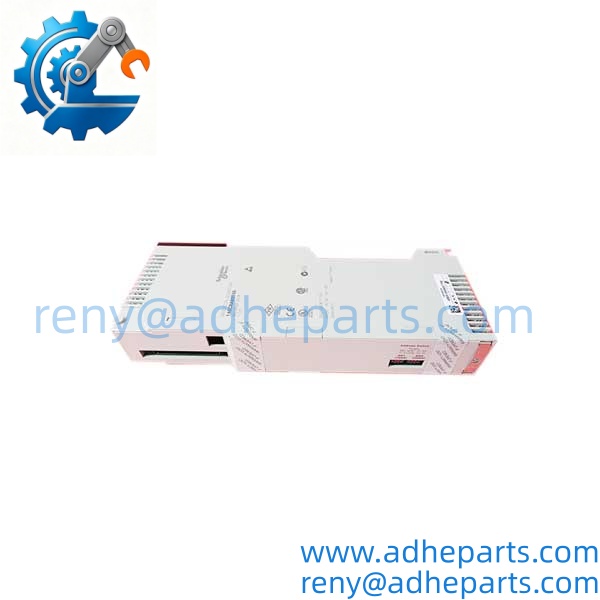
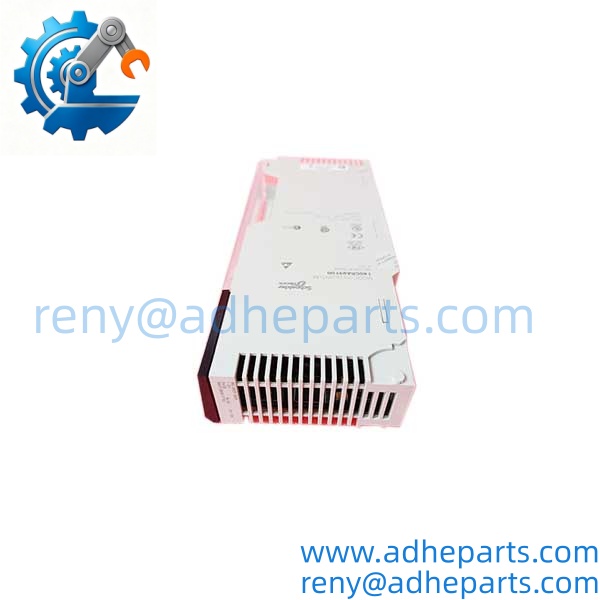
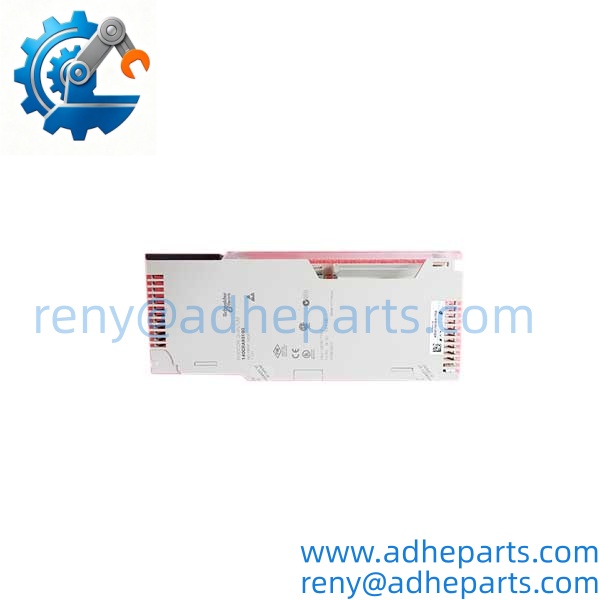
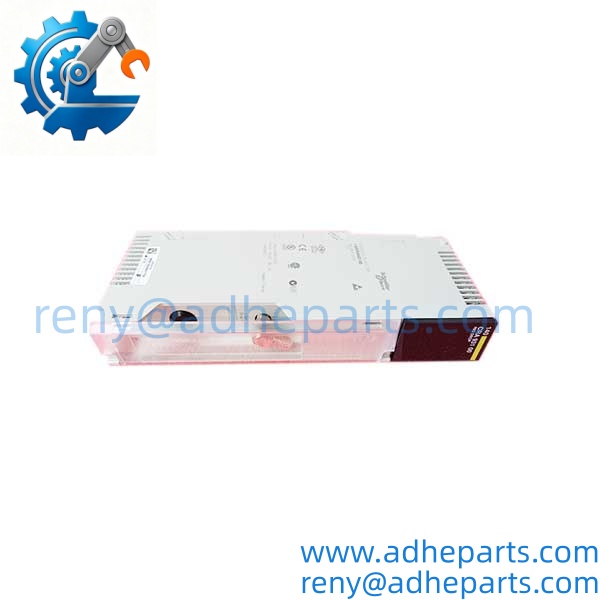
The Schneider Electric 140CRA93100 is the remote I/O drop adapter for the Modicon Quantum platform. It sits in the first slot of a remote Quantum rack and connects that rack to the controller’s RIO network over a single 75 Ω coaxial cable. From the CPU’s point of view, the remote rack’s I/O appears at the addresses configured for that drop.
The engineering value is the reduction in home-run wiring. Instead of pulling every field conductor back to the main control panel, you put a Quantum rack near the process, power it with its own 140CPS supply, and run one coaxial cable back to the RIO head module in the main rack. On a large plant, that replaces hundreds of conductors with one cable per drop.
Two things decide whether a swap works. First, single versus dual channel. The 140CRA93100 is a single-channel adapter — if your network is wired for redundancy, you need the 140CRA93200 and a matching dual-channel head module. Second, the coaxial termination. A 75 Ω terminator is required at each physical end of the network. A missing terminator causes intermittent communication faults that look like a failing adapter.
140CRA93100
140CRA93100
140CRA93100
140CRA93100
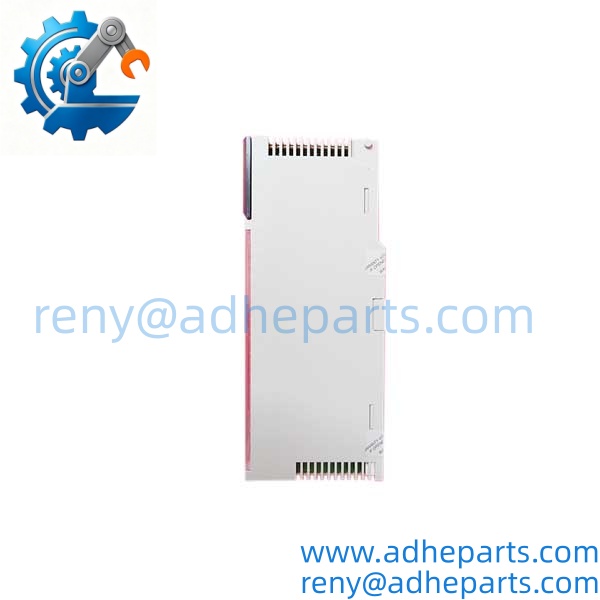
140CRA93100
5. Application Scenarios & Field Experience
Part 1 – Narrative Paragraph
The failure that takes down a remote drop is rarely the adapter itself. More often it is a coaxial connector that has corroded, a terminator that has been removed, or a cable that has been pinched during a panel modification. I have seen a plant replace three CRA modules chasing an intermittent RIO fault that turned out to be a loose F-type connector on a cable that had been rerouted a month earlier. The adapter was reporting the fault correctly. Before you order a replacement, check the cable, both terminators, and the connector seating at the head module and the drop adapter. That check takes twenty minutes and costs nothing.
Part 2 – Numbered List (Application Scenarios)
- Water Treatment – Remote Pump Station I/O – A pump station 800 ft from the main control room has its own Quantum rack with the CRA93100. The station’s digital and analog I/O appears in the main CPU’s address space over one coaxial cable, replacing a large multi-conductor run.
- Power Generation – Boiler and Turbine Auxiliary Racks – The remote rack sits in the auxiliary equipment room with the CRA adapter, while the main rack with the CPU and RIO head stays in the control room. This keeps field cable runs short in a crowded plant.
- Pulp & Paper – Machine Floor I/O – Racks are distributed along the machine line near the drives and sensors, each with a CRA adapter and its own 140CPS supply. The controller sees them as drops on one RIO network.
- Metals – Mill Stand Control Cabinets – A remote rack near the mill stand handles the local I/O, and the CRA adapter carries the data back over coax to the main control panel. The remote rack keeps the field wiring out of the main cabinet.
Part 3 – Short Field Story
A municipal water authority had a remote pump station that would lose communication for a few minutes every week. The maintenance team replaced the CRA adapter and the fault came back. We asked them to check the terminators and the cable route. The coax had been rerouted during a roof repair and was pinched against a conduit, and one of the 75 Ω terminators had been removed during troubleshooting and never reinstalled. They replaced the cable section, reinstalled the terminator, and the dropouts stopped. The original adapter had been fine.
6. Standard Operating Procedure (SOP) for Quality Control
- Visual & Origin Inspection – We verify the Schneider Electric marking, the 140CRA93100 model string, and the date code. We inspect the backplane connector for bent pins and the F-type coaxial connector for damage or corrosion. A module with a cracked connector or evidence of moisture ingress is rejected.
- Module Type Verification – We confirm the module is the single-channel 140CRA93100 and not the dual-channel 140CRA93200. The two are not interchangeable on a redundant network, and a mislabeled unit is set aside.
- Rack Fit Verification – Each module is seated in a Quantum test rack to confirm the connector engages fully and the retention screw holds. A module that fits loosely will cause intermittent backplane faults.
- Power-Up Self-Test – The module is powered in a live rack and we verify it initializes and that the status LEDs show normal operation without a fault.
- RIO Network Test – The module is connected to a known-good RIO head over RG-6 coax with proper termination, and we verify the drop is recognized and the I/O exchanges data. We log the results over a continuous run.
- Communication Fault Behavior – We remove the coax at the drop end and verify the module reports the loss to the CPU. A module that communicates correctly but does not report a network loss is not acceptable.
- ESD-Safe Packaging – The module is wrapped in anti-static film, seated in a conductive foam insert with the connectors protected, and packed in a double-wall carton with static warning labels.
7. Frequently Asked Questions (FAQ)
Q1: What is the difference between the 140CRA93100 and the 140CRA93200?
A: The 140CRA93100 is the single-channel coaxial adapter. The 140CRA93200 is the dual-channel version used on redundant RIO networks. If your network is wired for redundancy, you need the 93200 and a matching dual-channel head module such as the 140CRP93200. Do not substitute a single-channel adapter on a redundant network — you lose the redundancy and the CPU may report a configuration fault.
Q2: What does the remote rack need besides the CRA adapter?
A: The remote rack needs a 140CPS power supply module, the I/O modules, and the CRA adapter in the first slot. The CRA does not have its own power supply and draws from the rack backplane. Size the 140CPS for the full module load in that rack, including the CRA itself.
Q3: What cable and terminator should I use?
A: The Quantum RIO network uses 75 Ω RG-6 coaxial cable with F-type connectors. A 75 Ω terminator is required at both physical ends of the network. Use the cable type and terminator specified in the OEM installation guide — a mismatched cable impedance or a missing terminator causes intermittent faults that are hard to diagnose.
Q4: What is the warranty on this module?
A: We offer a 12-month warranty from the ship date. It covers component failure, backplane connector failure, and coaxial connector failure under normal operating conditions. It does not cover damage from hot-swapping the module with the rack energized, bent pins from forced insertion, or field faults caused by a missing terminator or a damaged cable. Every module is tested on a live RIO network before it ships.
Q5: Any installation pitfalls I should watch for?
A: Four. First, power down the remote rack before inserting or removing the module — the CRA is not hot-swap capable, and pulling it live will drop the entire drop’s I/O. Second, confirm the rack has its own 140CPS supply sized for the load; a remote rack powered from the main rack’s supply will not work. Third, verify both 75 Ω terminators are installed, one at each physical end of the network. Fourth, after the swap, verify the drop is recognized and the I/O is scanning before you return the process to service. A module that powers up is not necessarily communicating with the controller.