Description
Note: Many products are not yet listed. Please contact us for more product information. Our supply channels are constantly expanding, and we currently have 20 stable shared supply channels. Please confirm the model, product, price, and all other necessary information with customer service before placing an order. We offer new, refurbished, and used products, and prices are adjusted according to the year of the item you require.
3. Key Technical Specifications
Do not order against this table alone. I cannot confirm the exact channel count, the supported sensor types, and the input signal conditioning from the model number. Match every line against the OEM datasheet and the label on your existing module.
| Parameter | Value |
|---|---|
| Model | IS220PVIBH1A |
| Brand | GE |
| Product Family | Speedtronic Mark VIe |
| Module Type | Vibration Input I/O Pack (PVIB) |
| Input Channels | Verify with OEM datasheet — confirm on the module label |
| Input Signal Types | Proximity probe (eddy current), accelerometer, velocity — verify supported types |
| Input Voltage Range | Verify with OEM datasheet |
| Frequency Response | Verify with OEM datasheet |
| A/D Resolution | Verify with OEM datasheet |
| Measurement Parameters | Overall vibration, gap voltage, 1X amplitude and phase, 2X, nX — verify firmware capability |
| Isolation | Verify — channel-to-channel and channel-to-ground |
| Communication Ports | 2 x RJ45, 100 Mbps full-duplex IONet Ethernet (dual redundant) |
| Terminal Board Connector | DC-37-pin connector to matching vibration terminal board |
| Compatible Terminal Boards | Verify — likely TVIB or similar; confirm part number against your rack |
| Power Supply | 24V DC nominal via backplane — verify range |
| Power Consumption | Verify with OEM datasheet |
| Status Indicators | Power, attention/fault, per-channel vibration status, ENET1/ENET2 link/activity |
| Configuration Software | GE ToolboxST / ControlST — verify supported version |
| Operating Temperature | –30 °C to +65 °C (typical — verify) |
| Storage Temperature | –40 °C to +85 °C (typical — verify) |
| Humidity | 5% – 95% RH, non-condensing |
| Mounting | Mark VIe I/O pack rack slot |
| Hot Swap | Supported in redundant configurations — follow OEM procedure; not hot-swap capable in simplex |
| Weight | Verify with OEM datasheet |
| Certifications | UL, CE, ATEX / Class I Div 2 hazardous area rated — verify on the unit label |
4. Product Introduction
The GE IS220PVIBH1A is a vibration input I/O pack for the Speedtronic Mark VIe turbine control platform. It acquires vibration signals from proximity probes and accelerometers mounted on turbine bearings and casings, conditions those signals, and transmits the digitized data to the central controller over dual redundant IONet Ethernet. It is the module that gives the controller its picture of the machine’s mechanical condition.
The engineering value is the combination of local signal processing and the dual network path. The module filters and digitizes the vibration signals locally, extracting overall amplitude, gap voltage, and harmonic components before sending the data to the controller. That reduces the processing load on the main processor and keeps the vibration data available even if one IONet segment drops. In my experience, the most common cause of a false vibration trip is not the module — it is a degraded probe, a cable fault, or a ground loop on the field wiring. The PVIB pack reports those conditions as channel faults, which lets the operator isolate the problem before it trips the unit.
Two things decide whether a swap works. First, the terminal board. The IS220PVIBH1A does not land field wiring directly — it mates with a vibration terminal board through a DC-37-pin connector. The terminal board part number must match your probe wiring configuration. Second, the firmware revision. The vibration parameters and the alarm setpoints live in the rack configuration, not in the module, but the module firmware must be compatible with the controller.
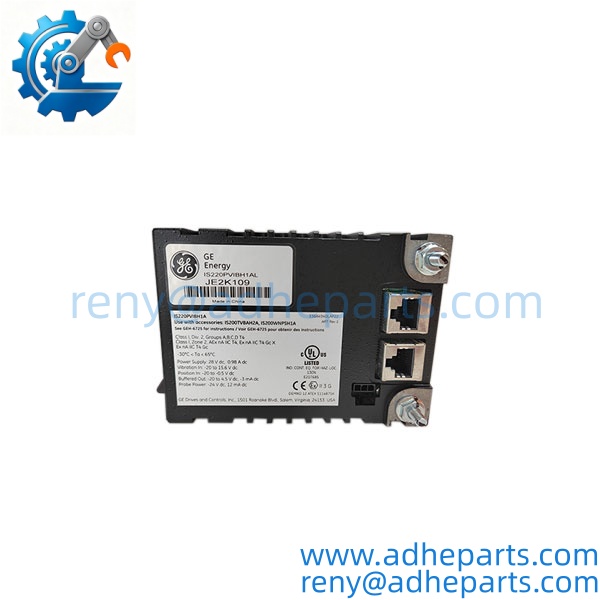
IS220PVIBH1A
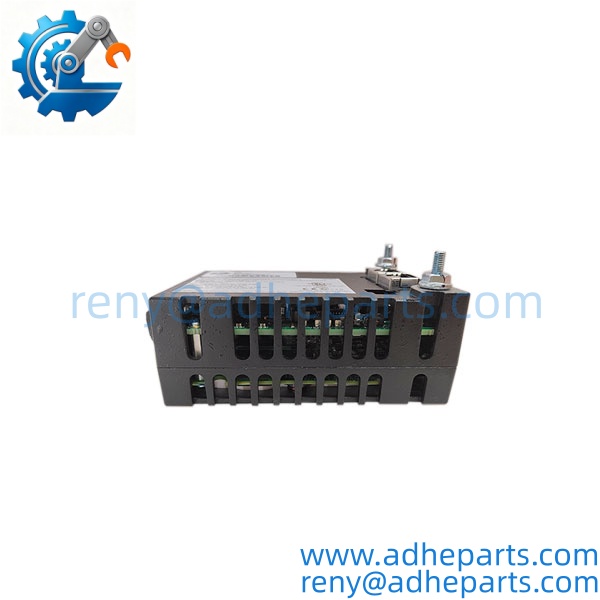
IS220PVIBH1A
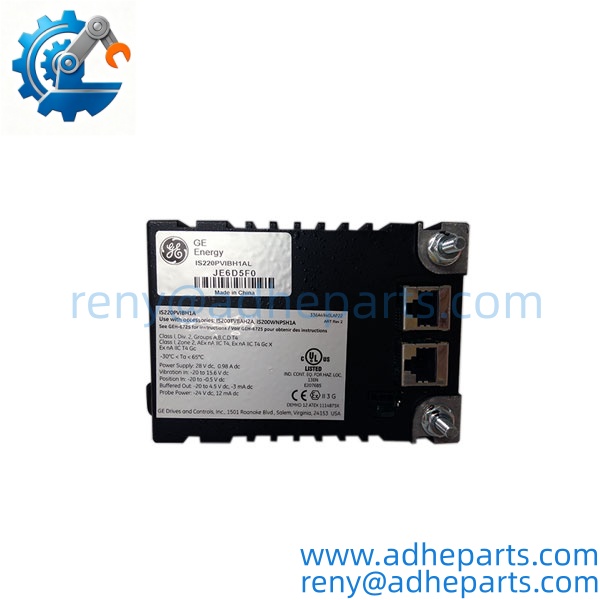
IS220PVIBH1A
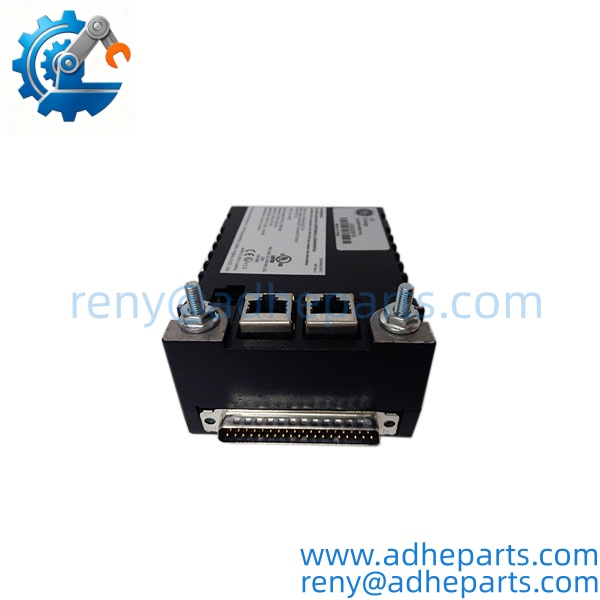
IS220PVIBH1A
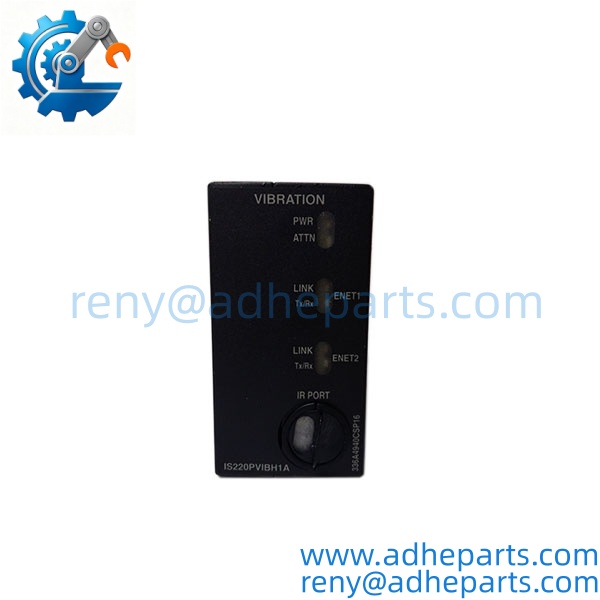
IS220PVIBH1A
5. Application Scenarios & Field Experience
Part 1 – Narrative Paragraph
The failure that hurts most on a vibration monitoring system is not a dead input channel — it is a channel that reads normal while the machine is degrading. The module still communicates, the alarm setpoints still evaluate, and the trend shows a flat line. I have seen that on a compressor where the proximity probe had lost its gap voltage reference and the module was reading a frozen value that looked like steady operation. The machine was actually developing a bearing fault, and the protection did not catch it. When you replace a PVIB module, verify the gap voltage and the sensor response on each channel against a known reference before you return the machine to service. A module that powers up is not necessarily measuring correctly.
Part 2 – Numbered List (Application Scenarios)
- Power Generation – Steam Turbine Bearing Monitoring – The module reads proximity probes on turbine bearings for shaft vibration, axial position, and eccentricity. The configurable setpoints drive the alarm and trip relays, and the harmonic data feeds the plant’s predictive maintenance program.
- Oil & Gas – Centrifugal Compressor Protection – Used to monitor radial vibration and thrust position on compressors. The isolated inputs prevent ground loops between the machine and the rack, and the dual IONet ports maintain communication through a single network fault.
- Petrochemical – Reciprocating Compressor Monitoring – The module reads velocity transducers and accelerometers on compressor frames and cylinders. The per-channel configuration allows one module to cover multiple measurement points on the same machine.
- Hydroelectric – Hydro Turbine Vibration – Used to measure shaft vibration and eccentricity on hydro units. The wide frequency response captures both the low-speed fundamental and the higher-frequency components that indicate cavitation.
Part 3 – Short Field Story
A gas plant had a centrifugal compressor that developed a bearing failure that the vibration system did not catch. The post-mortem showed the proximity probe channel had been reading a frozen value for weeks. The module reported no fault, the alarm never triggered, and the trend looked normal. When the plant replaced the IS220PVIBH1A module and re-verified the gap voltage on the new channel, the reading jumped to a healthy value — the old module’s front-end had failed in a way that produced a steady output rather than a fault. The plant now verifies gap voltage on every channel after a module replacement. That check takes two minutes and catches the failure mode that a self-test does not.
6. Standard Operating Procedure (SOP) for Quality Control
- Visual & Origin Inspection – We verify the GE marking, the IS220PVIBH1A model string, and the date code. We inspect the RJ45 ports and the rear DC-37 connector for bent pins or damage. A module with a cracked connector or evidence of moisture ingress is rejected.
- Revision and Firmware Documentation – We read and photograph the full model string, the firmware revision, and the board ID. That record ships with the module so you can compare it against the unit you are replacing.
- Rack Fit Verification – Each module is seated in a Mark VIe test rack to confirm the connector engages fully and the retention mechanism holds. A module that fits loosely will cause intermittent IONet faults.
- Power-Up Self-Test – The module is powered in a live rack and we verify it completes its boot sequence and that the controller recognizes the module type without a fault.
- Input Channel Verification – We inject calibrated vibration signals into each channel for each supported sensor type — proximity probe, accelerometer, and velocity. We verify the module’s reported overall amplitude and gap voltage against the reference. Accuracy must stay within the OEM specification.
- Alarm and Trip Verification – We drive each channel above and below its configured setpoints and verify the module reports the correct alarm and trip state to the controller.
- IONet Communication Test – The module is connected to a Mark VIe test network and we verify it communicates on both Ethernet ports at 100 Mbps full duplex. We run a continuous exchange loop and log any dropped frames.
- Diagnostic Function Test – We simulate an open sensor and a shorted sensor and verify the module reports the fault. A module that measures correctly but does not report faults is not acceptable for machinery protection.
- ESD-Safe Packaging – The module is wrapped in anti-static film, seated in a conductive foam insert with the connectors protected, and packed in a double-wall carton with static warning labels.
7. Frequently Asked Questions (FAQ)
Q1: What terminal board does the IS220PVIBH1A require?
A: The module mates with a vibration terminal board through a DC-37-pin connector. The specific compatible terminal board part number depends on your probe wiring configuration. I cannot confirm the exact terminal board from the module number alone. Check the terminal board part number in your existing installation and verify it matches the replacement. If you send us a photo of the terminal board label, we can confirm the match.
Q2: Can I mix sensor types on the same PVIB module?
A: That depends on the module build and the terminal board. Each channel is configured individually in the rack software, but the terminal board must support the sensor type you are connecting. Verify the supported sensor types against the OEM datasheet and your terminal board documentation before you order.
Q3: What is the warranty on this module?
A: We offer a 12-month warranty from the ship date. It covers input channel failure, IONet communication failure, and connector failure under normal operating conditions. It does not cover damage from hot-swapping the module in a simplex configuration, bent pins from forced insertion, or field wiring faults that cause a channel to fail. We test every module in a live Mark VIe rack across all supported sensor types before it ships.
Q4: Do you have this exact model in stock?
A: Mark VIe inventory moves quickly, and stock varies by revision. Confirm availability before you plan an outage. If we are out of the revision you need, we will tell you what we actually have rather than quote a date we cannot hold.
Q5: Any installation pitfalls I should watch for?
A: Four. First, power down the rack before inserting or removing the module in a simplex configuration — hot-swapping is only supported in redundant systems. Second, verify the terminal board part number matches your probe wiring before you install. Third, check the probe cables and connectors for damage or shielding problems before you install the replacement; a degraded probe signal will cause the new module to behave like the old one. Fourth, after the swap, verify the gap voltage and the vibration reading on each channel against a known reference before you return the machine to service. A module that powers up is not necessarily measuring correctly.