Description
Note: Many products are not yet listed. Please contact us for more product information. Our supply channels are constantly expanding, and we currently have 20 stable shared supply channels. Please confirm the model, product, price, and all other necessary information with customer service before placing an order. We offer new, refurbished, and used products, and prices are adjusted according to the year of the item you require.
3. Key Technical Specifications
| Parameter | Value |
|---|---|
| Model | IS220PPROH1A |
| Brand | GE |
| Product Family | Speedtronic Mark VIe / Mark VIeS |
| Module Type | Protection I/O Pack (PPRO) |
| Supply Voltage | 28V DC nominal; operating range 18–32V DC |
| Power Consumption | Typical 8W; max 11W |
| Peak Input Current | 380 mA |
| Speed Inputs | 3 independent channels; magnetic speed probes and Keyphasor pulse sensors |
| Speed Input Range | –15V to +15V DC |
| PT Input (SPRO/TPRO) | 0 to 138V AC, 5 to 66 Hz |
| Hardware Trip Response | <2 ms, independent of software scan cycle |
| Architecture | Simplex, Duplex, and Triple Modular Redundant (TMR) support |
| Ethernet Ports | 2 x 10/100 Mbps RJ45 IONet Ethernet (ENET1/ENET2) |
| Rear Connector | DB62 ribbon connector to terminal board |
| Matching Terminal Boards | IS200TREAH1A, IS200TREAH3A, IS200SPROH1A/2A, IS200TPROH1C/2C- |
| Isolation | 2000V AC galvanic isolation (field speed probe circuits to internal logic) |
| Configuration Software | GE ToolboxST / ControlST |
| Operating Temperature | –30 °C to +65 °C |
| Storage Temperature | –40 °C to +85 °C |
| Humidity | 5% – 95% RH, non-condensing |
| PCB Treatment | Factory acrylic conformal coating |
| Mounting | 35mm DIN rail lock-and-slide |
| Dimensions | Approx. 127mm H × 83mm W × 56mm D |
| Weight | Approx. 0.38 kg |
| Hot Swap | Fully hot-swappable in simplex/TMR Mark VIe racks |
| Certifications | CE marked, UL listed; ATEX / Class I Div 2 hazardous area rated |
4. Product Introduction
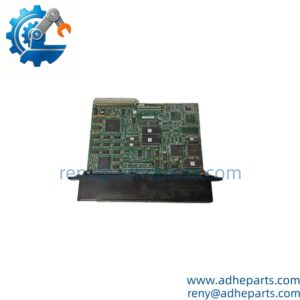
The GE IS220PPROH1A is a Protection I/O Pack (PPRO) for the Speedtronic Mark VIe and Mark VIeS distributed control and safety systems. It provides an independent, hardware-level backup protection layer dedicated to turbine emergency trip functions — overspeed, over-acceleration, and emergency shutdown — executing these functions separately from the main UCSA controller. The module is designed to operate even if the primary control processor fails.
The engineering value is the independent hardware trip path. Unlike general-purpose I/O modules that rely on software scan cycles for protective actions, the IS220PPROH1A contains dedicated hardware circuits that monitor speed transducer signals directly. When a trip threshold is exceeded, the hardware path executes the trip within microseconds — no software latency, no operating system dependency. The module also supports Triple Modular Redundant (TMR) configurations with three modules running simultaneously and voting two-out-of-three on the output, achieving SIL 3 safety integrity for the protection function.
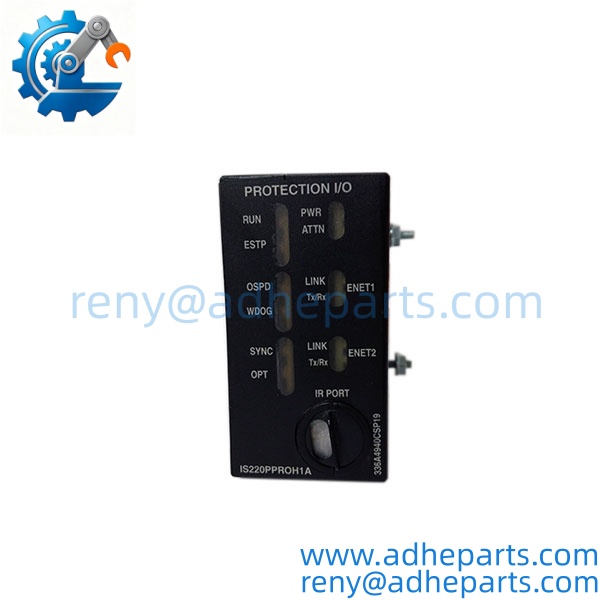
IS220PPROH1A
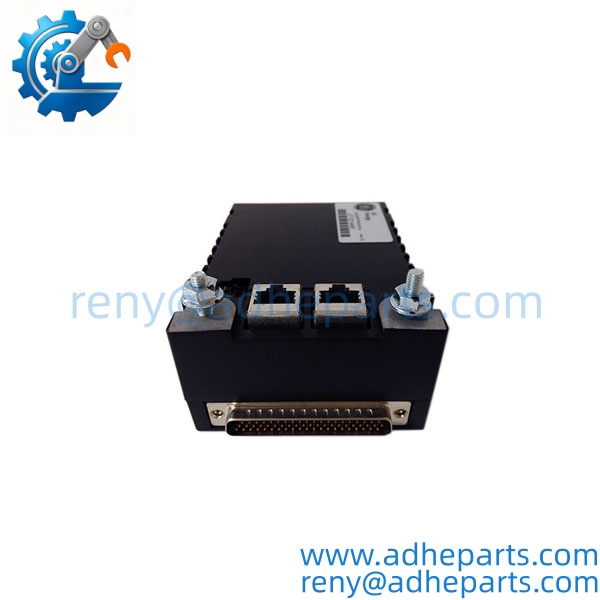
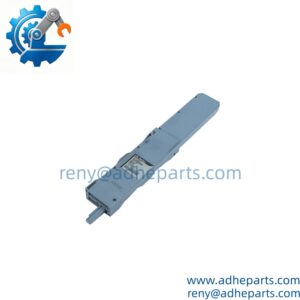
IS220PPROH1A
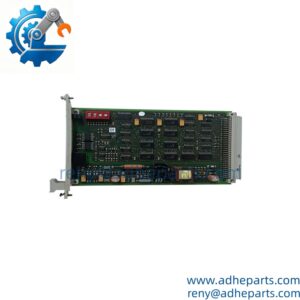
IS220PPROH1A
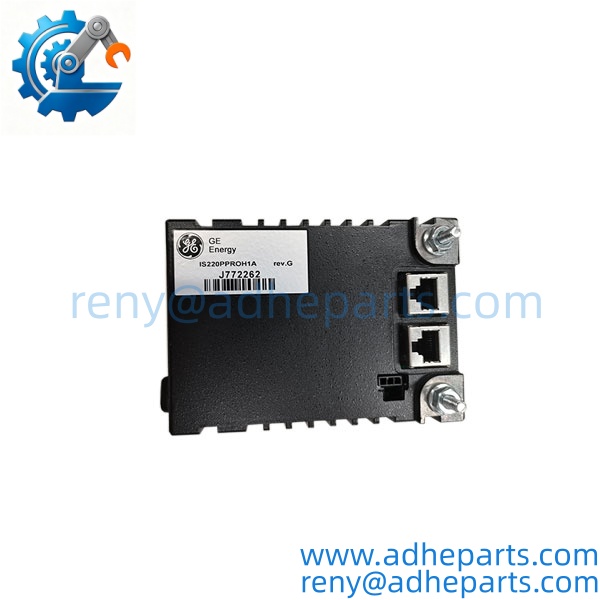
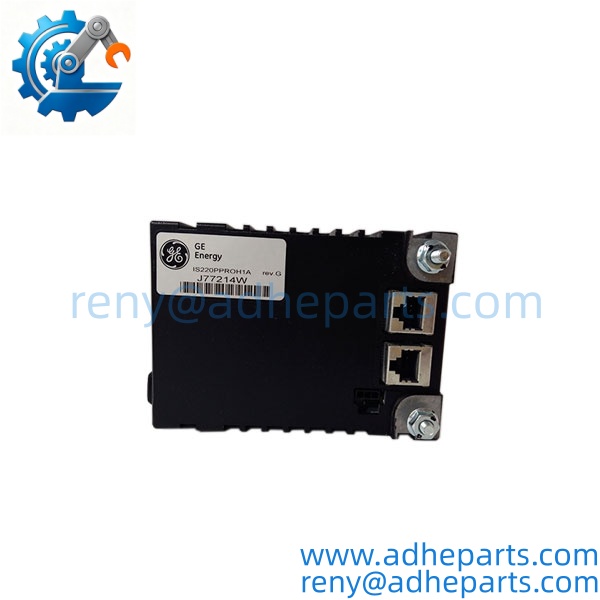
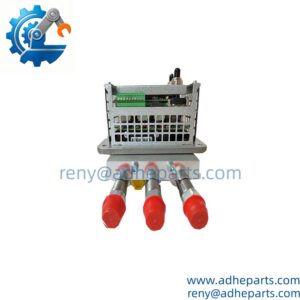
IS220PPROH1A
5. Application Scenarios & Field Experience
Part 1 – Narrative Paragraph
The failure that this module exists to prevent is catastrophic rotor overspin. On a gas or steam turbine, if the speed control loop fails and the fuel or steam admission valve stays open, the rotor can accelerate past its design limit within seconds. Blades can shed, the casing can rupture, and the damage runs into millions. The primary controller is supposed to prevent this, but a software crash, a network outage, or a CPU fault can disable the protection function. The IS220PPROH1A solves that by keeping the overspeed protection on a separate hardware path that does not depend on the main controller. Even if the primary CPU locks up, the PPRO pack still monitors the speed probes and still trips the fuel shutoff circuit.
Part 2 – Numbered List (Application Scenarios)
- Aeroderivative Gas Turbines – Emergency Trip System (ETS) – The PPRO pack executes the overspeed, over-acceleration, and emergency shutdown logic for aeroderivative turbines. It processes raw speed transducer signals and drives trip solenoid circuits via the TREA terminal board to prevent rotor overspin even if the primary control CPU fails.
- Heavy-Duty Gas Turbines – Independent Overspeed Protection – Used on Frame 7FA and 9FA machines as the backup protection layer. The module’s dedicated hardware circuits monitor turbine speed independently of the main controller and trip the fuel system if the speed exceeds the setpoint threshold.
- Steam Turbines – Emergency Shutdown and Synchronization Validation – The module provides independent backup overfrequency protection and validates generator-to-grid synchronization before the breaker is closed. The 0.05% speed measurement accuracy supports precise synchronization checks.
- Refinery and Petrochemical Compressors – Overspeed Trip – Used on critical compressor trains where overspeed can cause seal failure or rotor damage. The <2ms hardware trip response ensures the machine is stopped before mechanical damage occurs.
Part 3 – Short Field Story
A combined cycle plant had a gas turbine that tripped on overspeed during a load rejection event. The primary controller logged the event and the unit shut down safely. Post-event analysis revealed that the main UCSA controller had been in a communication fault state for approximately 200ms before the trip — a window during which software-based protection would have been blind. The IS220PPROH1A had executed the trip on its independent hardware path, cutting fuel to the combustors before the rotor exceeded the mechanical limit. The plant credited the PPRO pack with preventing blade damage and a multi-million-dollar repair.
6. Standard Operating Procedure (SOP) for Quality Control
- Visual & Origin Inspection – We verify the GE marking, the IS220PPROH1A model string, and the date code. We inspect the RJ45 ports and the rear DB62 connector for bent pins or damage. A module with a cracked connector or evidence of moisture ingress is rejected.
- Revision and Firmware Documentation – We read and photograph the full model string, the firmware revision, and the board ID. That record ships with the module so you can compare it against the unit you are replacing.
- Rack Fit Verification – Each module is seated in a Mark VIe test rack to confirm the connector engages fully and the retention mechanism holds. A module that fits loosely will cause intermittent IONet faults.
- Power-Up Self-Test – The module is powered in a live rack and we verify it completes its boot sequence and that the controller recognizes the module type without a fault.
- Speed Input Channel Verification – We inject calibrated speed signals into all three input channels and verify the module’s measured values match the reference. Accuracy must stay within the OEM specification.
- Hardware Trip Path Test – We simulate an overspeed condition and verify the hardware trip output executes within the specified response time, independent of the software scan cycle.
- IONet Communication Test – The module is connected to a Mark VIe test network and we verify it communicates on both Ethernet ports at 100 Mbps full duplex. We run a continuous exchange loop and log any dropped frames.
- Isolation Test – We apply the rated isolation voltage between the field speed probe circuits and the internal logic. Leakage current must stay below the datasheet limit.
- ESD-Safe Packaging – The module is wrapped in anti-static film, seated in a conductive foam insert with the connectors protected, and packed in a double-wall carton with static warning labels.
7. Frequently Asked Questions (FAQ)
Q1: What is the difference between the and the IS220PPROS1B?
A: The is the original version of the PPRO I/O pack. The IS220PPROS1B is the updated hardware variant that replaced the H1A in GE’s product line. The two are functionally similar, but the S1B variant includes updated hardware components. If your system was originally commissioned with the H1A, verify compatibility with the S1B before substituting. The H1A may still be available through surplus channels while the S1B is the current production part.
Q2: What terminal board does the require?
A: The module must be used with a TREAH-series terminal board. The compatible terminal boards include IS200TREAH1A and IS200TREAH3A. The PPRO pack will not operate correctly on a standard I/O baseplate — it requires the TREAH terminal board for the trip solenoid wiring and the speed probe connections. Verify the terminal board part number in your installation before ordering.-
Q3: Can the be hot-swapped in a running system?
A: Yes, in simplex or TMR Mark VIe racks, the module is fully hot-swappable. Full cabinet power lockout is not required for module replacement. However, in a simplex configuration, removing the module will disable the backup protection function for the duration of the swap. Follow your plant’s lockout/tagout and safety procedures before pulling the module.
Q4: What is the hardware trip response time?
A: The hardware overspeed trip threshold executes in less than 2 milliseconds, with no software latency delay. The module contains an independent watchdog circuit that locks the safety state on an internal module fault, ensuring the trip function remains available even if the module’s own processor fails.
Q5: Any installation pitfalls I should watch for?
A: Four. First, verify the terminal board part number matches your installation — the PPROH1A requires a TREAH-series board and will not function on a generic I/O baseplate. Second, check the speed probe wiring and shielding before you install the replacement; a degraded speed signal will cause the new module to behave like the old one. Third, record the firmware revision and board ID from the old module before you remove it. Fourth, after the swap, verify the module communicates on both IONet ports and that the hardware trip path is functional before you return the turbine to service. A module that powers up is not necessarily executing the protection function correctly.