Description
Note: Many products are not yet listed. Please contact us for more product information. Our supply channels are constantly expanding, and we currently have 20 stable shared supply channels. Please confirm the model, product, price, and all other necessary information with customer service before placing an order. We offer new, refurbished, and used products, and prices are adjusted according to the year of the item you require.
3. Key Technical Specifications
Confirm each line against the OEM datasheet and the label on your existing module before ordering. Channel count and isolation ratings have conflicting reports across sources — verify on your unit label.
| Parameter | Value |
|---|---|
| Model | IS220PDIAH1B |
| Brand | GE |
| Product Family | Speedtronic Mark VIe |
| Module Type | PDIA Discrete Contact Input I/O Pack |
| Input Channels | 24 discrete inputs (obsolete catalog IS220PDIAH1A replaced by IS220PDIAH1B — both listed as 24 inputs in GE’s official life-cycle notice)-1 |
| Input Type | Dry contact / 24V DC wet contact, sink or source compatible-2 |
| Supply Voltage (Module) | 24V DC nominal; range 22.5–28.6V DC- |
| Contact Input Voltage (Max) | 32V DC- |
| Input Current | Typically ~2.5 mA at 24V DC (verify with OEM datasheet) |
| Input Filter | Programmable 1–20 ms-15 |
| Sampling Period | ≤1 ms (configurable filter)-4 |
| Time Stamping Accuracy | ±100 μs (for SOE event recording)-4 |
| Isolation (Channel-to-Ground) | 2500 Vrms (per one source) — verify on your unit label-3 |
| Isolation (Channel-to-Backplane) | 1500 V DC channel-to-backplane; 500 V rms channel-to-channel (per another source) — verify-4 |
| Communication Ports | 2 x RJ45, 100 Mbps full-duplex IONet Ethernet (dual redundant)-2 |
| Terminal Board Connector | DC-37-pin connector to matching discrete input terminal board-15 |
| Compatible Terminal Boards | IS200STCIH1A/2A/8A, IS200TBCIH2C/H4C, IS400STCIH1A/2A/8A, IS400TBCIH2C-3 |
| Power Consumption | <10 W (verify with OEM datasheet)-3 |
| Status Indicators | PWR (green), ATTN (fault), DISCRETE IN (4 groups × 8 channel LEDs), ENET1/ENET2 Tx/Rx LINK-2 |
| Operating Temperature | –30 °C to +65 °C (ambient)-2 |
| Storage Temperature | –40 °C to +85 °C-2 |
| Humidity | 5% – 95% RH, non-condensing-2 |
| Mounting | Mark VIe standard I/O pack rack slot-2 |
| Hot Swap | Supported in redundant configurations — follow OEM procedure; not hot-swap capable in simplex-2 |
| Dimensions | Approx. 114 mm × 89 mm × 57 mm (verify on your unit)-3 |
| Weight | Approx. 0.42 kg-15 |
| Certifications | UL, CE, ATEX Zone 2 / Class I Div 2 hazardous area rated-3 |
4. Product Introduction
The GE IS220PDIAH1B is a discrete contact input I/O pack for the Speedtronic Mark VIe turbine control platform. It acquires dry-contact and 24V DC switch status signals from field devices — limit switches, interlock relays, push-buttons, and protective contacts — and transmits them to the central controller over dual redundant IONet Ethernet. The B revision replaced the obsolete A version in GE’s 2015 life-cycle update, and the two are backward-compatible and can be mixed in TMR systems-1.
The engineering value is the combination of local processing, dual-network redundancy, and SOE time-stamping. The module has its own processor that filters and digitizes field signals locally, then packages them for transmission — reducing the load on the main controller. The ±100 μs time-stamping accuracy supports sequence-of-events recording, which is critical for diagnosing turbine trips. The board also includes an onboard contact wetting circuit (28V DC, 3 mA) that burns through oxidation on dry contacts, ensuring reliable long-term conduction-4.
Two things decide whether a swap works. First, the terminal board. The IS220PDIAH1B does not land field wiring directly — it mates with a terminal board through a DC-37-pin connector. The terminal board part number must match your field wiring configuration. Second, the IONet network configuration. The module’s dual Ethernet ports must be addressed and connected correctly for the controller to recognize it.
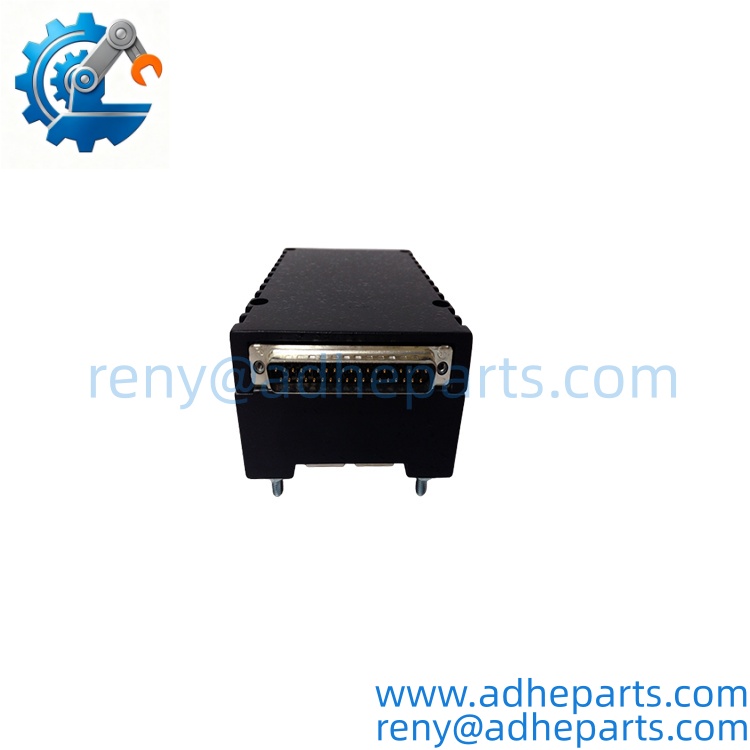
IS220PDIAH1B
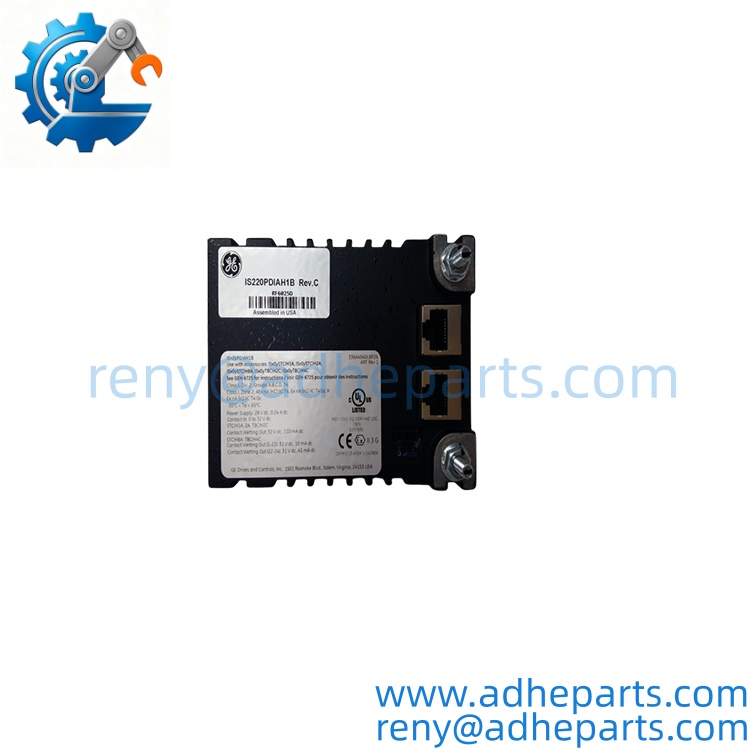
IS220PDIAH1B
5. Application Scenarios & Field Experience
Part 1 – Narrative Paragraph
The failure that causes the most nuisance trips on a turbine control system is not a dead input module — it is a channel that reads a false state because a dry contact has developed an oxide film. The switch is physically closed, but the signal does not pass, and the controller sees an “open” condition that trips the unit. I have seen that on a lube oil pressure switch that had been sitting closed for years. The contact oxidized, the resistance climbed, and the module read it as open. The IS220PDIAH1B solves that with its onboard wetting circuit — it pushes a small current through the contact to break through the oxide layer. That is the feature that keeps a dry-contact system reliable over decades of service.
Part 2 – Numbered List (Application Scenarios)
- Gas Turbine Control – Protective Contact Monitoring – The module reads lube oil pressure switches, flame detector contacts, and overspeed trip contacts. The dual IONet ports and TMR compatibility ensure the protection signals reach the controller even if one network segment fails.
- Steam Turbine Control – Valve Position and Limit Switch Feedback – Used to monitor valve end-of-travel switches, breaker status contacts, and auxiliary relay states. The SOE time-stamping records the exact sequence of events during a trip for post-mortem analysis.
- Combined Cycle Plants – Balance of Plant Interlocks – The module acquires interlock contacts from pumps, fans, and dampers across the balance-of-plant systems. The wide temperature range handles the uncontrolled climate of a turbine hall.
- Compressor Stations – Emergency Shutdown Inputs – Used to monitor ESD pushbuttons, gas detector contacts, and valve position feedback at remote compressor stations. The hazardous-area certification allows installation near the process.
Part 3 – Short Field Story
A combined cycle plant had a gas turbine that would not start because the controller read “lube oil pressure low” even though the mechanical gauge showed normal pressure. The maintenance team replaced the pressure switch and the wiring, and the fault persisted. We asked them to check the input module’s channel reading with the switch manually closed. The channel showed open. The dry contact inside the new switch had a light oxide film from storage, and the module’s wetting current was not configured high enough to break through it. The plant adjusted the wetting current setting, and the channel read closed. The module had been doing its job — the contact needed the wetting circuit to be properly configured.
6. Standard Operating Procedure (SOP) for Quality Control
- Visual & Origin Inspection – We verify the GE marking, the IS220PDIAH1B model string, and the date code. We inspect the DC-37-pin connector for bent pins and the RJ45 ports for damage. A module with a cracked connector shroud or evidence of moisture ingress is rejected.
- Revision and Firmware Documentation – We read and photograph the full model string, the firmware revision, and the board ID. That record ships with the module so you can compare it against the unit you are replacing.
- Rack Fit Verification – Each module is seated in a Mark VIe test rack to confirm the connector engages fully and the retention mechanism holds. A module that fits loosely will cause intermittent IONet faults.
- Power-Up Self-Test – The module is powered in a live rack and we verify it completes its boot sequence and that the controller recognizes the module type without a fault.
- Input Channel Verification – We apply a contact closure to each of the 24 input channels and verify the module reports the correct state. We test at both the dry-contact level and the 24V DC wetting level.
- Wetting Circuit Test – We verify the onboard contact wetting supply produces the specified voltage and current at the terminals. A module with a failed wetting circuit will not reliably read oxidized dry contacts.
- IONet Communication Test – The module is connected to a Mark VIe test network and we verify it communicates on both Ethernet ports at 100 Mbps full-duplex. We run a continuous exchange loop and log any dropped frames.
- SOE Time-Stamp Test – We verify the module’s time-stamping accuracy against a reference clock. The ±100 μs specification is critical for event sequence recording.
- ESD-Safe Packaging – The module is wrapped in anti-static film, seated in a conductive foam insert with the connectors protected, and packed in a double-wall carton with static warning labels.
7. Frequently Asked Questions (FAQ)
Q1: What is the difference between the and the IS220PDIIH1B?
A: Both are discrete input modules for Mark VIe, but they serve different applications. The is a non-isolated 24-channel contact input module for standard discrete signals. The IS220PDIIH1B is an isolated 16-channel input module with channel-to-channel isolation, used where SIL 3 safety inputs are required. The two are not interchangeable, and they use different terminal boards-1.
Q2: Will this module work with my existing Mark VIe rack without a firmware change?
A: The is backward-compatible with the older IS220PDIAH1A and can be mixed in TMR systems per GE’s official life-cycle notice-1. However, verify the controller firmware revision supports the B revision. If your system was commissioned with the A revision and has not been updated, check the GE compatibility documentation before ordering.
Q3: What terminal boards does the require?
A: The module mates with a range of terminal boards including the IS200STCIH1A/2A/8A and IS200TBCIH2C/H4C families-12. The terminal board part number must match your field wiring configuration — dry contact vs. wetting, fused vs. non-fused, and the number of channels. If you send us the terminal board part number from your existing installation, we can confirm the match.
Q4: What is the warranty on this module?
A: We offer a 12-month warranty from the ship date. It covers input channel failure, wetting circuit failure, IONet communication failure, and connector failure under normal operating conditions. It does not cover damage from hot-swapping the module in a simplex configuration, bent pins from forced insertion, or ESD damage from handling without a wrist strap. We test every module in a live Mark VIe rack across all 24 channels before it ships.
Q5: Any installation pitfalls I should watch for?
A: Four. First, power down the rack before inserting or removing the module in a simplex configuration — hot-swapping is only supported in redundant systems. Second, verify the terminal board part number matches your field wiring before you install. Third, check the DC-37-pin connector and the RJ45 ports for damage before mating. Fourth, after the swap, verify each input channel reads correctly and that both IONet links are active before you return the unit to service. A module that powers up is not necessarily communicating with the controller correctly.