Description
Note: Many products are not yet listed. Please contact us for more product information. Our supply channels are constantly expanding, and we currently have 20 stable shared supply channels. Please confirm the model, product, price, and all other necessary information with customer service before placing an order. We offer new, refurbished, and used products, and prices are adjusted according to the year of the item you require.
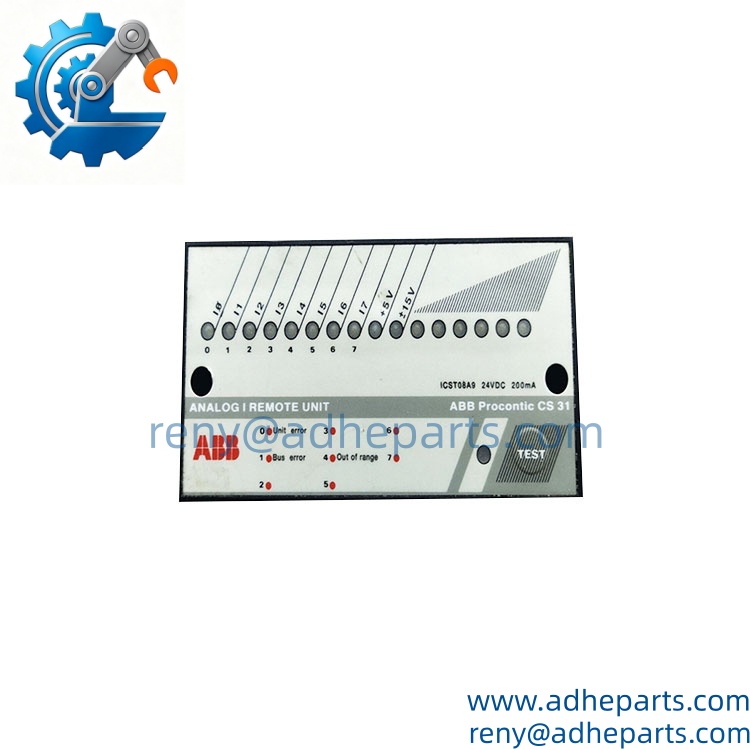
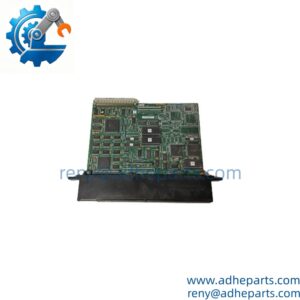
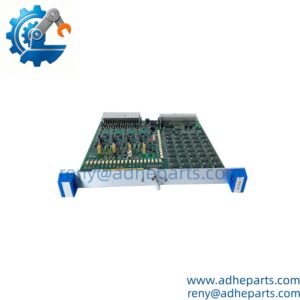
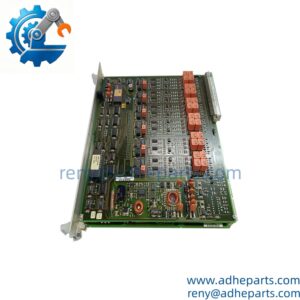
ABB ICST08A9 | MOD 300 Central Processing Unit
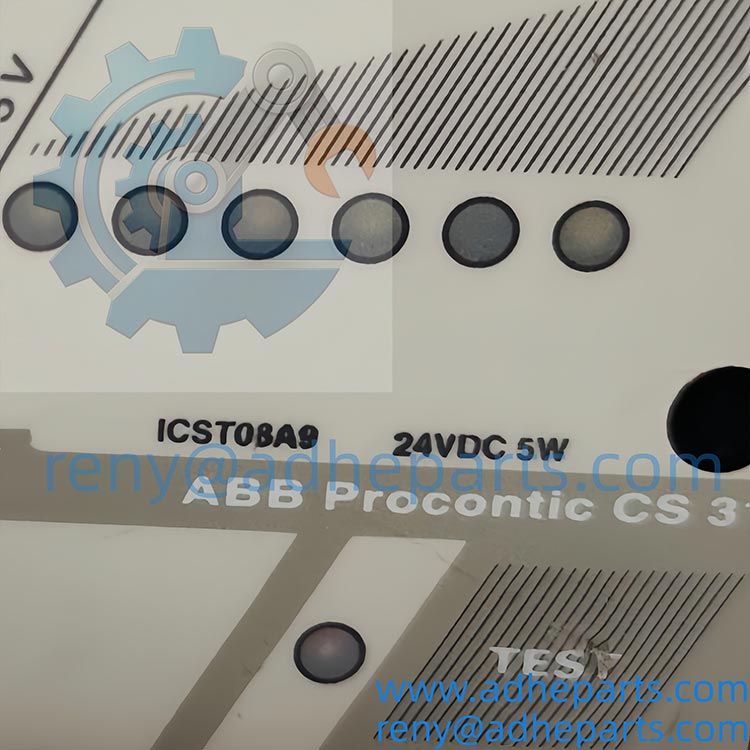
ABB ICST08A9 | MOD 300 Central Processing Unit
Key Technical Specifications
| Parameter | Value |
|---|---|
| Model | ICST08A9 |
| Brand | ABB |
| Product Family | MOD 300 (Advant MOD 300) |
| Processor | Motorola MC68000 (16‑bit, 10 MHz) |
| User Program RAM | 512 KB (battery‑backed, static RAM) |
| Firmware Storage | 1 MB EPROM (factory‑programmed) |
| Non‑Volatile Memory | 128 KB EEPROM (configuration retention) |
| Backup Battery | 3.6V lithium (retains RAM for ≥ 30 days) |
| Communication Ports | 2 x RS‑232 (9‑pin D‑sub) + 1 x RS‑485 (terminal block) |
| Protocols Supported | MODBUS RTU, ABB MOD‑BUS, proprietary MOD 300 peer‑to‑peer |
| I/O Capacity (Max) | Up to 512 digital I/O or 128 analog I/O (per controller) |
| Scan Time (Typical) | 50 ms for 1K logic + 100 I/O points |
| Diagnostic Indicators | RUN (green), STOP (yellow), ERROR (red), COMM (blinking green) |
| Mounting | MOD 300 rack (backplane via 2 x 64‑pin DIN connectors) |
| Power Consumption | 5V DC @ 1.2A (from backplane) |
| Operating Temperature | 0 °C to +60 °C |
| Storage Temperature | –40 °C to +85 °C |
| Humidity | 5% – 95% RH, non‑condensing |
| Weight | Approx. 0.7 kg (1.5 lb) |
| Certifications | UL 508, CSA, CE (EN 61010‑1) |
Product Introduction
The ABB ICST08A9 is the main processor module that sits at the heart of the MOD 300 distributed control system. It executes the user‑written control logic, scans the field I/O, manages peer‑to‑peer communications with other controllers, and handles host‑computer interface traffic. This is the module that runs your process—whether it is boiler control, turbine sequencing, or batch reactor management.
What makes the ICST08A9 a workhorse is its split memory architecture. The 1 MB EPROM holds the operating system firmware independent of the user’s application, while the 512 KB battery‑backed RAM stores your logic and setpoint data. If the plant loses power, the lithium battery retains your application for up to a month, so you do not need to reload from a workstation after every outage. The three communication ports give you flexibility—two RS‑232 ports for programming terminals or serial devices, and one RS‑485 port for field network connectivity or peer‑to‑peer controller links.
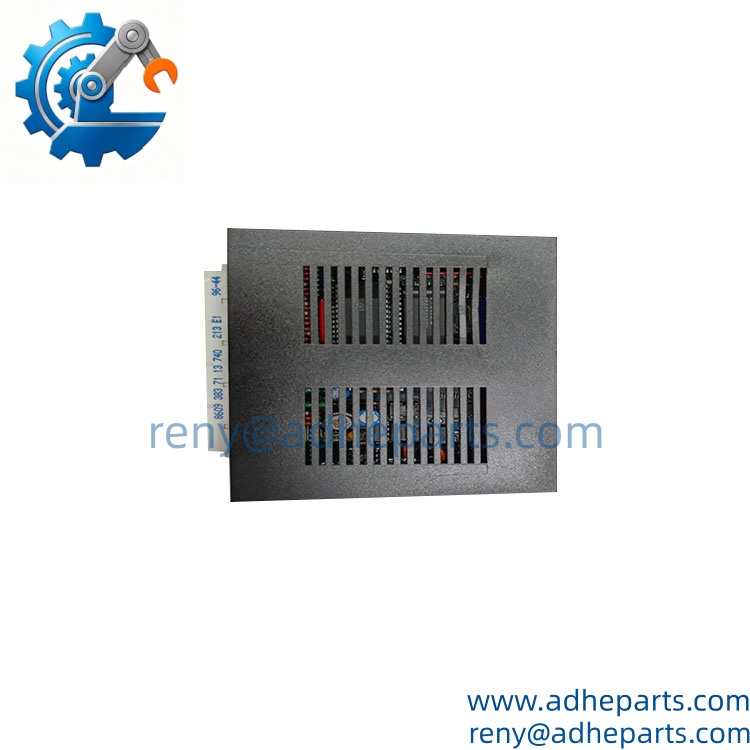
ABB ICST08A9 | MOD 300 Central Processing Unit
Application Scenarios & Field Experience
Part 1 – Narrative Paragraph
The worst failure scenario on a legacy DCS is not a blown fuse or a bad I/O card—it is a dead CPU that takes an entire process unit offline while you scramble to find a replacement. I have stood in a control room at 2 AM with operations breathing down my neck, staring at a “Processor Fail” LED on a MOD 300 rack, knowing the spare we had on‑site was actually a mismatched revision. The ICST08A9 is the module that gets you back online fast. It drops into the same rack, powers up, and if the firmware revision matches your existing system, the controller boots and loads your application from the battery‑backed RAM—often without even needing a restart of the attached operator stations.
Part 2 – Numbered List (Application Scenarios)
- Power Generation – Boiler Combustion Control – The ICST08A9 executes the cross‑limit logic for fuel and air modulation, scanning thermocouples and oxygen analyzers across the I/O bus. The 50 ms scan rate keeps the firing rate stable under load changes.
- Refining – Crude Unit Overhead Condenser Control – The processor runs PID loops for temperature and pressure cascades, with the RS‑485 port handling Modbus communication to a vibration monitoring system on the overhead compressor.
- Pharmaceutical – Fermentation Vessel Sequencing – The CPU manages batch recipes with step‑and‑hold logic, reading pH and dissolved oxygen inputs while writing valve states through digital output cards. The battery‑backed RAM ensures batch data survives a momentary utility bump.
- Water Distribution – Pump Station Automation – The ICST08A9 coordinates multiple variable speed pumps across a pressure control scheme. The RS‑232 ports send status data to a radio telemetry system, while the RS‑485 port talks to a remote RTU at a storage reservoir.
Part 3 – Short Field Story
A cogeneration plant in Texas had a MOD 300 controller that started logging intermittent “Watchdog Timer” faults—the CPU would halt for 200 ms and then recover, causing the steam pressure loop to spike every four to five hours. They tried swapping power supplies, re‑seating backplane connectors, and even replacing the I/O cards. Nothing worked. We brought in a known‑good , powered down the rack, swapped the processor, and powered back up. The controller booted, loaded the application from RAM, and the pressure loop held steady within ±0.3 psi for the next week. The faulty unit went to our test bench and revealed a failing capacitor on the timing circuit—something only a spare CPU could prove.
ABB ICST08A9 | MOD 300 Central Processing Unit
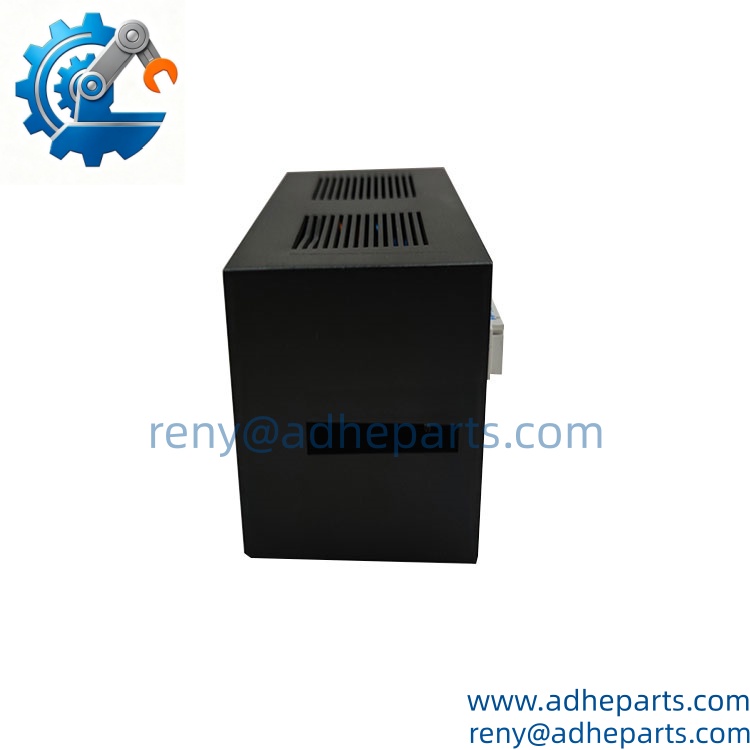
ABB ICST08A9 | MOD 300 Central Processing Unit
Standard Operating Procedure (SOP) for Quality Control
Every processor undergoes this eight‑step QC protocol before shipping:
- Visual & Origin Inspection – We verify the ABB mold marking, serial number laser‑engraving, and conformal coating consistency. We check the battery date code—if the lithium cell is more than 18 months old, we replace it with a fresh OEM‑spec unit before shipment.
- Backplane Connectivity Check – We inspect both 64‑pin DIN connectors for bent pins, corrosion, or solder joint cracks. Any connector damage results in immediate rejection.
- Power‑On Self‑Test – The module is inserted into a MOD 300 test rack with a known‑good power supply. We verify the RUN LED illuminates, the ERROR LED extinguishes after 5 seconds, and the diagnostic boot sequence completes to the “Ready” state.
- Memory Integrity Test – We download a test application via the RS‑232 port, write a known bit pattern into the entire 512 KB RAM, read it back, and compare. We also verify the EPROM checksum against the factory baseline.
- Battery Backup Validation – We disconnect backplane power and wait 60 seconds, then re‑apply. The test application must remain intact. We measure the battery terminal voltage under load—it must read above 3.2V.
- Serial Port Loopback Test – We connect a serial loopback plug to both RS‑232 ports and execute a transmit‑receive diagnostic. The RS‑485 port is tested with a Modbus master simulator to verify framing and addressing.
- Thermal Soak – The module is powered on in an environmental chamber at 60 °C for 2 hours while continuously scanning a test I/O load. We monitor for communication dropouts or memory parity errors.
- ESD‑Safe Packaging – The processor is placed in an anti‑static bag with a desiccant pack, surrounded by static‑dissipative foam, and packed in a double‑walled carton. The battery is secured against accidental shorting.
Frequently Asked Questions (FAQ)
Q1: Will the work as a direct replacement for an ICST08A5 or ICST08A7?
A: Mechanically, yes—same rack slot and backplane connectors. Electrically and logically, check your firmware revision. The is a later revision with more RAM (512KB vs. 256KB on earlier units). If your system configuration uses less than 256KB, it will work. If it relies on a specific firmware patch that shipped only with the older revisions, you may need to re‑flash the EPROM. We recommend cross‑checking the firmware version number on your existing CPU label and matching it to ours.
Q2: How do I transfer my existing application to the new ?
A: If your old CPU’s battery is still good, you can simply power down, swap the module, and power up—the new module will boot and if the application is stored in RAM, it will stay. However, if the old CPU is dead, you will need to download the application from the MOD 300 workstation using the serial programming port. We recommend backing up your logic to a floppy disk or PC file before performing any hardware swap—that is standard practice.
Q3: What is the warranty on this CPU, and does it cover the battery?
A: We provide a 12‑month warranty on the module itself—covering processor failure, memory faults, and communication port failures. The lithium battery is a consumable; we install a fresh cell before shipping, but its capacity degrades over time. We guarantee the battery holds RAM for at least 30 days from shipment. After that, it is on you to replace it every 2–3 years as part of routine preventive maintenance.
Q4: My MOD 300 system uses a different communication protocol—will the RS‑485 port support it?
A: The RS‑485 port defaults to ABB’s proprietary peer‑to‑peer protocol, but it can be configured via dip switches and software to support MODBUS RTU. However, you must set the baud rate and parity through the configuration terminal. We cannot pre‑configure it without knowing your specific setup. We ship the module with factory default settings (9600, 8‑N‑1, MODBUS slave). If your system uses a different protocol, plan to reconfigure it on first power‑up.
Q5: Any installation pitfalls I need to watch for?
A: Two big ones. First, always power down the entire rack before inserting or removing the —this module draws 1.2A on the 5V rail, and hot‑swapping can cause a voltage dip that trips other modules in the rack. Second, when connecting to the RS‑232 ports, ensure the cable shield is grounded at one end only to avoid ground loops. If you connect a programming terminal while the controller is running, use a null‑modem cable with hardware handshaking—we have seen many communication failures traced back to incorrect DB9 pinouts.
Pre:GE IC698RMX016-ED | 16MB SDRAM Redundant Control Master Unit
Next: