Description
Note: Many products are not yet listed. Please contact us for more product information. Our supply channels are constantly expanding, and we currently have 20 stable shared supply channels. Please confirm the model, product, price, and all other necessary information with customer service before placing an order. We offer new, refurbished, and used products, and prices are adjusted according to the year of the item you require.
Key Technical Specifications
| Parameter | Value |
|---|
| Module Type | Quantum Ethernet Remote I/O head module (local rack) |
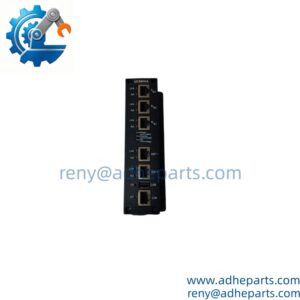
| Ethernet Ports | 4 total under a single IP address: 1 SERVICE, 1 INTERLINK, 2 DEVICE NETWORK (copper) |
| Device Network Topology | Daisy-chain loop for remote I/O cable redundancy |
| Supported Protocols | EtherNet/IP (implicit + explicit messaging), Modbus/TCP diagnostics |
| Max Remote Drops | 31 per EIO bus (high-end CPU); 31 total with max 16 X80 drops on low-end CPUs (2 MB or less) |
| Compatible Drop Adapters | 140CRA31200 (Quantum drop), BMXCRA31200 / BMXCRA31210 (X80 drop) |
| Hot Standby Support | Yes — device DDT types for standalone and Hot Standby configurations |
| Explicit Messaging | 16 MBP_MSTR blocks per MAST cycle |
| Network Load Guidance | Max 5 Mbps per dual-ring-switch/service port; 20 Mbps distributed I/O traffic on main ring |
| Backplane Power | 5 V DC from Quantum backplane (current draw per datasheet) |
| Operating Temperature | 0°C to +60°C (verify against current datasheet) |
| Protection Rating | IP20 |
| Net Weight | ~0.55 kg (1.22 lb) |
| Certifications | CE, C-Tick, UL 508, CSA C22.2 No. 142, EN 55011 |
| Configuration Software | EcoStruxure Control Expert 14.1 or later |
| Environmental Compliance | Green Premium, RoHS compliant (date code 1107 onward), REACh — no SVHC above threshold |
The 140CRP31200 carries four external ports — SERVICE, INTERLINK, and two DEVICE NETWORK copper ports — all under a single IP address, with the device ports providing daisy-chain loop redundancy for remote I/O cables. Capacity depends on CPU class: a low-end Quantum CPU (2 MB or less) supports 31 drops with a maximum of sixteen X80 drops, while high-end CPUs (4 MB or more) support the full 31 BMXCRA312·0 or 140CRA31200 drops.The module also supports Hot Standby redundancy configurations. Physical and certification data come from distributor documentation — confirm dimensions and ratings against the current OEM datasheet before panel design.
Product Introduction
The Schneider 140CRP31200 is the Ethernet RIO head module for Modicon Quantum control systems. Installed in the local rack alongside a Quantum CPU, it masters an EIO bus of up to 31 remote I/O drops over standard copper Ethernet — replacing legacy coaxial S908 remote I/O infrastructure with switched, diagnosable network cabling.
Its engineering value is migration without rewrite. The EIO bus behaves like the legacy S908 bus in the Control Expert environment, so existing Quantum applications extend to Ethernet remote drops without restructuring the I/O map. Add daisy-chain loop redundancy, RSTP support, and native Hot Standby integration, and you get modern network architecture on a proven control platform.
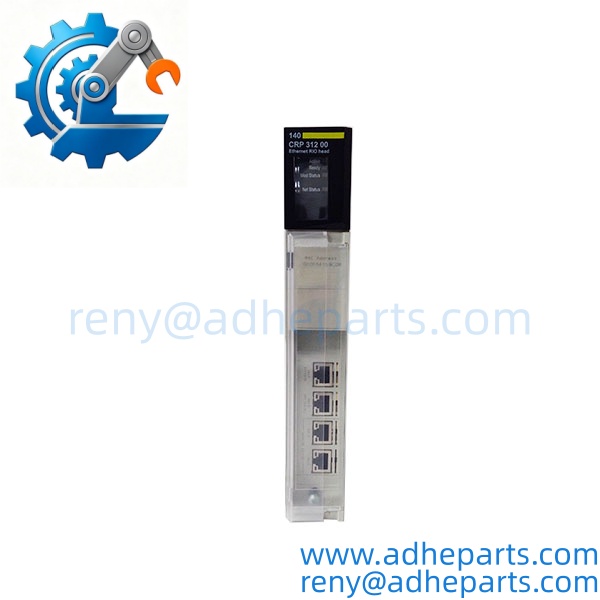
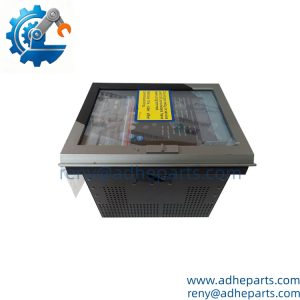
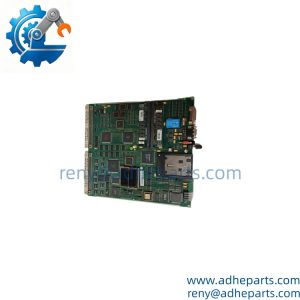
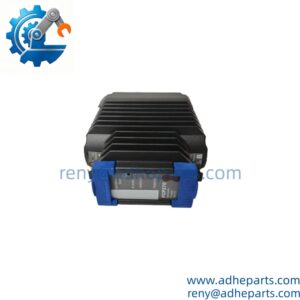
140CRP31200
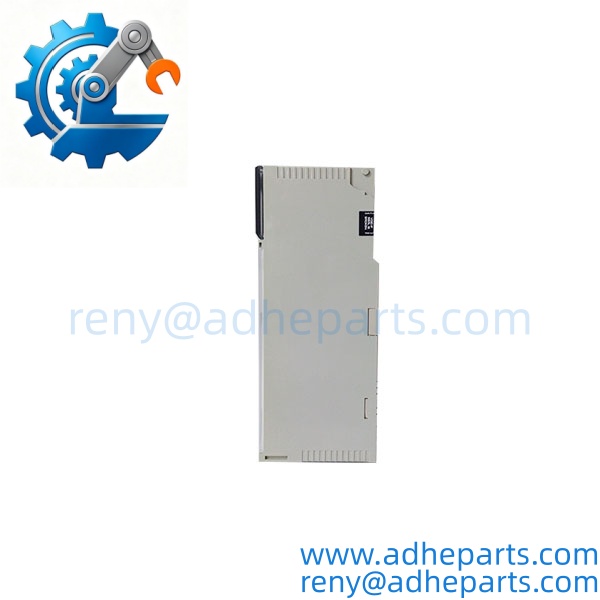
140CRP31200
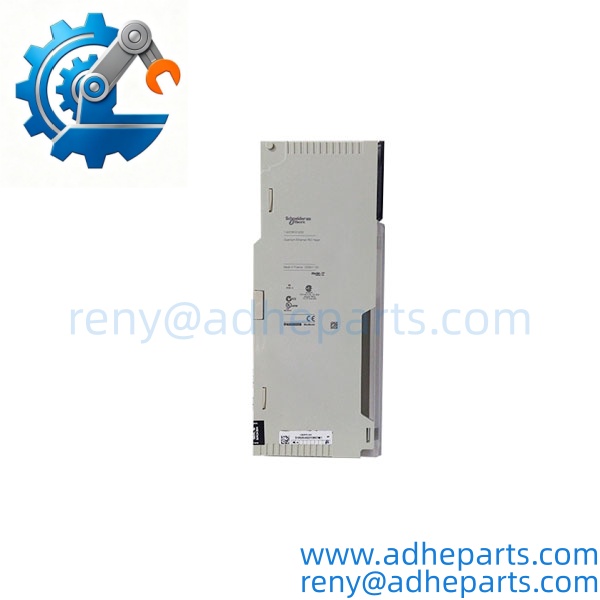
140CRP31200
Application Scenarios & Field Experience
Part 1 — The Engineering Pain Point
Quantum installations built in the 1990s and 2000s run on S908 coax remote I/O — hardware that is now unsupported, hard to source, and invisible to modern network diagnostics. A complete control platform migration means re-validating thousands of I/O points and rewriting proven control logic. The 140CRP31200 offers the middle path: keep the Quantum CPU and application intact, replace the coax trunk with Ethernet, and gain per-drop diagnostics, cable redundancy, and remote I/O that standard network tools can actually see.
Part 2 — Specific Application Scenarios
- Oil & Gas / Pipelines — Remote wellhead and pump station I/O: Wellhead drops sit kilometers from the central rack over leased-line or fiber Ethernet. The daisy-chain loop with RSTP keeps I/O alive through a single cable break — critical when a lost drop means a lost shutdown signal.
- Power Generation — Balance-of-plant retrofit: Plants migrating S908 trunk-and-drop coax to Ethernet reuse the existing Quantum CPU and program. The 140CRP31200 drops into the local rack and the 140CRA31200 adapters land in the field racks — same I/O modules, new transport.
- Mining / Material Handling — Conveyor line control: Long conveyor systems with drives and pull-cord switches spread along the route use X80 drops (BMXCRA312·0 adapters) for cheaper remote racks on the EIO bus, with Hot Standby CPUs at the head end for continuous operation.
- Water / Wastewater — Lift station networks: Multiple lift stations as Ethernet RIO drops on a ring, with the SERVICE port used in port-mirroring mode to capture traffic for network troubleshooting without disturbing the I/O scan.
Part 3 — Field Story
A cement plant’s S908 coax trunk developed an intermittent fault that dropped a kiln feed drop three times in a week — each trip costing hours of lost production, with the coax fault hidden somewhere in a 300-meter buried run. The integrator moved the CPU to a 140CRP31200 head, installed 140CRA31200 adapters in the two field racks, and ran a redundant fiber ring. The intermittent coax was abandoned in place. The I/O map transferred unchanged, and the plant gained per-drop health status in Control Expert it never had before.
Standard Operating Procedure (SOP) for Quality Control
Every 140CRP31200 unit we ship passes this four-stage process:
- Visual & Origin Inspection
- OEM labels, Schneider holographic seal, and serial/date code format verified against known genuine units
- Anti-counterfeit review: PCB silkscreen, connector molding, component date-code consistency
- Front-panel RJ45 jacks inspected for damage or prior insertion wear
- Live Rig Testing
- Bench rack power-up in a Quantum backplane with 5 V bus current measured against datasheet limits
- All four ports exercised: SERVICE port ping and port-mirroring mode; DEVICE NETWORK ports verified on a live EIO bus with a 140CRA31200/BMXCRA312·0 adapter and configured drop
- Full LED sequence check and firmware readback via Control Expert connection
- Firmware Verification
- Exact firmware and hardware revision (PV code) read via the OEM tool and recorded on the test certificate
- Firmware upgrade path confirmed against the buyer’s Control Expert version (14.1+ required)
- ESD-Safe Packaging
- Module sealed in anti-static bag with desiccant and humidity indicator
- RJ45 port caps fitted, module foam-cushioned in double-wall box, QC certificate and tested-revision record enclosed
Frequently Asked Questions (FAQ)
Q1: Which CPUs and drop adapters is the 140CRP31200 compatible with? A: It installs in the local rack of a Quantum 140CPU6· processor running EcoStruxure Control Expert 14.1 or later. On the drop side it pairs with the 140CRA31200 (Quantum drop), BMXCRA31200, or BMXCRA31210 (X80 drops). Watch the CPU memory class: CPUs with 2 MB or less cap you at 16 X80 drops among the 31-drop total, while 4 MB+ CPUs allow the full count. Hot Standby configurations are supported via the dedicated device DDT type.
Q2: What warranty do you offer? A: 12 months from shipment on both new surplus and refurbished units, covering component failure and workmanship. Note that Schneider’s contractual warranty on this reference is 18 months from manufacture — our 12-month coverage runs from your receipt, so the effective protection window is comparable. Refurbished units carry the same 12-month terms because they pass the identical live-rig test.
Q3: Is it actually in stock, and how fast does it ship? A: We confirm physical stock against your order before quoting a ship date — this reference is a mature product with intermittent OEM availability, and market pricing reflects that. Typical dispatch is 1–3 business days from confirmed stock, with expedited handling for line-down situations. If your project needs several units, tell us early; sourcing multiples of this head module takes longer than singles.
Q4: Will the firmware revision in my replacement unit cause problems? A: Usually no — drop adapters auto-receive IP and configuration from the head, and Control Expert supports firmware upgrades across the EIO network. One hardware detail worth knowing: PV01 units have the Net Status 1/2 LEDs physically unlit, while PV02 units show them lit — with no functional difference either way. Don’t mistake those LEDs for a fault on a PV02 module.We record the exact firmware/hardware revision on every certificate.
Q5: What are the installation pitfalls with this module? A: Three things. First, respect the network load limits — 5 Mbps per DRS/service port and 20 Mbps of distributed I/O traffic on the main ring; overloading shows up as intermittent drop faults, not clean alarms. Second, ground the rack correctly per the Quantum EIO installation manual before powering — network transients on ungrounded backplanes damage these modules. Third, don’t casually move the SERVICE port to port-mirroring mode and forget it: in mirroring the port is read-only, so a maintenance laptop connected there will appear “dead” for ping and programming access. Configure drop fallback behavior deliberately — the default sets outputs to fallback and holds inputs at last value during a communications loss, which may not be what your process needs on a long outage.