Description
Note: Many products are not yet listed. Please contact us for more product information. Our supply channels are constantly expanding, and we currently have 20 stable shared supply channels. Please confirm the model, product, price, and all other necessary information with customer service before placing an order. We offer new, refurbished, and used products, and prices are adjusted according to the year of the item you require.
3. Key Technical Specifications
Do not order against this table alone. I cannot confirm the channel count, input types, and communication interface from the model number. Match every line against the OEM datasheet and the label on your existing module.
| Parameter | Value |
|---|---|
| Model | 60M100-00 |
| Brand | Bently Nevada |
| Product Family | 60M condition monitoring series |
| Module Type | Data acquisition / condition monitoring module |
| Input Channels | Verify with OEM datasheet — confirm on the module label |
| Input Signal Types | Verify — proximity probe, accelerometer, velocity, process (4–20 mA), or other; confirm on your build |
| Input Ranges | Verify with OEM datasheet |
| A/D Resolution | Verify with OEM datasheet |
| Sampling Rate | Verify with OEM datasheet |
| Communication Interface | Verify — Ethernet, serial, or proprietary bus; confirm on your build |
| Protocol Support | Verify — Modbus, OPC, or vendor-specific; confirm firmware |
| Power Supply | Verify — voltage rail and current draw; confirm on the unit label |
| Power Consumption | Verify with OEM datasheet |
| Isolation | Verify — field side to logic side |
| Status Indicators | Verify — LED arrangement varies by revision |
| Configuration Software | Verify — Bently Nevada System 1 or other tool; confirm supported version |
| Operating Temperature | 0 °C to +60 °C (typical — verify for your cabinet) |
| Storage Temperature | –40 °C to +85 °C (typical — verify) |
| Humidity | 5% – 95% RH, non-condensing |
| Mounting | Verify — DIN rail, panel, or rack; confirm on your build |
| Weight | Verify with OEM datasheet |
| Certifications | CE, UL, CSA — verify on the specific unit’s label |
4. Product Introduction
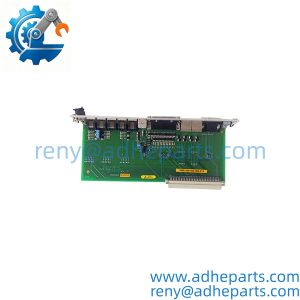
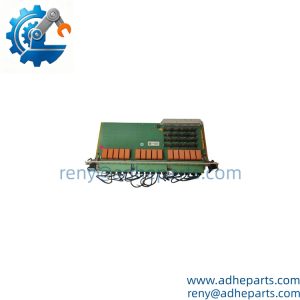
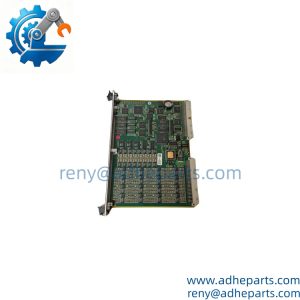
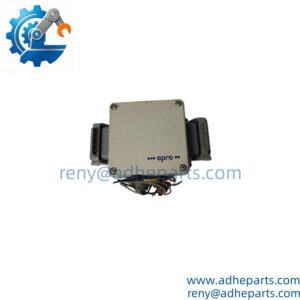
The Bently Nevada 60M100-00 is a condition monitoring and data acquisition module from the 60M series. It collects vibration and process signals from machinery, digitizes them, and communicates the data to a host system for trending, alarm, and diagnostics. It is the module that feeds the asset management software with the raw measurements it needs to detect machine degradation.
The engineering value is the integration of multiple signal types on one platform. The 60M series was designed to bring proximity probe, accelerometer, and process data into a single monitoring system, reducing the number of separate condition monitoring racks a plant has to maintain. In my experience, the most common cause of a monitoring gap is not a dead module — it is a transducer that has failed or a cable that has been damaged, and the module is reporting the fault correctly. Before you replace a 60M100-00, check the sensors and the wiring.
Two things decide whether a swap works. First, the firmware revision. The module firmware must match the version the host software expects, or the data will not be interpreted correctly. Second, the communication configuration. The module’s address and protocol settings must match the host’s configuration.
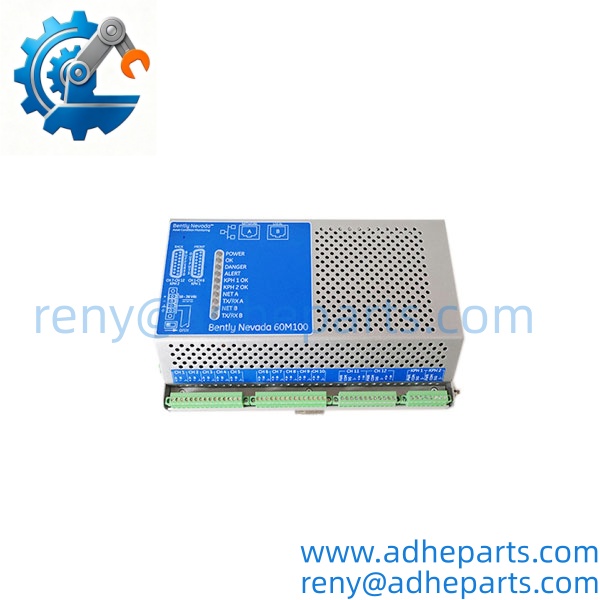
60M100-00
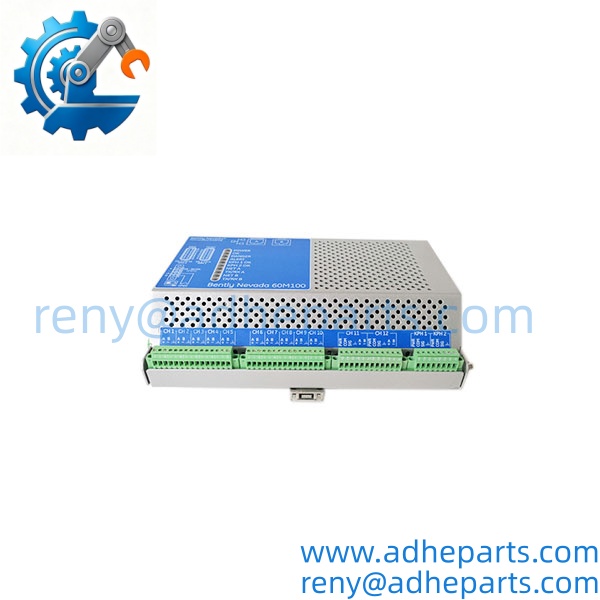
60M100-00
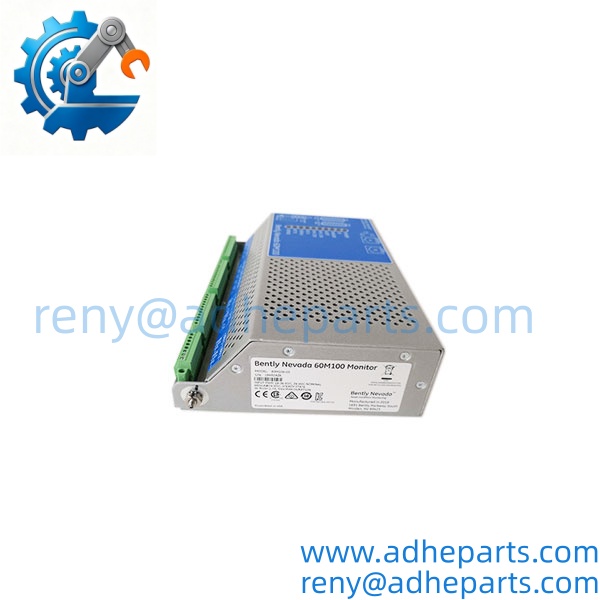
60M100-00
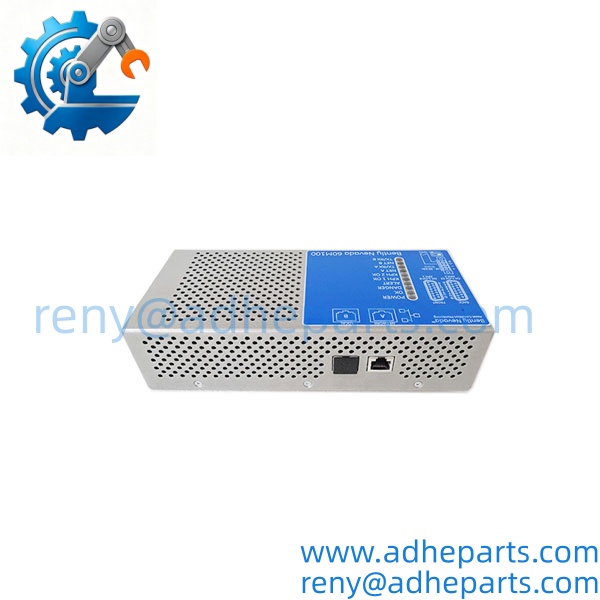
60M100-00
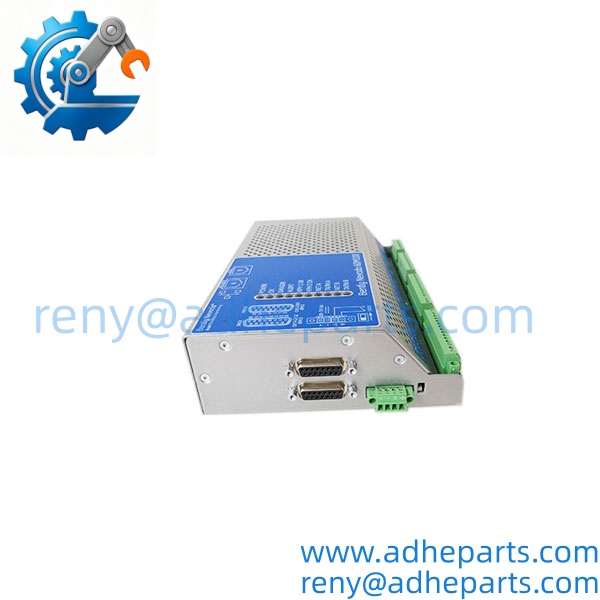
60M100-00
5. Application Scenarios & Field Experience
Part 1 – Narrative Paragraph
The failure that hurts most on a condition monitoring system is not a dead module — it is a module that reads within tolerance on a bench check but drifts in the field. The system reports a vibration level, the trend looks normal, and the machine develops a bearing fault that the monitoring system did not catch. I have seen that on a compressor where the 60M module’s input channel had drifted by 5% and the alarm setpoint was never reached. The module was alive. The measurement was wrong. When you replace a 60M100-00, verify the input channel against a calibrated signal source before you trust it in a protection or trending application.
Part 2 – Numbered List (Application Scenarios)
- Power Generation – Turbine and Generator Monitoring – The module collects vibration and process data from steam or gas turbine bearings and feeds it to the plant’s asset management system for trending and alarm.
- Oil & Gas – Compressor and Pump Monitoring – Used to monitor vibration on critical compressors and pumps. The module’s multiple input types allow one card to cover proximity probes and accelerometers on the same machine.
- Petrochemical – Reciprocating Compressor Monitoring – The module reads rod drop and crosshead vibration signals and passes them to the host system for condition assessment.
- Water Treatment – Pump Station Monitoring – Used in a remote pump station to collect vibration data and transmit it to the central monitoring system over the plant network.
Part 3 – Short Field Story
A gas plant had a compressor that developed a bearing failure that the condition monitoring system did not catch. The post-mortem showed the 60M module’s input channel had been reading a frozen value for weeks. The module reported no fault, the alarm never triggered, and the trend looked normal. When the plant replaced the 60M100-00 module and re-verified the channel with a calibrated signal, the reading jumped to a healthy value — the old module’s front-end had failed in a way that produced a steady output rather than a fault. The plant now verifies each channel against a known reference after a module replacement. That check takes minutes and catches the failure mode that a self-test does not.
6. Standard Operating Procedure (SOP) for Quality Control
- Visual & Origin Inspection – We verify the Bently Nevada marking, the 60M100-00 model string, and the date code. We inspect the connectors and the housing for cracks or moisture ingress. A module with a damaged connector or evidence of rework is rejected.
- Revision and Firmware Documentation – We read and photograph the full model string, the firmware revision, and any configuration settings where accessible. That record ships with the module so you can compare it against the unit you are replacing.
- Power-Up Self-Test – The module is powered on a bench fixture at rated voltage. We verify it initializes without a fault and that the status indicators show normal operation.
- Input Channel Verification – We inject calibrated signals into each input channel for each supported sensor type and verify the module’s reported values against the reference. Accuracy must stay within the OEM specification.
- Communication Test – We verify the communication interface with a test host and confirm the protocol and address settings. We record the settings so you can compare them against your system.
- Diagnostic Function Test – We simulate an open sensor and a shorted sensor and verify the module reports the fault. A module that measures correctly but does not report faults is not acceptable for machinery protection.
- Isolation Test – We apply the rated isolation voltage between the field side and the logic side. Leakage current must stay below the datasheet limit.
- ESD-Safe Packaging – The module is wrapped in anti-static film, seated in a conductive foam insert with the connectors protected, and packed in a double-wall carton with static warning labels.
7. Frequently Asked Questions (FAQ)
Q1: What is the function of the Bently Nevada 60M100-00?
A: The 60M100-00 is a condition monitoring and data acquisition module from Bently Nevada’s 60M series. It collects vibration and process signals from machinery and communicates them to a host system for trending and diagnostics. I cannot confirm the exact channel count and input types from the model number alone. Send us a photo of the label and the cabinet it came out of, and we will confirm it against the OEM documentation before you order.
Q2: Will this module work with my existing System 1 software?
A: Only if the firmware revision and the communication protocol match the version your System 1 installation expects. A mismatched firmware revision can initialize and still fail to deliver data correctly. Read the firmware revision off your existing module and compare it to the replacement before you order.
Q3: What is the warranty on this module?
A: We offer a 12-month warranty from the ship date. It covers component failure, input channel failure, communication port failure, and power supply failure under normal operating conditions. It does not cover damage from incorrect supply voltage, reversed sensor wiring, or ESD damage from handling without a wrist strap. We test every module on a bench fixture with calibrated inputs before it ships.
Q4: Do you have this exact model in stock?
A: Bently Nevada 60M inventory is legacy and varies by revision. Confirm availability before you plan an outage. If we are out of the 60M100-00 variant, we will tell you what we actually have rather than quote a date we cannot hold.
Q5: Any installation pitfalls I should watch for?
A: Four. First, power down the rack before inserting or removing the module — these modules are not hot-swap capable in most configurations. Second, record the firmware revision and the communication configuration from the old module before you remove it. Third, check the sensor wiring and the transducer condition before you install the replacement; a degraded sensor will make the new module look faulty. Fourth, after the swap, verify the measurement on each channel against a known reference before you return the machine to service. A module that powers up is not necessarily measuring correctly.