Description
Note: Many products are not yet listed. Please contact us for more product information. Our supply channels are constantly expanding, and we currently have 20 stable shared supply channels. Please confirm the model, product, price, and all other necessary information with customer service before placing an order. We offer new, refurbished, and used products, and prices are adjusted according to the year of the item you require.
Product Introduction
When a vibration test system loses high-frequency signal capture accuracy mid-run, the root cause almost always traces back to a generic DAQ card that cannot maintain stable 1MS/s 16-bit sampling under full load.
Purpose-built for National Instruments M Series DAQ platform, this full-length PCI card integrates all signal conditioning, A/D conversion, D/A conversion and timing circuits on a single board. It supports 16 single-ended or 8 differential analog input channels with programmable input ranges, and natively works with NI-DAQmx driver software for seamless integration with LabVIEW, MATLAB, C/C++ and Python development environments. Its multi-card synchronous trigger capability lets users build high-channel-density test systems without extra external synchronization hardware.
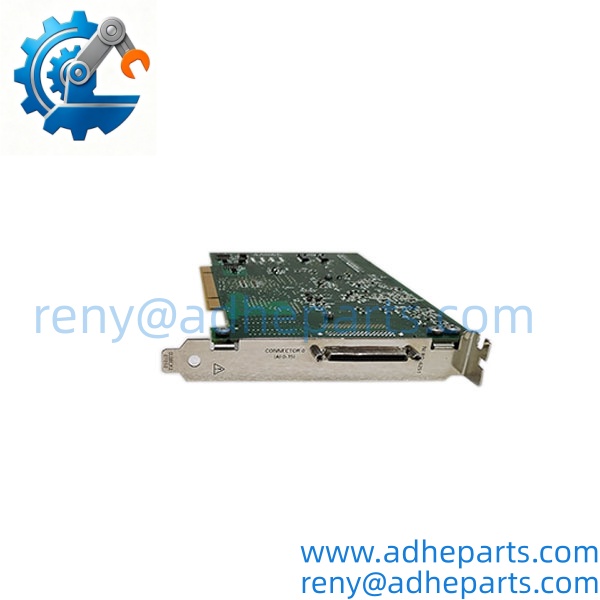
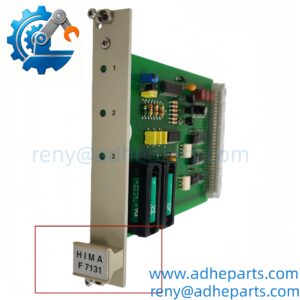
PCI-6251
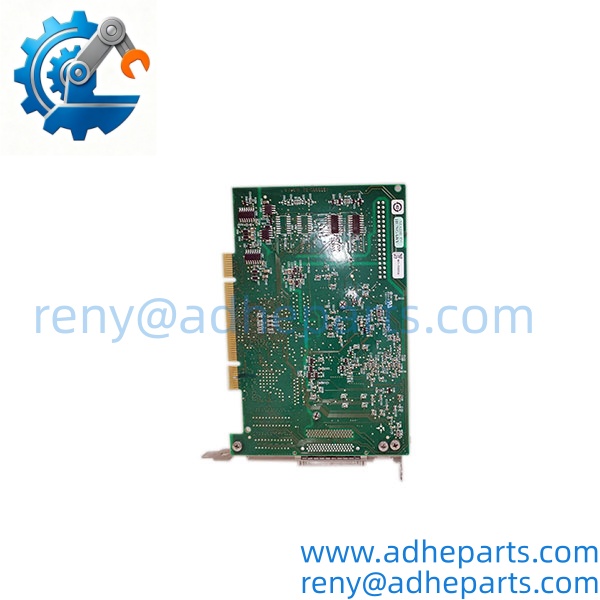
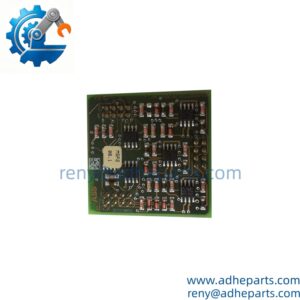
PCI-6251
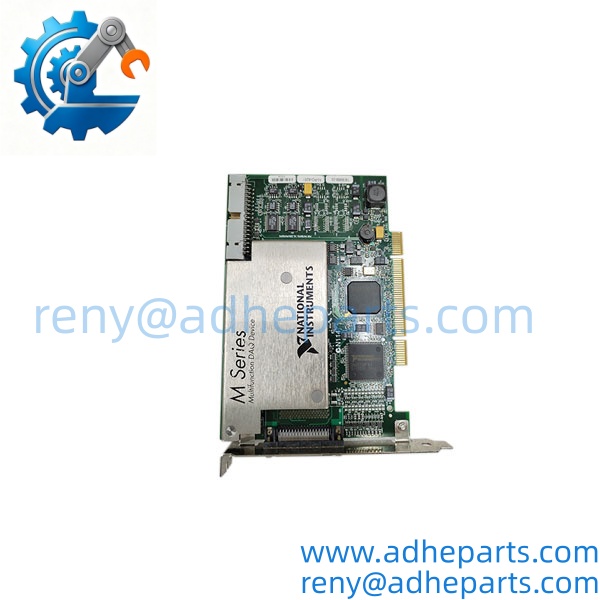
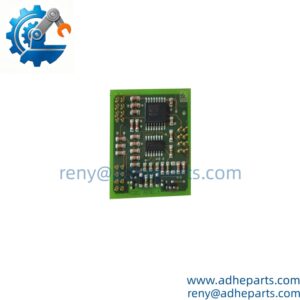
PCI-6251
Key Technical Specifications
| Parameter | Value |
|---|---|
| Analog Input Channels | 16 single-ended / 8 differential |
| A/D Resolution | 16-bit |
| Max Sampling Rate | 1.25 MS/s |
| Programmable Input Ranges | ±10V / ±5V / ±2V / ±1V |
| Analog Output Channels | 2, 16-bit synchronous update |
| Max AO Update Rate | 2.86 MS/s |
| AO Output Range | ±10V |
| Digital I/O Lines | 24 bidirectional TTL/CMOS compatible |
| Counter/Timers | 2 × 32-bit general purpose |
| Bus Interface | 32-bit 33MHz PCI 2.2 compliant |
| Operating Temperature | 0°C to +55°C |
| Supported OS | Windows 7/10/11, Linux (NI-DAQmx driver required) |
| Agency Approvals | CE, cULus, FCC Class B |
| Dimensions | ~175 × 107 mm standard full-length PCI card |
Field Application & Technical Pitfalls
This part runs three non-negotiable production-critical roles.
First, it acts as the core data acquisition hardware for automotive powertrain vibration test benches, capturing high-frequency acceleration signals from 16 test points simultaneously with 16-bit precision.
Second, it delivers high-speed closed-loop control for industrial laser cutting motion systems, generating precise analog velocity reference signals for servo drives and reading limit switch status via DIO lines.
Third, it serves as the signal interface for university scientific research experimental platforms, supporting real-time data collection and waveform generation for physics and material science experiments.
⚠️ PCI Slot Alignment Risk: This is a full-length PCI card. If you force it into a low-profile half-length PCI slot, you will bend the PCB and permanently damage the rear signal conditioning circuits.
⚠️ Sampling Rate Overrun Gap: The maximum total aggregate sampling rate across all 16 channels is 1.25MS/s. If you configure all 16 channels to run at 1MS/s simultaneously, the card will drop data samples and trigger a FIFO overflow fault.
⚠️ Driver Version Mismatch: The card requires NI-DAQmx driver v9.0 or newer. If you install an older driver version, the system will fail to recognize the card and no I/O operations will work.
I watched a senior test tech skip the sampling rate calculation last summer. He configured all 16 analog input channels to run at 200kS/s, which added up to 3.2MS/s total — far exceeding the 1.25MS/s aggregate limit. The card triggered FIFO overflow every 10 seconds, and the vibration test data was completely corrupted. The team spent 2 hours troubleshooting before they found the total sampling rate overrun issue. That 1-minute oversight forced the test lab to delay the automotive component validation project by half a day.
Quality Control (QC) SOP & Transparency
- Inbound Verification: Cross-check the OEM serial number against NI’s official M Series part revision database, run anti-counterfeit validation on the card’s laser-etched serial label, and confirm no bulging capacitors or cracked solder joints on the A/D converter chip.
- Live Rig Testing: Mount the card in a certified industrial PC PCI slot, install the latest NI-DAQmx driver, and verify 4 hours of stable continuous 1MS/s sampling operation.
- Parameter Testing: Confirm full 16-channel analog input accuracy within ±0.01% full scale, verify 2 analog output channels deliver stable ±10V signals, and validate all 24 DIO lines and 2 counter/timers function correctly.
- Final QA & Packaging: Seal the fully tested card in a static-shielding anti-static bag, apply a unique QC passed serial label, and pack it in ESD-dissipative foam with a printed hard copy of the full calibration test report.
Frequently Asked Questions
- Can I hot-swap this card while the industrial PC is powered on? No. Standard PCI 2.2 does not support hot-swap. Pulling the card live will cut all I/O instantly, triggering uncontrolled test system shutdown.
- What exact industrial systems does this part work with? It is fully compatible with standard 32-bit PCI industrial PCs running NI-DAQmx driver. It will not fit or work in PCIe slots without a PCI-to-PCIe adapter.
- How long is the standard warranty for this new surplus unit? It carries a full 12-month functional warranty. If it fails within that window under specified operating conditions, we cover all return shipping and bench replacement costs.
- How do I tell a genuine OEM unit apart from a refurbished clone? Genuine units have the National Instruments hologram sticker on the side of the PCB, and the 16-bit A/D converter carries the official NI part number marking. Refurbished clones usually skip the official hologram and use generic 12-bit A/D chips that cannot deliver the rated 1.25MS/s sampling performance.
- Will this PCI-6251 directly replace an older NI M Series PCI DAQ card? No. Older M Series variants may have different FIFO buffer sizes. You will need to re-verify all sampling rate and trigger settings in NI-DAQmx after swapping.
- What’s the maximum safe continuous operating temperature at full 1.25MS/s load? It will hold stable sampling accuracy up to 55°C, though your mileage may vary if the PC cooling airflow drops below 20 CFM and internal A/D converter temperatures spike 15°C above ambient.