Description
Note: Many products are not yet listed. Please contact us for more product information. Our supply channels are constantly expanding, and we currently have 20 stable shared supply channels. Please confirm the model, product, price, and all other necessary information with customer service before placing an order. We offer new, refurbished, and used products, and prices are adjusted according to the year of the item you require.
3) Key Technical Specifications
| Specification | 5517B |
|---|---|
| Laser Type | Helium-Neon, continuous wave |
| Optical Configuration | Two-frequency / heterodyne |
| Nominal Vacuum Wavelength | 632.99137 nm |
| Reference Frequency | 1.9–2.4 MHz |
| Minimum Beam Output | 120 µW |
| Maximum Beam Output | 1 mW |
| Typical Beam Diameter | 6 mm |
| Beam Height | 79.5 ± 1.0 mm |
| Maximum Linear Velocity | 500 mm/s |
| Wavelength Accuracy | ±0.1 ppm, 3-sigma lifetime |
| Wavelength Stability | ±0.002 ppm typical, 1 hour |
| Lifetime Wavelength Stability | ±0.02 ppm typical |
| Weight | 3.4 kg |
| Positive Supply | +15 V ±0.3 V |
| Positive Supply Current | 3.0 A maximum |
| Negative Supply | −15 V ±0.3 V |
| Negative Supply Current | 0.3 A maximum |
| Laser Safety Classification | Class II |
| Typical Warm-Up | 90 minutes |
The 5517B’s reference frequency is the frequency difference between the two optical frequencies generated by the laser head. This parameter is important because the interferometer receiver and measurement electronics must be compatible with the laser-head frequency.
4) Product Introduction — Anti-Template
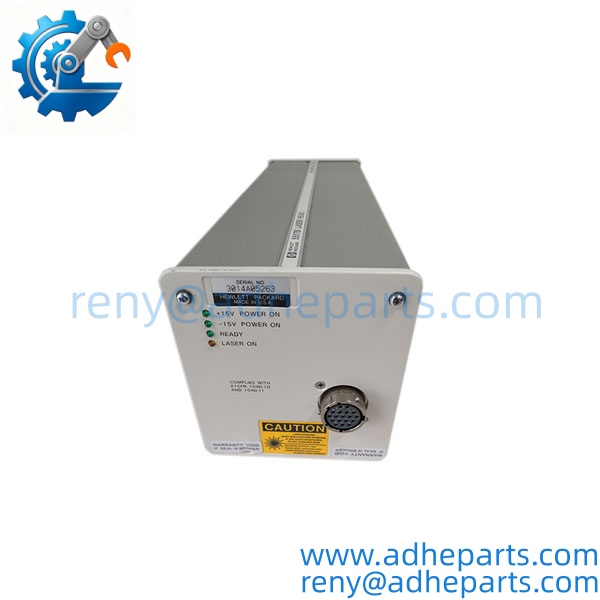
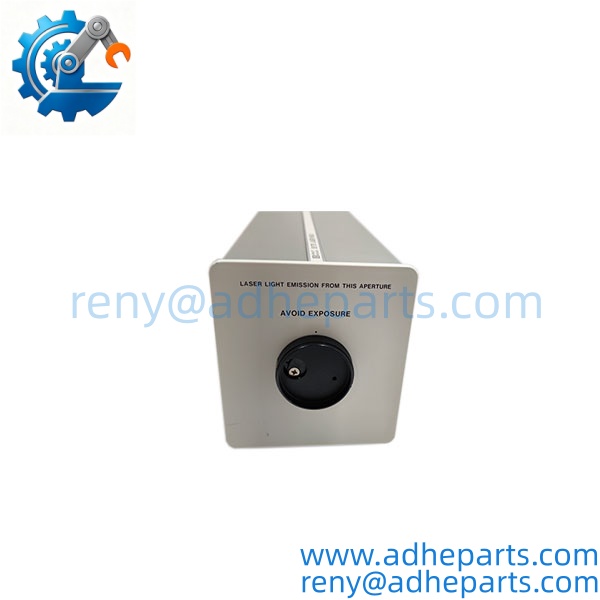
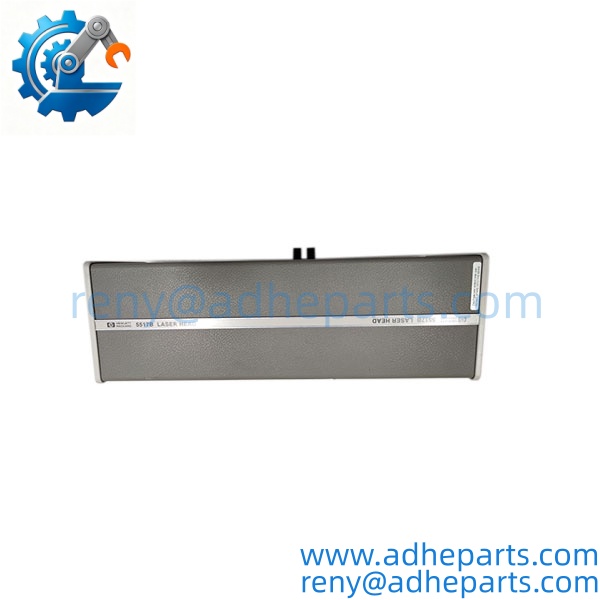
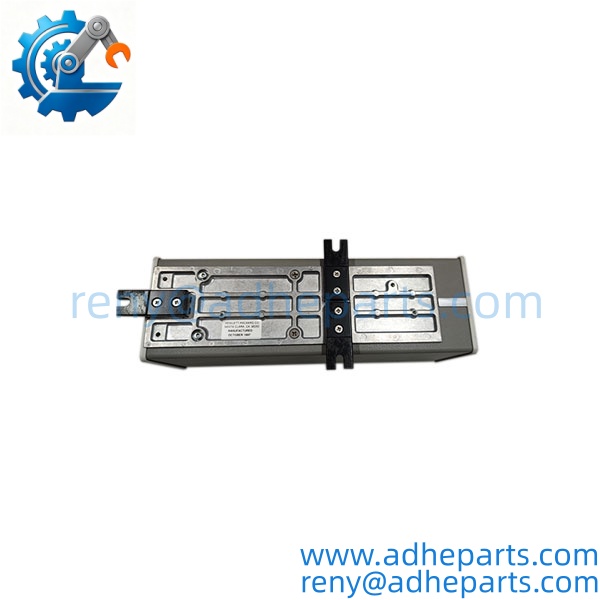
The Agilent HP 5517B is a two-frequency helium-neon laser head used as the optical reference source in precision laser interferometer systems. Its 632.99137 nm nominal vacuum wavelength and 1.9–2.4 MHz reference frequency support position and motion measurement where the 5517B’s velocity range is appropriate.
This is a measurement component, not a general-purpose laser source. The laser head works together with compatible interferometer optics, receivers, cables, and measurement electronics. In a replacement project, matching the complete interferometer architecture matters more than simply matching “5517B” on the label.
HP-5517B
HP-5517B
HP-5517B
HP-5517B
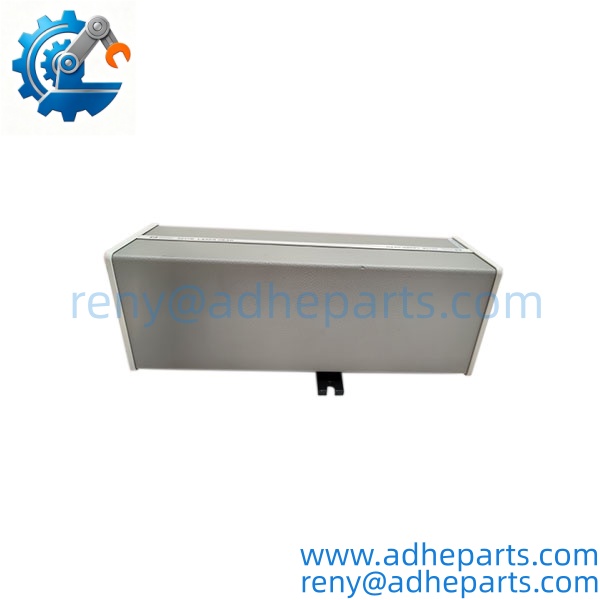
HP-5517B
5) QC, Procurement & Logistics SOP
1) Inbound Identification
Before quotation or shipment, verify:
- Agilent / HP 5517B model marking
- Serial number
- Any installed option or calibration marking
- Beam diameter option, if applicable
- Connector condition
- Housing and mounting surfaces
- Laser aperture and optical window condition
- Evidence of previous repair or modification
The 5517B was available with different options, including calibration and beam-diameter configurations. Do not treat every used 5517B as optically identical without checking its identification label and configuration.
2) Optical and Electrical Verification
Testing should be performed with suitable interferometer test equipment rather than by applying power to the laser head on a workbench.
Verify:
- Correct +15 V and −15 V supply rails
- Current consumption during startup and stabilized operation
- Laser emission
- Reference-frequency output
- Beam stability
- Optical output level where calibrated measurement equipment is available
- Interferometer receiver compatibility
A basic “laser turns on” test is not enough for a precision metrology component.
3) Warm-Up and Stability
The 5517B requires a substantial warm-up period before precision measurements should be treated as representative. Current Keysight documentation lists a 90-minute warm-up time.
For customer acceptance testing, record the test condition and warm-up period instead of quoting an instantaneous optical reading.
4) Packaging and ESD Protection
Use:
- Anti-static protection for electrical interfaces
- Shock-absorbing inner packaging
- Rigid outer packaging
- Optical-aperture protection
- Moisture protection where required
- “Fragile / Precision Optical Equipment” handling identification
The laser head should not be allowed to move freely inside the shipping carton.
5) Global Logistics and Customs
For international procurement, confirm the exact customs classification with the export broker based on the actual shipment description and destination regulations.
Recommended commercial description:
Precision HeNe laser head for laser interferometer measurement system
Confirm:
- Country of origin
- Export-control requirements
- Customs classification
- Incoterms
- Insurance requirements
- Transit time
- Customer import requirements
For long-distance shipments, optical alignment and mechanical shock are practical concerns, not just packaging formalities.
6) Technical Pitfalls & Integration Warnings
1) Do Not Confuse 5517B with 5517C/D/DL/FL
The 5517 family contains multiple laser-head variants with different reference-frequency ranges and maximum measurement velocities.
The 5517B uses a 1.9–2.4 MHz reference frequency and has a lower velocity range than several later models. A 5517C or 5517D should not automatically be treated as a drop-in replacement simply because the mechanical appearance is similar.
2) Receiver Compatibility Matters
The maximum measurement velocity depends on the complete interferometer configuration, including the receiver/electronics. The 5517B’s commonly specified 500 mm/s figure should therefore not be interpreted as an unconditional system-wide limit.
3) Power Supply Must Be Correct
The laser head requires both positive and negative supply rails:
- +15 V ±0.3 V
- −15 V ±0.3 V
Do not substitute a generic ±15 V supply without checking current capability, ripple, connector wiring, grounding, and the original system requirements.
4) Optical Alignment Is Critical
The nominal beam height is 79.5 ±1.0 mm, and the beam exits parallel to the mounting plane within the specified mechanical tolerance. Mechanical replacement therefore needs to preserve mounting position and optical alignment.
5) Laser Safety
The 5517B is classified as a Class II laser product with a maximum optical output of 1 mW. Never look directly into the beam or defeat the applicable safety provisions during testing.
6) Firmware Is Not the Main Compatibility Question
Unlike a PLC CPU or communication module, the primary compatibility concerns here are the laser-head model, reference frequency, optical configuration, receiver, interferometer electronics, power supply, and mechanical alignment. Software compatibility alone does not establish interchangeability.
7) Frequently Asked Questions
Q1: What is the Agilent HP 5517B?
It is a two-frequency helium-neon laser head used as the reference laser source in precision laser interferometer systems.
Q2: What wavelength does the 5517B use?
The nominal vacuum wavelength is 632.99137 nm. The specified lifetime wavelength accuracy is ±0.1 ppm under the applicable specification.
Q3: What is the reference frequency of the 5517B?
The standard 5517B has a 1.9–2.4 MHz reference frequency. This is an important system-matching parameter when replacing an existing laser head.
Q4: Can I replace a 5517C or 5517D with a 5517B?
Do not assume direct interchangeability. The 5517B, 5517C, and 5517D use different reference-frequency ranges and have different maximum velocity specifications. The receiver and interferometer electronics must be checked before substitution.
Q5: What power supply does the 5517B require?
The published requirement is +15 V ±0.3 V and −15 V ±0.3 V. Current requirements must also be respected, with the positive rail specified up to 3.0 A and the negative rail up to 0.3 A in the current Keysight documentation.
Q6: How long should the laser head warm up?
Keysight currently lists a 90-minute warm-up time for the 5517B. For precision metrology work, testing immediately after power-up can give misleading results.
Q7: What should I provide when requesting a replacement 5517B?
Provide the complete model number, serial number, option information if available, existing interferometer model, receiver model, and photos of the identification label and connectors. If the customer needs a replacement for an installed system, the existing system configuration is much more useful than the laser-head model alone.