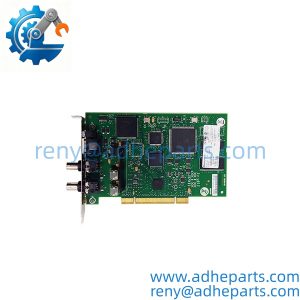
Description
Note: Many products are not yet listed. Please contact us for more product information. Our supply channels are constantly expanding, and we currently have 20 stable shared supply channels. Please confirm the model, product, price, and all other necessary information with customer service before placing an order. We offer new, refurbished, and used products, and prices are adjusted according to the year of the item you require.
Product Introduction
A legacy PLC installation can become difficult to maintain when field devices use a different communication architecture from the controller. The ProSoft PTQ-PDPMV1 addresses this requirement by adding PROFIBUS DP master functionality to a Modicon Quantum PLC system, allowing the processor to exchange cyclic process data with connected field devices through the PLC backplane.
Beyond routine I/O exchange, the module supports DP-V1 acyclic services, extended diagnostics, and device parameter access. For plants maintaining established Quantum control systems, it can support continued use of existing PROFIBUS networks without automatically requiring a complete control-system redesign. Successful integration still depends on the installed processor, configuration software, bus parameters, and slave-device setup.
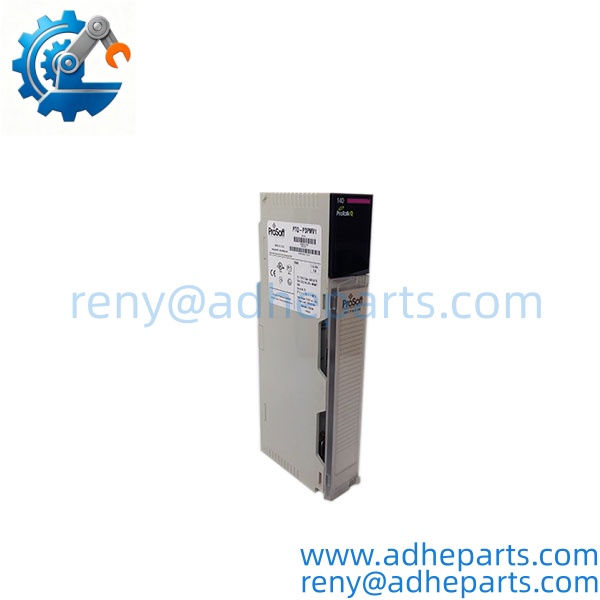
PTQ-PDPMV1
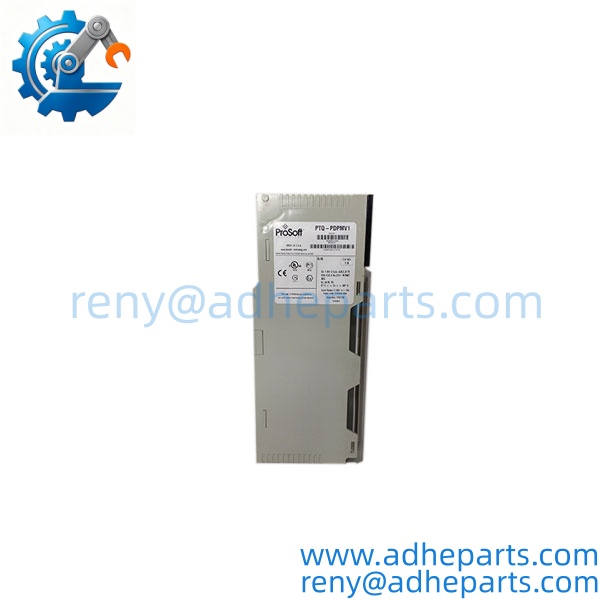
PTQ-PDPMV1
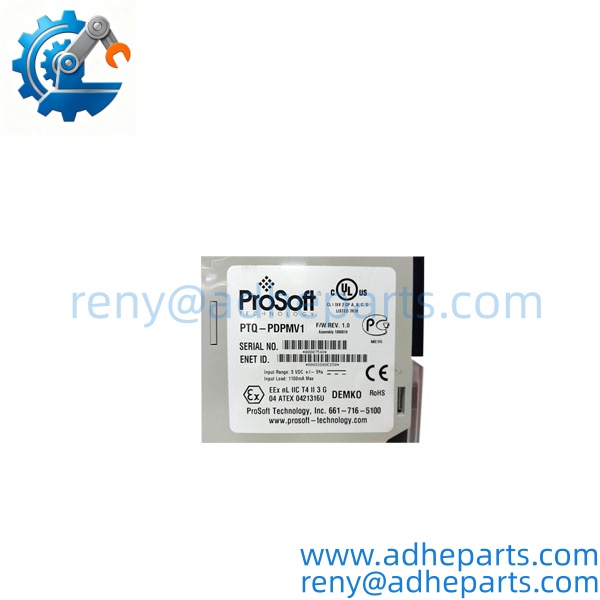
PTQ-PDPMV1
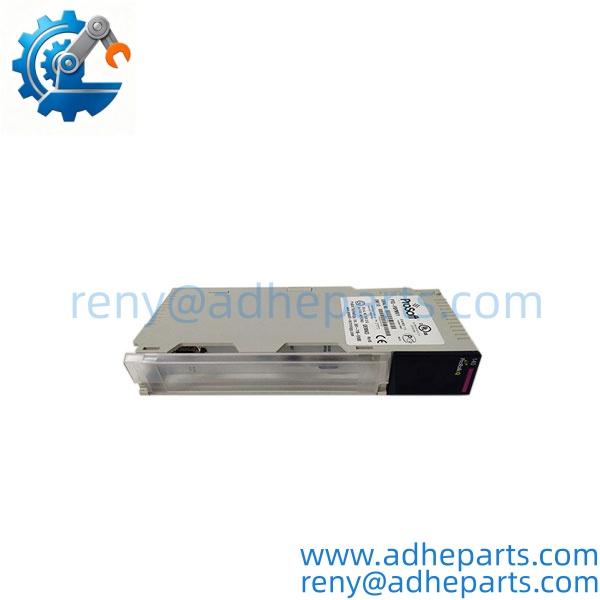
PTQ-PDPMV1
Key Technical Specifications
| Parameter | Specification |
|---|---|
| Manufacturer | ProSoft Technology |
| Model | PTQ-PDPMV1 |
| Product Type | PROFIBUS DP Master Network Interface Module |
| Host Platform | Modicon Quantum PLC |
| Backplane Installation | Single-slot Quantum backplane |
| Communication Protocol | PROFIBUS DP-V1 master |
| PROFIBUS Interface | 9-pin female D-sub connector, optically isolated RS-485 |
| Maximum Baud Rate | 12 Mbps |
| Network Capacity | Up to 125 slave devices with repeaters |
| Backplane Power Requirement | 5 VDC, maximum 1,100 mA |
| Operating Temperature | 0°C to 60°C (32°F to 140°F) |
| Storage Temperature | -40°C to 85°C (-40°F to 185°F) |
| Relative Humidity | 5% to 95%, non-condensing |
| Configuration Software | ProSoft Configuration Builder |
| PLC Programming Compatibility | Concept 2.6 or later; Unity Pro 2.2 or later; ProWORX 2.20 or later, subject to application requirements |
| Configuration Interfaces | RS-232 serial and Ethernet |
| Hot Standby Support | Supported in applicable configurations; verify CPU, firmware, and software requirements |
Specifications are based on the product documentation. Confirm the applicable manual and firmware requirements before engineering a replacement, especially for redundant systems.
Field Application & Technical Pitfalls
Application Scenarios
1) PROFIBUS device integration
The PTQ-PDPMV1 enables a Quantum PLC to communicate with PROFIBUS slave devices, including remote I/O stations, drives, and compatible field equipment. Process data is transferred between the network and PLC memory for use by the control application.
2) Legacy process-control maintenance
In manufacturing, packaging, water and wastewater treatment, and process facilities, this module can help maintain an existing PROFIBUS installation when the original communication architecture remains in service.
3) Parameter access and diagnostics
DP-V1 services support acyclic parameter operations and extended diagnostic information. These capabilities can assist maintenance teams investigating communication faults or checking field-device status without relying exclusively on cyclic I/O data.
Three Compatibility Risks to Check
Pitfall 1: Confusing similar communication modules
The PTQ-PDPMV1 is designed for the Quantum platform. Do not assume a module with a similar PROFIBUS designation from another PLC family can be installed in the same rack or use the same configuration file.
Pitfall 2: Overlooking network configuration
The baud rate, slave addresses, GSD-based device definitions, process-data mapping, and bus termination must agree with the actual network. A physically correct replacement may still fail to communicate if the configuration does not match the existing installation.
Pitfall 3: Assuming direct replacement compatibility
The PTQ-PDPMV1 is not a direct drop-in replacement for the Modicon 140 CRP 811 00. Any proposed substitution must be evaluated for hardware architecture, PLC logic, data mapping, and commissioning requirements.
Field lesson: During a communication-module replacement, a controller may recognize the hardware while the PROFIBUS network remains in a fault state. Checking the stored configuration and slave parameters before installation can reduce troubleshooting time during a planned shutdown.
Hot Standby Considerations
The module supports Hot Standby configurations under specified hardware and software conditions. The manufacturer’s documentation describes support for the applicable SE 140 671 CPU arrangement, with nominal PROFIBUS switchover around 100 ms and a stated maximum of 300 ms in the documented configuration.
These values should not be treated as a guarantee for every installation. Verify firmware compatibility, redundancy architecture, network behavior, and application-specific recovery requirements before relying on this module in a redundant control system.
Quality Control (QC) SOP & Transparency
- Model verification: Confirm the PTQ-PDPMV1 label and record any hardware or firmware revision markings.
- Physical inspection: Check the PCB, backplane connector, PROFIBUS port, configuration interfaces, and housing for visible damage or corrosion.
- Condition confirmation: Identify the actual stock condition as new original, new surplus, or refurbished before order confirmation.
- Compatibility review: Verify the Quantum rack, processor model, configuration software version, and any Hot Standby requirements.
- Configuration review: Where the customer’s application information is available, review the relevant PROFIBUS configuration and process-data mapping requirements.
- Functional testing: Perform communication and functional checks when a compatible test setup and the required configuration are available. Visual inspection alone does not establish full operational functionality.
- Inspection evidence: Provide available product-label photographs, condition photographs, and testing details for review before shipment.
- Protective packaging: Package the module to protect its electronic components and backplane connector during transportation.
A one-year warranty may be offered subject to the confirmed order terms. Stock condition, testing scope, and dispatch lead time should be confirmed for the specific unit quoted.
Frequently Asked Questions
Q1: What does the do?
It adds PROFIBUS DP-V1 master communication capability to a compatible Modicon Quantum PLC system, supporting process-data exchange with connected PROFIBUS slave devices.
Q2: How many PROFIBUS devices can it support?
The manufacturer’s documentation specifies support for up to 125 slave devices with repeaters. The practical network limit also depends on the network layout, device capabilities, and bus configuration.
Q3: What is the maximum communication speed?
The module supports standardized PROFIBUS baud rates up to 12 Mbps, with automatic baud-rate detection at valid supported rates.
Q4: Can it replace a Modicon 140 CRP 811 00?
Not as a direct, drop-in replacement. Project modifications may be necessary, so confirm the architecture and application requirements before ordering.
Q5: Does it support Quantum Hot Standby systems?
Yes, in applicable configurations. Confirm the CPU model, firmware version, engineering software, and redundancy arrangement against the relevant documentation.
Q6: Can the module be hot-swapped?
Do not assume that live removal or installation is permitted. Follow the system-specific maintenance procedure and confirm the consequences for PLC operation and fieldbus communication before replacing the module.
Q7: What information should I provide for a quotation?
Provide the exact model , required quantity, preferred condition, existing PLC processor model, and whether the installation uses Hot Standby. If the module is replacing a failed unit, a photograph of the original label and details of the current communication fault can help establish the correct replacement requirements.