Description
Note: Many products are not yet listed. Please contact us for more product information. Our supply channels are constantly expanding, and we currently have 20 stable shared supply channels. Please confirm the model, product, price, and all other necessary information with customer service before placing an order. We offer new, refurbished, and used products, and prices are adjusted according to the year of the item you require.
3. Key Technical Specifications
Do not order against this table alone. I cannot confirm the channel type, channel count, or termination arrangement from the model number. Match every line against the label on your existing module and the OEM datasheet for your Ovation system.
| Parameter | Value |
|---|---|
| Model | 5X00357G04 |
| Brand | Emerson |
| Product Family | Ovation DCS |
| Module Type | I/O module — verify exact type (analog or digital, input or output, RTD or TC) |
| Number of Channels | Verify with OEM datasheet |
| Field Signal Type | Verify — depends on the module type |
| Signal Range | Verify — depends on the module type |
| Isolation | Verify — channel-to-channel and channel-to-ground |
| I/O Network Interface | Ovation I/O network — verify branch and node address requirements |
| Termination | Field wiring lands on the I/O base or termination panel — verify base part number |
| Redundancy | Redundant module option supported on compatible bases — verify |
| Power Supply | From I/O base backplane — verify voltage rail and current draw |
| Status Indicators | Module status and fault LEDs — verify arrangement |
| Operating Temperature | 0 °C to +60 °C (typical — verify for your cabinet) |
| Storage Temperature | –40 °C to +85 °C (typical — verify) |
| Humidity | 5% – 95% RH, non-condensing |
| Weight | Verify with OEM datasheet |
| Certifications | CE, UL — verify on the specific unit’s label |
4. Product Introduction
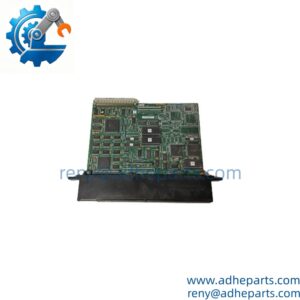
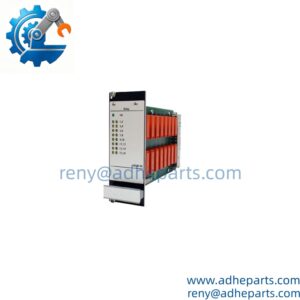
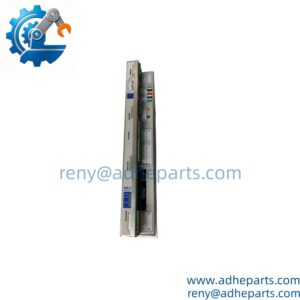
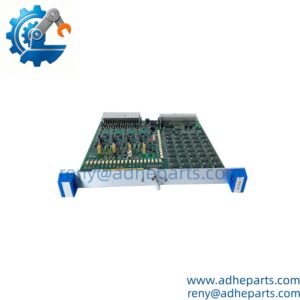
The Emerson Ovation 5X00357G04 is an I/O module for the Ovation distributed control system. Ovation is the platform Emerson built for power generation and water treatment — it runs boiler controls, turbine auxiliaries, balance-of-plant systems, and water distribution networks. The I/O modules are the interface between the controller and the field devices: transmitters, switches, solenoids, and positioners.
The engineering value of the Ovation I/O architecture is the branch-and-node structure. The controller talks to the I/O over a dedicated high-speed network, and each module reports its own channel-level diagnostics back to the operator station. If a channel fails or a field wire opens, the operator sees the specific point fail, not just a generic card fault. That is the difference between a two-minute diagnostic and a two-hour loop check.
I cannot tell you from the model number whether this module is analog or digital, input or output, or how many channels it carries. Read the faceplate label on your existing module — it will state the channel type and count. Send me that photo and the cabinet it came out of, and I will confirm the assembly against the OEM documentation.
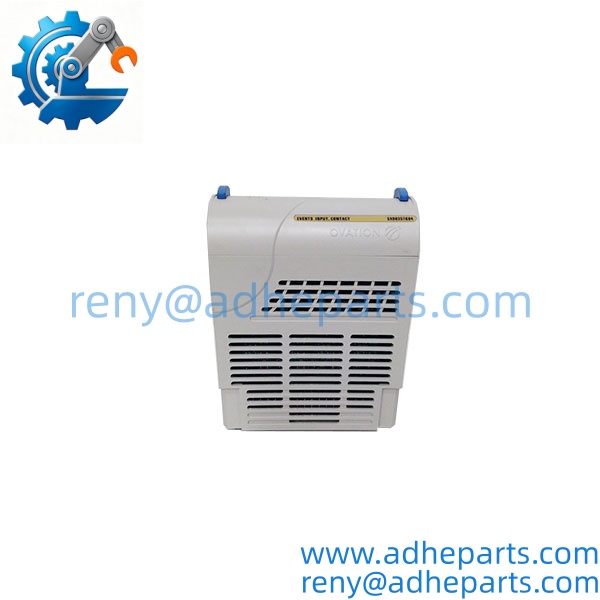
5X00357G04
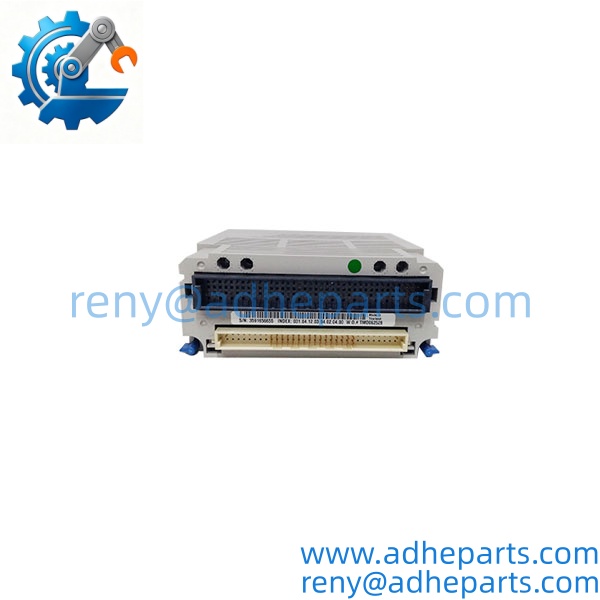
5X00357G04
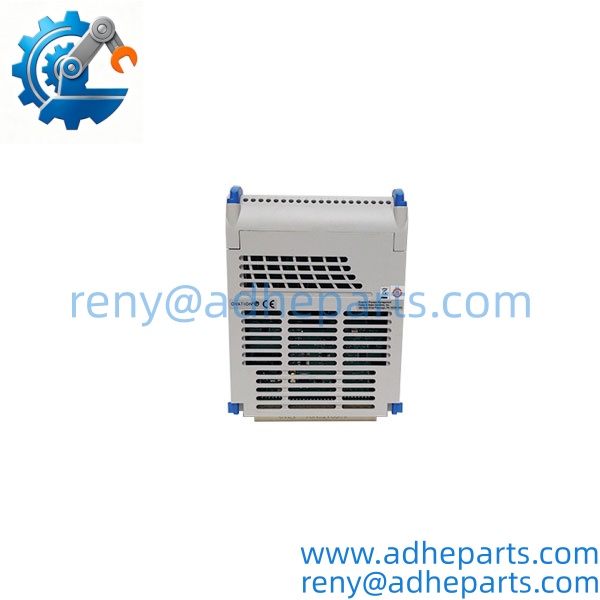
5X00357G04
5. Application Scenarios & Field Experience
Part 1 – Narrative Paragraph
The failure mode that costs the most on an Ovation I/O module is a channel that fails silently. The module still communicates, the card still passes its self-test, but one channel stops updating. The operator sees a frozen value on the trend display — or worse, sees the last good value and assumes the process is steady. In my experience, the plant usually discovers the problem when a control loop stops responding, not when the channel fails. When you replace a module in this class, record the channel assignments and the field wiring before you pull the old one. The base is keyed, but the wiring is not — a mislanded wire will introduce a fresh fault on top of the one you are fixing.
Part 2 – Numbered List (Application Scenarios)
- Fossil Power Plants – Boiler and Turbine Auxiliary I/O – The module monitors thermocouples, pressure switches, and level transmitters, and drives positioners and solenoids on dampers, feedwater valves, and sootblowers. The Ovation I/O branch keeps the field wiring local to the equipment area.
- Combined Cycle Plants – HRSG and Balance of Plant – Used on heat recovery steam generator controls and the balance-of-plant systems that support the gas turbine. Channel-level diagnostics let the operator isolate a failed transmitter without a field walkdown.
- Hydroelectric Plants – Unit Auxiliary Monitoring – Monitors bearing temperature, vibration switches, and gate position on hydro units. The wide temperature rating handles the uncontrolled climate inside a powerhouse.
- Water and Wastewater – Plant-Wide I/O – Used across intake, treatment, and distribution controls. The module reports open-wire and out-of-range conditions on the operator station, which reduces the number of unplanned field visits.
Part 3 – Short Field Story
A fossil plant in the Midwest had a feedwater control loop that would not respond to the operator’s setpoint changes. The crew had replaced the positioner and recalibrated the valve. The loop still would not move. We asked for the module’s channel assignment before shipping anything. It turned out the analog output channel had failed, and the controller was reporting the last commanded value back to the operator station — so the display showed the new setpoint while the field device was sitting at the old position. The plant replaced the module, transferred the channel configuration, and the loop responded on the first command. The card had failed in a way that looked like a process problem, not an I/O fault.
6. Standard Operating Procedure (SOP) for Quality Control
- Visual & Origin Inspection – We verify the Emerson marking, the 5X00357G04 model string, and the date code. We inspect the module connector and the housing for cracks or moisture ingress. A module with a damaged connector or evidence of rework is rejected.
- Revision Documentation – We read and photograph the full model string, the firmware revision, and the module type label. That record ships with the module so you can compare it against the unit you are replacing.
- Base Fit Verification – Each module is seated on a test I/O base to confirm the connector engages fully and the retention mechanism holds. A module that fits loosely will cause intermittent I/O network faults.
- Channel Verification – We exercise the module’s channels against a calibrated test fixture. For inputs, we apply a known signal and confirm the reported value. For outputs, we command the channel and measure the result. Accuracy must stay within the OEM specification.
- Isolation Test – We apply the rated isolation voltage between channels and between a channel and ground. Leakage current must stay below the datasheet limit.
- I/O Network Test – The module is installed in a live Ovation test branch with a controller. We verify the controller recognizes the module, reads its status, and exchanges I/O data without a network fault.
- Fault Reporting Test – We simulate an open field wire on one channel and verify the module reports the fault to the controller. A module that reads correctly but does not report faults is not acceptable.
- ESD-Safe Packaging – The module is wrapped in anti-static film, seated in a conductive foam insert with the connector protected, and packed in a double-wall carton with static warning labels.
7. Frequently Asked Questions (FAQ)
Q1: What channel type is 5X00357G04?
A: I cannot confirm the channel type from the model number alone. Ovation uses the 5X00 prefix across analog inputs, analog outputs, digital inputs, digital outputs, RTD inputs, thermocouple inputs, and communication cards. Read the faceplate label on your existing module — it states the channel type and count. Send us that photo and we will confirm the assembly before you order.
Q2: Will this module drop into my existing Ovation I/O base?
A: The module is designed for Ovation I/O bases, but the base part number matters. Some bases support redundancy and some do not, and the termination arrangement differs between base types. Check the base part number in your cabinet and confirm it accepts this module. If you send us the base model, we can confirm the match.
Q3: Can I replace just one module in a redundant pair?
A: Yes, if your base supports module-level redundancy. But follow the manufacturer’s hot-swap procedure — do not pull the module with the field wiring energized. After the swap, verify the controller has re-established the redundant pair before you return the loop to automatic control.
Q4: What is the warranty on this module?
A: We offer a 12-month warranty from the ship date. It covers channel failure, isolation breakdown, I/O network communication failure, and connector failure under normal operating conditions. It does not cover damage from connecting field supply voltage to the wrong terminals, reversed field wiring, or ESD damage from handling without a wrist strap. We test every module on a live Ovation branch before it ships.
Q5: Any installation pitfalls I should watch for?
A: Four. First, record the channel assignments and field wiring before you pull the old module — the base is keyed, but the wiring is not. Second, verify the field signal type and range match the module configuration before you connect any load. Third, the I/O network addressing is set at the cabinet level — confirm the module is configured for the correct node address before power-up. Fourth, after the swap, exercise each channel through its range and verify the controller reports the correct value before you return the loop to service. A module that powers up is not necessarily communicating correctly.