Description
Note: Many products are not yet listed. Please contact us for more product information. Our supply channels are constantly expanding, and we currently have 20 stable shared supply channels. Please confirm the model, product, price, and all other necessary information with customer service before placing an order. We offer new, refurbished, and used products, and prices are adjusted according to the year of the item you require.
Key Technical Specifications
| Parameter | Value |
|---|---|
| Supported Sensors | ICP accelerometers, velocity sensors, proximity probes, RTD / thermocouple |
| Frequency Response | 10 Hz ~ 1 kHz |
| Measurement Modes | Vibration velocity, displacement, acceleration, temperature, speed |
| Analog Output | Isolated 4–20 mA recorder output, proportional to measured value |
| Relay Outputs | 2 configurable SPDT relays: Alert and Danger |
| Buffered Signal Output | Raw transducer buffer output for portable analyzer check |
| Communication | Optional Modbus RTU (RS485) for DCS / System 1 trending |
| Supply | 24 VDC or 100–240 VAC, variant dependent |
| Power Consumption | ~5 W |
| Mounting | Panel cutout mount |
| Operating Temperature | −20 °C to +60 °C, non-condensing |
| Certification | CE, UL |
| Weight | ~1.2 kg |
Product Introduction
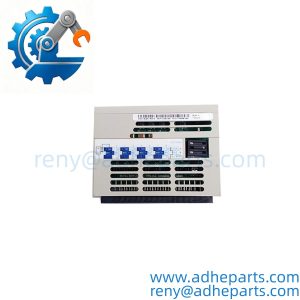
The Bently Nevada 1900/55 is a standalone panel-mount machinery monitor for non-critical auxiliary rotating equipment. It is widely used where a full 3500 rack TSI system is cost-prohibitive, but vibration protection and trending are still required. It accepts multiple transducer types, provides local visual readout, alarm relay contacts for shutdown or annunciation, and 4–20mA signal to feed DCS. Configuration is done via local keypad or 1900 configuration software. It is commonly called the fan monitor in the field.
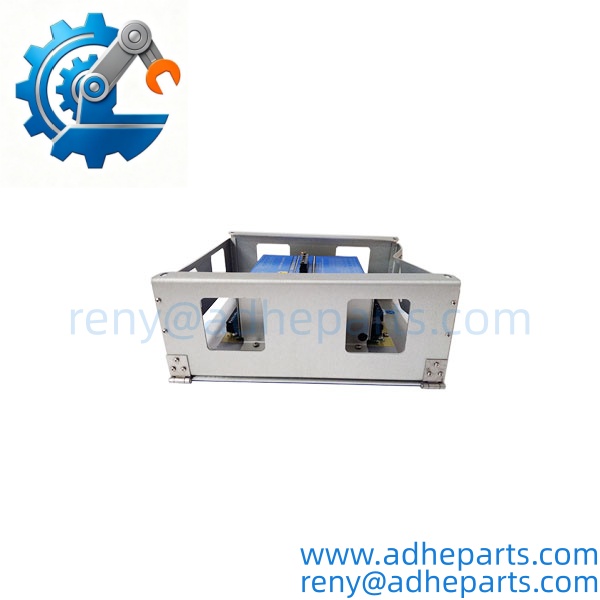
1900/55
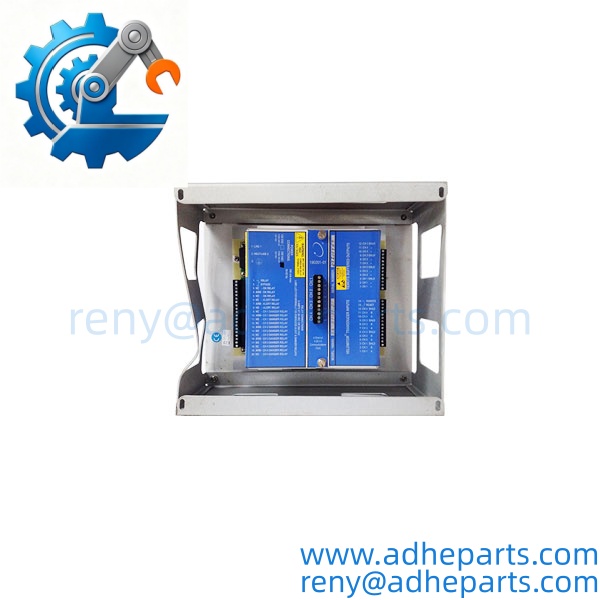
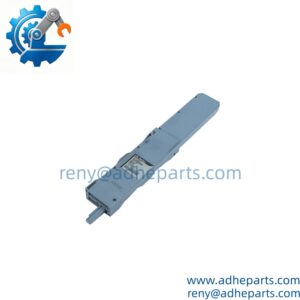
1900/55
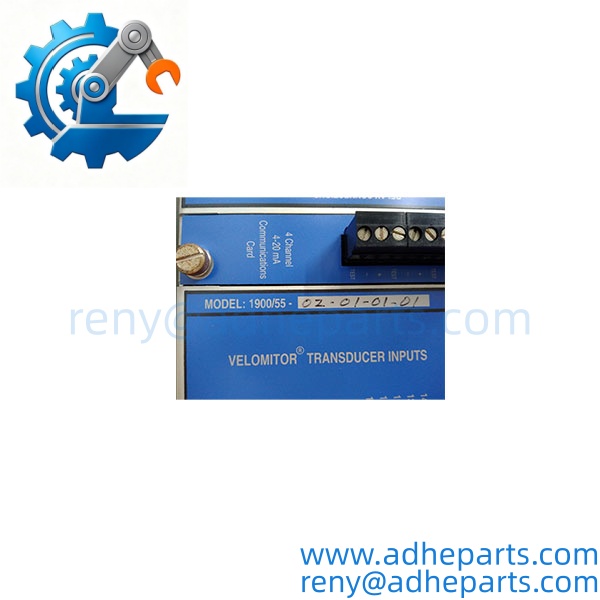
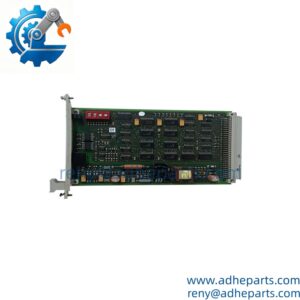
1900/55
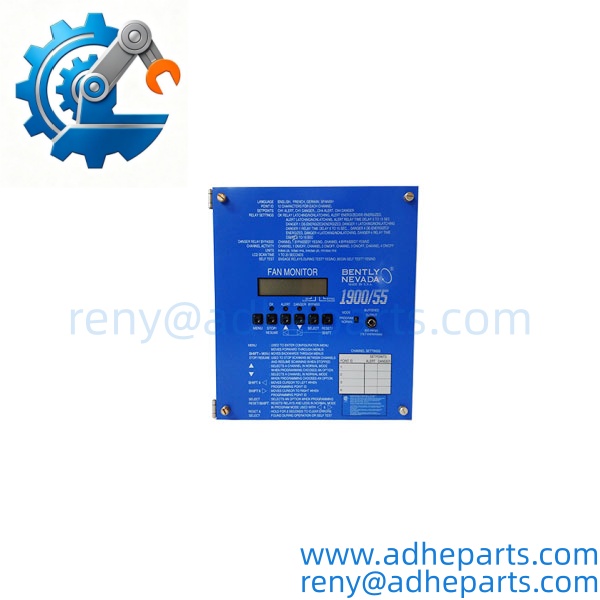
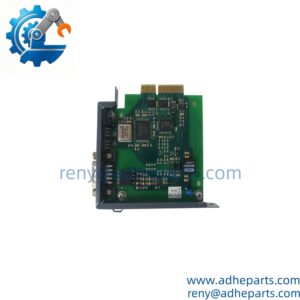
1900/55
Application Scenarios & Field Experience
Many sites confuse 1900/55 with 3500 series rack modules. The 1900/55 is a self-contained unit; it cannot plug into a 3500 backplane.
- Power plant auxiliary systems: ID/FD fans, induced draft and forced draft blower protection.
- Refinery utility packages: Cooling tower fans, air blowers, small oil pumps.
- Pulp & paper mills: Process fans and exhaust fans bearing vibration monitoring.
- Water treatment plants: Aeration blowers and transfer pump condition monitoring.
In my experience, a power plant FD fan 1900/55 gave false danger alarms after the accelerometer cable suffered intermittent shielding damage. The technician swapped the spare monitor, loaded the same alert and danger threshold settings, performed a transducer check and bump test, and verified stable 4–20mA trending before returning the fan to auto. The original unit was sent for bench calibration.
Standard Operating Procedure (SOP) for Quality Control
- Visual & Origin Inspection: Check front panel LCD, keypad, terminal block, OEM nameplate and serial number. Reject units with cracked display or burned relay terminals.
- Live Rig Testing: Apply rated power, connect simulator signal, verify reading accuracy, alert/danger relay action, 4–20mA output and buffer signal.
- Configuration & Revision Verification: Record firmware version, confirm ordering variant matches power supply and comm option required on site.
- ESD-Safe Packaging: Protect terminal block, place in static shielding bag, foam padding around front panel to avoid LCD scratch.
Frequently Asked Questions (FAQ)
Q1: Can 1900/55 be installed inside a 3500 rack? A: No. It is a standalone panel mount monitor, not a 3500 slot module. It is not interchangeable with 3500/42M or other 3500 monitors. Q2: What warranty applies to this Bently Nevada 1900/55? A: We offer a 12-month warranty. Warranty covers hardware defects under rated operating conditions. Damage from sensor overvoltage, wiring shorts, or misconfigured alarm thresholds is excluded. Q3: Is this exact variant stocked? A: This is a common auxiliary monitor, but power supply and Modbus options vary. Confirm the full ordering suffix before ordering. Q4: Do I need to re-calibrate the sensor after replacing the monitor? A: Sensor calibration remains valid. You must re-enter alarm thresholds, measurement units and sensor sensitivity settings into the new 1900/55. Q5: Can I hot swap the unit while the fan is running? A: You may power it down for replacement, but the fan will lose vibration protection during the swap. Bypass alarm/trip logic before removal.