Description
Note: Many products are not yet listed. Please contact us for more product information. Our supply channels are constantly expanding, and we currently have 20 stable shared supply channels. Please confirm the model, product, price, and all other necessary information with customer service before placing an order. We offer new, refurbished, and used products, and prices are adjusted according to the year of the item you require.
Product Introduction (Anti-Template)
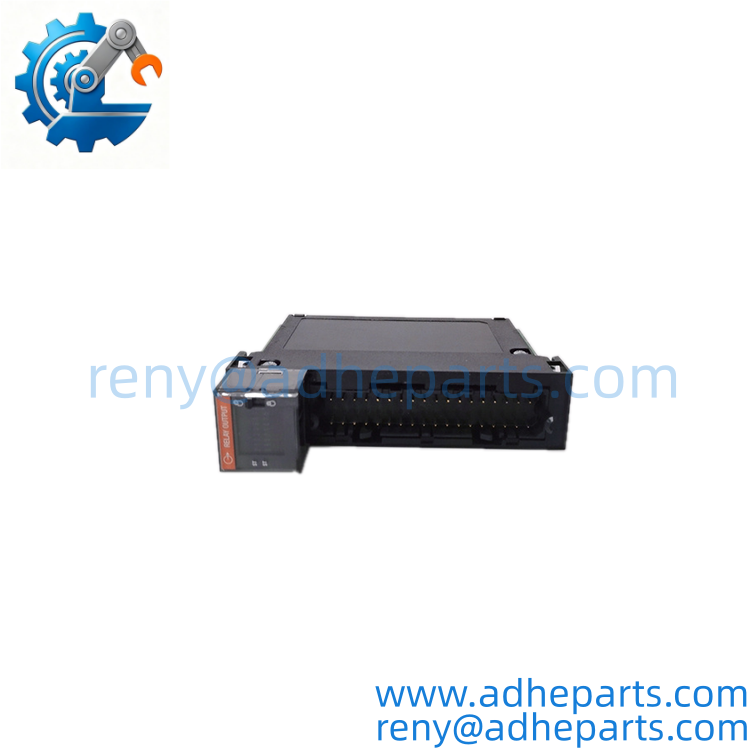
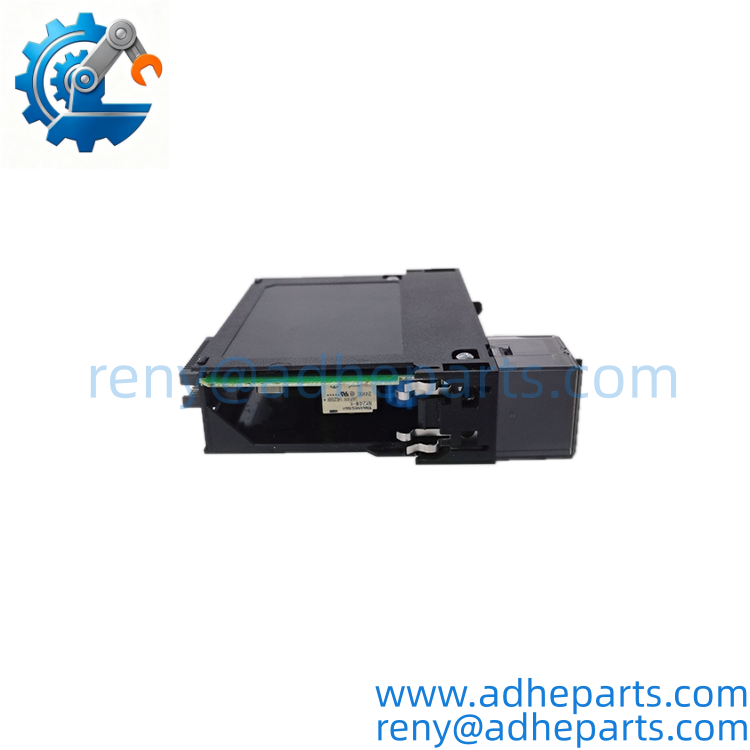
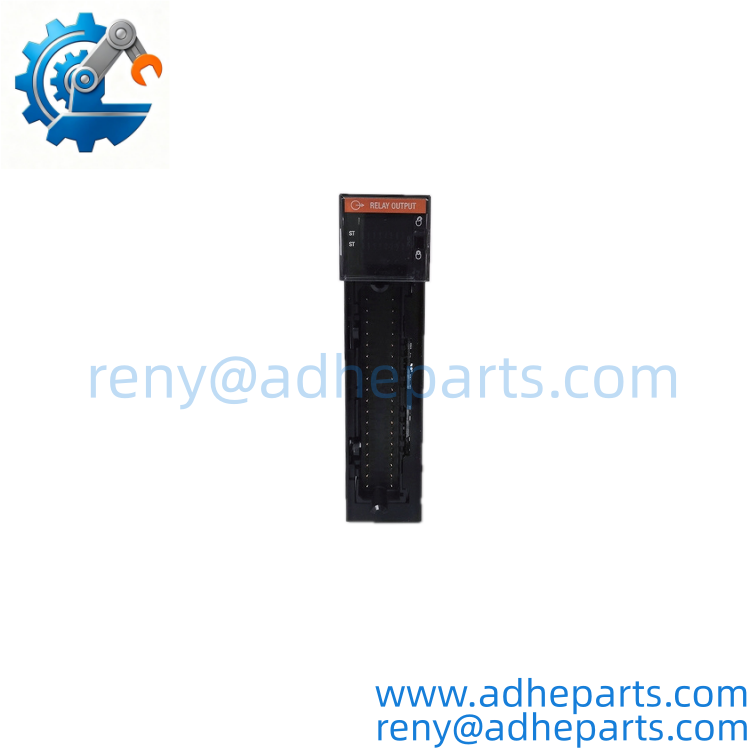
When a ControlLogix system has to switch different field voltages through independent relay contacts, output isolation becomes more important than simply counting I/O points. The Allen-Bradley 1756-OW16I/A provides 16 normally-open relay outputs, with each output individually isolated for applications requiring separation between field circuits.
The module supports both AC and DC loads within its specified operating range and connects to the ControlLogix backplane through a standard 1756 I/O slot. Rockwell specifies 250 V continuous isolation between outputs, as well as between the outputs and backplane.
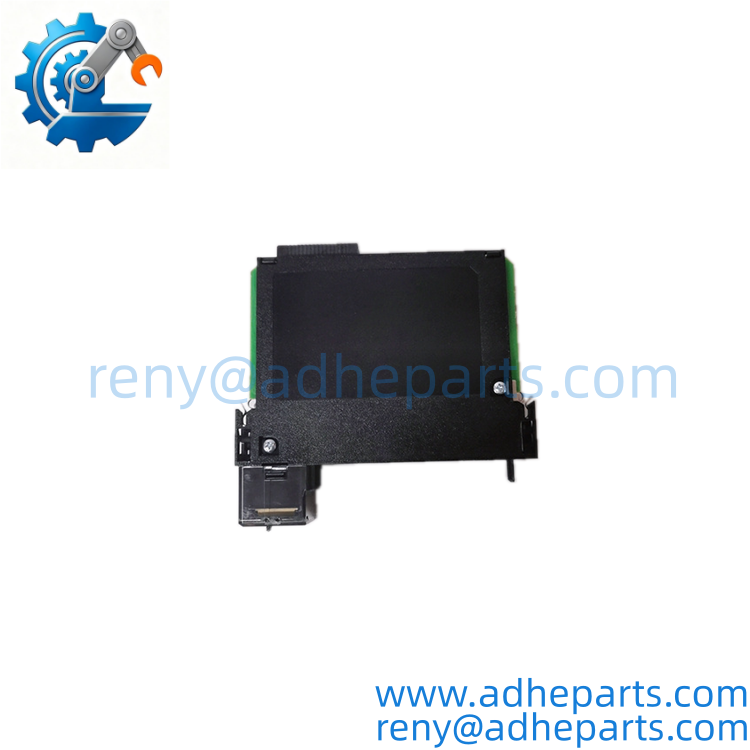
1756-OW16I/A
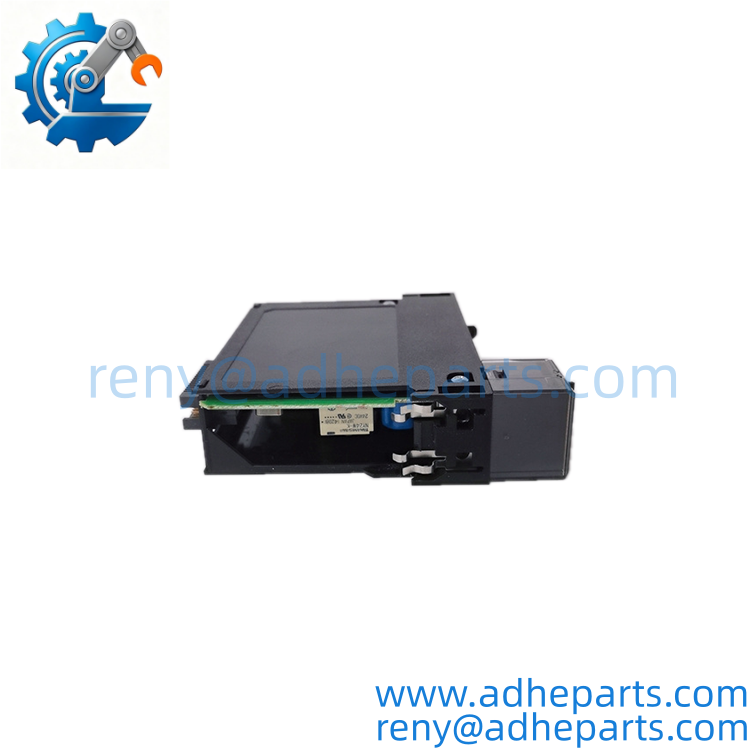
Key Technical Specifications
| Parameter | Specification |
|---|---|
| Manufacturer | Allen-Bradley / Rockwell Automation |
| Catalog Number | 1756-OW16I |
| Requested Version | 1756-OW16I/A |
| Product Family | ControlLogix 1756 |
| Module Type | Digital Contact / Relay Output |
| Number of Outputs | 16 |
| Output Type | Normally Open (N.O.) relay |
| Output Isolation | Individually isolated |
| Isolation Voltage | 250 V continuous |
| DC Operating Range | 5–125 VDC |
| AC Operating Range | 10–240 VAC, 50/60 Hz |
| Output Rating | 1 A @ 5–30 VDC; 0.5 A @ 48 VDC; 0.22 A @ 125 VDC; 1.5 A @ 120 VAC; 0.75 A @ 240 VAC |
| Minimum Load | 10 mA per point |
| Output Delay | 10 ms maximum, OFF-to-ON and ON-to-OFF |
| Backplane Current | 150 mA @ 5.1 V; 150 mA @ 24 V |
| Backplane Power | 4.4 W |
| Max. Power Dissipation | 4.5 W @ 60°C |
| Switching Frequency | 1 operation / 3 seconds at rated load |
| Contact Life | 300,000 cycles resistive; 100,000 cycles inductive |
| Connection | 36-pin removable terminal block arrangement |
Specifications above are based primarily on Rockwell’s current product data and ControlLogix technical documentation.
Field Application & Technical Pitfalls (The Engineer’s Guide)
Motor and Equipment Control
The 1756-OW16I is suitable for discrete switching tasks such as contactor control, interposing relay commands, alarm circuits, solenoid control, and other field devices where a relay contact is preferable to a transistor or solid-state output.
Mixed-Voltage Control Cabinets
Its individually isolated contacts can be useful where different output circuits operate at different field voltages. This does not mean every load can be connected without checking its actual current and voltage requirements.
Legacy ControlLogix Replacement
The module is also encountered during ControlLogix migration and maintenance projects. Rockwell documents conversion applications from older PLC-5 relay output modules to the 1756-OW16I.
Pitfall 1 — Check the load rating, not just the voltage.
The allowable current changes substantially with load voltage. For example, Rockwell specifies 1.5 A at 120 VAC but only 0.75 A at 240 VAC. DC ratings also vary by voltage.
Pitfall 2 — Do not treat it like a transistor output.
This is a mechanical relay output. Switching frequency, contact life, inductive loads, and minimum load current all matter. Rockwell specifies a maximum switching frequency of approximately one operation every three seconds at rated load.
Pitfall 3 — Normally open means normally open.
The 1756-OW16I provides N.O. contacts. When replacing older relay modules, verify whether the existing application depends on N.C. contacts. Rockwell’s PLC-5 conversion documentation specifically warns that an older 1771-OW16 installation may use N.C. outputs that cannot simply be reproduced by the 1756- without rewiring and program changes.
A typical maintenance issue appears during a migration: the engineer sees “16 relay outputs” on both the old and new modules and assumes the wiring can be transferred point-for-point. The contact configuration and load ratings still need to be checked first (especially when inductive loads or 240 VAC circuits are involved).
Quality Control (QC) SOP & Transparency
- Part-number verification: Confirm the module label reads , with the customer’s required Series A/version designation where applicable.
- Physical inspection: Check the housing, front label, status indicators, backplane connector, terminal interface, and keying features.
- Relay-output inspection: Verify all 16 output channels are present and correspond to the N.O. relay configuration.
- Electrical inspection: Check for visible signs of overheating, contact damage, contamination, cracked housings, or abnormal terminal conditions.
- Functional testing: Where the appropriate test equipment is available, exercise the relay outputs and verify OFF/ON switching response.
- Isolation testing: Verify output-to-output and output-to-backplane isolation according to the applicable test procedure.
- Application review: Confirm the customer’s field voltage, load current, N.O./N.C. requirement, and terminal-block arrangement before shipment.
- Final QA: Record identification photographs and available test results before packing.
- Packaging: Protect the module against ESD, mechanical shock, and moisture during storage and transportation.
FAQ
Q1: What is the Allen-Bradley 1756-?
It is a ControlLogix 16-point digital relay output module with 16 normally-open, individually isolated relay contacts.
Q2: What voltage can the outputs switch?
The current Rockwell specification lists 5–125 VDC and 10–240 VAC. The permitted current depends on the actual voltage and load type.
Q3: Are all 16 outputs individually isolated?
Yes. Rockwell specifies 16 N.O. individually isolated outputs and 250 V continuous isolation between outputs.
Q4: Does 1756- have short-circuit protection?
No. Rockwell specifies that the outputs are not internally protected by fusing. External protection or an appropriate fused interface should therefore be considered according to the application.
Q5: Can it be used for safety functions?
Rockwell currently identifies the 1756- as not suitable for safety functions. Do not select this module merely because the field circuit is part of a safety-related process.
Q6: Is 1756-/A the same as 1756-?
The catalog number is ; “/A” generally refers to the Series A hardware designation. For a replacement order, provide the complete label information, including series and any revision details, rather than relying only on the base catalog number.
Q7: Does the terminal block come with the module?
The 1756- uses a 36-pin removable terminal block arrangement. The exact terminal-block configuration should be confirmed when purchasing a replacement, particularly for an existing cabinet where the field wiring is already installed.