Description
Note: Many products are not yet listed. Please contact us for more product information. Our supply channels are constantly expanding, and we currently have 20 stable shared supply channels. Please confirm the model, product, price, and all other necessary information with customer service before placing an order. We offer new, refurbished, and used products, and prices are adjusted according to the year of the item you require.
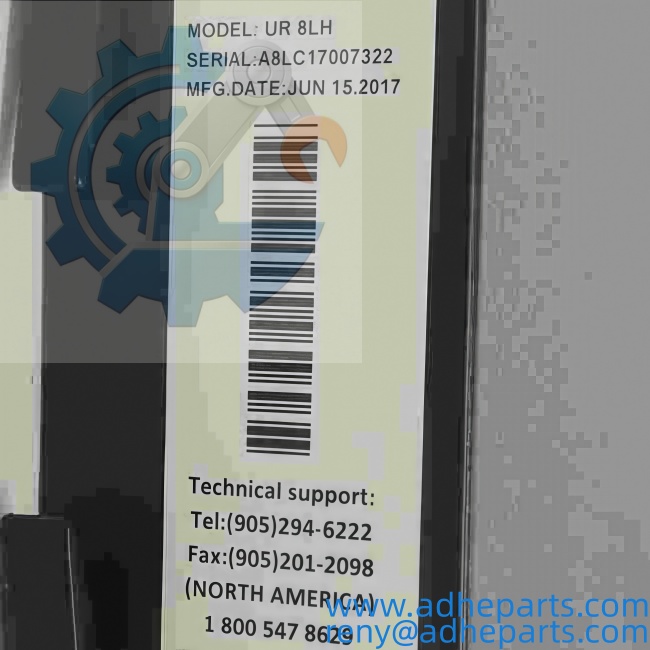
GE Multilin UR8LH
Key Technical Specifications
| Parameter | Value |
|---|---|
| Model | UR8LH |
| Brand | GE Multilin (now Schneider Electric) |
| Product Family | UR (Universal Relay) Series |
| Module Type | RTD Input Module |
| RTD Inputs | 8 channels (differential, individually configurable) |
| Supported RTD Types | Pt100 (DIN/IEC), Ni120, 10Ω Copper, 100Ω Nickel (customizable) |
| Wiring Configuration | 3-wire (automatic lead resistance compensation) |
| Measurement Range | –50 °C to +250 °C (Pt100), –50 °C to +300 °C (Ni120) |
| Accuracy (Typical) | ±1 °C (at 25 °C ambient) |
| Resolution | 0.1 °C |
| Lead Resistance Compensation | Automatic, up to 25 Ω per lead |
| Scan Rate | 1 Hz (all 8 channels sequentially) |
| Isolation | 2500V AC (RTD circuits to logic) |
| Common Mode Rejection | > 100 dB at 50/60 Hz |
| Normal Mode Rejection | > 60 dB at 50/60 Hz |
| Update Rate to Host | Every 1 ms (via UR backplane bus) |
| Diagnostics | Open-circuit detection, short-circuit detection (0Ω), out-of-range alarms |
| Status Indicators | Module OK (green LED), Communication (green LED), Fault (red LED) |
| Mounting | Plugs into UR chassis (horizontal or vertical orientation) |
| Backplane Connector | 96-pin DIN (proprietary UR bus) |
| Power Supply | 5V DC from UR backplane (consumes 2.5W typical) |
| Operating Temperature | –40 °C to +60 °C |
| Storage Temperature | –40 °C to +85 °C |
| Humidity | 5% – 95% RH, non-condensing |
| Weight | Approx. 0.35 kg (0.77 lb) |
| Certifications | UL 508, CSA C22.2, CE, IEC 60255 (relay standards) |
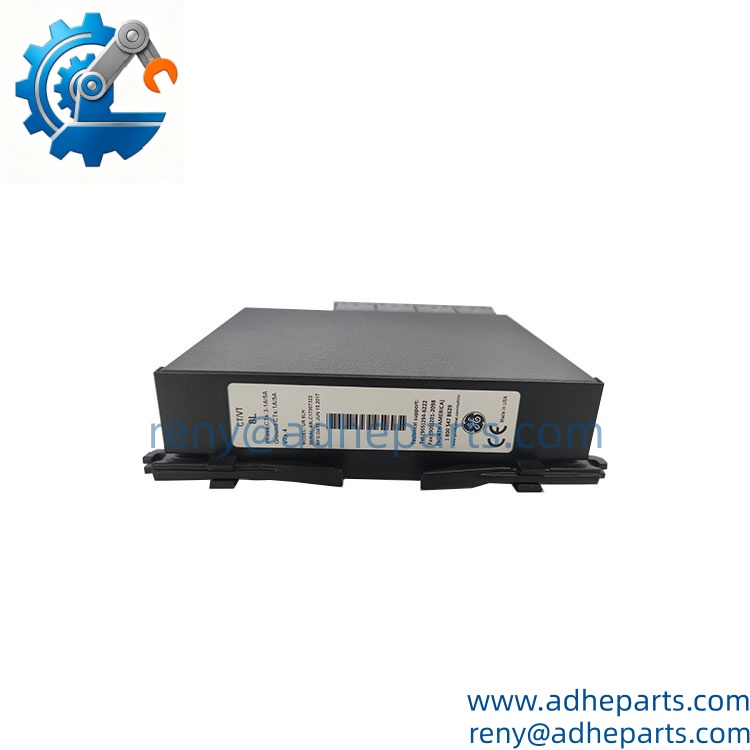
GE Multilin UR8LH
Product Introduction
The GE Multilin UR8LH is a dedicated RTD input module designed for the UR (Universal Relay) family of protection relays. It provides 8 channels of high-accuracy temperature measurement, typically used for monitoring motor winding temperatures, bearing temperatures, or transformer oil temperatures. The module plugs directly into the UR relay’s chassis (via the 96-pin backplane connector) and communicates with the main CPU over a dedicated bus.
What sets the UR8LH apart is the combination of electrical isolation, lead resistance compensation, and the fast 1-second update rate. The 2500V AC isolation between the RTD circuits and the relay logic ensures that a transient surge on the thermocouple wiring does not compromise the relay’s protection functions. The automatic lead resistance compensation (up to 25 Ω per lead) allows the use of long RTD cables without calibration, which is essential when the RTDs are located in the motor terminal box 50 meters away from the relay cabinet. The UR8LH also supports open-circuit and short-circuit detection, providing diagnostic feedback to the operator station.
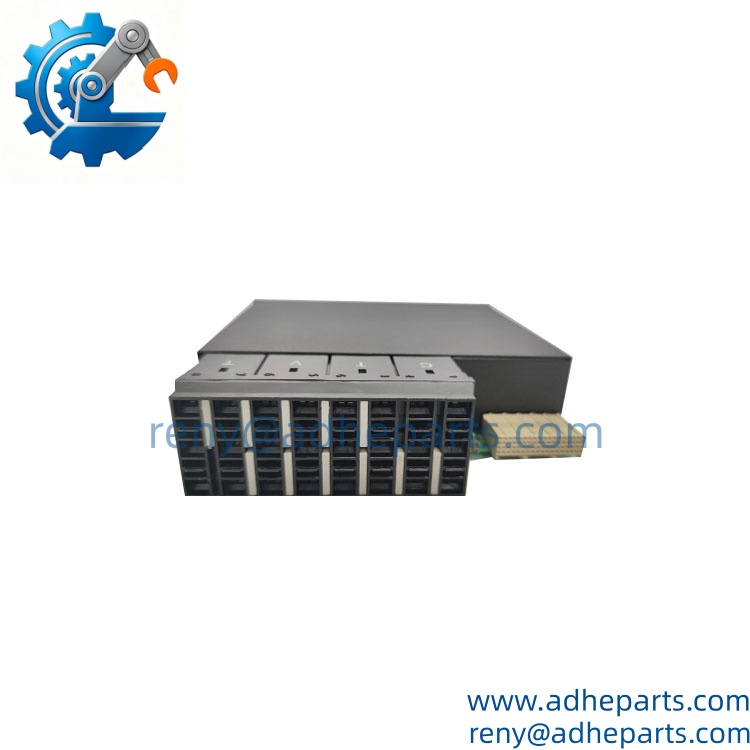
GE Multilin UR8LH
Application Scenarios & Field Experience
Part 1 – Narrative Paragraph
The most overlooked point of failure in motor protection is temperature monitoring. A motor can be drawing normal current and still be overheating due to blocked cooling fins or a failed bearing. I have seen plants that relied solely on thermal overload protection—which trips only when the motor is already severely degraded—instead of proactive temperature monitoring. The UR8LH solves that by giving the 469 or 489 relay direct access to winding and bearing temperatures in real-time. If the bearing temperature rises above a configurable threshold, the relay can issue an alarm, initiate a cooling cycle, or trip the motor before catastrophic failure occurs. The ability to do this without additional analog input cards in the PLC simplifies the control architecture.
Part 2 – Numbered List (Application Scenarios)
- Motor Protection – Large Induction Motors – In a 1500 HP compressor motor, the UR8LH reads 3 winding RTDs and 2 bearing RTDs (Pt100). The relay uses this data to generate a thermal model that protects against locked rotor, overload, and loss-of-cooling. The data is sent to the DCS via Modbus.
- Transformer Monitoring – Power Transformers – The module monitors transformer oil temperature (top and bottom), winding hot-spot temperature, and ambient temperature. It works with the 745 Transformer Protection Relay to raise an alarm if the oil temperature exceeds 85 °C.
- Generator Protection – Hydro Turbines – The is used in conjunction with the 489 Generator Protection Relay to monitor stator winding and bearing temperatures. The open-circuit detection is critical—if an RTD fails open, the generator must be tripped to prevent a false temperature reading.
- Pump Stations – Cooling Water Pumps – The module monitors motor bearing temperatures and pump seal temperatures, initiating an alarm if either exceeds its setpoint. This is especially important for high-speed pumps operating at 3600 RPM.
Part 3 – Short Field Story
A water treatment plant had a 500 HP vertical turbine pump that would randomly trip on motor overload, despite the current draw being normal. The maintenance manager suspected the pump was seizing, but the problem was intermittent. We installed a 469 relay with a RTD module. Within one week, the logged that the pump’s lower bearing temperature was rising by 15 °C over a 30-minute period before each trip. The bearing was failing. The pump was rebuilt, and the trips stopped. The paid for itself in one month of avoided downtime.
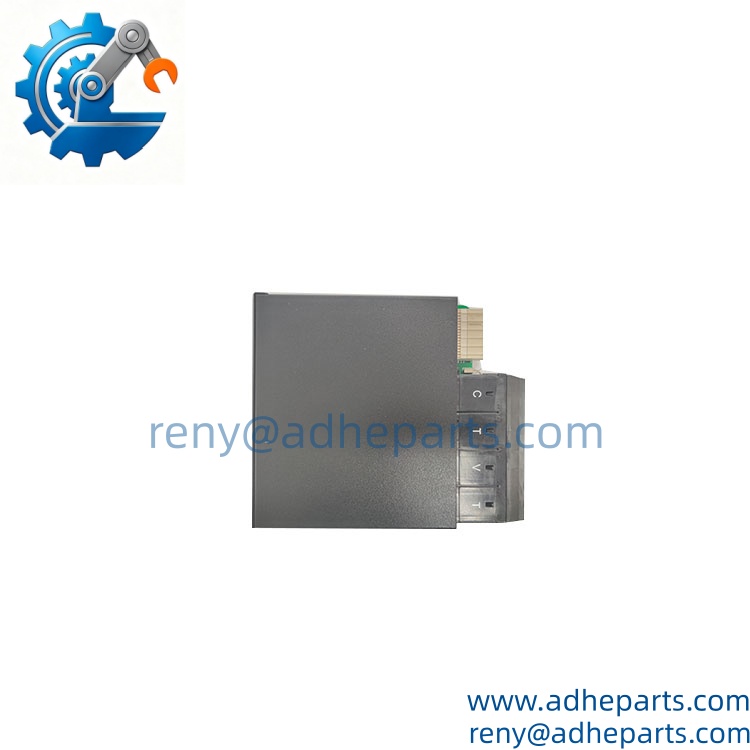
GE Multilin UR8LH
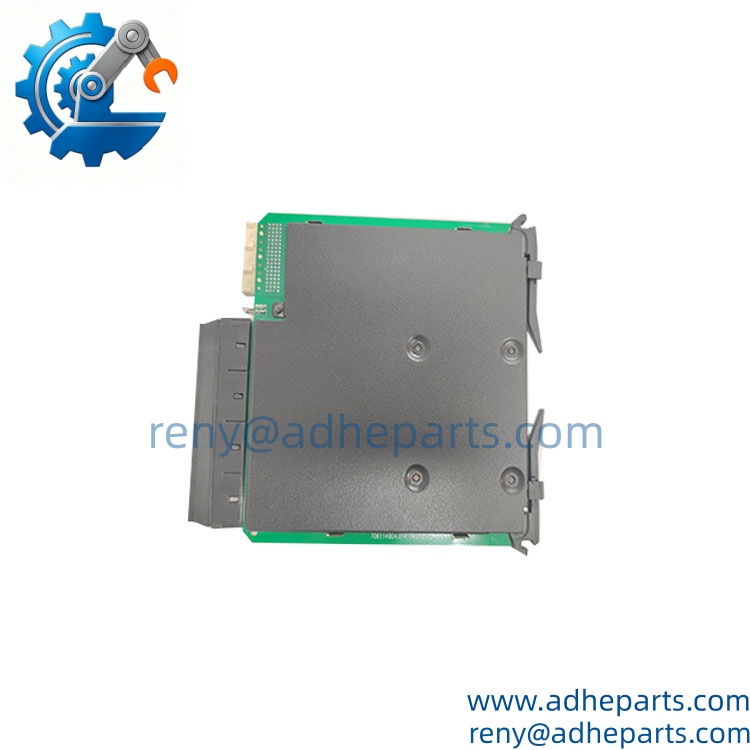
GE Multilin UR8LH
Standard Operating Procedure (SOP) for Quality Control
Every RTD module goes through this QC process:
- Visual & Origin Inspection – We verify the GE/Multilin logo, the model marking, and the date code. We inspect the 96-pin backplane connector for bent pins or corrosion. We also check the PCB for conformal coating and any signs of moisture ingress.
- Power-Up & Self-Test – The module is inserted into a test UR chassis with a known-good CPU. We power up and verify the “Module OK” LED illuminates green and the CPU recognizes the correctly. We note the module’s firmware revision.
- RTD Accuracy Test – We connect a precision RTD simulator (calibrated to Pt100 characteristics) to each of the 8 channels. We set the simulator to 0 °C, 50 °C, 100 °C, and 150 °C, and record the relay’s reading. The error must stay within ±1 °C across the range. We calibrate the module if necessary.
- Lead Resistance Compensation Verification – We add 10 Ω, 20 Ω, and 25 Ω of resistance in series with each RTD lead and verify the reading remains accurate to within ±1.5 °C. We also test the open-circuit detection by disconnecting the RTD—the relay must set an alarm flag.
- Communication Bus Test – We run a 1-hour communication stress test, reading the RTD values from the host CPU every 100 ms. We log any communication dropouts or CRC errors. There must be zero errors during the test.
- Thermal Test – The module is placed in an environmental chamber at 60 °C and is powered on. We verify the module still communicates and the accuracy stays within spec.
- ESD-Safe Packaging – The is wrapped in an anti-static bag, placed in conductive foam, and packed in a rigid cardboard box with “Sensitive Electronic Device” labels.
Frequently Asked Questions (FAQ)
Q1: Is the compatible with all UR series relays (469, 489, 745, etc.)?
A: Yes, the is a standard I/O module that works with any UR-series relay that supports RTD inputs and has the appropriate backplane bus. However, you should confirm that your specific relay (e.g., 469, 489, 745, 750, 760, etc.) has the correct firmware version to support the . Some older relays require a firmware update. We can verify this before shipping if you provide the relay model.
Q2: Does the support 2-wire RTDs, or only 3-wire?
A: The is designed for 3-wire RTDs. It does not support 2-wire RTDs without external compensation. However, you can use a 3-wire RTD with the third wire left unconnected, but this will compromise the lead resistance compensation. For best accuracy, we recommend using 3-wire RTDs exclusively.
Q3: The module has a red fault LED. What does it mean, and can it be cleared?
A: The red fault LED indicates one of the following: (1) an open RTD circuit (the relay will show a “RTD Open” flag in the metering screen), (2) a shorted RTD circuit (the relay will show a “RTD Short” flag), (3) an out-of-range temperature (below -50 °C or above +250 °C for Pt100). The fault is automatically cleared when the condition is resolved. If the red LED stays on and the RTD circuit is known to be good, the module may have a hardware defect—contact us for warranty support.
Q4: What is the warranty, and does it cover the RTD input accuracy?
A: We offer a 12-month warranty covering hardware failure, communication bus failure, and accuracy drift beyond specification (more than ±2 °C). The warranty does not cover damage from connecting 24V AC to the RTD inputs (reverse polarity) or physical damage to the 96-pin backplane connector. We verify each module’s accuracy on our test bench before shipping and provide a calibration certificate.
Q5: Any installation pitfalls I need to watch for?
A: Two important points. First, the is not hot-swappable on most older UR chassis—you must power down the relay before installing or removing the module. Some newer UR chassis (with firmware version 7.0 and above) support hot-swap, but confirm with your relay’s manual. Second, do not connect RTD cables that have a shield grounded at both ends—ground the shield only at the relay cabinet end to avoid ground loops. Also, ensure the RTD cable is shielded and twisted-pair to avoid electromagnetic interference from the motor’s power cables.