Description
Note: Many products are not yet listed. Please contact us for more product information. Our supply channels are constantly expanding, and we currently have 20 stable shared supply channels. Please confirm the model, product, price, and all other necessary information with customer service before placing an order. We offer new, refurbished, and used products, and prices are adjusted according to the year of the item you require.
3. Key Technical Specifications
Confirm each line against the OEM datasheet and the label on your existing module before ordering. The firmware revision and the ToolboxST project version govern compatibility.
| Parameter | Value |
|---|---|
| Model | IS420UCSBH4A |
| Brand | GE |
| Product Family | Speedtronic Mark VIe / Mark VIeS |
| Module Type | UCSB Main Controller |
| Processor | Quad-core processor — verify exact type on your board label |
| Memory (RAM) | Larger than the H1A variant — verify on your board label |
| Non-Volatile Storage | Verify with OEM datasheet |
| Real-Time Operating System | QNX-based RTOS for deterministic control execution |
| Communication Ports | 2 x RJ45, 100 Mbps full-duplex IONet Ethernet (dual redundant) |
| Additional Ports | Verify — USB or serial maintenance port varies by build |
| Redundancy Support | Simplex, Duplex, and Triple Modular Redundant (TMR) |
| Safety Integrity | SIL 3 capable in TMR configuration with the appropriate I/O packs |
| I/O Network | IONet — connects to IS220 series I/O packs |
| Configuration Software | GE ToolboxST / ControlST — verify supported version |
| Power Supply | 24V DC nominal via backplane — verify range and current draw |
| Power Consumption | Verify with OEM datasheet |
| Status Indicators | Power, run, fault, IONet link/activity — verify LED arrangement |
| Operating Temperature | –30 °C to +65 °C (typical — verify for your cabinet) |
| Storage Temperature | –40 °C to +85 °C (typical — verify) |
| Humidity | 5% – 95% RH, non-condensing |
| Mounting | Mark VIe control cabinet rack slot |
| Hot Swap | Supported in redundant configurations — follow OEM procedure; not hot-swap capable in simplex |
| Weight | Verify with OEM datasheet |
| Certifications | UL, CE, ATEX / Class I Div 2 hazardous area rated — verify on the unit label |
4. Product Introduction
The GE IS420UCSBH4A is the high-performance UCSB main controller for the Speedtronic Mark VIe and Mark VIeS turbine control platforms. It executes the turbine control application — speed control, temperature control, fuel control, start-up sequencing, and protection logic — and coordinates the I/O packs over the IONet network. It is the module that runs the machine, and the H4A variant carries a larger processing and memory footprint than the H1A for applications that need it.
The engineering value is the combination of the quad-core processor, the QNX real-time operating system, and the dual redundant IONet network. The H4A variant is specified for larger frame machines and more complex applications where the H1A’s processing headroom is tight — for example, machines with extensive I/O counts, fast control loops, or advanced diagnostics running in parallel with the control application. The RTOS guarantees deterministic execution times, which matters when a control loop must respond within a fixed window. In a TMR configuration, three UCSB controllers run in parallel and vote on the output, achieving SIL 3 safety integrity for the protection functions.
Two things decide whether a swap works. First, the firmware revision. The controller firmware must match the version the ToolboxST project was compiled for, or the project will not download. Second, the rack configuration. The controller slot assignment, the redundancy role (primary or backup), and the network addressing must be correct, or the module will not initialize.
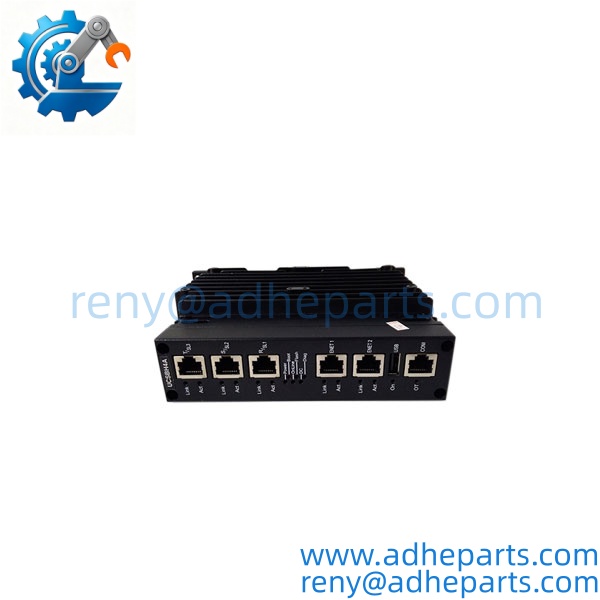
IS420UCSBH4A
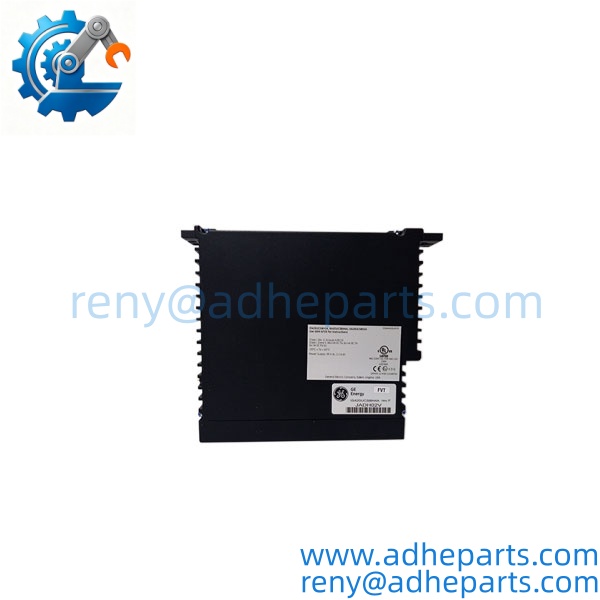
IS420UCSBH4A
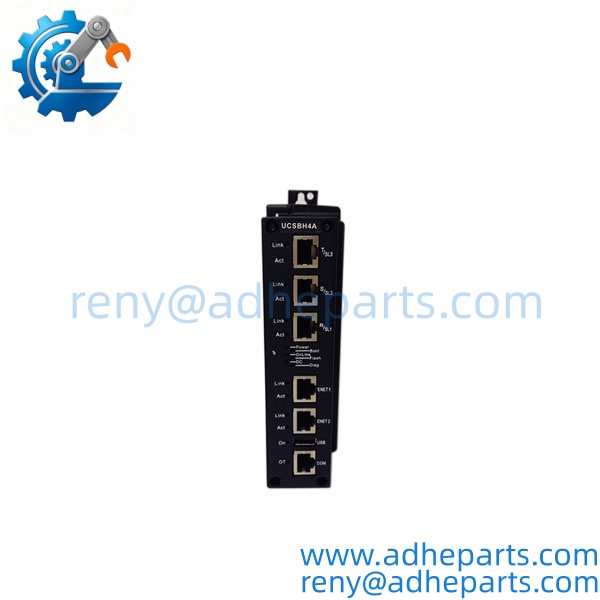
IS420UCSBH4A
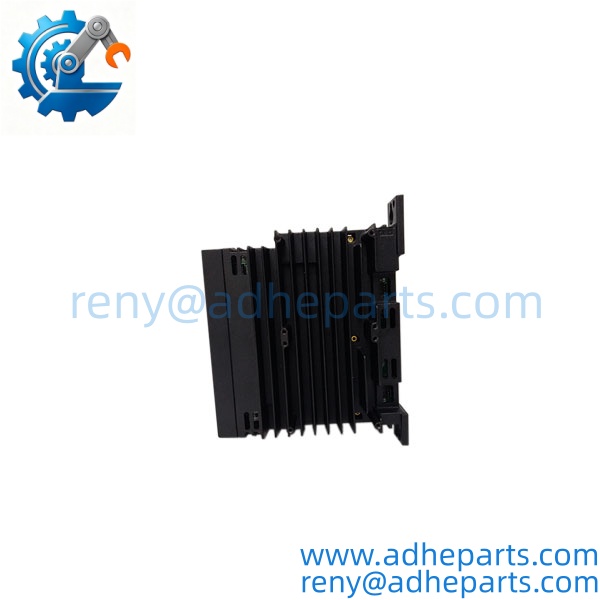
IS420UCSBH4A
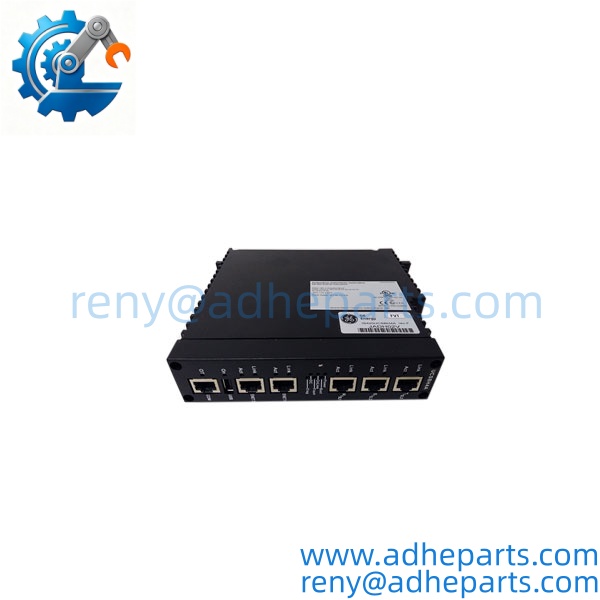
IS420UCSBH4A
5. Application Scenarios & Field Experience
Part 1 – Narrative Paragraph
The failure that hurts most on a Mark VIe controller is not a dead CPU — it is a controller that runs but loses synchronization with its redundant partner. The primary keeps executing, the turbine stays online, and the backup sits silently out of step. Then the primary faults, the switchover happens, and the backup takes over with stale data or a mismatched application. I have seen that scenario on a combined cycle plant where the two controllers had been running different firmware revisions for months and nobody noticed until a forced switchover test failed. When you replace a UCSB in a redundant pair, verify the firmware revision and the synchronization status before you return the unit to service.
Part 2 – Numbered List (Application Scenarios)
- Heavy-Duty Gas Turbines – Large Frame Machines – The H4A variant is specified on Frame 7FA and 9FA class machines where the I/O count and the control complexity exceed the H1A’s comfortable processing margin. The controller executes the speed, temperature, and fuel control loops plus the start-up sequencing and the overspeed protection logic.
- Steam Turbine Control – Complex Load Sharing – Used where the turbine operates in a complex load-sharing scheme with other units on the grid. The larger memory footprint accommodates the additional logic and the historical data storage.
- Combined Cycle Plants – Unit and Plant Coordination – The controller coordinates the gas turbine, the HRSG, and the steam turbine across the combined cycle unit. The H4A variant handles plants with extensive balance-of-plant I/O and advanced diagnostics.
- Generator Excitation – Mark VIeS Safety Applications – In the Mark VIeS configuration, the controller executes safety instrumented functions for the turbine and generator. The SIL 3 rating applies when the system is configured in a compliant TMR architecture.
Part 3 – Short Field Story
A combined cycle plant had a gas turbine that would not start after a scheduled outage. The maintenance team had replaced the backup controller during the outage and the system would not synchronize. We asked them to check the firmware revision on both controllers. The replacement had a newer firmware revision than the primary, and the two would not pair. The plant rolled the replacement firmware back to match the primary, and the system synchronized on the next power-up. The hardware had been fine — the firmware revision was the problem.
6. Standard Operating Procedure (SOP) for Quality Control
- Visual & Origin Inspection – We verify the GE marking, the IS420UCSBH4A model string, and the date code. We inspect the RJ45 ports and the backplane connector for bent pins or damage. A module with a cracked connector or evidence of moisture ingress is rejected.
- Revision and Firmware Documentation – We read and photograph the full model string, the firmware revision, and the board ID. That record ships with the module so you can compare it against the unit you are replacing.
- Rack Fit Verification – Each module is seated in a Mark VIe test rack to confirm the connector engages fully and the retention mechanism holds. A module that fits loosely will cause intermittent backplane faults.
- Power-Up Self-Test – The module is powered in a live rack and we verify it completes its boot sequence and that the rack recognizes the module type without a fault.
- IONet Communication Test – The module is connected to a Mark VIe test network and we verify it communicates on both Ethernet ports at 100 Mbps full duplex. We run a continuous exchange loop and log any dropped frames.
- Redundancy Synchronization Test – Where a redundant pair is ordered, we verify the two controllers synchronize and that a forced switchover completes without data loss.
- Control Output Verification – We load a test control application and verify the controller executes the logic and produces the expected output on the I/O network.
- ESD-Safe Packaging – The module is wrapped in anti-static film, seated in a conductive foam insert with the connectors protected, and packed in a double-wall carton with static warning labels.
7. Frequently Asked Questions (FAQ)
Q1: What is the difference between the IS420UCSBH4A and the IS420UCSBH1A?
A: Both are UCSB controllers for the Mark VIe platform, but the H4A is the higher-performance variant. It carries a faster processor and a larger memory footprint than the H1A. The H4A is specified for larger frame machines and more complex applications where the H1A’s processing headroom is tight. Mechanically they share the same form factor and backplane connector, so the H4A can substitute for the H1A in many applications — but verify your ToolboxST project’s hardware definition and the firmware revision before you substitute.
Q2: Can I replace just one controller in a redundant pair?
A: Yes, but the two controllers must match in model and firmware revision, or the pair will not synchronize. Before you order, read the firmware revision off both existing controllers and send it to us. If we cannot match the revision, plan to replace both and re-download the application.
Q3: Will my existing ToolboxST project load into this controller?
A: Only if the firmware revision matches or is compatible with the project. The control application and the hardware configuration are tied to the controller firmware version. If the replacement has a newer revision, you may need to update the project and re-verify the application before you can download. Pull your existing project file before you remove the old controller — that file is your recovery path.
Q4: What is the warranty on this module?
A: We offer a 12-month warranty from the ship date. It covers processor failure, backplane connector failure, and IONet communication failure under normal operating conditions. It does not cover damage from hot-swapping the module in a simplex configuration, bent pins from forced insertion, or ESD damage from handling without a wrist strap. We test every module in a live Mark VIe rack before it ships.
Q5: Any installation pitfalls I should watch for?
A: Four. First, power down the rack before inserting or removing the module in a simplex configuration — hot-swapping is only supported in redundant systems. Second, record the firmware revision, the board ID, and the network configuration from the old controller before you remove it. Third, verify the controller firmware matches the ToolboxST project version before you power up. Fourth, in a redundant pair, verify the synchronization status before you return the unit to service. A controller that powers up is not necessarily synchronized with its partner or executing the correct application.