Description
Note: Many products are not yet listed. Please contact us for more product information. Our supply channels are constantly expanding, and we currently have 20 stable shared supply channels. Please confirm the model, product, price, and all other necessary information with customer service before placing an order. We offer new, refurbished, and used products, and prices are adjusted according to the year of the item you require.
3. Key Technical Specifications
Confirm each line against the OEM datasheet and the label on your existing module before ordering. The -20 suffix defines the build and the output configuration.
| Parameter | Value |
|---|---|
| Model | PFEA112-20 |
| Order Code | 3BSE050091R20 |
| Brand | ABB |
| Product Family | PFEA112 tension electronics |
| Module Type | Tension electronics / load cell signal conditioner |
| Load Cell Inputs | Pressductor load cells — verify number of inputs on your build |
| Input Signal | Pressductor transducer signal — verify |
| Measurement Range | Verify with OEM datasheet — depends on load cell rating |
| Analog Outputs | Verify — typically 0–10V and/or 4–20mA; confirm on your build |
| Digital Inputs | Verify count and function (e.g., zero, calibrate) |
| Digital Outputs | Verify count and function (e.g., limit alarms) |
| Display | Verify — LED or LCD indication on the front panel |
| Communication | Verify — some builds include serial or fieldbus; confirm on your label |
| Supply Voltage | 24V DC nominal — verify range |
| Power Consumption | Verify with OEM datasheet |
| Isolation | Verify — field side to logic side |
| Operating Temperature | 0 °C to +55 °C (typical — verify) |
| Storage Temperature | –40 °C to +85 °C (typical — verify) |
| Humidity | 5% – 95% RH, non-condensing |
| Mounting | DIN rail or panel mount — verify |
| Weight | Verify with OEM datasheet |
| Certifications | CE, UL — verify on the specific unit’s label |
4. Product Introduction
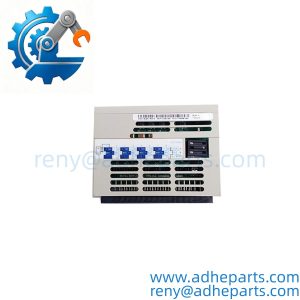
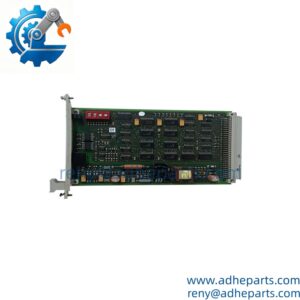
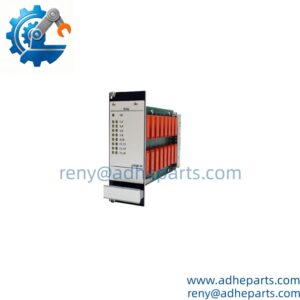
The ABB PFEA112-20 (3BSE050091R20) is a tension electronics module for web handling systems. It interfaces with ABB Pressductor load cells, conditions the transducer signal, and provides tension measurement and control outputs to the drive or PLC. It is the unit that turns the mechanical force on a roll into a usable tension signal.
The engineering value is the Pressductor interface. Pressductor load cells are magnetoelastic transducers with a high signal level and excellent overload tolerance. The PFEA112-20 provides the excitation and signal conditioning those cells require, plus the analog outputs and digital I/O needed to close a tension loop. In my experience, the most common cause of a tension control problem is not the electronics — it is a load cell that has been mechanically overloaded or a cable that has been damaged. The PFEA112-20 reports the fault, but it cannot fix a broken transducer.
Two things decide whether a swap works. First, the build suffix. The -20 in the model number defines the output configuration and the feature set. A different suffix may have different analog output ranges or different digital I/O. Second, the load cell calibration. The tension reading depends on the load cell rating and the calibration constant stored in the module or set by potentiometer. Record the calibration before you replace the unit.
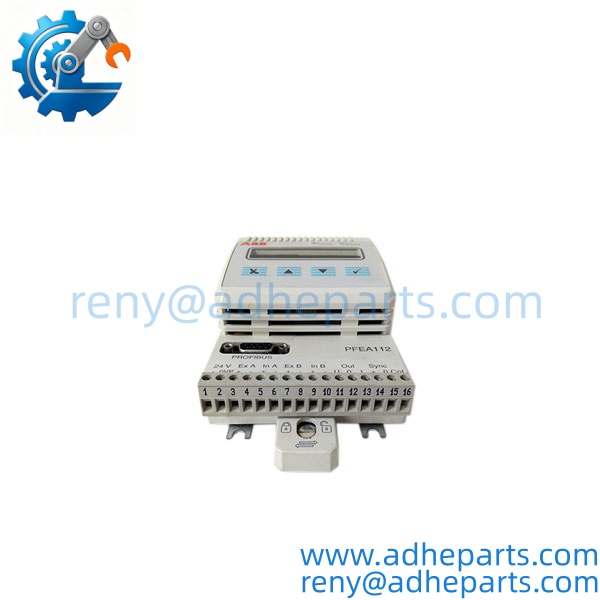
PFEA112-20
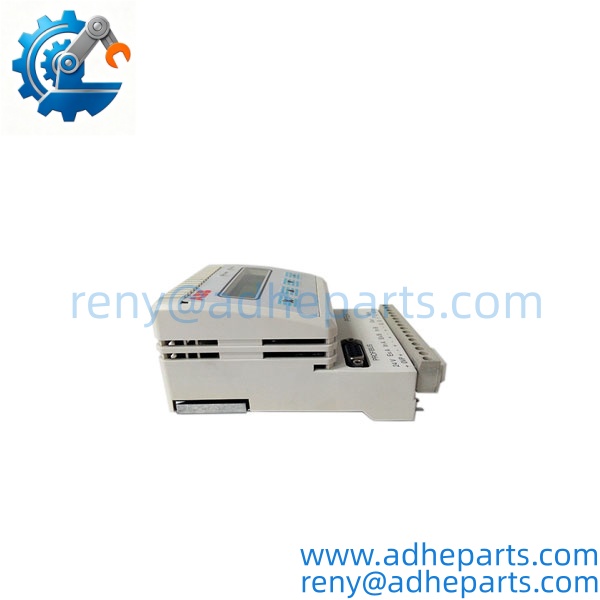
PFEA112-20
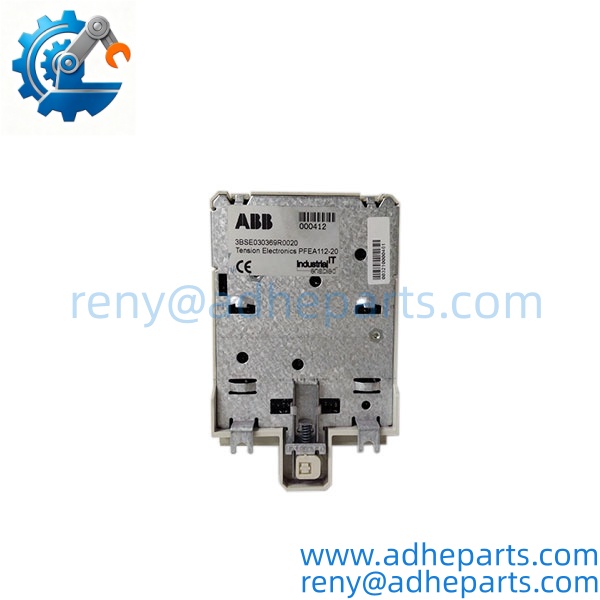
PFEA112-20
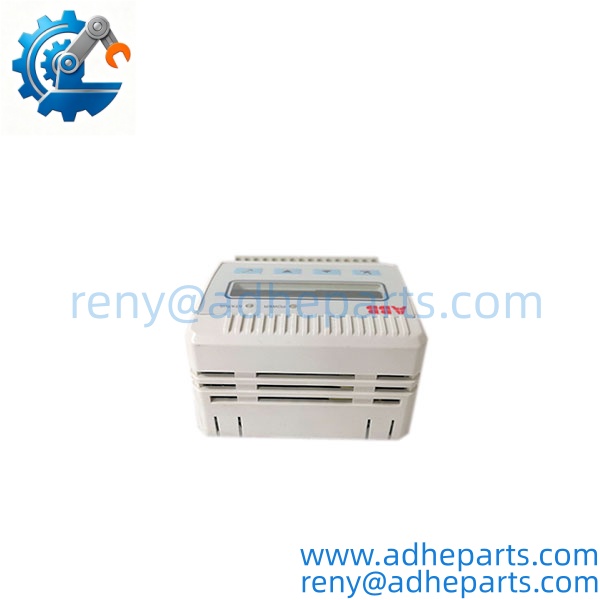
PFEA112-20
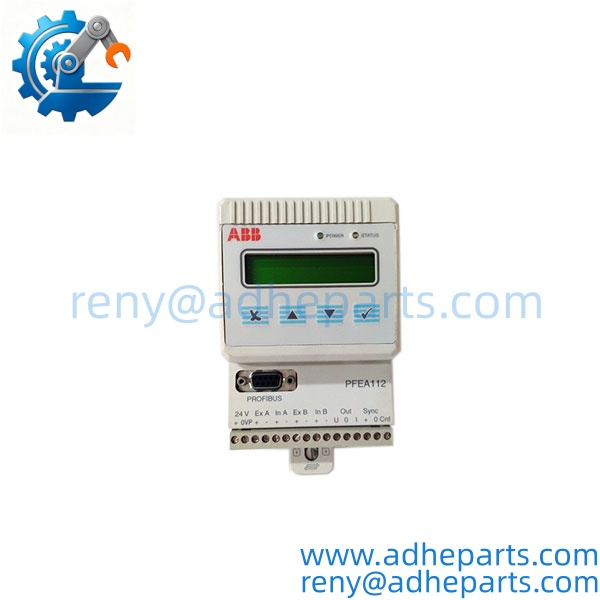
PFEA112-20
5. Application Scenarios & Field Experience
Part 1 – Narrative Paragraph
The failure that hurts most on a tension control system is not a dead electronics module — it is a reading that drifts. The web runs, the operator sees a tension value, and the product is slightly out of specification. I have seen that on a printing press where the tension reading had drifted 3% over several months because the load cell had been mechanically overloaded and the zero point had shifted. The electronics were fine. The transducer was the problem. Before you replace a PFEA112-20, check the load cell zero and the calibration. A new module with the same calibration error will produce the same drift.
Part 2 – Numbered List (Application Scenarios)
- Printing and Converting – Web Tension Control – The module reads Pressductor load cells on the unwind and rewind stands and provides the tension signal to the drive. The analog output drives the tension reference, and the digital outputs signal a tension limit alarm.
- Packaging – Film and Foil Tension – Used on form-fill-seal and lamination machines to hold film tension stable. The fast response of the Pressductor interface keeps the tension constant through acceleration and deceleration.
- Paper and Board – Winder Tension – The module measures tension on the winder and provides the feedback for the tension loop. The digital inputs allow remote zeroing and calibration from the operator station.
- Textile – Fabric Tension – Used on dyeing, finishing, and coating lines where fabric tension must be controlled to avoid distortion. The module’s analog output feeds the drive or the dancer control.
Part 3 – Short Field Story
A packaging plant had a lamination line where the film tension would drift every time the line speed changed. The crew had replaced the drive and the dancer roll, and the drift persisted. We asked them to check the load cell zero and the -20 calibration. The load cell had been overloaded during a jam, and the zero point had shifted by 5%. The module was reading correctly — the transducer was sending a shifted signal. The plant replaced the load cell and recalibhe . The tension held through the speed changes. The electronics had been fine — the load cell was the problem.
6. Standard Operating Procedure (SOP) for Quality Control
- Visual & Origin Inspection – We verify the ABB marhe model string, the 3BSE050091R20 order code, and the date code. We inspect the terminals, the display, and the housing for cracks or moisture ingress. A module with a damaged terminal or evidence of rework is rejected.
- Revision and Configuration Documentation – We read and photograph the full model string, the build suffix, and any configuration or calibration settings. That record ships with the module so you can compare it against the unit you are replacing.
- Power-Up Self-Test – The module is powered on a bench fixture at 24V DC. We verify it initializes without a fault and that the display shows normal operation.
- Load Cell Input Verification – We connect a calibrated load cell simulator to each input and verify the module’s tension reading against the reference. Accuracy must stay within the OEM specification.
- Analog Output Verification – We command the analog output to 0%, 50%, and 100% of range and measure the output into a calibrated load. The output must match the commanded value within the OEM tolerance.
- Digital I/O Verification – We exercise each digital input and output and verify the module responds correctly. We test the zero and calibrate functions where applicable.
- Isolation Test – We apply the rated isolation voltage between the field side and the logic side. Leakage current must stay below the datasheet limit.
- ESD-Safe Packaging – The module is wrapped in anti-static film, seated in a conductive foam insert with the terminals protected, and packed in a double-wall carton with static warning labels.
7. Frequently Asked Questions (FAQ)
Q1: What is the difference behe and the PFEA111?
A: The is a higher-feature tension electronics module than the PFEA111. The typically includes more analog outputs, more digital I/O, and a display, while the PFEA111 is a simpler signal conditioner. The -20 suffix defines the specific build. Compare the full model string on your existing unit and match it exactly before you order. If you send us a photo of the label, we will confirm the build.
Q2: Can I use this module with a non-ABB load cell?
A:he is designed for ABB Pressductor load cells. It provides the specific excitation and signal conditioning those transducers require. A non-ABB load cell may have a different bridge configuration, a different signal level, or a different excitation requirement, and it will not work correctly without an interface. Verify the load cell type against the OEM documentation before you order.
Q3: What is the warranty on this module?
A: We offer a 12-month warranty from the ship date. It covers component failure, input channel failure, and output failure under normal operating conditions. It does not cover damage from incorrect supply voltage, reversed load cell wiring, or physical damage to the terminals. We test every module on a bench fixture before it ships.
Q4: Do you have this exact order code in stock?
A: ABB tension electronics inventory moves and varies by build. Confirm availability before you plan an outage. If we do not have the -20 variant, we will tell you what we do have and whether a different build would suit your application. Do not assume any will configure the same way.
Q5: Any installation pitfalls I should watch for?
A: Four. First, verify the load cell wiring and the excitation voltage before you power up — reversed wiring can damage the input stage. Second, record the calibration constant and the zero offset from the old module before you remove it; these are not always stored elsewhere. Third, verify the build suffix on the replacement matches the unit you are removing. Fourth, after the swap, verify the tension reading against a known reference before you return the line to production. A module that powers up is not necessarily measuring tension correctly.