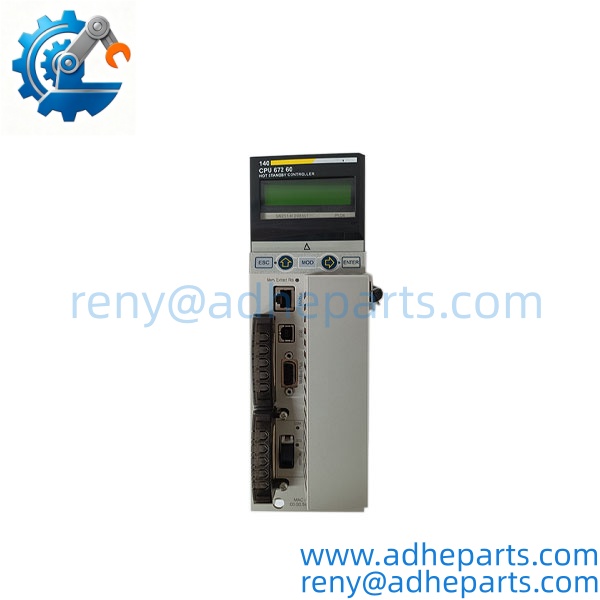
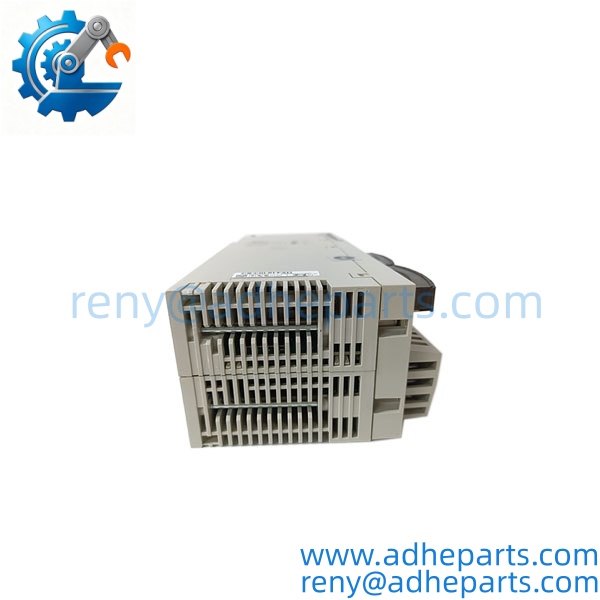
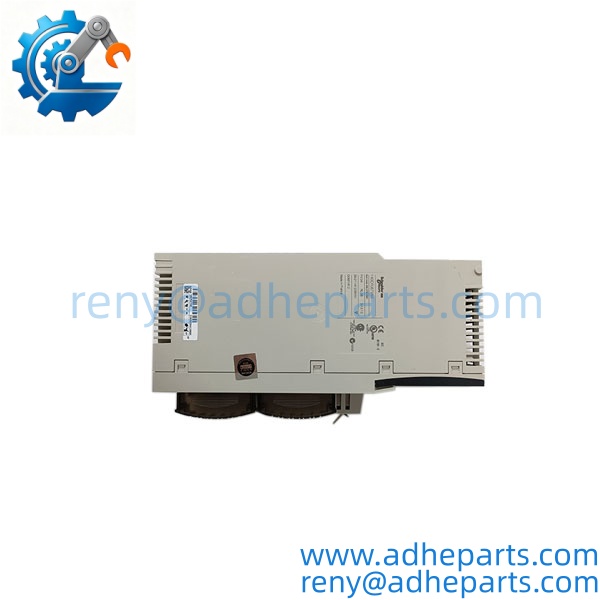
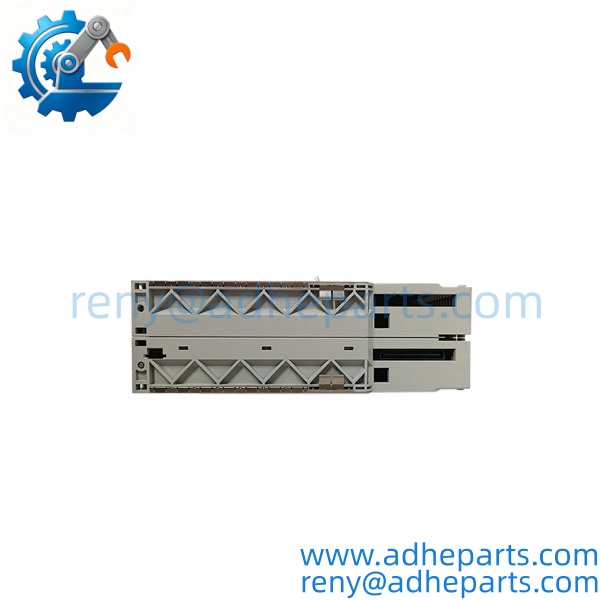
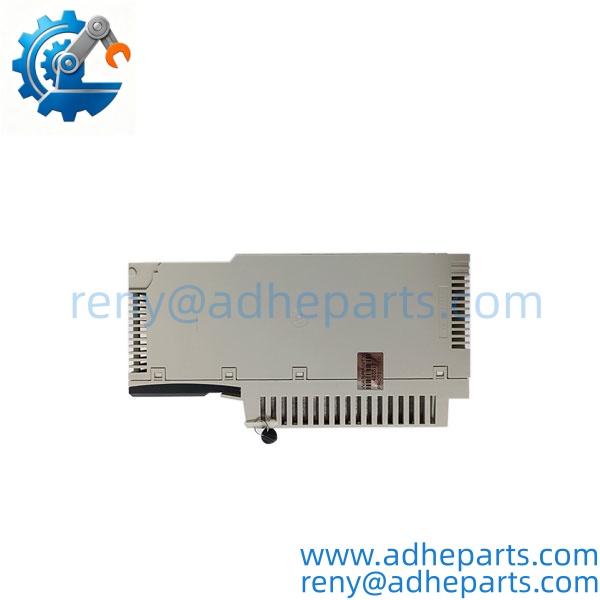
Description
Note: Many products are not yet listed. Please contact us for more product information. Our supply channels are constantly expanding, and we currently have 20 stable shared supply channels. Please confirm the model, product, price, and all other necessary information with customer service before placing an order. We offer new, refurbished, and used products, and prices are adjusted according to the year of the item you require.
3. Key Technical Specifications
Confirm each line against the OEM datasheet and the label on your existing module before ordering. Memory size and port population vary across the Quantum Unity CPU family.
| Parameter | Value |
|---|---|
| Model | 140CPU67260 |
| Brand | Schneider Electric (Modicon) |
| Product Family | Modicon Quantum (140 series) |
| Processor | Dual-core 686-class processor |
| Programming Software | Unity Pro / EcoStruxure Control Expert — verify supported version |
| Internal RAM | Verify with OEM datasheet — confirm on the module label |
| Application Memory | Verify with OEM datasheet |
| Integrated Ethernet | Yes — RJ45 port(s) for programming and Modbus TCP — verify port count on your build |
| Modbus Plus | Yes — 9-pin D-sub connector |
| Modbus Serial | RS-232 and RS-485 — verify connector arrangement |
| USB Port | Yes — front-panel programming port |
| Hot Standby Support | Yes — requires matched CPU pair and fiber optic link module (verify part number) |
| Co-Processor Slot | Present — verify supported co-processor module against OEM documentation |
| Local I/O Capacity | Verify with OEM datasheet — depends on rack and I/O configuration |
| Rack Compatibility | Quantum 140 series racks — 6-slot, 10-slot, 16-slot; verify backplane revision |
| Power Supply | Requires 140CPS supply module in the rack — verify sizing against total rack load |
| Backplane Current (5V) | Verify with OEM datasheet |
| Status Indicators | Run, Error, Modbus Plus, Ethernet, Hot Standby — verify LED arrangement on your build |
| Battery | Lithium backup for RAM and clock — verify cell type and replacement interval |
| Operating Temperature | 0 °C to +60 °C |
| Storage Temperature | –40 °C to +85 °C |
| Humidity | 0% – 95% RH, non-condensing |
| Weight | Verify with OEM datasheet |
| Certifications | UL 508, CSA C22.2, CE, FM Class I Div 2 — verify on the specific unit’s label |
4. Product Introduction
The Schneider Electric 140CPU67260 is the high-end processor module in the Modicon Quantum line. It executes the control program, scans the local and remote I/O, manages the communication ports, and — when configured with a matched partner and a fiber link — runs as a Hot Standby pair. It is programmed with Unity Pro or EcoStruxure Control Expert, not the older Concept toolset.
Two engineering facts decide whether a swap works. First, the Hot Standby configuration. The two CPUs must match in model and firmware, and the fiber link module must be present and correctly addressed. If you replace one CPU in a Hot Standby pair with a different firmware revision, the pair will not synchronize, and the standby will sit in a fault state that does not always announce itself clearly. Second, the memory and application size. If your program was compiled for a specific CPU model, moving to a different model in the family requires a hardware configuration change in the project file — the program will not simply download.
5. Application Scenarios & Field Experience
Part 1 – Narrative Paragraph
The failure that hurts most on a Quantum Hot Standby pair is not a dead CPU — it is a synchronization fault that leaves the standby unit silently out of step. The primary keeps running, the process stays up, and nobody notices that the backup has stopped tracking. Then the primary faults, the switchover happens, and the standby takes over with stale data or an empty program. I have seen that scenario cause a plant trip that the Hot Standby architecture was specifically installed to prevent. When you replace a CPU in a redundant pair, verify the synchronization status before you leave the site. Do not assume that because both racks are powered, the pair is healthy.
Part 2 – Numbered List (Application Scenarios)
- Water Treatment – Plant-Wide Control – The CPU runs intake, filtration, and distribution logic across a large plant. The Hot Standby pair keeps the process running through a CPU fault or a firmware update, which matters when the plant cannot afford an unplanned outage.
- Power Generation – Balance of Plant – Used on cooling water, ash handling, and auxiliary systems in a generating station. The integrated Ethernet carries data to the plant DCS while the Hot Standby pair provides the redundancy the station requires.
- Pulp & Paper – Stock Preparation and Machine Control – The CPU executes the interlocks and sequencing for the wet end and the machine drive interface. The Modbus Plus port connects to legacy drives that predate the plant’s Ethernet migration.
- Oil & Gas – Pipeline and Terminal Automation – Deployed in terminals and pump stations where the redundancy requirement comes from the process, not from preference. The Ethernet port handles SCADA traffic, and the serial ports interface with legacy flow computers.
Part 3 – Short Field Story
A municipal water authority had a Quantum Hot Standby pair running a 40 MGD treatment plant. The primary CPU failed during a storm, and the switchover did not happen cleanly — the plant lost control for roughly 90 seconds while the standby initialized. The investigation found that the standby CPU had been carrying a different firmware revision for months and had never fully synchronized. The authority replaced both CPUs with matched units, performed a synchronization check, and ran a forced switchover test during a low-demand window. The next primary fault, six months later, switched over without a hiccup.
6. Standard Operating Procedure (SOP) for Quality Control
- Visual & Origin Inspection – We verify the Schneider Electric marking, the 140CPU67260 model string, and the date code. We inspect the backplane connector for bent pins and the front-panel connectors for damage. A module with a cracked connector shroud or evidence of moisture ingress is rejected.
- Revision and Firmware Documentation – We read and photograph the full model string, the firmware revision, and the battery date code. That record ships with the module so you can compare it against the unit you are replacing.
- Battery Verification – We measure the onboard lithium cell under load. A cell reading below the OEM minimum is replaced before shipping, and the new date code is recorded on the test sheet.
- Backplane Fit Verification – Each module is seated in a Quantum test rack to confirm the connector engages fully and the retention screw holds. A module that fits loosely will cause intermittent backplane faults in the field.
- Power-Up and Self-Test – The module is powered in a live rack and we verify it completes its boot sequence, the Run LED indicates normal operation, and the processor reports no configuration error.
- Communication Port Test – We verify the Ethernet port with a loopback and confirm link and throughput. We verify the Modbus Plus port and both serial ports with a test partner.
- Hot Standby Synchronization Test – Where a matched pair is ordered, we verify the two CPUs synchronize over a test fiber link and that a forced switchover completes without data loss.
- ESD-Safe Packaging – The module is wrapped in anti-static film, seated in a conductive foam insert with the connectors protected, and packed in a double-wall carton with static warning labels.
7. Frequently Asked Questions (FAQ)
Q1: Can I replace one CPU in a Hot Standby pair without replacing both?
A: Technically yes, if you power down the standby rack and swap it while the primary runs. But the two CPUs must match in model and firmware revision, or the pair will not synchronize. Before you order, read the firmware revision off both existing CPUs and send it to us. If we cannot match the revision, plan to replace both and re-download the application.
Q2: Will my existing application load into this CPU?
A: Only if the hardware configuration in your project matches the replacement CPU. Memory size and firmware revision are part of that configuration. If your project was built for a different Quantum CPU model, you must update the hardware catalog entry and re-verify the program before downloading. Pull your project file before you remove the old CPU — that file is your recovery path.
Q3: Do you have this exact model in stock?
A: Quantum Unity CPU inventory moves and varies. Confirm availability before you plan an outage. If we are out, we will tell you what we actually have. Do not assume a different Quantum CPU will drop in — the memory size and firmware revision matter, and the Hot Standby pairing requirement makes substitution riskier than it looks.
Q4: What is the warranty on this module?
A: We offer a 12-month warranty from the ship date. It covers processor failure, backplane connector failure, and communication port failure under normal operating conditions. It does not cover damage from hot-swapping the module with the rack energized, bent pins from forced insertion, or ESD damage from handling without a wrist strap. The lithium backup cell is a consumable — we install a fresh one before shipping but do not warranty its capacity beyond 30 days.
Q5: Any installation pitfalls I should watch for?
A: Four. First, power down the rack before inserting or removing the CPU. These modules are not hot-swap capable in a standard Quantum rack. Second, verify the power supply is sized for the full rack load — adding a high-end CPU to an undersized 140CPS will cause brownout faults that look like CPU failures. Third, if the CPU carries a battery, replace it on schedule; a dead cell loses the program and the clock on power loss. Fourth, after the swap, verify communication with the HMI and the I/O, and — on a redundant pair — verify synchronization status before you return the plant to automatic control.