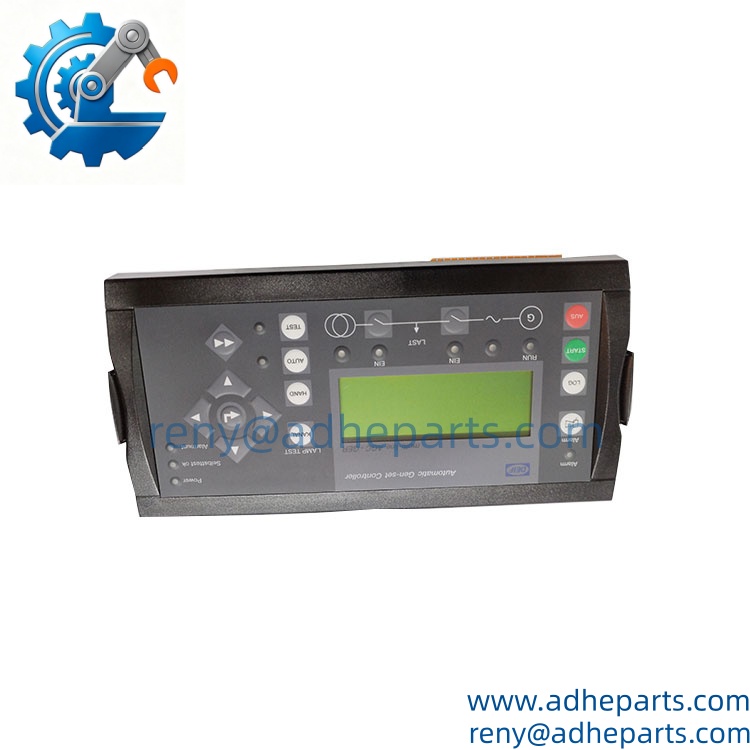
Description
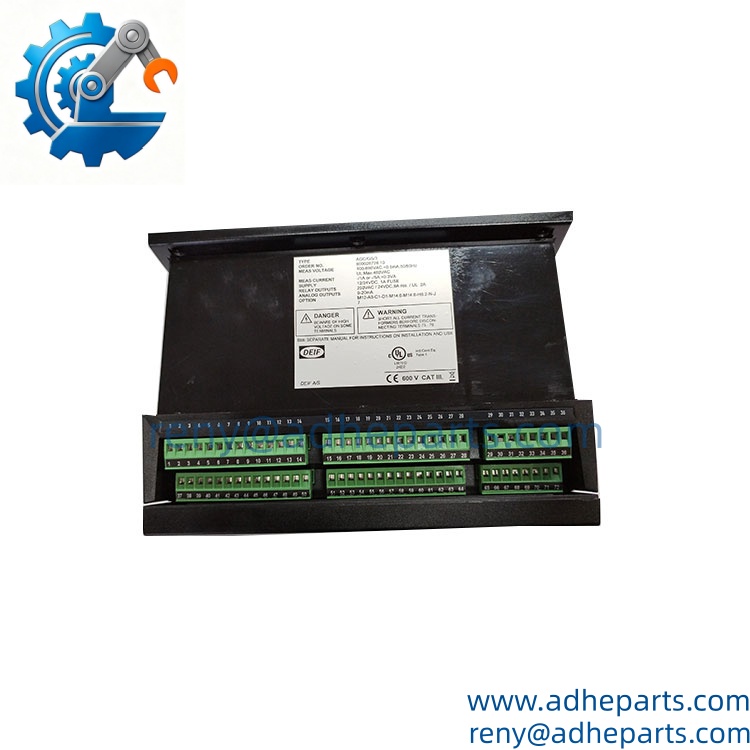
The AGC/GS/3 designation is associated with DEIF’s AGC-3 generation of automatic genset control equipment. DEIF’s own documentation confirms that the AGC-3 family provides operation modes, engine control, generator protection, mains/busbar protection, display functions, and M-Logic programmable control.
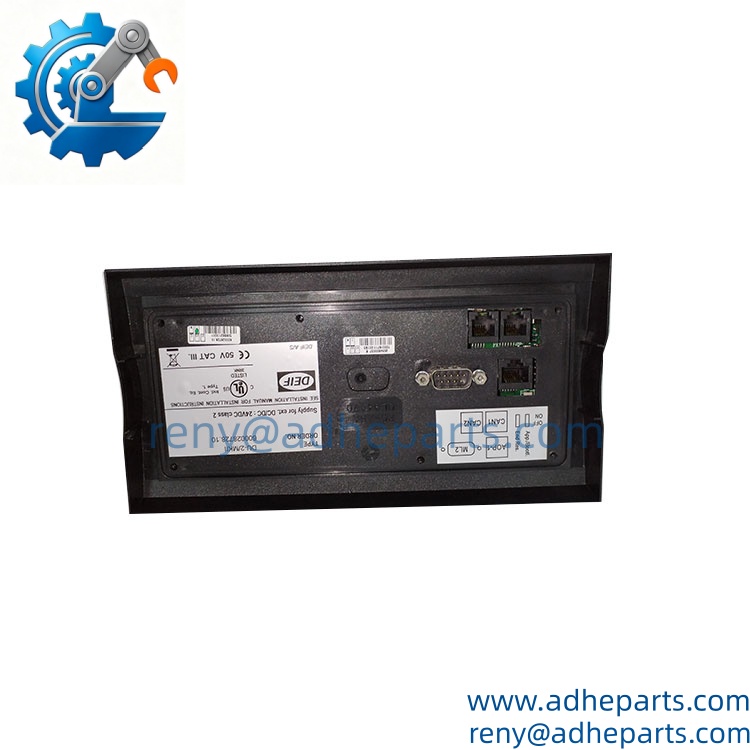
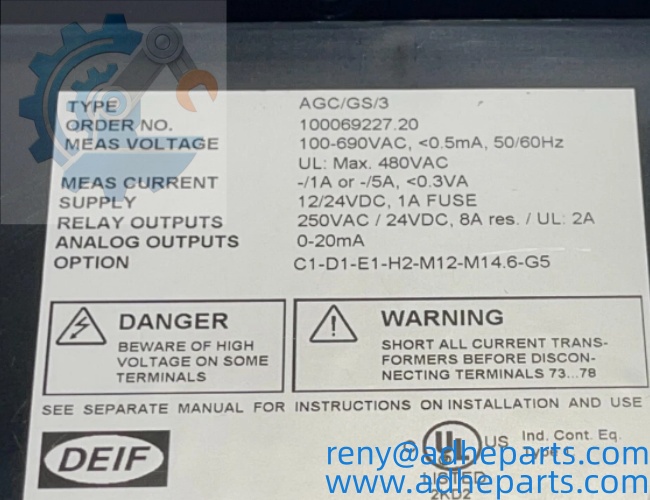
Key Technical Specifications
| Parameter | Value |
|---|---|
| Brand | DEIF |
| Model | AGC/GS/3 |
| Product Family | AGC-3 |
| Product Type | Automatic Genset Controller |
| Application | Generator Set Control and Protection |
| Control Functions | Engine control, generator control, synchronization |
| Power Management | Parallel generator operation and load management |
| Protection | Generator and mains/busbar protection |
| Logic | M-Logic Micro PLC |
| Operating Modes | Configuration-dependent |
| Communication | Configuration-dependent |
| Display | Integrated controller display |
| Manufacturer | DEIF A/S |
| Country of Origin | Denmark |
DEIF’s official AGC-3 datasheet identifies the controller as an Automatic Genset Controller and lists operation modes, engine control, generator protection, mains/busbar protection, display functions, and M-Logic. The document also states that the AGC-3 is no longer for sale.
Do not rely on generic specifications circulating for AGCGS3 when preparing a technical offer. Some available product listings attribute detailed voltage ranges, I/O counts, dimensions, and communication interfaces to the part, but those details are not confirmed by the DEIF documentation located for the exact designation. For procurement, the controller’s complete type code and option configuration should be checked first.
Product Introduction (Anti-Template)
When several generator sets have to operate together, the controller has to do more than start and stop an engine. The DEIF AGC/GS/3 belongs to the AGC-3 generation and is intended for automatic genset control, generator protection, and coordinated operation in power-management systems. DEIF’s documentation also includes programmable M-Logic functions, allowing application-specific control logic to be implemented within the controller.
This is a legacy DEIF controller, so replacement work deserves extra attention. Firmware, option configuration, I/O assignments, and the existing genset architecture should all be checked before installation. A visually identical controller is not necessarily a configuration-equivalent replacement.
QC, Procurement & Logistics SOP
- Inbound Verification
- Confirm the complete designation: AGC/GS/3.
- Record the full type code, serial number, hardware revision, and option information from the nameplate.
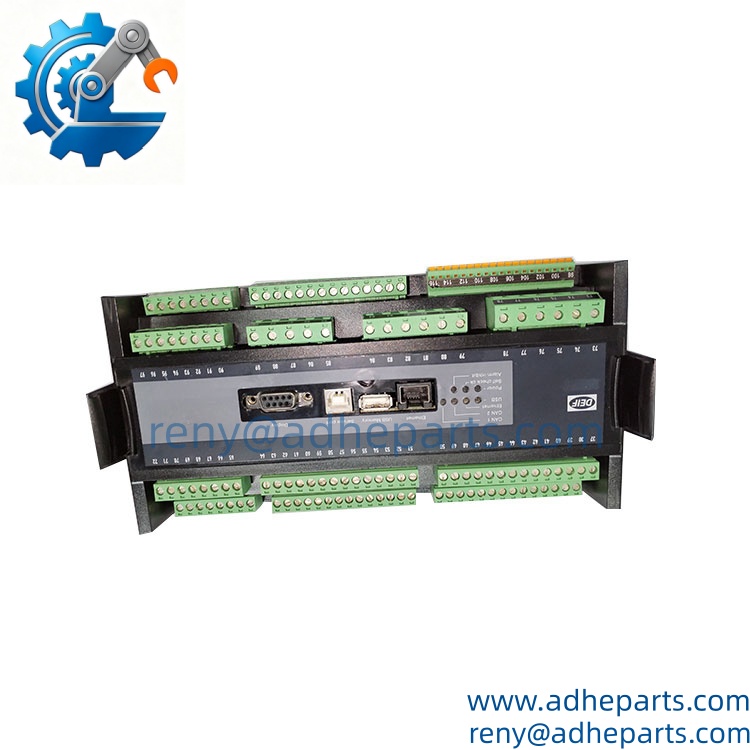
- Inspect the display, push buttons, terminals, communication interfaces, and mounting points.
- Compare the replacement with photographs of the customer’s installed controller.
- Verify the application: standalone genset, AMF, parallel operation, or power-management system.
- Live Rig Testing
- Perform controlled power-up using the correct DC supply.
- Check display startup, alarm handling, status indications, and keypad operation.
- Where suitable test equipment is available, verify representative generator voltage and frequency measurements.
- Check breaker-control and engine-control outputs in a controlled test environment.
- Verify communication interfaces according to the installed configuration.
- Do not connect an unverified controller directly to a live generator switchboard.
- QA & Anti-Static Packaging
- Photograph the identification label before packing.
- Protect the controller against ESD and moisture.
- Use anti-static material around exposed electronic interfaces.
- Protect the front display and buttons from impact.
- Secure the controller inside a rigid export carton to prevent movement.
- Global Logistics & Export Compliance
- Prepare the commercial invoice, packing list, product description, country-of-origin information, and appropriate HS classification.
- Describe the item accurately as an industrial automatic generator controller.
- Air freight is generally appropriate for an electronic controller.
- Use moisture-resistant and shock-absorbing packaging for international transportation.
- Because is a legacy product, include the complete model/type information on the commercial documentation to reduce customs clarification issues.
Technical Pitfalls & Integration Warnings
1. Firmware / Configuration Mismatch
The is configurable for different generator-control applications. A replacement controller that powers up normally can still be wrong for the customer’s plant if its application parameters or software configuration differ. Before removing the existing unit, save the configuration whenever possible.
2. I/O Configuration Errors
Engine start, stop, breaker control, alarms, generator sensing, and protection signals can all be tied to controller I/O. Moving wires based only on terminal position is risky. Verify every critical I/O point against the original wiring diagram.
3. Synchronization and Load-Sharing Settings
A controller used for multiple-generator operation requires carefully matched synchronization and load-sharing parameters. If one generator has different voltage or frequency settings, the system may experience unstable load transfer or unsuccessful breaker closing. Check the complete power-management configuration before commissioning.
4. ESD During Unboxing
The AGC/GS/3 contains electronic circuitry that should be handled using normal ESD precautions. Keep the controller in its anti-static packaging until installation. Avoid touching exposed terminals or PCB areas. A handling-related fault can easily be mistaken for a defective replacement unit.
Frequently Asked Questions (FAQ)
Q1: What is the DEIF AGC/GS/3 used for?
The AGC/GS/3 is an automatic genset controller associated with DEIF’s generation. Its functions include engine control, generator protection, mains/busbar protection, display functions, and programmable M-Logic control.
Q2: Is AGCGS3 the same as AGC/GS/3?
The available procurement references use AGCGS3 and AGC/GS/3 for the same general DEIF controller designation. For an exact replacement, however, the complete nameplate/type code should be compared rather than relying on the shortened model name.
Q3: Can it be used for multiple generator sets?
The platform supports different generator-control applications. DEIF’s documentation identifies the broader family as an automatic genset controller with generator and mains/busbar protection functions. The exact number of generators and power-management configuration depends on the specific controller type and installed application.
Q4: Can I replace an AGCGS3 with an AGC-4?
Not as a blind plug-in replacement. DEIF has moved the product line forward, and its current documentation states that the AGC-4 itself is being replaced by the AGC-4 Mk II. A migration from an controller should therefore be treated as an engineering replacement involving I/O, configuration, wiring, and application compatibility.
Q5: Can the AGCGS3 be hot-swapped?
Do not assume it can. The controller may be connected directly to engine start circuits, breaker commands, generator protection, and sensing circuits. Isolate the genset control panel and follow the site’s approved maintenance procedure before removing the controller.
Q6: What should I provide when ordering a replacement?
Send:
- Complete AGC/GS/3 nameplate photograph
- Full type code
- Hardware revision
- Serial number
- Existing controller photographs
- Generator voltage and frequency
- Number of generators in the system
- Application mode
- Communication interface
- Existing fault or alarm information
This is particularly important for legacy DEIF equipment because the short model designation does not necessarily identify every hardware and software option.
Q7: Is the still available from DEIF?
DEIF’s official datasheet explicitly marks the product as “No longer for sale.” For an existing installation, a genuine spare or an approved engineering replacement should therefore be evaluated based on the installed configuration.
Q8: What is the recommended newer DEIF controller?
DEIF’s current product range includes the AGC-4 Mk II and AGC 150 families. The appropriate replacement depends on the original AGC/GS/3 application, I/O requirements, synchronization scheme, and power-management architecture. DEIF specifically identifies AGC-4 Mk II as the replacement product for AGC-4.
Same Series Models also check together:
DEIF AGC 242 | Generator Synchronizing Controller