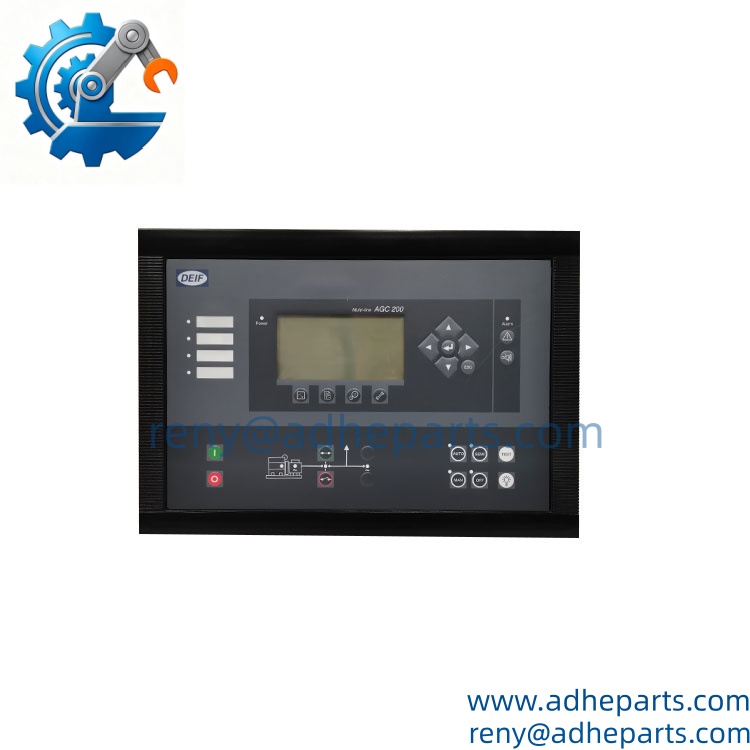
Description
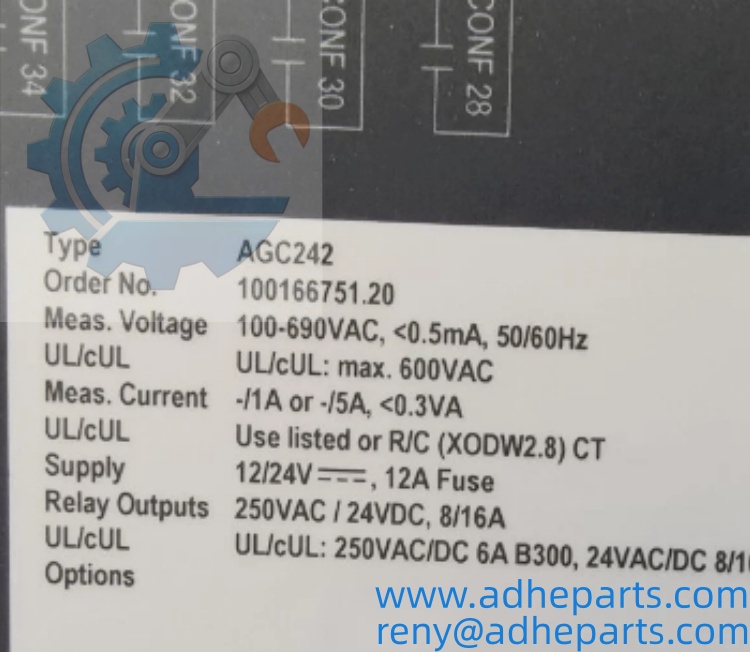
Procurement note: DEIF’s current documentation centers on the AGC-4 and AGC-4 Mk II families, while the older AGC product line has been superseded in the current product program. If the customer’s requested unit is specifically marked AGC 242, the nameplate and full product number should be verified before treating it as an AGC-4 replacement. DEIF states that the AGC-4 is being phased out in favor of the AGC-4 Mk II, while spare units can still be supplied.
A typical multi‑generator parallel system may include:
AGC 242 → CAN bus link → AGC 242 → Multiple gensets for load‑sharing operation
Therefore, if the customer’s existing system runs multiple generators in parallel via CAN bus, communication wiring, firmware version and downloaded application parameters should be confirmed before purchasing the replacement controller.
This is an important ordering consideration that distinguishes DEIF AGC 242 from ordinary standalone generator controllers.
Key Technical Specifications
| Parameter | Value |
|---|---|
| Brand | DEIF |
| Model | AGC 242 |
| Product Type | Automatic Generator Controller |
| Application | Generator Set Control & Protection |
| Primary Functions | Control, monitoring, synchronization, protection |
| System Function | Genset / Power Management |
| Control Architecture | DEIF Multi-line controller family |
| Typical Application | Standby, island, parallel, and generator power systems |
| Communication | Configuration-dependent |
| Installation | Generator control panel / switchboard |
| Manufacturer | DEIF A/S |
| Country of Origin | Denmark |
The AGC product family is designed for generator control and power-management applications. Current DEIF AGC-4 documentation describes functions including automatic mains failure, generator synchronization, load sharing, fixed-power operation, peak shaving, and mains power export.
Because AGC 242 is an older designation and does not provide enough information to establish the exact hardware option package, the safest procurement method is to match the complete nameplate information, including the unit’s hardware code, option configuration, and software revision.
Product Introduction (Anti-Template)
When a generator has to start, synchronize, and assume load without an operator standing at the switchboard, the controller becomes the decision-making center of the genset. The DEIF AGC 242 belongs to the automatic generator-control category, handling functions associated with generator operation, monitoring, protection, and power-system coordination.
Do not order this unit from the short model name alone. Older DEIF controllers were available in different hardware and application configurations, so the exact nameplate matters. For a replacement project, compare the existing controller’s I/O arrangement, communication interfaces, software configuration, and generator application before approving the spare.
QC, Procurement & Logistics SOP
- Inbound Verification
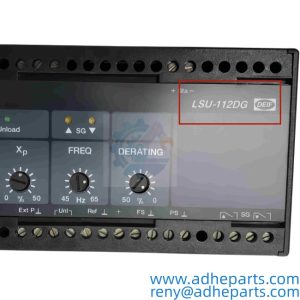
- Confirm the nameplate designation as DEIF AGC 242.
- Record the complete hardware identification, serial number, and revision markings.
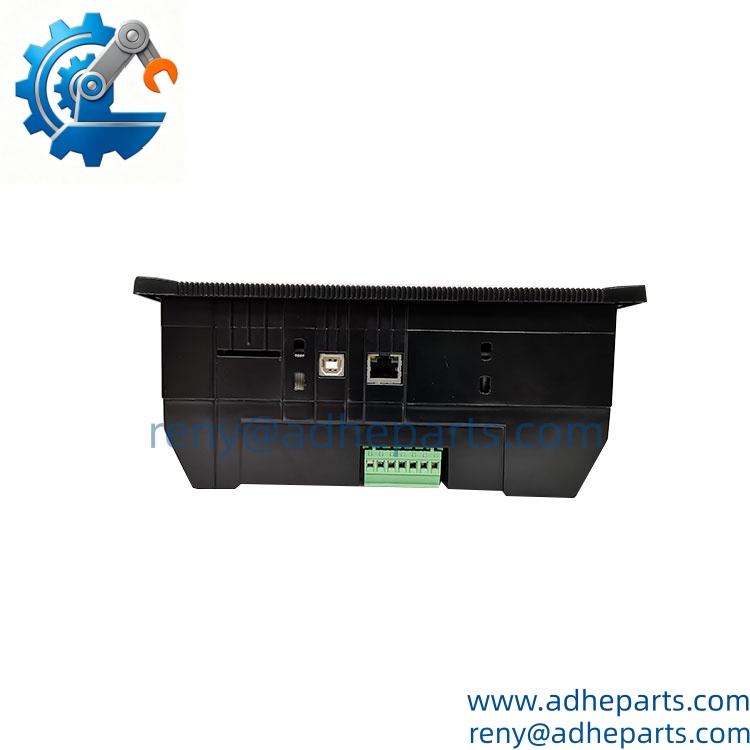
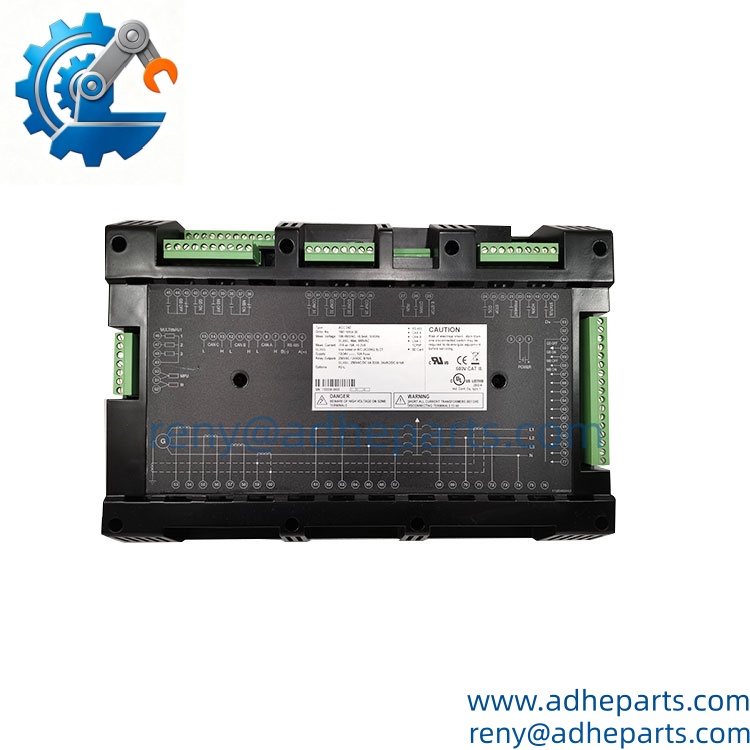
- Inspect the display, buttons, terminals, communication ports, mounting points, and enclosure.
- Compare the unit against photographs of the customer’s installed controller.
- Check whether the existing application uses AMF, island operation, synchronization, or parallel operation.
- Live Rig Testing
- Power the controller only with the correct rated supply.
- Verify startup behavior, display operation, alarm indications, and control inputs.
- Where suitable test equipment is available, verify representative generator voltage, frequency, current, and breaker-control signals.
- Check communication interfaces according to the installed configuration.
- Do not connect a replacement controller directly to a live generator switchboard without completing the required isolation and commissioning procedure.
- QA & Anti-Static Packaging
- Photograph the complete nameplate before packing.
- Protect the controller against ESD and moisture.
- Use anti-static material around exposed electronic interfaces.
- Cushion the display and front-panel controls against impact.
- Place the controller in a rigid export carton to prevent movement during transportation.
- Global Logistics & Export Compliance
- Prepare the commercial invoice, packing list, product description, country-of-origin information, and applicable HS classification.
- Use a product description such as “industrial automatic generator controller” rather than a vague description such as “electronic board.”
- Air freight is generally suitable for an electronic controller.
- Use moisture-resistant packaging for long-distance air or sea freight.
- Verify the final customs classification with the destination customs broker because the appropriate tariff code depends on the controller’s actual construction and function.
Technical Pitfalls & Integration Warnings
1. Software / Application Configuration Mismatch
Two controllers can carry the same basic family designation while having different application configurations. Imagine a replacement starting normally but failing to execute the customer’s original breaker-control sequence. The hardware may be fine; the application configuration is wrong. Back up the existing parameters before replacement whenever possible.
2. I/O Configuration Errors
Generator controllers interact directly with engine start/stop circuits, breaker commands, voltage sensing, current transformers, alarms, and protection signals. A single incorrect I/O assignment can create a serious commissioning problem. Verify terminal numbering against the original wiring drawings rather than copying connections by appearance.
3. Synchronization Settings
If the controller is used for generator paralleling, voltage, frequency, phase-angle, and breaker timing parameters become critical. A controller that works correctly in an isolated genset application may require a different configuration for parallel operation. Check the actual plant operating mode before loading parameters.
4. ESD During Unboxing
The controller contains electronic circuitry and should remain protected against electrostatic discharge until installation. Keep the unit in its anti-static packaging and avoid touching exposed terminals or PCB areas. A careless handling event can create an intermittent fault that is difficult to diagnose later.
Frequently Asked Questions (FAQ)
Q1: What is the DEIF AGC 242 used for?
The AGC 242 is an automatic generator-control unit intended for monitoring and controlling generator-set operation. Depending on its specific configuration, applications can include standby operation, synchronization, generator protection, and power-system control.
Q2: Is AGC 242 the same as ?
Not necessarily. The designation AGC 242 should not be automatically converted into during procurement. DEIF’s current documentation identifies and Mk II as separate product generations, with now being phased out in favor of Mk II.
Q3: Can I replace an older AGC controller with an Mk II?
Possibly, but this should be treated as an engineering replacement rather than a simple plug-in substitution. I/O configuration, application software, communication, terminal arrangement, and parameter compatibility all need to be checked. DEIF describes the Mk II as the replacement product for .
Q4: Does the controller support generator synchronization?
Generator synchronization is a core function within DEIF’s AGC controller architecture. The current Mk II supports synchronizing generators for islanded or mains-paralleled power systems.
Q5: Can the AGC 242 be hot-swapped?
Do not assume so. The controller can be connected to engine start circuits, generator protection, breaker commands, and sensing circuits. Isolate the equipment and follow the generator-control panel’s approved maintenance procedure before removing the controller.
Q6: What information should I send when ordering a replacement?
For an exact compatibility check, provide:
- Complete AGC 242 nameplate photograph
- Hardware code and revision
- Serial number
- Existing controller photographs
- Generator voltage and frequency
- Engine/genset application
- I/O and terminal arrangement
- Communication interface
- Current software or parameter information
This is particularly important for an older DEIF controller because the short AGC 242 designation alone may not identify the complete configuration.
Q7: What are the usual shipping options?
For a controller of this type, express air freight is normally practical when the unit is needed for an outage. Standard air cargo can also be used for less urgent orders. Proper cushioning and ESD protection should be maintained regardless of shipping method.
Q8: Is the AGC 242 still a current DEIF product?
The current DEIF product documentation focuses on newer AGC generations. DEIF explicitly states that the is being phased out and replaced by the Mk II, while spare units can still be supplied. Therefore, if a customer specifically requests AGC 242, verify the exact legacy part identification before proposing a newer controller.