Description
Note: Many products are not yet listed. Please contact us for more product information. Our supply channels are constantly expanding, and we currently have 20 stable shared supply channels. Please confirm the model, product, price, and all other necessary information with customer service before placing an order. We offer new, refurbished, and used products, and prices are adjusted according to the year of the item you require.
Product Introduction
A feeder protection relay must identify abnormal current conditions and initiate the appropriate protective action before a fault causes more extensive equipment damage. The ABB REF610 is a numerical protection relay developed for feeder applications in distribution systems. It monitors current inputs, evaluates configured protection thresholds, and operates designated output contacts when programmed trip conditions are met.
In addition to overcurrent and earth-fault protection, the REF610 family provides functions such as thermal overload protection and phase discontinuity detection. For maintenance teams supporting established switchgear installations, a correctly configured replacement can help preserve the existing protection scheme. Exact ordering-code matching remains essential because auxiliary supply, current-transformer inputs, and optional features affect compatibility.
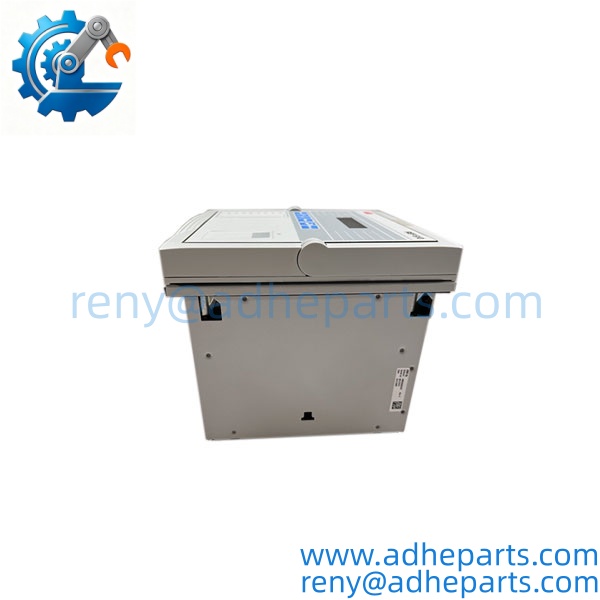
REF610C11LCLR
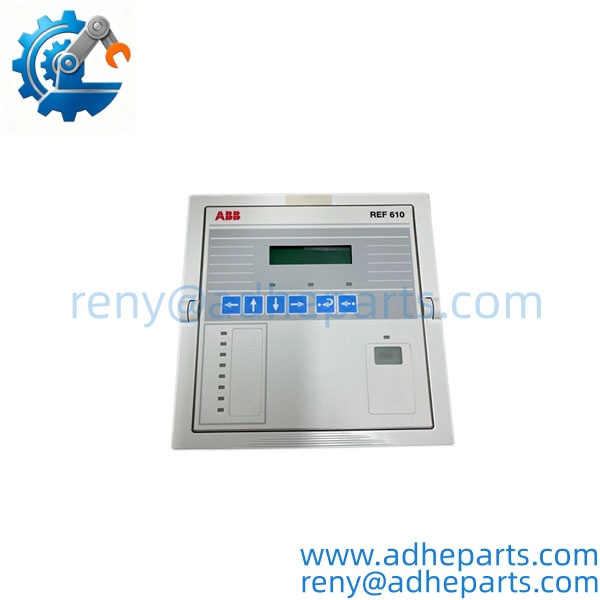
REF610C11LCLR
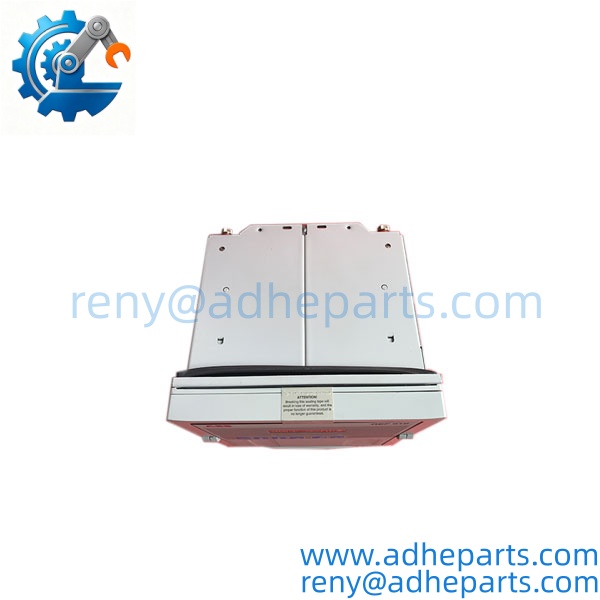
REF610C11LCLR
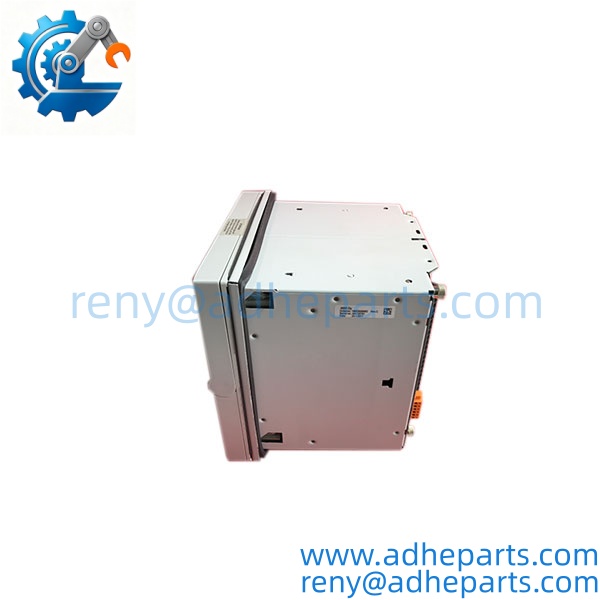
REF610C11LCLR
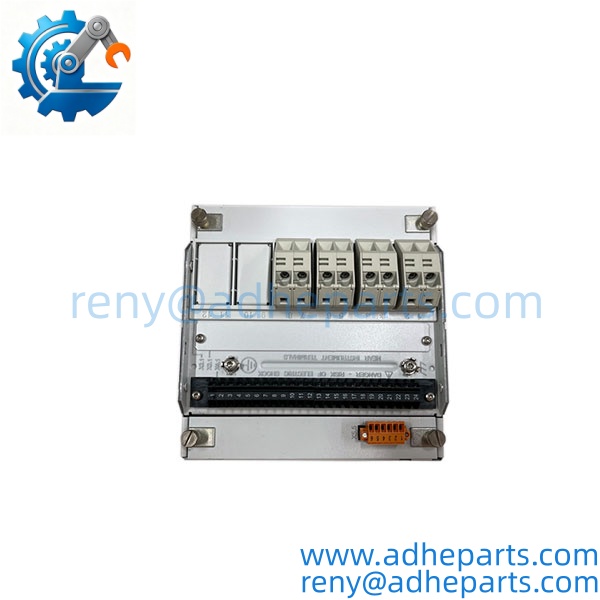
REF610C11LCLR
Key Technical Specifications
| Parameter | Specification |
|---|---|
| Manufacturer | ABB |
| Model | REF610C11LCLR |
| Product Family | Relion 610 Series |
| Product Type | Numerical feeder protection relay |
| Primary Application | Distribution feeder protection |
| Protection Functions | Overcurrent, earth fault, thermal overload, phase discontinuity, and other configured functions |
| Auxiliary Supply Variant | Low-voltage DC supply; confirm exact rated voltage from the nameplate |
| Current Inputs | Confirm phase and earth-fault input ratings against the complete ordering code |
| Nominal System Frequency | 50/60 Hz, depending on application configuration |
| Communication | Serial communication options depend on the relay configuration |
| Mounting | Panel-mounted relay case |
| Frame Dimensions | Approximately 177 mm wide × 177 mm high |
| Case Dimensions | Approximately 164 mm wide × 160 mm high |
| Case Depth | Approximately 149.3 mm |
| Approximate Relay Weight | 3.5 kg |
| Product Lifecycle | Legacy product; confirm current support and replacement availability |
Specification note: Dimensions and general technical data refer to the REF610 product family. Confirm the exact hardware and option configuration of REF610C11LCLR before using these values for panel design or replacement approval.
Field Application & Technical Pitfalls
Application Scenarios
1) Medium-voltage distribution feeders
The REF610 can monitor feeder current and initiate protective trips when configured overcurrent or earth-fault criteria are met. Typical installations include industrial distribution substations and switchgear supplying plant equipment.
2) Transformer and industrial power distribution protection
Depending on the approved protection design, feeder relays can form part of a coordinated scheme protecting outgoing circuits and associated distribution equipment. Settings must be coordinated with upstream and downstream protective devices.
3) Legacy switchgear maintenance
Where an existing installation uses the REF610 family, a verified spare can reduce the time required to restore the original protection arrangement. Before procurement, confirm the current-input ratings, auxiliary supply, trip-output arrangement, and installed protection settings.
Three Replacement Pitfalls to Avoid
Pitfall 1: Selecting the wrong current-input rating
Protection relays with similar model names may have different current-transformer input ratings. A mismatch can affect measurement accuracy and protection performance. Verify the phase and earth-fault input ratings from the full ordering code and nameplate.
Pitfall 2: Overlooking the auxiliary DC supply
The low-voltage supply variant must match the station’s available DC supply. Confirm the actual rated voltage and permitted operating range before connecting the replacement relay.
Pitfall 3: Assuming protection settings transfer automatically
A replacement relay may require the correct settings for pickup thresholds, time delays, trip logic, and circuit-breaker control. Preserve the original configuration where possible and have the responsible protection engineer review the settings before energization.
Field example: A replacement relay may power up normally but trip at an unsuitable threshold because the current-input rating or protection settings differ from the original unit. Comparing the complete model code and approved settings before installation can prevent avoidable commissioning problems.
Commissioning Considerations
Protection settings must be reviewed against the site’s coordination study and approved operating procedures. Where applicable, verify current-transformer ratios, polarity, trip-circuit wiring, binary inputs, event records, and communication settings.
Do not place a protection relay into service based solely on a successful power-up test. Functional testing and protection commissioning should be performed by qualified personnel using approved procedures and suitable test equipment.
Quality Control (QC) SOP & Transparency
- Model verification: Check the complete REF610C11LCLR designation and record the nameplate information, serial number, and hardware markings.
- Physical inspection: Examine the relay case, display, operating keys, terminal areas, connectors, and accessible components for damage or corrosion.
- Condition confirmation: Identify the offered unit as new original, new surplus, or refurbished, based on the actual item.
- Configuration review: Verify auxiliary supply, current-input ratings, communication options, and other order-code-dependent features.
- Functional checks: Where a compatible test setup is available, check power-up behavior, display operation, measurement inputs, binary inputs, and output contacts as appropriate.
- Protection testing: If included in the agreed test scope, use suitable relay test equipment to verify selected protection functions and trip behavior against the approved settings.
- Inspection evidence: Provide available label photographs, condition photographs, and a clear description of the checks performed.
- Protective packaging: Package the relay to protect its case, terminals, and electronic components during transportation.
A one-year warranty may be offered subject to the confirmed order terms. Stock condition, test scope, and dispatch lead time should be confirmed for the specific unit quoted.
Frequently Asked Questions
Q1: What is the ABB REF610C11LCLR used for?
It is a numerical feeder protection relay used to monitor electrical current and initiate protective actions when configured fault conditions are detected.
Q2: Which protection functions does the REF610 support?
The family supports functions including three-phase overcurrent, earth-fault protection, thermal overload, and phase discontinuity protection. Available functions depend on the specific configuration and settings.
Q3: What auxiliary supply voltage does REF610C11LCLR require?
The model designation corresponds to a low-voltage DC supply variant, but the exact rated voltage should be confirmed from the relay nameplate and ordering documentation before connection.
Q4: Can REF610C11LCLR replace another model?
Not automatically. Check the complete ordering code, current-input ratings, supply voltage, hardware options, terminal arrangement, and installed protection configuration before approving a replacement.
Q5: Does the relay communicate with a supervisory system?
Communication capabilities depend on the installed interface and configuration. Confirm the available port, protocol, wiring, and settings against the actual unit and site requirements.
Q6: Can the relay be replaced without reconfiguring the protection settings?
Do not assume so. Preserve the original settings where possible, compare them with the replacement configuration, and have a qualified protection engineer approve the final settings and commissioning results.
Q7: What information should I provide when requesting a quotation?
Provide the complete model number , required quantity, preferred condition, and a clear photograph of the relay nameplate. If the unit is being replaced, include the auxiliary DC supply voltage and phase and earth-fault current-transformer ratings to help verify compatibility before shipment.