Description
Note: Many products are not yet listed. Please contact us for more product information. Our supply channels are constantly expanding, and we currently have 20 stable shared supply channels. Please confirm the model, product, price, and all other necessary information with customer service before placing an order. We offer new, refurbished, and used products, and prices are adjusted according to the year of the item you require.
Product Introduction (Anti-Template)
A turbine controller failure can turn a relatively small electronic component into a major maintenance concern, particularly when the plant depends on a legacy control platform. The GE IS215UCVEH2A is a UCVE controller board for the Speedtronic Mark VI system, where it executes turbine application logic and coordinates data exchange with the system’s I/O and communication hardware.
Built around a 300 MHz Intel Celeron processor, the board runs the QNX real-time operating system. It connects to the controller rack through the VME backplane and provides an Ethernet connection to the Unit Data Highway (UDH), along with serial interfaces for configuration and external communication. Exact memory configuration and hardware revision should be checked against the installed board before replacement.
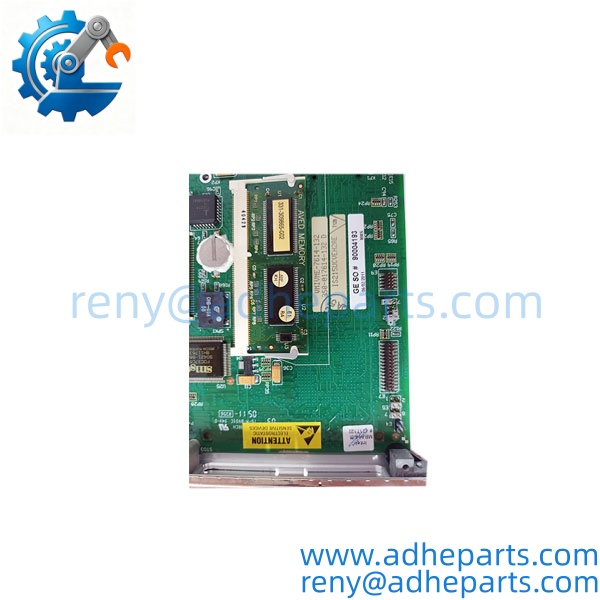
IS215UCVEH2A
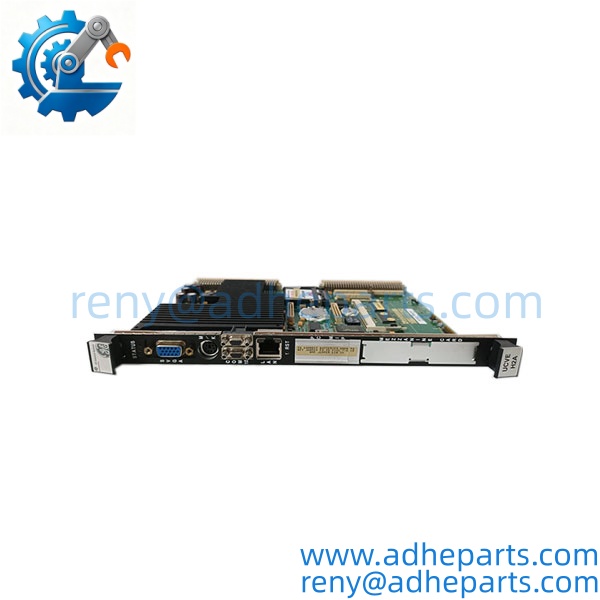
IS215UCVEH2A
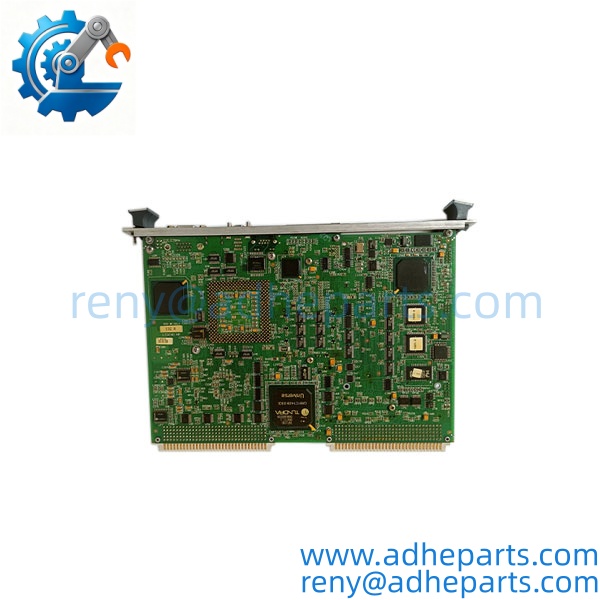
IS215UCVEH2A
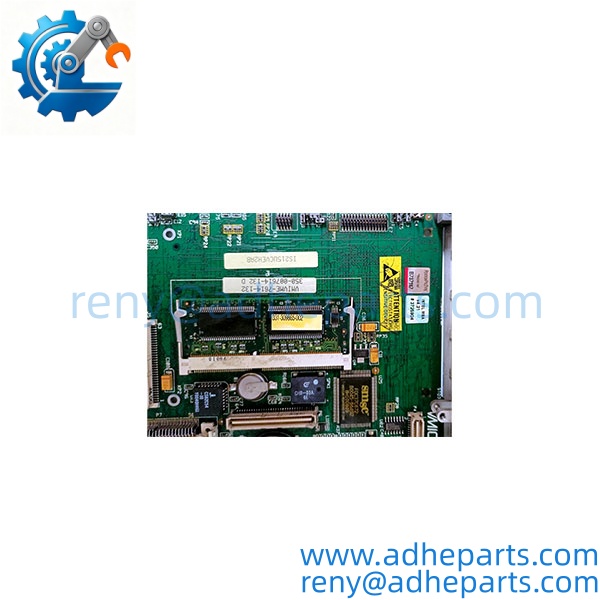
IS215UCVEH2A
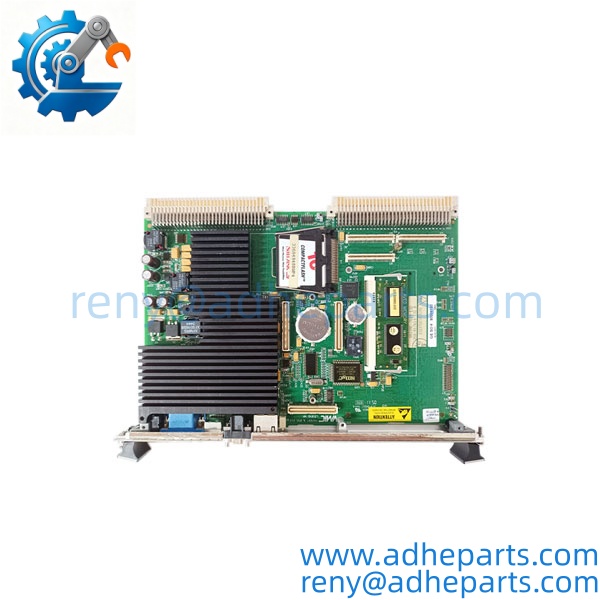
IS215UCVEH2A
Key Technical Specifications
| Parameter | Specification |
|---|---|
| Manufacturer | General Electric (GE) |
| Model | IS215UCVEH2A |
| Functional Acronym | UCVE |
| Product Series | Speedtronic Mark VI |
| Module Type | VME Controller Board |
| Processor | Intel Celeron, 300 MHz |
| DRAM | 32 MB |
| Flash Memory | 16 MB in the documented configuration; verify installed hardware |
| Operating System | QNX real-time operating system |
| Backplane Interface | VME |
| Ethernet | 1 × 10/100Base-TX RJ-45 |
| Serial Interfaces | COM1 and COM2; verify the interface functions for the installed configuration |
| Primary Function | Turbine application execution and controller-level communication |
| Typical Applications | Gas turbines, steam turbines, and associated turbine-control equipment |
Field Application & Technical Pitfalls (The Engineer’s Guide)
Gas and Steam Turbine Control
The IS215UCVEH2A executes the control application within a Mark VI control module. Depending on the configured application, this can involve turbine sequencing, regulation, operating-state management, and coordination with the system’s I/O boards.
Controller and I/O Communication
The board exchanges data with the control system’s I/O hardware through the VME backplane and communicates over the Unit Data Highway. It should not be mistaken for a direct field-wiring interface: field signals are handled by the appropriate I/O hardware.
Legacy Mark VI System Maintenance
For plants maintaining an established Mark VI installation, a matching controller spare can reduce recovery time after a confirmed controller failure. However, a replacement board must be compatible with the installed hardware generation, application software, and system configuration.
Pitfall 1 — Do not confuse Mark VI with Mark VIe.
The IS215UCVEH2A is associated with the Mark VI VME controller architecture. Mark VIe hardware uses a different controller and I/O architecture; a similar-looking product description does not establish interchangeability.
Pitfall 2 — Check the controller configuration before installation.
The control application and configuration are installation-specific. Before replacing the board, establish whether the required application software, configuration files, and startup procedures are available. A physically compatible card may not restore operation without the correct configuration.
Pitfall 3 — Diagnose the complete controller path.
A controller fault can be confused with a VME backplane, rack power, communication-board, or downstream I/O problem. Check diagnostic indicators and system fault records before concluding that the UCVE board itself has failed.
Consider a turbine that repeatedly loses controller communication after a maintenance shutdown. Replacing the UCVE immediately may not resolve the issue if the underlying fault is unstable rack power or a poorly seated communication board. Confirming the fault path first can avoid unnecessary component swaps and additional commissioning delays.
Quality Control (QC) SOP & Transparency
- Part-number verification: Confirm the board label reads IS215UCVEH2A and record the complete revision suffix and serial information.
- Physical inspection: Examine the PCB, connectors, backplane interface, mounting points, labels, and components for damage or corrosion.
- Hardware identification: Record the processor and memory configuration where accessible and compare them with the required replacement specification.
- Configuration review: Confirm the Mark VI system generation and determine whether the correct application software and configuration files are available.
- Power and interface inspection: Check for visible component damage and inspect the Ethernet, serial, and VME interfaces.
- Functional testing: Where a suitable Mark VI test setup is available, verify startup behavior, diagnostics, communication, and controller operation.
- Application compatibility review: Compare the replacement against the installed controller, rack arrangement, firmware, and turbine application requirements.
- Final QA: Record identification photographs and available test results before shipment.
- Protective packaging: Use appropriate ESD protection and cushioning for industrial electronic equipment.
FAQ
Q1: What is the GE IS215UCVEH2A?
It is a UCVE VME controller board for the GE Speedtronic Mark VI turbine control system. Its main role is executing the turbine application and managing controller-level processing and communication.
Q2: Is a Mark VIe controller?
No. It is associated with the Mark VI VME architecture. Mark VIe uses a different controller platform, so compatibility should never be inferred from the similar product-family names.
Q3: What processor does the board use?
The documented configuration uses a 300 MHz Intel Celeron processor, 32 MB DRAM, and 16 MB flash memory. Verify the installed hardware and memory configuration when matching a replacement.
Q4: Does it connect directly to field sensors and actuators?
Not as a general-purpose field I/O card. The UCVE controller communicates with the relevant I/O hardware through the VME backplane; the appropriate I/O boards handle field signal connections.
Q5: Can be replaced by a UCVEM-series board?
Do not assume direct interchangeability. UCVEM variants may provide additional communication interfaces or protocols. Confirm the exact controller variant, system configuration, application software, and communication requirements before selecting an alternative.
Q6: Can the board be hot-swapped?
Do not assume hot-swap capability. Follow the applicable GE maintenance instructions and site shutdown procedures. In turbine control systems, an incorrect removal or replacement procedure can affect controller availability or trip the equipment.
Q7: What should I provide when requesting a replacement?
Provide the complete board number and revision, a clear nameplate photograph, the Mark VI rack or controller details, the turbine application, and any available fault codes. Information about the installed configuration and software is particularly useful when determining whether a replacement board can be commissioned successfully.