Description
Note: Many products are not yet listed. Please contact us for more product information. Our supply channels are constantly expanding, and we currently have 20 stable shared supply channels. Please confirm the model, product, price, and all other necessary information with customer service before placing an order. We offer new, refurbished, and used products, and prices are adjusted according to the year of the item you require.
3. Key Technical Specifications
Confirm each line against the OEM datasheet and the marking on your existing board before ordering. The functional revision code on this board governs firmware compatibility.
| Parameter | Value |
|---|---|
| Model | IS200VRTDH1DAB |
| Brand | GE |
| Product Family | Speedtronic Mark VI (Innovation Series 200) |
| Board Type | Vibration and RTD input board |
| Host Equipment | Mark VI turbine control cabinet — verify the rack position |
| Backplane Interface | Mark VI proprietary backplane — verify pinout and slot assignment |
| Vibration Input Type | Proximity probe and accelerometer inputs — verify signal conditioning |
| RTD Input Type | 3-wire RTD inputs — verify supported RTD types (Pt100, Ni120, etc.) |
| Number of Channels | Verify with OEM datasheet — channel count varies by build |
| On-Board Diagnostics | Verify — LED arrangement varies by revision |
| Isolation | Verify — field side to logic side |
| Power Supply | From Mark VI backplane — verify voltage rail and current draw |
| Power Consumption | Verify with OEM datasheet |
| Jumper / Switch Settings | Verify — record from your existing board before ordering |
| Operating Temperature | 0 °C to +60 °C (typical for this class — verify) |
| Storage Temperature | –40 °C to +85 °C (typical — verify) |
| Humidity | 5% – 95% RH, non-condensing |
| Mounting | Mark VI rack slot, plug-in board |
| Weight | Verify with OEM datasheet |
| Certifications | Verify on the specific unit’s label |
4. Product Introduction
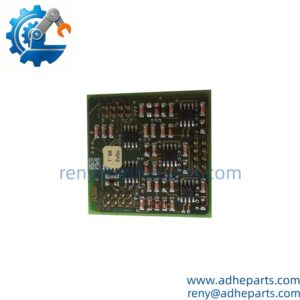
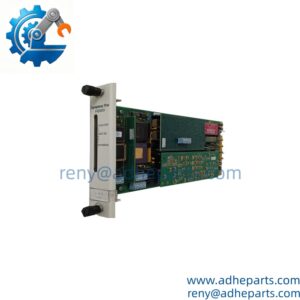
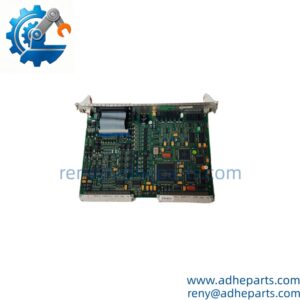
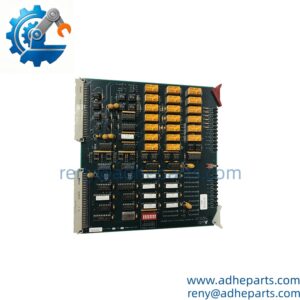
The GE IS200VRTDH1DAB is a vibration and RTD input board for the Speedtronic Mark VI turbine control platform. It processes vibration signals from proximity probes and accelerometers, and RTD signals from bearing and winding temperature sensors, feeding the data to the Mark VI controller for monitoring and protection. The board’s on-board signal conditioning and diagnostics let the controller detect sensor faults and out-of-range conditions before they trip the unit.
What sets this board apart is the integrated signal conditioning for both vibration and temperature on one card. In my experience, separating those functions across two boards adds connectors, cabling, and failure points. The VRTD board keeps the field wiring in one place and reduces the number of spare parts a plant has to stock.
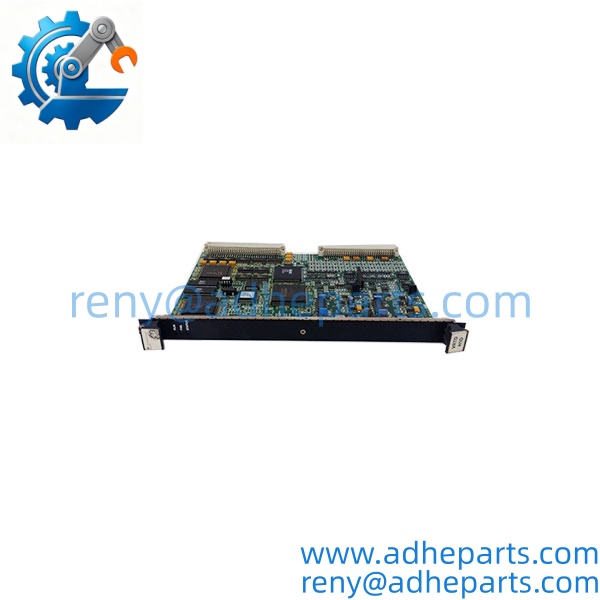
IS200VRTDH1DAB
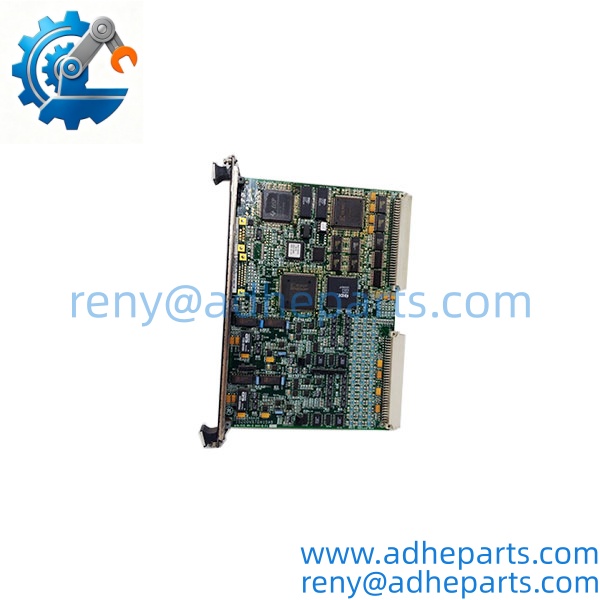
IS200VRTDH1DAB
5. Application Scenarios & Field Experience
Part 1 – Narrative Paragraph
The challenge with turbine monitoring is not the sensors — it is the signal path between the sensors and the controller. Vibration probes and RTDs live in harsh locations, and their cables run through cabinets full of drives and relays. Noise on those cables shows up as false vibration readings or temperature spikes, and the protection system trips the unit on bad data. I have seen a plant lose a full day of production because a single RTD lead picked up interference from a variable frequency drive. The IS200VRTDH1DAB solves that by providing isolated, conditioned inputs on a board that sits in the same rack as the controller. The isolation and filtering keep the noise out of the data, and the on-board diagnostics tell the operator when a sensor or a cable is failing, not just when it has failed.
Part 2 – Numbered List (Application Scenarios)
- Gas Turbine Control – Vibration and Bearing Temperature Monitoring – The board reads proximity probe signals for shaft vibration and RTD signals for bearing temperature. The controller uses this data to detect imbalance, misalignment, and bearing wear before they cause a trip.
- Steam Turbine Control – Thrust and Eccentricity Monitoring – The board processes proximity probe inputs for thrust position and shaft eccentricity, plus RTD inputs for steam chest and bearing temperatures. The combined data gives the controller a complete picture of the turbine’s mechanical condition.
- Combined Cycle Plants – Generator and Turbine Protection – The board monitors vibration and temperature on both the gas turbine and the generator. The isolation between channels prevents a ground fault on one sensor from corrupting the others.
- Industrial Turbines – Auxiliary System Monitoring – Used on mechanical drive turbines in petrochemical and industrial plants. The board provides the vibration and temperature data the controller needs to protect the machine during start-up and steady-state operation.
Part 3 – Short Field Story
A combined cycle plant had a gas turbine that tripped on “high bearing temperature” every time the unit started. The crew had replaced the RTD and the cable, and the trip kept happening. We asked them to check the IS200VRTDH1DAB board and the RTD input configuration. It turned out the board’s RTD input was configured for a different RTD type than the sensor in the field — the board was reading the resistance correctly but scaling it with the wrong curve. The plant changed the configuration and the trips stopped. The board had been working as designed; the setup was wrong.
6. Standard Operating Procedure (SOP) for Quality Control
- Visual & Origin Inspection – We verify the GE marking, the IS200VRTDH1DAB model string, and the date code. We inspect the backplane connector for bent pins and the board for evidence of heat damage, rework, or moisture. A board with a cracked connector or burned traces is rejected.
- Revision Documentation – We read and photograph the full model string, the functional revision code, all jumper and switch settings, and the on-board fuse ratings. That record ships with the board so you can compare it against the unit you are replacing.
- Fuse Verification – We check every on-board fuse for continuity and confirm the rating matches the OEM specification. A board with a blown or wrong-rated fuse is corrected before shipping.
- Power-Up Self-Test – The board is inserted into a known-good Mark VI test rack. We verify it initializes without a backplane fault and that the controller recognizes the board type.
- Vibration Input Test – We inject calibrated vibration signals into each input channel and verify the board’s reported values match the reference. Accuracy must stay within the OEM specification.
- RTD Input Test – We connect a calibrated RTD simulator to each input channel and verify the board’s temperature readings across the range. Accuracy must stay within the OEM specification.
- Connector Integrity Test – We mate and unmate the backplane connector ten times to confirm the contacts do not deform and the retention mechanism holds. A loose board causes intermittent faults that are hard to diagnose in the field.
- ESD-Safe Packaging – The board is wrapped in anti-static film, seated in a conductive foam insert with the connectors protected by rigid shrouds, and packed in a double-wall carton with static warning labels.
7. Frequently Asked Questions (FAQ)
Q1: Will this board work in my Mark VI rack without a firmware change?
A: Only if the functional revision code matches or is compatible with your system’s firmware. The revision code on this board governs the firmware image, and a mismatched revision can initialize and still drop signals under load. Read the code off your existing board and compare it to the replacement before you order.
Q2: What RTD types does the board support?
A: The board supports 3-wire RTD inputs, but the specific types (Pt100, Ni120, etc.) depend on the board’s configuration and firmware revision. Verify the supported RTD types against the OEM datasheet for your build. If you are replacing a board, record the RTD type from your existing configuration before you remove it.
Q3: What is the warranty on this board?
A: We offer a 12-month warranty from the ship date. It covers component failure, backplane connector failure, and input channel failure under normal operating conditions. It does not cover damage from hot-swapping the board with the rack energized, bent pins from forced insertion, or field wiring faults that cause fuse failure. We test every board in a live Mark VI rack before it ships.
Q4: Do you have this exact board in stock?
A: Mark VI inventory moves quickly, and stock varies by revision. Confirm availability before you plan an outage. If we are out of the revision you need, we will tell you what we actually have rather than quote a date we cannot hold.
Q5: Any installation pitfalls I should watch for?
A: Four. First, power down the Mark VI rack before inserting or removing the board — these boards are not hot-swap capable. Second, record the functional revision code, all jumper and switch settings, and the RTD type configuration from the old board before you remove it. Third, check the field wiring and the sensor cables for damage or shielding problems before you install the replacement; noise on the cables will show up as bad data. Fourth, after the swap, verify the board communicates with the controller and that all channels read correctly before you return the unit to service. A board that powers up is not necessarily reading correctly.