Description
Note: Many products are not yet listed. Please contact us for more product information. Our supply channels are constantly expanding, and we currently have 20 stable shared supply channels. Please confirm the model, product, price, and all other necessary information with customer service before placing an order. We offer new, refurbished, and used products, and prices are adjusted according to the year of the item you require.
3. Key Technical Specifications
Confirm each line against the OEM datasheet and the marking on your existing board before ordering. The H2BEE firmware revision is critical to compatibility.
| Parameter | Value |
|---|---|
| Model | IS200VCMIH2BEE |
| Brand | GE |
| Product Family | Speedtronic Mark VI / Mark VIe |
| Board Type | VME Communication Interface (VCMI) / Rack Master Controller |
| Processor | PowerPC 604e, 600 MHz (verify on your board label)-38 |
| Memory | 256 MB SDRAM (verify on your board label)-38 |
| Firmware Revision | H2BEE — critical match required; this revision improves packet throughput by approximately 20% during high-load alarm scenarios compared to earlier H1 loads-13 |
| VME Backplane | VME64x compatible; peak transfer rate 160 MB/s, master/slave modes-13-36 |
| IONet Ports | 3 x fiber optic (TMR configuration); Simplex boards have a single port-12-36 |
| Ethernet Ports | 2 x 10/100 Base-TX (RJ45)-13 |
| Serial Ports | 1 x RS-232 male serial port (maintenance)-12-38 |
| Redundancy | TMR (Triple Modular Redundant) with SIFT (Software-Implemented Fault Tolerance) voting-12-36 |
| Max I/O Support | Up to 16 I/O modules per rack-36 |
| Power Supply | 5V DC via backplane; current draw ~450 mA typical @ 5V-13 |
| Isolation | 1500 V RMS (network to logic)-13 |
| LED Indicators | 4 sets (3, 6, 8, 3) for power, run, fault, IONet activity, serial status-12– |
| Operating Temperature | –30 °C to +65 °C (verify for your cabinet)-13 |
| Storage Temperature | –40 °C to +85 °C-13 |
| Humidity | 5% – 95% RH, non-condensing-13 |
| Weight | Approx. 2 kg (verify with OEM datasheet)-38 |
| Certifications | CE, UL, CSA (industrial safety and EMC compliance)- |
4. Product Introduction
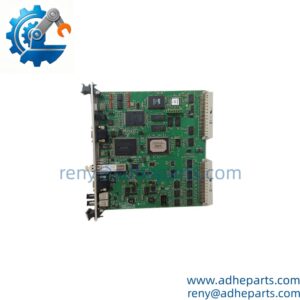
The GE IS200VCMIH2BEE is a VME Communication Interface (VCMI) board for the Speedtronic Mark VI and Mark VIe turbine control systems. It functions as the main rack master controller inside the I/O rack, coordinating high-speed communication between local I/O cards across the VME backplane and the central control processors via the IONet network-3. It is the board that keeps the rack’s I/O data synchronized with the rest of the turbine control system.
The engineering value is the TMR architecture and the SIFT voting. The board carries three IONet fiber optic ports, and the SIFT (Software-Implemented Fault Tolerance) voting cross-checks three data streams to eliminate single-point failures--12. Data is broadcast to all remote racks in one packet, and each VCMI in those remote locations extracts the appropriate data-12. The H2BEE firmware revision specifically addresses latency issues found in earlier H1 loads, improving packet throughput by approximately 20% during high-load alarm scenarios-13.
Two things decide whether a swap works. First, the firmware revision. The H2BEE revision must match the system project database in GE Toolbox before the rack is brought back online-3. Second, the jumper settings and network IP configuration. These are stored on the board and must be verified against the original before installation-3.
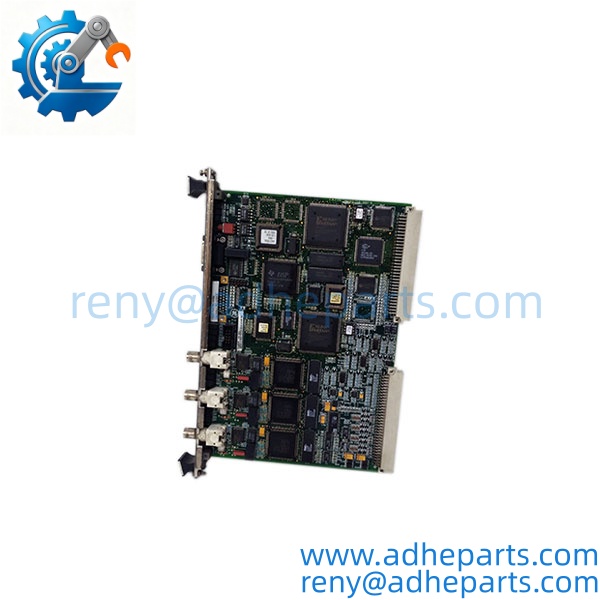
IS200VCMIH2BEE
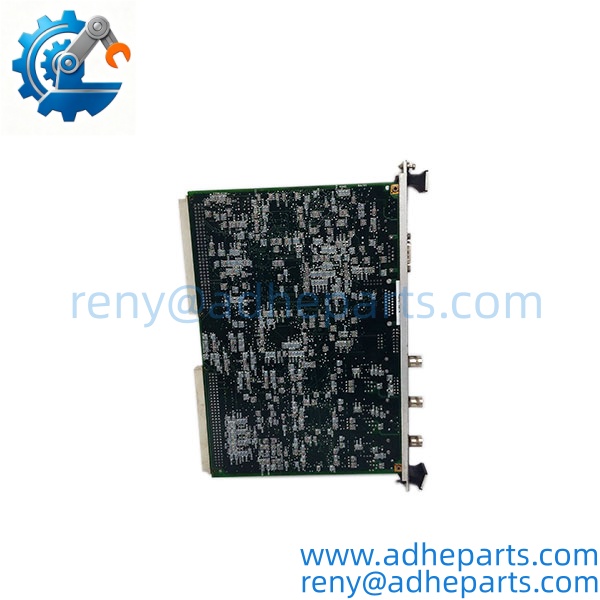
IS200VCMIH2BEE
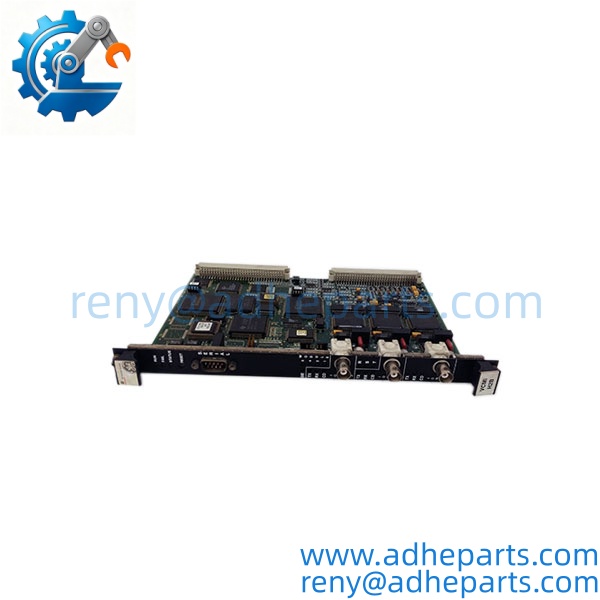
IS200VCMIH2BEE
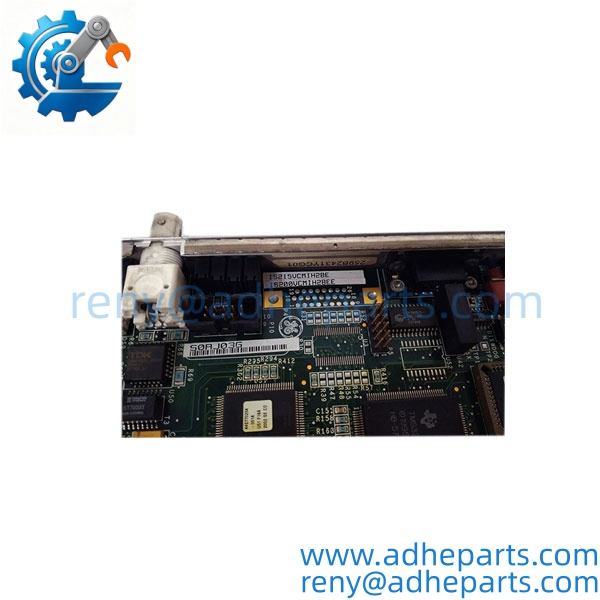
IS200VCMIH2BEE
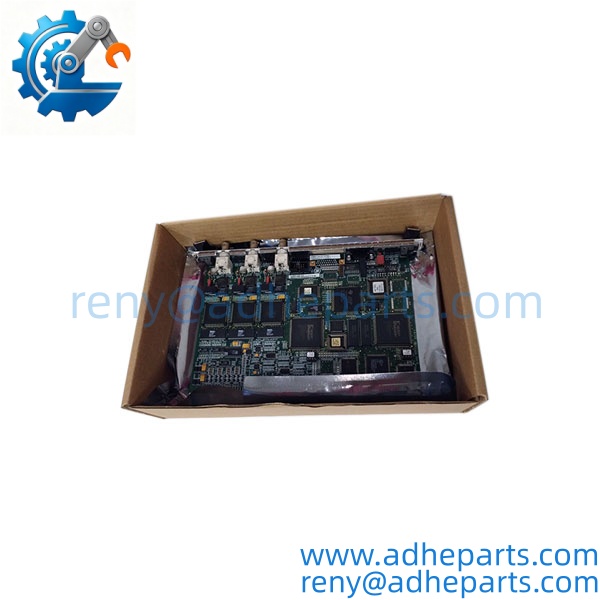
IS200VCMIH2BEE
5. Application Scenarios & Field Experience
Part 1 – Narrative Paragraph
The failure that costs the most downtime on a Mark VI turbine is a communication dropout between the rack master and the central controller. The unit is running, the operator sees an I/O fault, and the VCMI board is the suspect. I have seen a crew replace a VCMI board twice and still have the fault because the real problem was a marginal IONet fiber connector or a firmware mismatch. On this platform, the board is rarely the only thing that can fail. Before you order a replacement, check the IONet fiber connections, the backplane seating, and the firmware revision against the project database. A board with the right part number and the wrong revision will initialize and still drop communication under load.
Part 2 – Numbered List (Application Scenarios)
- Gas Turbine Control – I/O Rack Master Controller – The board scans local I/O cards, collects analog and digital field data, and transmits it to the central controller over redundant IONet links. A dropout here shows up as an I/O fault and, depending on the point, a unit trip.
- Steam Turbine Control – Unit Data Highway (UDH) Node – The board is the primary communication controller on the Unit Data Highway, reading and transmitting data to other boards via fiber-optic Ethernet-12. It supports turbine speed control, generator synchronization, and load control-.
- Combined Cycle Plants – TMR Rack Coordination – The board coordinates data across triple-redundant I/O racks. The SIFT voting ensures data accuracy by cross-checking three data streams, eliminating single-point failures-.
- Industrial Turbines – Remote I/O Gateway – The board serves as the primary gateway for remote monitoring, diagnostics, and operational coordination in demanding power generation and industrial gas turbine environments-.
Part 3 – Short Field Story
A combined cycle plant had a gas turbine that logged an intermittent “I/O communication fault” during load changes. The crew replaced the VCMI board and the fault came back two days later. We asked them to check the IONet fiber connectors and the firmware revision on the replacement board. The replacement had a different firmware load than the system project database required, and the IONet connector at the remote rack end had a partially backed-out fiber. The plant reseated the fiber, installed a board with the correct H2BEE firmware, and the fault cleared. The board had been doing its job — the firmware and the connector were the problem.
6. Standard Operating Procedure (SOP) for Quality Control
- Visual & Origin Inspection – We verify the GE marking, the IS200VCMIH2BEE model string, and the date code. We inspect the VME backplane connector for bent pins and the IONet fiber ports for damage or contamination. A board with a cracked connector or evidence of moisture ingress is rejected.
- Revision and Firmware Documentation – We read and photograph the full model string, the H2BEE firmware revision, all jumper settings, and the network IP configuration. That record ships with the board so you can compare it against the unit you are replacing.
- Backplane Fit Verification – Each board is seated in a Mark VI test rack to confirm the VME connector engages fully and the retention mechanism holds. A board that fits loosely will cause intermittent backplane faults.
- Power-Up Self-Test – The board is powered in a live rack and we verify it completes its boot sequence and that the controller recognizes the board type without a fault.
- IONet Communication Test – The board is connected to a Mark VI test network and we verify it communicates with the central controller across all three IONet ports at the specified data rate. We run a continuous exchange loop and log any dropped frames.
- SIFT Voting Verification – We verify the SIFT voting logic is active and that the board correctly reports a degraded channel when one IONet port is disconnected.
- Connector Integrity Test – We mate and unmate the backplane connector ten times to confirm the contacts do not deform and the retention mechanism holds. A loose board causes intermittent faults that are hard to diagnose in the field.
- ESD-Safe Packaging – The board is wrapped in anti-static film, seated in a conductive foam insert with the connectors protected by rigid shrouds, and packed in a double-wall carton with static warning labels.
7. Frequently Asked Questions (FAQ)
Q1: Will this board work in my Mark VI rack without a firmware change?
A: Only if the firmware revision matches the system project database in GE Toolbox. The firmware revision governs the board’s communication behavior and its compatibility with the central controller. A mismatched revision can initialize and still drop communication under load. Read the firmware revision off your existing board and compare it to the replacement before you order. If you send us a photo of the board label, we will confirm the revision.
Q2: What is the difference between the IS200VCMIH2BEE and the IS215VCMIH2BE?
A: Both are VCMI boards for the Mark VI and Mark VIe platforms, but they are different assembly variants-. The IS200VCMIH2BEE is the board-level part number, while the IS215VCMIH2BE is a related assembly. They are not interchangeable without confirming compatibility against the OEM documentation. Match the full part number on your existing board before you order.
Q3: What are the jumper settings and IP configuration, and do I need to change them?
A: The board carries jumper settings and a network IP configuration that must match the system project database-3. The replacement board ships with factory default settings that will not match your system. Record the jumper positions and IP configuration from the board you are removing and set the replacement to match before you install it. A mismatch will prevent the board from initializing correctly.
Q4: What is the warranty on this board?
A: We offer a 12-month warranty from the ship date. It covers component failure, VME backplane connector failure, and IONet communication failure under normal operating conditions. It does not cover damage from hot-swapping the board with the rack energized, bent pins from forced insertion, or ESD damage from handling without a wrist strap. We test every board in a live Mark VI rack across all three IONet ports before it ships.
Q5: Any installation pitfalls I should watch for?
A: Four. First, power down the VME chassis before inserting or removing the board — hot-swapping the master communication board in an un-redundant rack will drop communication to all attached I/O cards-3. Second, record the firmware revision, jumper settings, and IP configuration from the old board before you remove it. Third, verify the firmware revision matches the system project database before you power up. Fourth, after the swap, verify the board communicates with the central controller across all three IONet ports and that the rack I/O is scanning before you return the unit to service. A board that powers up is not necessarily communicating correctly.