Description
Note: Many products are not yet listed. Please contact us for more product information. Our supply channels are constantly expanding, and we currently have 20 stable shared supply channels. Please confirm the model, product, price, and all other necessary information with customer service before placing an order. We offer new, refurbished, and used products, and prices are adjusted according to the year of the item you require.
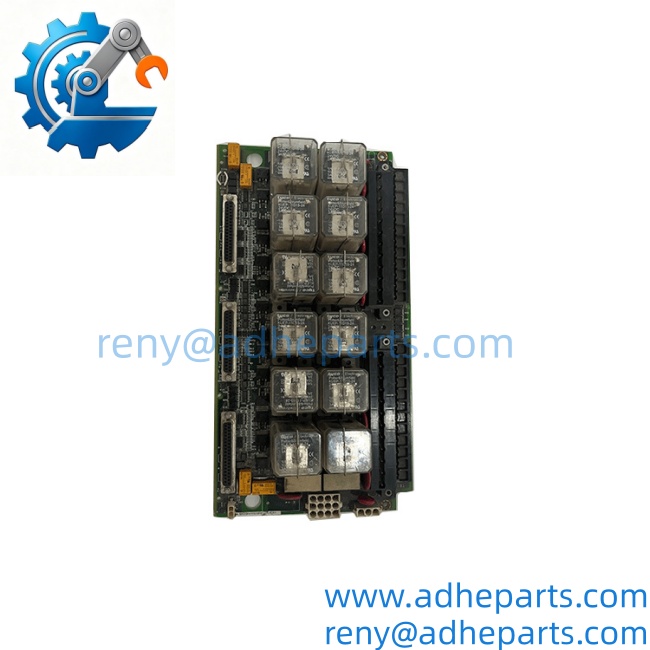
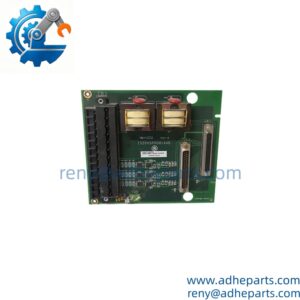
GE IS200TREGH1BDB
Key Technical Specifications
| Parameter | Specification |
|---|---|
| Manufacturer | General Electric |
| Model | IS200TREGH1BDB |
| Functional Designation | TREG |
| Product Type | Turbine Emergency Trip Terminal Board |
| Control System | Mark VI turbine control system |
| Primary Application | Gas and steam turbine emergency shutdown |
| H1B Configuration | 125 VDC primary trip-solenoid version |
| Trip Solenoid Capacity | Three emergency trip solenoids |
| Nominal Solenoid Voltage | 125 VDC |
| Solenoid Voltage Range | Approximately 70–145 VDC |
| Nominal Solenoid Current | Approximately 1 A during energization |
| Trip Relay Arrangement | Nine emergency trip relay contacts arranged in three groups |
| Economizer Relays | Three |
| Hardware Trip Filter | Approximately 4 ms |
| Terminal Blocks | Two terminal blocks, commonly 24 terminals each |
| Board Connections | Three jack-style connector ports |
| Operating Temperature | Approximately 0–60°C |
The IS200TREGH1BDB is identified as a Turbine Emergency Trip Terminal Board for GE Mark VI turbine control systems. The H1B configuration is associated with a 125 VDC trip-solenoid circuit and supports three emergency trip solenoids.
Product Introduction (Anti-Template)
When a turbine protection system must remove energy from the trip circuit, the emergency termination board becomes part of the shutdown path rather than a conventional signal-conditioning module. The GE IS200TREGH1BDB is a TREG terminal board used in Mark VI turbine control systems to distribute and control the positive DC power required by emergency trip solenoids. Its H1B configuration is associated with 125 VDC trip-solenoid applications.
The board supports three emergency trip solenoids and uses relay, economizer, suppression, and filtering circuits to manage the shutdown interface. The exact H1B and DB configuration must be matched carefully; similar TREG boards may use different power arrangements or redundancy configurations. Honestly, this is not a board to substitute by appearance alone.
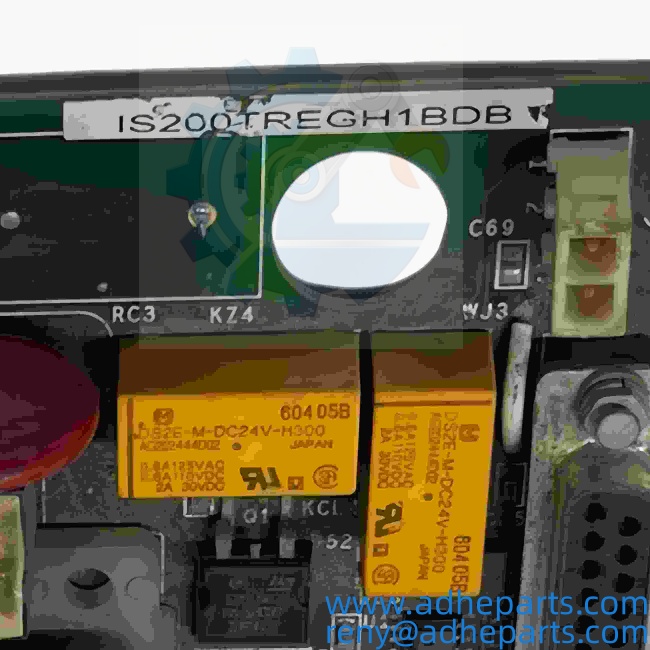
GE IS200TREGH1BDB
QC, Procurement & Logistics SOP
- Inbound Verification
Confirm the complete identification IS200TREGH1BDB and check the board label, serial information, hardware revision, terminal blocks, relays, capacitors, and connector condition. - Configuration Verification
Verify the H1B configuration, 125 VDC trip-solenoid requirement, board suffix, and installed Mark VI architecture. Check whether the system uses simplex or redundant TREG arrangements. - Live Rig Testing
Where an approved test environment is available, inspect relay operation, trip-solenoid circuit continuity, economizer timing, suppression components, and hardware filter behavior. Testing must follow the turbine manufacturer’s approved maintenance procedure. - QA & Anti-Static Packaging
Protect the terminal blocks, relays, connectors, and exposed PCB areas against impact, moisture, and ESD. Immobilize the board inside rigid packaging so that the terminal blocks do not carry transport loads. - Global Logistics & Export Compliance
Confirm final packed dimensions and gross weight before freight booking. Use an appropriate customs classification for the actual turbine-control terminal board and provide accurate product identification on the commercial invoice and packing list.
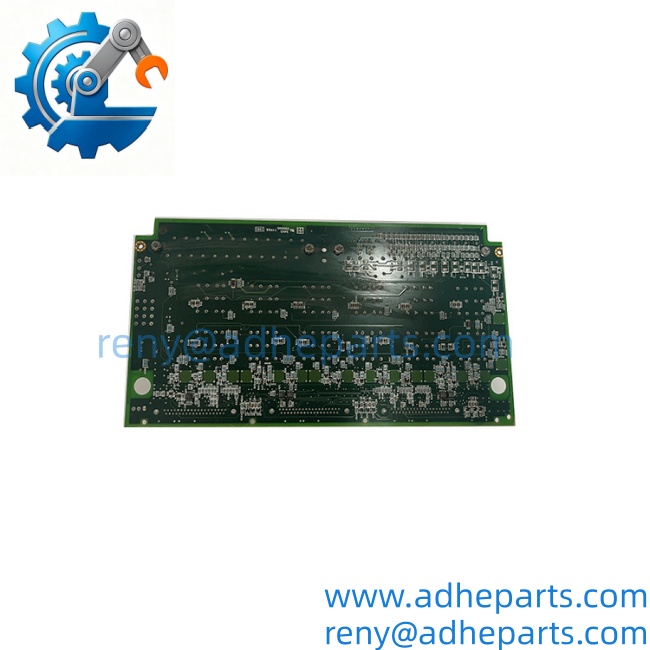
GE IS200TREGH1BDB
Technical Pitfalls & Integration Warnings
- Firmware / Controller Revision Mismatch
The TREG board itself is not a conventional programmable CPU, but its operation depends on the connected Mark VI controller and protection configuration. Example: a board may pass a basic continuity check but fail to operate correctly with a different controller or protection revision. - DIP Switch / Configuration Errors
TREG systems may use different board types for simplex, redundant, or separated power arrangements. Example: installing an H1B board where the system requires another TREG power configuration can compromise the intended trip-circuit architecture. - Wiring / Terminal Incompatibility
The H1B version is associated with a 125 VDC trip-solenoid circuit. Incorrect polarity, terminal assignment, relay contact wiring, or solenoid voltage can prevent the turbine from tripping correctly or damage the circuit. - ESD and Uncontrolled Unboxing
Relays, suppression components, and connector circuitry can be damaged during handling. Keep the board in anti-static packaging until installation, and never use the terminal blocks or connectors as lifting points.
Frequently Asked Questions (FAQ)
Q1. What is GE IS200TREGH1BDB used for?
It is a Turbine Emergency Trip Terminal Board used in GE Mark VI turbine control systems for emergency trip-solenoid control.
Q2. What does the H1B configuration indicate?
The H1B configuration is associated with a 125 VDC primary trip-solenoid circuit, with an operating range commonly listed at approximately 70–145 VDC.
Q3. How many emergency trip solenoids can it support?
The board is designed to support three emergency trip solenoids.
Q4. Is IS200TREGH1BDB interchangeable with other TREG boards?
Not automatically. TREG variants may differ in voltage arrangement, redundancy configuration, feedback routing, and economizer circuitry. Match the complete part number and system wiring before replacement.
Q5. Can this board be hot-swapped?
Do not hot-swap it. Emergency trip circuits can contain hazardous DC voltage and may be connected to critical turbine protection functions. Isolate the equipment and follow the approved maintenance procedure before removal.
Q6. What information should I provide when requesting a quotation?
Provide the complete model , a clear nameplate photograph, the Mark VI controller configuration, trip-solenoid voltage, terminal-side photographs, and the reason for replacement.
Q7. What is the international lead time?
Lead time depends on actual stock and requested condition. New surplus, used, and tested units may require different preparation times, so the exact board revision and testing requirements should be confirmed before a firm delivery date is issued.