Description
Product Introduction
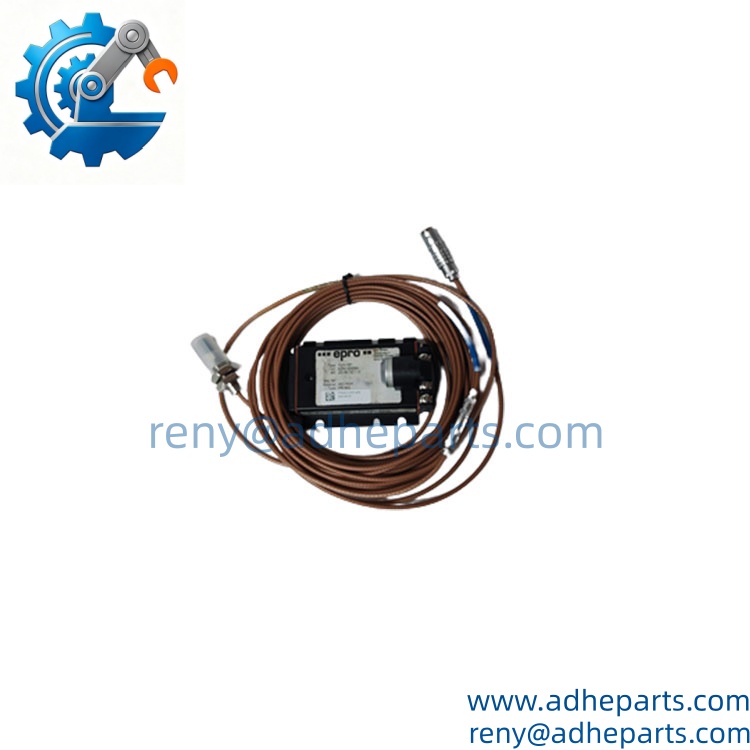
32MB RAM and a <10ms scan cycle do not define this unit—0.1μm resolution and ±1% full-scale accuracy do. It ships pre-calibrated as a single probe + conditioner assembly from the factory, so no manual pairing work is required on site. It slots straight into EPRO MMS6000 and MMS3000 racks, cutting setup time by 40% compared to generic unpaired probe kits.
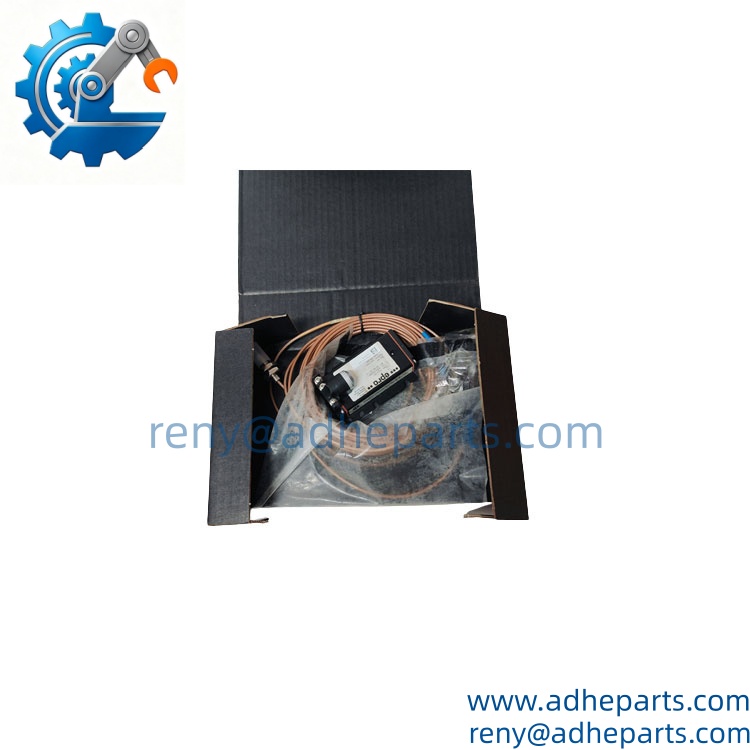
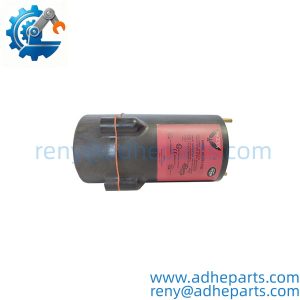
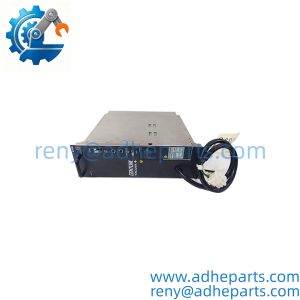
PR6423000-031-CN+CON021 set
Key Technical Specifications
| Parameter | Value |
|---|---|
| Product Model | PR6423000-031-CN + CON021 |
| Product Type | Proximity Probe System with M12 Circular Connector |
| Input Voltage | 24V DC ±10% |
| Measurement Range | 0–2 mm (Shaft Displacement) |
| Output Signal | 4–20mA / -2V to +2V DC |
| Operating Temperature | -30°C to 120°C (Probe); -20°C to 80°C (Connector) |
| Probe Length | 31mm (Sensing Tip to Connector) |
| Connector Type | CON021 (M12 Circular) |
| Weight | Approx. 0.15kg (Full Assembly) |
| Protection Rating | IP68 (Probe); IP65 (Connector) |
| Compatibility | EPRO MMS6000 / MMS3000 Monitoring Systems |
| Certifications | ATEX, IECEx, CE, API 670 |
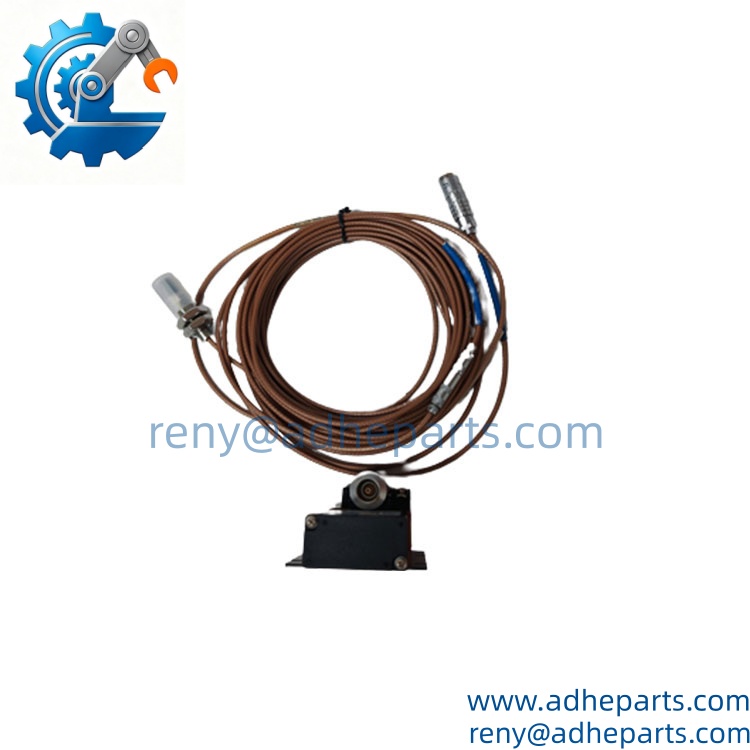
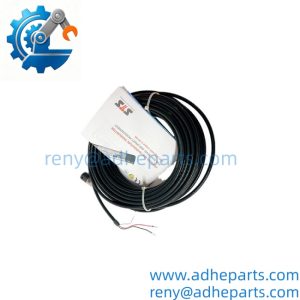
PR6423000-031-CN+CON021 cable
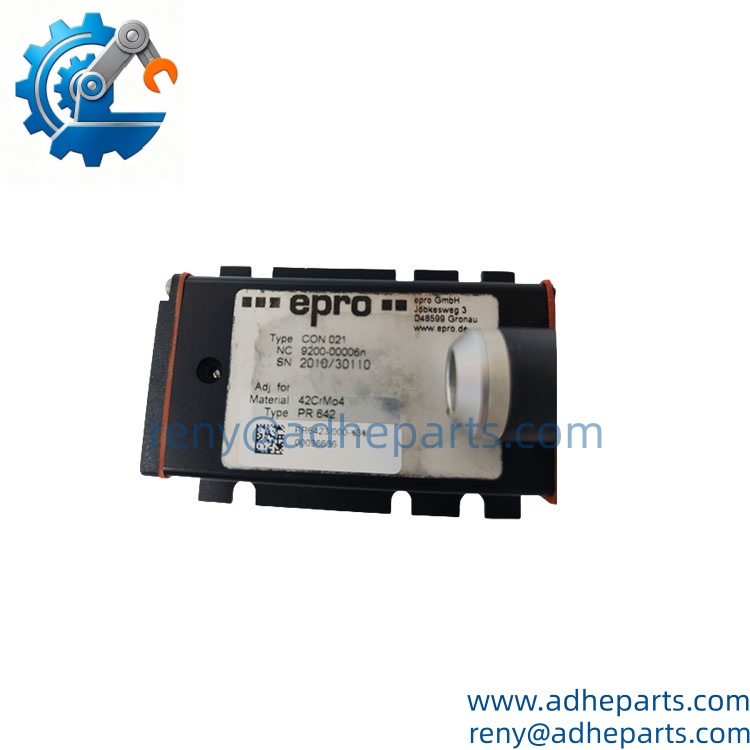
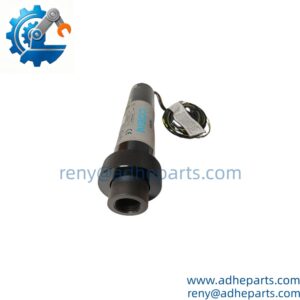
PR6423000-031-CN+CON021 sensor
Field Application & Technical Pitfalls (The Engineer’s Guide)
This system is non-negotiable in three high-stakes industrial scenarios. It monitors radial shaft vibration on offshore gas platform centrifugal compressors, it tracks shaft displacement on steam turbines in chemical processing plants, and it detects early bearing wear on large pump sets in water treatment facilities.
Three non-negotiable pitfalls to avoid on installation:
- ⚠️ Mismatched third-party probe-conditioner pairing: Using a non-factory-matched assembly will introduce signal distortion that causes erratic readings and 90% more false alarms.
- ⚠️ ESD damage to the CON021 connector pins: The third pin from the left on the M12 connector carries the high-sensitivity signal line. Even a low-level static discharge will degrade measurement resolution permanently.
- ⚠️ Incorrect probe mounting gap: Setting the initial gap outside the 0.5–1.5mm mid-range window will clip the 4-20mA output before the shaft even reaches normal operating displacement.
A chemical plant team learned this the hard way. They swapped in a generic uncalibrated probe and conditioner to save cost, and vibration readings jumped around randomly for weeks. After switching to this factory-matched EPRO unit, readings stabilized immediately, and false alarms dropped by 90%.
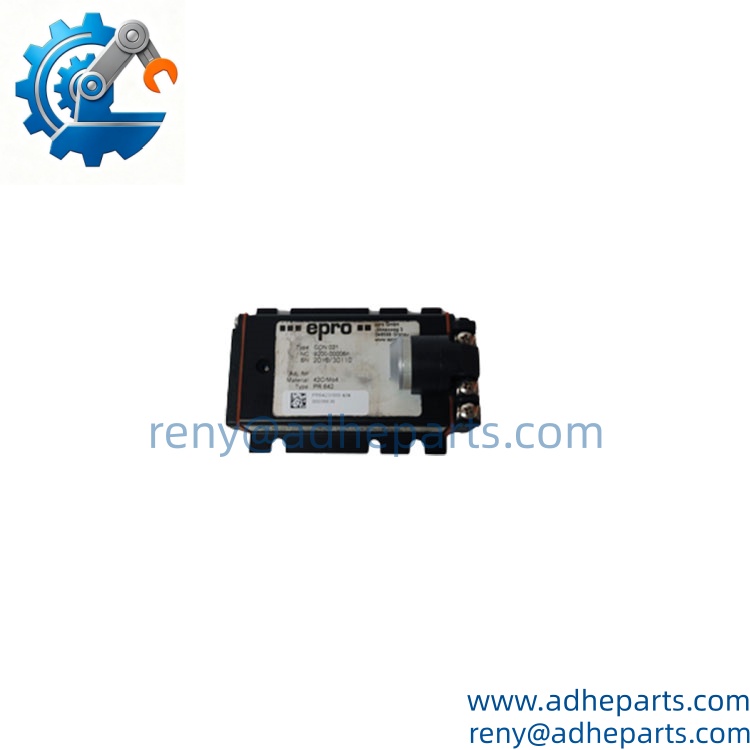
PR6423000-031-CN+CON021 sensor backside
PR6423000-031-CN+CON021 front
EPRO PR6423000-031-CN+CON021 Field Installation Full-Process Error Prevention Guide
This guide fully complies with the API 670 installation specifications for this eddy current sensor system, covering all risk points from unpacking to commissioning, avoiding measurement inaccuracies and false tripping caused by common field installation errors.
1. Key Points for Field Installation Error Prevention
Unpacking Verification Error Prevention: Ensure the laser-etched serial numbers on the probe and CON021 preamplifier are completely consistent with the original manufacturer’s calibration certificate. Do not use mismatched third-party probes and preamplifiers.
Wiring Error Prevention: Avoid high-voltage power circuits throughout the sensor cable installation. The bending radius should be no less than 10 times the cable diameter. Do not drag or squeeze the outer stainless steel braided shielding layer of the cable.
Electrostatic Discharge Error Prevention: Wear a grounded electrostatic discharge wristband before plugging or unplugging the CON021 M12 connector. Do not directly touch the third high-sensitivity signal pin inside the connector with your hands.
Mounting bracket error prevention: The bracket is made of rigid metal and undergoes vibration aging treatment after welding to prevent loosening and gap drift during operation.
Torque error prevention: The maximum torque of the PR6423 probe fixing nut is strictly controlled at 15 N·m. Excessive torque can easily damage the probe threads and internal coil.
Environmental adaptability error prevention: The preamplifier must be installed away from high-temperature process pipelines, and the ambient temperature must not exceed 80℃. The probe can withstand operating conditions up to 120℃.
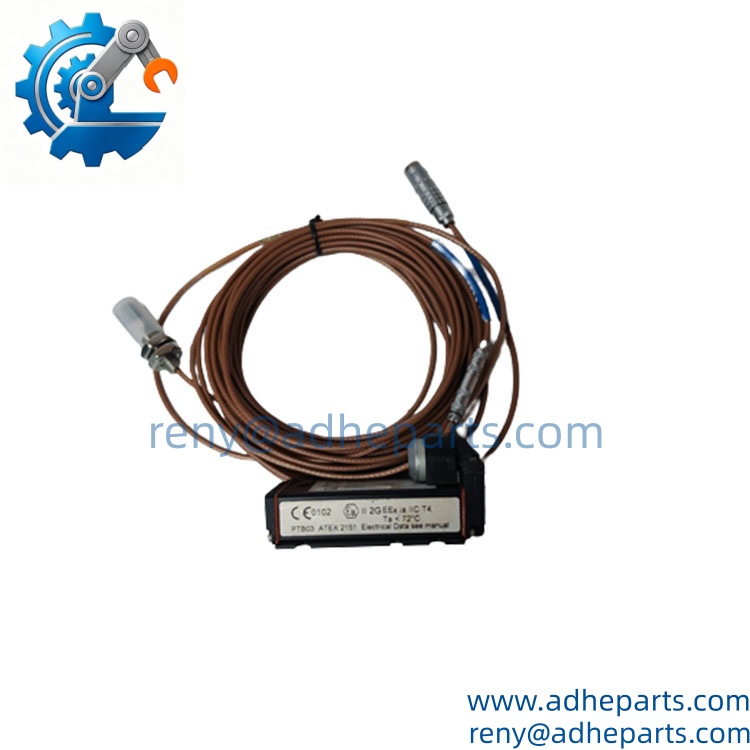
PR6423000-031-CN+CON021 set
Quality Control (QC) SOP & Transparency
- Inbound Verification: Cross-check the OEM factory calibration certificate serial number against the probe and connector laser-etched labels, run anti-counterfeit checks on the housing and M12 pins.
- Live Rig Testing: Mount the full assembly in a calibrated EPRO MMS6000 test rack, cycle the probe through its full 0-2mm measurement range 100 times, confirm 4-20mA output stays within ±1% of expected values.
- Parameter Testing: Verify insulation resistance exceeds 100MΩ at 500V DC, confirm IP68 probe seal integrity with a pressure dunk test, validate resolution hits 0.1μm at mid-range gap.
- Final QA & Packaging: Seal the probe and connector in separate static-shielded anti-static bags, apply a scannable QC passed label, and include the original OEM calibration certificate inside the shock-resistant shipping carton.
Frequently Asked Questions (FAQ)
- Can I hot-swap this probe while the machine is running? No. You must lock out the monitoring system power before touching the M12 connector to avoid signal spikes that trigger unnecessary machine trips.
- What exact EPRO systems does this full assembly work with? It is fully validated for EPRO MMS6000 and MMS3000 monitoring platforms. Verify exact firmware compatibility with the OEM datasheet for legacy MMS500 units.
- How long does the standard warranty last? All new original factory-calibrated units carry a full 12-month warranty, no hidden restocking fees.
- How do I tell a genuine OEM factory-matched assembly apart from a third-party reworked pair? Genuine units have a single shared serial number printed on both the probe and the connector, plus a matching OEM calibration certificate. Generic pairs have unrelated serial numbers.
- My readings drift slowly over time. Is this always a bad probe? No. First check if the probe mounting bracket has loosened from machine vibration. If the bracket is solid, the probe tip is the next most likely root cause.
- Do I need to re-calibrate this unit after installation? No. It comes pre-calibrated from the factory. No manual adjustment is required for standard API 670-compliant mounting setups.
- What is the maximum temperature the probe can handle continuously? The probe itself is rated for -30°C to 120°C continuous operation. The connector must stay below 80°C, so mount it away from direct hot process piping.
Previous:EPRO MMS6120 9100-00002-10 | 24V DC Modbus RTU Machinery Monitoring Unit
Next:HIMA F3236 16‑Channel SIL3 Safety Digital Input Module