Description
Note: Many products are not yet listed. Please contact us for more product information. Our supply channels are constantly expanding, and we currently have 20 stable shared supply channels. Please confirm the model, product, price, and all other necessary information with customer service before placing an order. We offer new, refurbished, and used products, and prices are adjusted according to the year of the item you require.
3. Key Technical Specifications
Confirm each line against the OEM datasheet and the option code on your board label before ordering. The memory size and processor speed vary by build.
| Parameter | Value |
|---|---|
| Model | VME162PA-344SE (MVME162PA-344SE) |
| Brand | Motorola Computer Group |
| Product Family | MVME162 series |
| Processor | Motorola MC68040 or MC68LC040 — verify on the board label |
| Processor Speed | 25 MHz or 32 MHz — verify by option code |
| Cache | 4 KB instruction + 4 KB data (on-chip, 68040) |
| DRAM | 4 MB, 8 MB, or 16 MB — verify option code 344 against the OEM table |
| SRAM | 512 KB, battery-backed |
| Flash / Boot Memory | 1 MB or 4 MB — verify build |
| VMEbus Interface | VME64, A16/A24/A32, D8/D16/D32, master and slave |
| VMEbus Compliance | IEEE 1014-1987, ANSI/VITA 1-1994 |
| Ethernet | 10BaseT (RJ45) + AUI, onboard controller |
| SCSI | SCSI-2, 8-bit, single-ended, 10 MB/s |
| Serial Ports | 2 x EIA-232-D (DB9 front panel) |
| Parallel Port | Centronics, 8-bit |
| Timers / Counters | 4 x 16-bit programmable |
| Real-Time Clock | Battery-backed TOD clock with NVRAM |
| Debug Interface | Onboard firmware monitor (162Bug) via serial port |
| Front Panel | SCSI, Ethernet, 2 serial, reset/abort switches, status LEDs |
| Form Factor | 6U double-height Eurocard, 160 mm x 233 mm |
| Power Requirements | +5V @ 4.0A typ / +12V @ 100 mA / -12V @ 100 mA |
| Operating Temperature | 0 °C to +55 °C (standard build) |
| Storage Temperature | –40 °C to +85 °C |
| Humidity | 5% – 95% RH, non-condensing |
| Weight | Approx. 1.0 kg (2.2 lb) |
4. Product Introduction
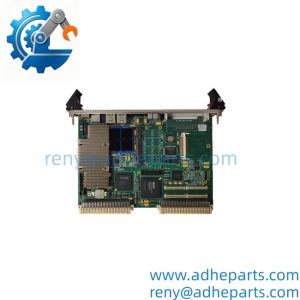
The Motorola VME162PA-344SE is a 6U VMEbus single-board computer built around the MC68040 microprocessor. It puts the CPU, DRAM, battery-backed SRAM, flash, VMEbus interface, Ethernet, SCSI, and serial I/O on one double-height Eurocard, so a single card slot delivers a complete control node. The MVME162 was the compact, cost-reduced member of Motorola’s 68040 VME family — it traded the MVME167’s full feature set for a smaller board that fit applications where space and power budget mattered.
The engineering value is bus throughput at lower cost. The board operates as both VMEbus master and slave across A32/D32 transfers, which lets it pull data from legacy I/O cards without an external bridge board. Battery-backed SRAM and flash hold the boot image and calibration tables through power loss. The onboard Ethernet and SCSI mean you do not need separate cards for network and disk access, which is a real advantage in a 6U chassis with limited slots.
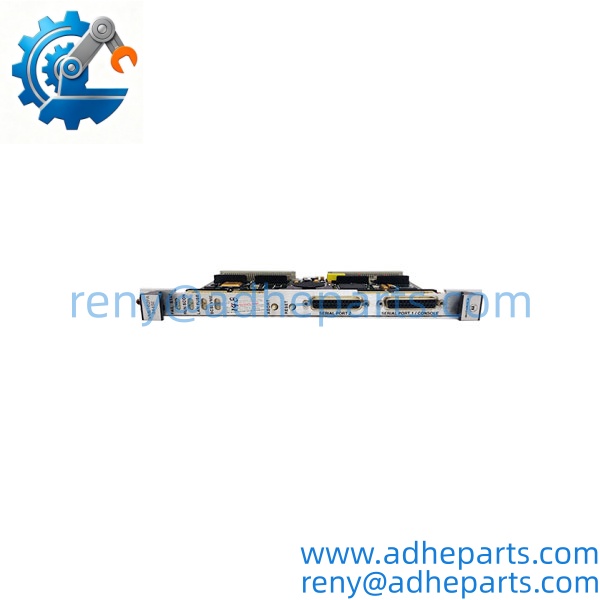
VME162PA-344SE
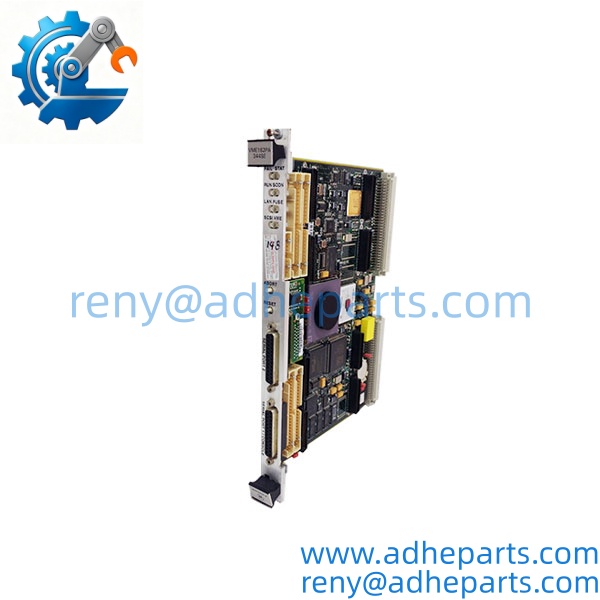
VME162PA-344SE
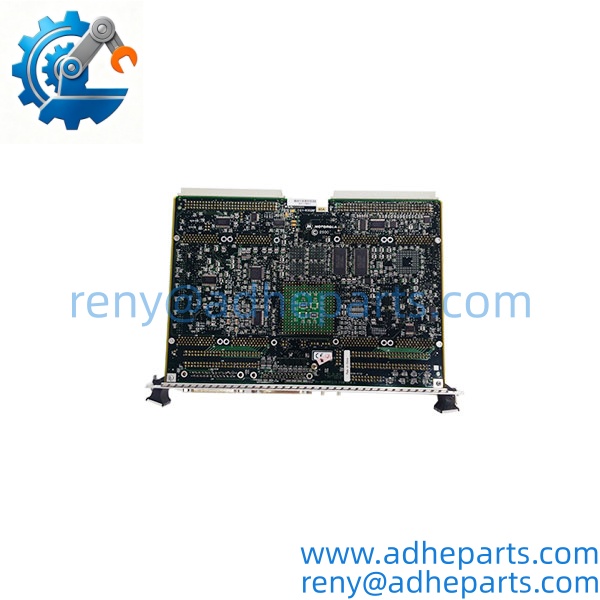
VME162PA-344SE
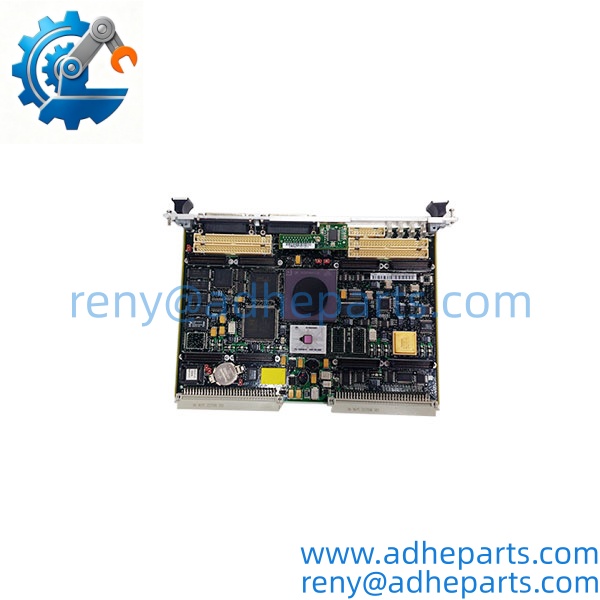
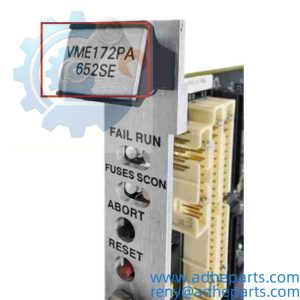
VME162PA-344SE
5. Application Scenarios & Field Experience
Part 1 – Narrative Paragraph
The problem with legacy VME racks is not that they fail — it is that they fail one card at a time, and every card removed is a chance to discover that the backplane has been running at spec limit for a decade. A 6U chassis with a 68040 CPU card pulling 4A on the +5V rail has very little headroom left once you add I/O. The MVME162PA-344SE solves the replacement problem directly: it drops into the same slot, speaks the same VME64 protocol, and boots from the same flash image, so the OEM application software does not need to be rebuilt. In my experience, that last point is what decides whether a line comes back up in four hours or four weeks.
Part 2 – Numbered List (Application Scenarios)
- Telecom Central Office Equipment – The board runs signaling and call processing tasks in carrier-grade shelves. The onboard Ethernet connects to the management network, and the SCSI bus connects to a disk enclosure for call detail records.
- Industrial Control – Data Concentrator Node – The board polls legacy VMEbus analog input cards, runs a control or logging algorithm, and pushes results over Ethernet to a supervisory system. The A32/D32 master capability keeps the polling loop under budget.
- Test and Measurement – Instrument Controller – Used in rack-mounted test systems where the VMEbus backplane hosts multiple instrument cards. The 68040 handles the data acquisition and the SCSI port stores the results.
- Medical Imaging – Legacy Scanner Control – Deployed in older imaging systems where the VME chassis controls the gantry and acquisition hardware. Replacement is often the only path when the OEM no longer stocks the board.
Part 3 – Short Field Story
A telecom equipment refurbisher had a central office shelf running a signaling node on an MVME162 board. The board failed a POST check and refused to boot — no fan, no output, dead. The shelf had no spare and the OEM quoted a long lead time. We shipped a VME162PA-344SE the same day. The refurbisher moved the SCSI drive and the flash card across, powered the shelf up, and the firmware monitor came back with a clean memory map. The node was back in service the next morning.
6. Standard Operating Procedure (SOP) for Quality Control
Every VME162PA-344SE board is processed through this QC sequence before it is cleared for shipment:
- Visual & Origin Inspection – We verify the Motorola silkscreen, the option code on the board label, and the date code. We inspect the 96-pin DIN P1/P2 connectors for bent pins, cracked solder joints, and corrosion. Any board showing rework outside the factory pattern is rejected.
- Power Rail Verification – We apply +5V, +12V, and -12V from a bench supply and measure current draw at idle. A standard board pulls roughly 4.0A on the +5V rail. A board drawing more than 15% above baseline is pulled for inspection.
- POST and Firmware Monitor Test – We connect a terminal to the front-panel serial port and watch the boot sequence. We verify the firmware monitor banner, run a memory map dump, and check the DRAM and SRAM address ranges against the option code.
- Memory Integrity Test – We write a walking-ones pattern across all DRAM, read it back, and compare. We do the same for the 512 KB SRAM with the battery disconnected and then reconnected, to confirm the cell holds state.
- VMEbus Master/Slave Test – The board is installed in a powered 6U chassis alongside a known-good I/O card. We run master reads and writes across A16, A24, and A32 spaces, and verify slave access from an external VMEbus master.
- Peripheral Verification – Ethernet is tested with a loopback plug at 10BaseT. SCSI is tested with a terminated loopback cable. Both serial ports are exercised with a null-modem loopback at 9600 and 115200 baud.
- Battery Replacement – We measure the onboard lithium cell under load. Any cell reading below 3.0V is replaced with a fresh unit, and the date code is recorded on the test sheet.
- ESD-Safe Packaging – The board is wrapped in anti-static film, seated in a conductive foam insert with the edge connector protected by a rigid shroud, and packed in a double-wall carton with static warning labels.
7. Frequently Asked Questions (FAQ)
Q1: What is the difference between the VME162PA-344SE and the VME172PA-652SE?
A: Both are 6U VMEbus single-board computers from Motorola’s 68040/68060 family, but they differ in processor and memory. The VME172 uses the MC68060 at 50 MHz; the VME162 uses the MC68040 or MC68LC040 at 25 or 32 MHz. The VME162 is the more compact, lower-cost board. Mechanically they share the same form factor and backplane connectors, so a VME162 can often substitute for a VME172 in applications where the extra processing power is not needed — but verify your software’s timing assumptions first.
Q2: What does the 344 option code mean?
A: The 344 code identifies the memory and feature configuration of this board. I cannot confirm the exact DRAM size from the number alone. Read the option code on your existing board and compare it against the OEM datasheet table. If you send us a photo of the board label, we will confirm the memory size and processor speed before you order.
Q3: What is the warranty, and what does it cover?
A: We offer a 12-month warranty from the ship date. It covers processor failure, memory faults, VMEbus interface faults, and onboard peripheral controller failures under normal operating conditions. It does not cover damage from reverse-polarity power application, bent connector pins from forced insertion, or ESD damage from handling without a wrist strap. The lithium backup cell is a consumable—we install a fresh one before shipping, but we do not warranty its capacity beyond 30 days.
Q4: Do you actually have these in stock, or is this a lead-time item?
A: The MVME162 series is end-of-life, so all inventory is surplus or refurbished. We hold stock of the VME162PA-344SE in small quantities and ship same-day or next-day when units are on the shelf. Quantities above five units usually require a stock check. If we do not have it, we will tell you the real number instead of quoting a fabricated lead time.
Q5: Any installation pitfalls I should watch for?
A: Four. First, the leftmost slot in most VME chassis is wired as slot 1 and carries the system controller function—if you are replacing the controller card, the board must go there. Second, the VMEbus requires proper termination at both ends of the backplane. If you pull a terminated card and leave the end unterminated, you will get intermittent bus errors that look like software bugs. Third, always power the chassis down before inserting or removing the board. These cards are not hot-swap capable, and live insertion can arc the P1 connector pins. Fourth, if the board does not boot, check the firmware monitor banner against your application’s expected revision — a mismatched monitor revision can hang the boot before your software ever runs.