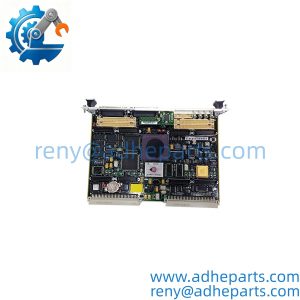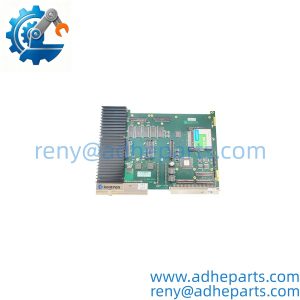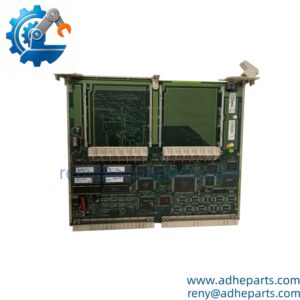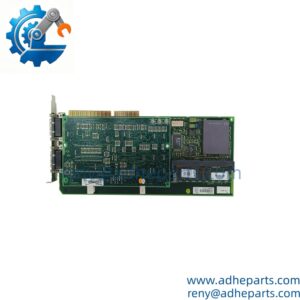
Description
Note: Many products are not yet listed. Please contact us for more product information. Our supply channels are constantly expanding, and we currently have 20 stable shared supply channels. Please confirm the model, product, price, and all other necessary information with customer service before placing an order. We offer new, refurbished, and used products, and prices are adjusted according to the year of the item you require.
Key Technical Specifications
| Parameter | Specification |
|---|---|
| Model | PM861AK01 |
| ABB Article Number | 3BSE018157R1 |
| Manufacturer | ABB |
| Product Family | AC 800M |
| System Platform | System 800xA |
| CPU | PM861A |
| Clock Frequency | 48 MHz |
| Memory | 16 MB |
| Application RAM | Approx. 7.155 MB |
| Processor Type | MPC860 |
| Boolean Performance | 0.23 ms per 1,000 Boolean operations |
| Ethernet | 2 × RJ45 Ethernet ports |
| Serial Interfaces | 2 × RS-232C |
| CPU Redundancy | Supported |
| Baseplate | TP830, 115 mm |
| Operating Supply | 24 V DC |
| Protection | IP20 |
The PM861A is a Classic AC 800M controller with 48 MHz processing, 16 MB memory, built-in Ethernet and RS-232C interfaces, and support for CPU redundancy. ABB’s current documentation identifies the PM861AK01 package as the single-processor K01 configuration.
Product Introduction (Anti-Template)
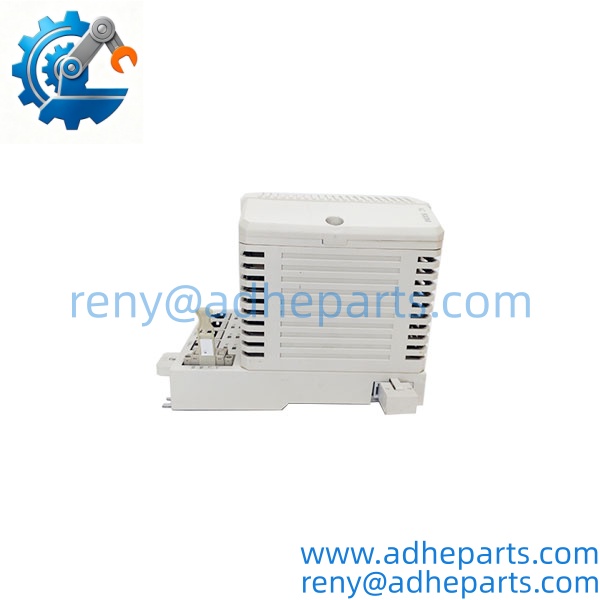
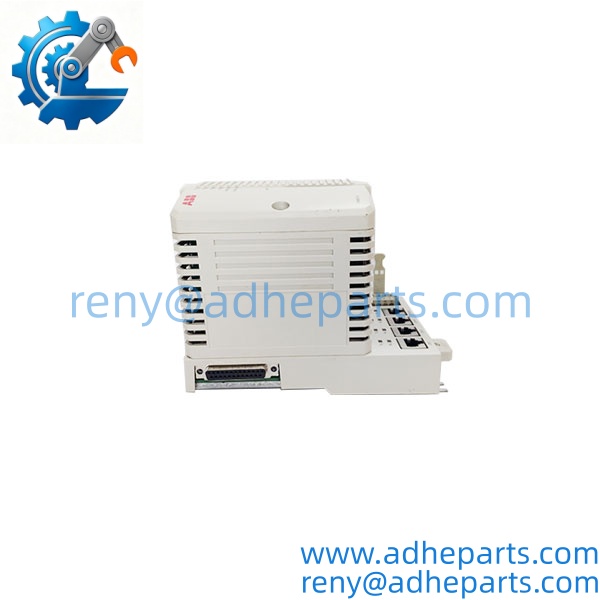
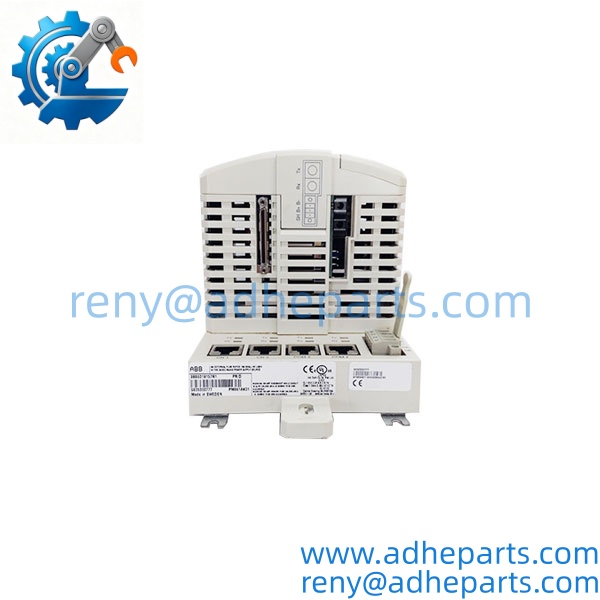
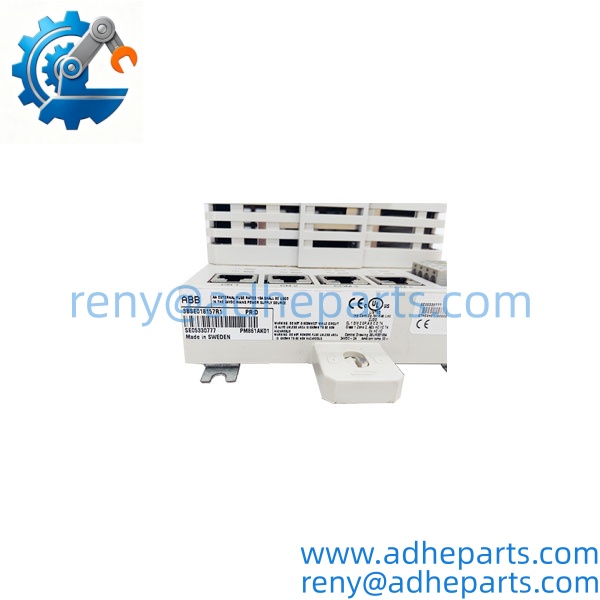
Operating as the central processor package for ABB AC 800M control systems, the PM861AK01 combines the PM861A CPU with its required TP830 baseplate and bus termination hardware. The controller provides 48 MHz processing, 16 MB memory, dual Ethernet ports, and two RS-232C interfaces for control-system communication and service access. CPU redundancy is supported when the system is engineered with the corresponding redundant controller arrangement.
This is a K01 processor-unit package, not simply a bare CPU board. ABB lists the PM861AK02 separately as the redundant processor-unit package containing two PM861AK01 units plus the required redundancy cables. That distinction matters when replacing hardware in an existing 800xA installation.
PM861AK01
PM861AK01
PM861AK01
PM861AK01
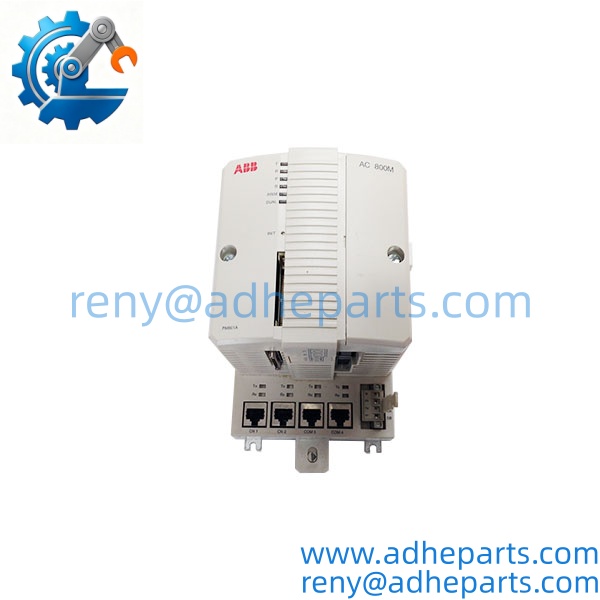
PM861AK01
QC, Procurement & Logistics SOP
- Inbound Verification — Verify the complete PM861AK01 designation, ABB article number 3BSE018157R1, CPU label, TP830 baseplate, terminators, battery, and power connector. Confirm that the supplied package matches the customer’s required K01 configuration.
- Live Rig Testing — Where a compatible AC 800M test environment is available, verify CPU startup, Ethernet communication, serial interfaces, controller diagnostics, and application loading behavior. For replacement units, check the controller hardware configuration before transferring the customer’s application.
- QA & Anti-Static Packaging — Inspect the CPU, baseplate connectors, Ethernet ports, serial ports, terminators, battery compartment, and locking mechanism. Use ESD-safe packaging and protect the RJ45 interfaces and baseplate connectors from impact.
- Global Logistics & Export Compliance — Confirm the applicable HS classification, product description, country-of-origin documentation, and destination import requirements. Because the package contains a lithium memory-backup battery, verify the applicable air-freight handling requirements before dispatch.
Technical Pitfalls & Integration Warnings
- Firmware Rev Mismatch — A PM861A replacement must be checked against the existing AC 800M engineering environment and controller firmware. For example, a controller running an established application under one firmware revision should not be assumed to accept a different revision without checking software and hardware compatibility.
- DIP Switch / Configuration Errors — The main risk is not a simple DIP-switch setting on the CPU. Ethernet identity, controller configuration, redundancy parameters, CEX-Bus modules, and S800 I/O architecture must correspond with the engineered AC 800M configuration. Copying a replacement CPU without reviewing the controller configuration can prevent proper startup.
- Wiring/Terminal Incompatibility — PM861AK01 uses the TP830 baseplate and associated CEX-Bus, ModuleBus, and RCU-Link termination arrangement. Do not substitute another AC 800M processor package solely because it fits the same controller family. Verify the baseplate, bus terminators, communication modules, and power connection before installation.
- ESD During Unboxing — The CPU and exposed connectors should remain inside ESD-safe packaging until installation. Ground the technician and cabinet before handling the module, particularly when transferring the CPU into an existing AC 800M cabinet.
Frequently Asked Questions (FAQ)
is an AC 800M Processor Unit package based on the PM861A CPU. Its ABB article number is 3BSE018157R1.
2. What is included in the kit?
ABB lists the PM861A CPU, TP830 baseplate, TB850 CEX-Bus terminator, TB807 ModuleBus terminator, TB852 RCU-Link terminator, memory-backup battery, and four-position power plug.
3. Does support CPU redundancy?
Yes. supports CPU redundancy, although itself is the single-processor K01 package. ABB specifies PM861AK02 separately as the redundant processor-unit package.
4. What are the main communication interfaces?
The controller has two Ethernet ports and two RS-232C interfaces. ABB documentation describes the Ethernet ports as connections to the Control Network, with one RS-232C port providing modem-control signals and the other serving as an isolated configuration/service interface.
5. Can replace another AC 800M CPU directly?
Not automatically. Verify the exact CPU generation, firmware, Control Builder environment, baseplate, CEX-Bus configuration, ModuleBus topology, and redundancy arrangement before replacement.
6. Is still a current-generation controller?
ABB classifies as Classic, with a replacement available in the lifecycle information shown in ABB’s documentation. For a legacy installation, confirming the customer’s migration or replacement requirements before changing controller hardware is important.
7. What should I provide when requesting a replacement?
Provide the complete part number, ABB article number if available, CPU label photo, existing baseplate model, firmware/software information, controller configuration, and whether the installation uses CPU redundancy. This is particularly important when replacing a in an operating 800xA system.