Description
Note: Many products are not yet listed. Please contact us for more product information. Our supply channels are constantly expanding, and we currently have 20 stable shared supply channels. Please confirm the model, product, price, and all other necessary information with customer service before placing an order. We offer new, refurbished, and used products, and prices are adjusted according to the year of the item you require.
3. Key Technical Specifications
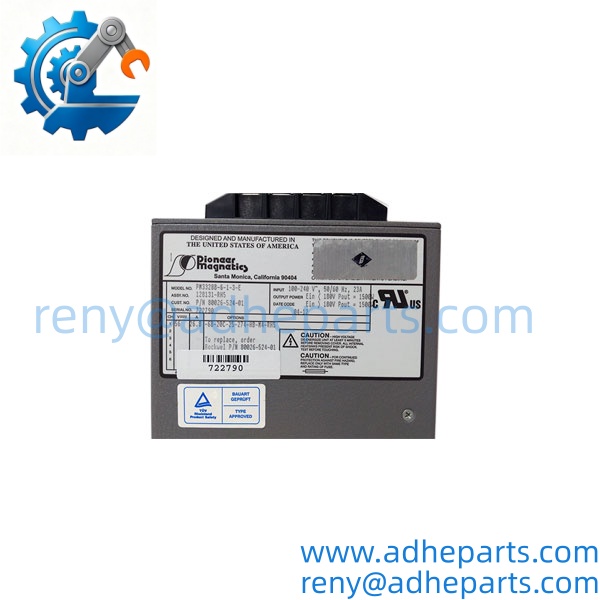
Do not order against this table alone. I cannot confirm the input range, output voltage, and current rating from the model number. The suffix -6-1-3-E defines a specific build. Match every line against the OEM datasheet and the label on your existing unit.
| Parameter | Value |
|---|---|
| Model | PM3328B-6-1-3-E |
| Brand | Pioneer Magnetics |
| Product Family | PM3328B industrial power supply |
| Input Voltage | 3-phase AC — verify nominal voltage and range on the unit label |
| Input Frequency | 47 – 63 Hz — verify |
| Input Current (Max) | Verify with OEM datasheet |
| Output Voltage | Verify — confirm nominal DC output on the unit label |
| Output Current (Rated) | Verify with OEM datasheet — confirm on the module label |
| Output Power | Verify with OEM datasheet |
| Regulation (Line / Load) | Verify — confirm against the OEM datasheet |
| Ripple & Noise | Verify — measure at full load against the OEM limit |
| Efficiency | Verify at nominal load |
| Protection Features | Overvoltage, overcurrent, overtemperature — verify |
| Cooling | Forced air or convection — verify fan type and airflow clearance |
| Mounting | Chassis mount — verify dimensions and terminal arrangement |
| Operating Temperature | Verify with derating curve for your cabinet ambient |
| Storage Temperature | –40 °C to +85 °C (typical — verify) |
| Humidity | 5% – 95% RH, non-condensing |
| Weight | Verify with OEM datasheet |
| Certifications | CE, UL, CSA — verify on the specific unit’s label |
4. Product Introduction
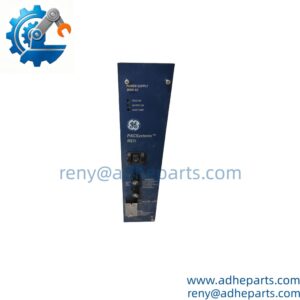
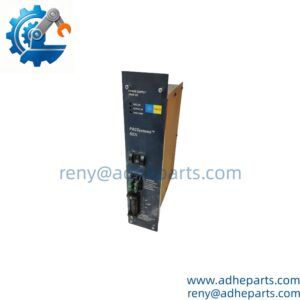
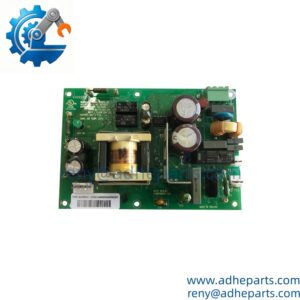
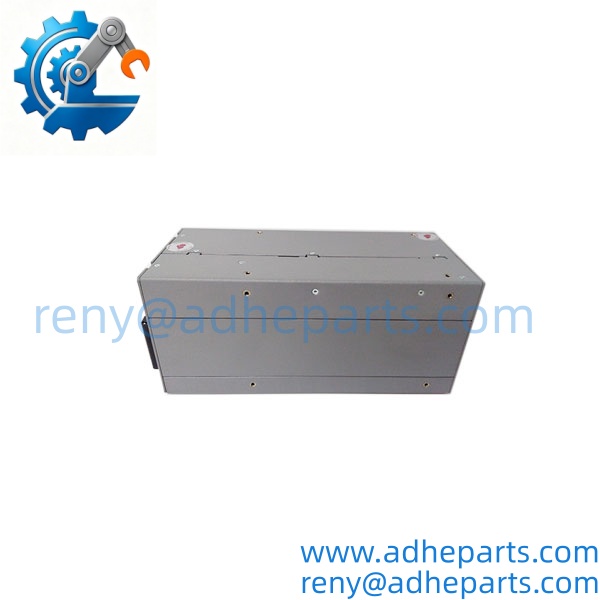
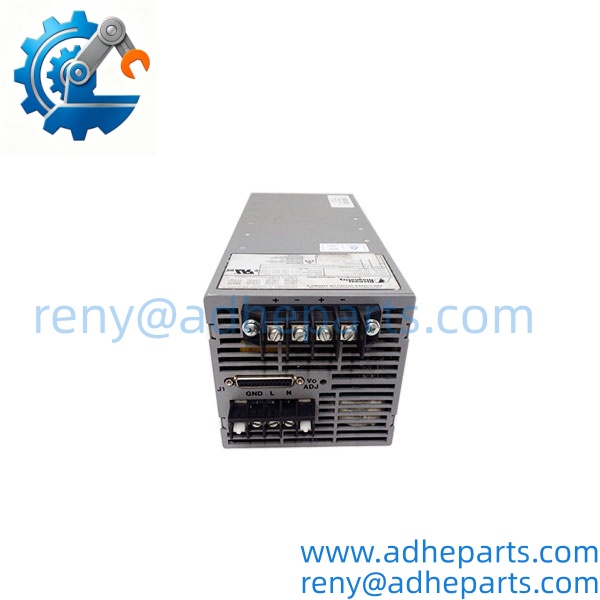
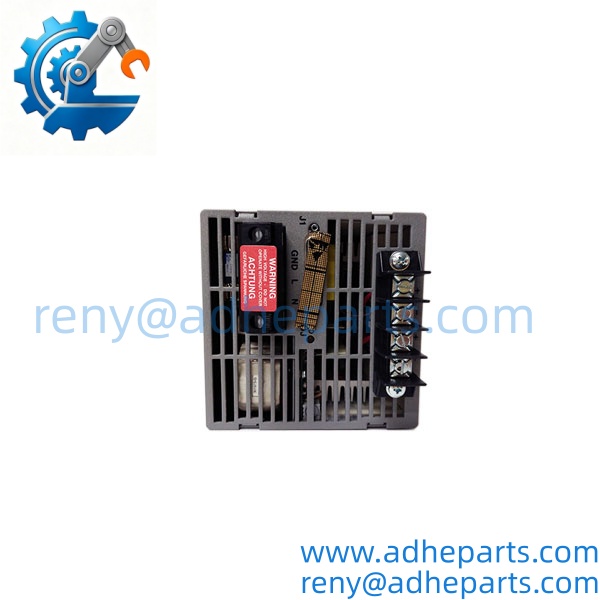
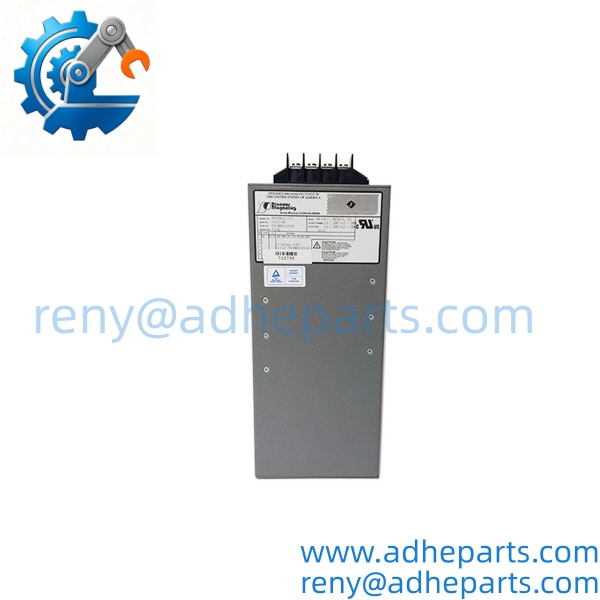
The Pioneer Magnetics PM3328B-6-1-3-E is a 3-phase AC-input industrial power supply. It converts plant AC power into a regulated DC output for control panels, drive cabinets, and process equipment. The -6-1-3-E suffix identifies a specific build; verify the input voltage, output voltage, and current rating on your unit label.
The engineering value is the 3-phase input and the industrial construction. A 3-phase supply draws balanced current from the plant feed and avoids the single-phase loading that can trip a panel breaker. In my experience, the most common cause of a “power supply failure” in a drive cabinet is not a dead module — it is a supply running at its current limit because the cabinet load grew over the years. Check the total DC load against the module rating before you assume the old supply was oversized.
5. Application Scenarios & Field Experience
Part 1 – Narrative Paragraph
The failure that hurts most in a drive cabinet is a power supply that browns out under load. The cabinet runs, the controller scans, and then a contactor or a relay bank energizes and the DC rail sags below the module threshold. The controller faults, the line stops, and the maintenance team replaces the controller. I have seen that movie twice. The power supply was the problem both times. The PM3328B is built to hold a stiff output under load, but it has to be sized correctly against the cabinet’s actual current draw. Check the load before you assume the supply is oversized.
Part 2 – Numbered List (Application Scenarios)
- Metals – Drive Control Cabinets – The supply feeds the control electronics and relay logic in a rolling mill drive cabinet. The 3-phase input balances the load across the plant feed.
- Pulp & Paper – Machine Control Panels – Used in a panel that powers PLC I/O, interposing relays, and panel instrumentation. The regulated DC output keeps the analog modules within their supply tolerance.
- Water Treatment – Pump Station Control – The supply powers a control panel at a pump station. The wide input range accommodates the voltage variation on a long plant feeder.
- Oil & Gas – Compressor Station Control Cabinets – Used in a cabinet that powers the shutdown and control relays. The supply must hold the rail through the inrush of multiple relay coils.
Part 3 – Short Field Story
A paper mill had a machine control panel that would fault every time the line started. The crew had replaced the PLC and the I/O modules. The fault kept returning. We asked them to measure the DC rail during startup. It dropped when the relay bank energized. The power supply was running at its current limit because the panel had grown by several relay groups over the years. The plant replaced the supply with the correct rating, and the startup faults stopped.
6. Standard Operating Procedure (SOP) for Quality Control
- Visual & Origin Inspection – Verify the Pioneer Magnetics marking, the PM3328B-6-1-3-E model string, and the date code. Inspect the terminals, the fan, and the housing for damage or moisture ingress. Reject units with a damaged terminal block or a cracked fan blade.
- Input and Output Rating Documentation – Read and photograph the input voltage, output voltage, and current rating from the label. A unit that does not match the requested build is set aside rather than shipped.
- Power-Up and Output Verification – Power the unit at rated input and measure the output at no load, 50% load, and full load. Regulation must stay within the OEM specification.
- Ripple and Noise Measurement – Measure the output ripple with a 20 MHz bandwidth scope at full load. Ripple must stay below the OEM limit.
- Protection Circuit Test – Verify overvoltage, overcurrent, and overtemperature protection engages at the specified thresholds.
- Thermal Load Test – Run the unit at rated load for one hour and confirm the heatsink and internal temperatures stay within the OEM limits.
- Fan and Airflow Check – Verify the fan operates and the airflow path is clear. A unit with a failing fan is flagged before shipping.
- ESD-Safe Packaging – Wrap the unit in protective film, seat it in a foam insert with the terminals protected, and pack it in a double-wall carton with handling labels.
7. Frequently Asked Questions (FAQ)
Q1: What is the output voltage and current of this supply?
A: I cannot confirm the output ratings from the model number alone. The -6-1-3-E suffix defines a specific build, and the label on your existing unit is the authority. Read the output voltage and current marking before you order. If you send us a photo of the label, we will confirm the match.
Q2: Can I replace a different PM3328B build with this one?
A: Only if the input voltage, output voltage, and current rating match your cabinet load. A different build may have a different output voltage or a lower current rating. Compare the full model string and the label on your existing supply before ordering. Do not assume any will configure the same way.
Q3: What is the warranty on this unit?
A: We offer a 12-month warranty from the ship date. It covers output failure, regulation drift, protection circuit failure, and fan failure under normal operating conditions. It does not cover damage from incorrect input voltage, output overload beyond the rated current, or physical damage. We test every unit at rated load and verify the ripple before it ships.
Q4: Do you have this exact model in stock?
A: Pioneer Magnetics inventory moves and varies by build. Confirm availability before you plan an outage. If we are out of the -6-1-3-E variant, we will tell you what we actually have and whether a different build would suit your cabinet.
Q5: Any installation pitfalls I should watch for?
A: Four. First, verify the input voltage on the label matches your plant feed before you connect power. Second, calculate the total DC load in the cabinet and leave headroom for inrush. Third, verify the fan and airflow clearance before you power up; a supply that runs hot will fail prematurely. Fourth, after the swap, measure the output under full load and verify the controller and relays are operating before you return the line to production. A supply that powers up is not necessarily holding the rail under load.