Description
Note: Many products are not yet listed. Please contact us for more product information. Our supply channels are constantly expanding, and we currently have 20 stable shared supply channels. Please confirm the model, product, price, and all other necessary information with customer service before placing an order. We offer new, refurbished, and used products, and prices are adjusted according to the year of the item you require.
3. Key Technical Specifications
Do not order against this table alone. I cannot confirm the voltage class, current rating, or package type from the model number. Match every line against the marking on the device and the OEM datasheet for your specific variant.
| Parameter | Value |
|---|---|
| Model | 5SHY3545L0016 |
| Brand | ABB |
| Product Family | 5SHY power semiconductor modules |
| Module Type | Verify — thyristor, IGCT, or IGBT |
| Repetitive Peak Off-State Voltage (VDRM/VRRM) | Verify with OEM datasheet — read the marking on the device |
| Average On-State Current (ITAV) | Verify with OEM datasheet |
| Surge Current (ITSM) | Verify with OEM datasheet |
| Gate Trigger Voltage / Current | Verify with OEM datasheet |
| Turn-Off Time (tq) | Verify — for thyristor and IGCT variants |
| Isolation Voltage (baseplate to terminal) | Verify with OEM datasheet |
| Package Type | Verify — likely press-pack or flat-base |
| Cooling Method | Heatsink mounted, forced air or liquid — verify |
| Mounting Torque | Verify — overtorque cracks the ceramic insulator |
| Operating Junction Temperature | Verify — typically 125 °C to 150 °C for this class |
| Storage Temperature | –40 °C to +125 °C (typical) |
| Certifications | Verify on the specific unit’s label |
4. Product Introduction
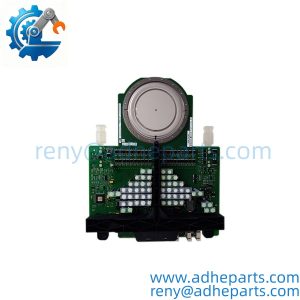
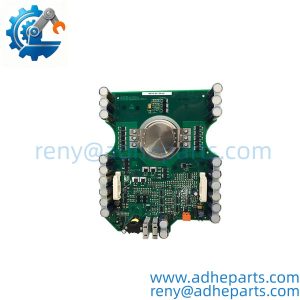
The ABB 5SHY3545L0016 is a high-power semiconductor module from ABB’s 5SHY family. This family covers the devices ABB built for drive power stacks, rectifier bridges, and traction converters — the components that switch hundreds or thousands of amps in the inverter and rectifier sections of a drive. The exact device type depends on the suffix, and I cannot tell from the number alone whether this is a phase-control thyristor, an IGCT, or an IGBT module.
Here is the catch, and it is why I am not handing you a clean spec sheet: on ABB power semiconductors, the voltage class and current rating are stamped on the device itself, not encoded in a way I can decode from the part number. Two modules with the same base number and different suffixes can look identical and have different voltage ratings. Before you order, read the VDRM and ITAV off the ceramic or the side plate, and match those against the OEM datasheet. If you send me a photo of the device marking and the stack it came out of, I will confirm what you are looking at.
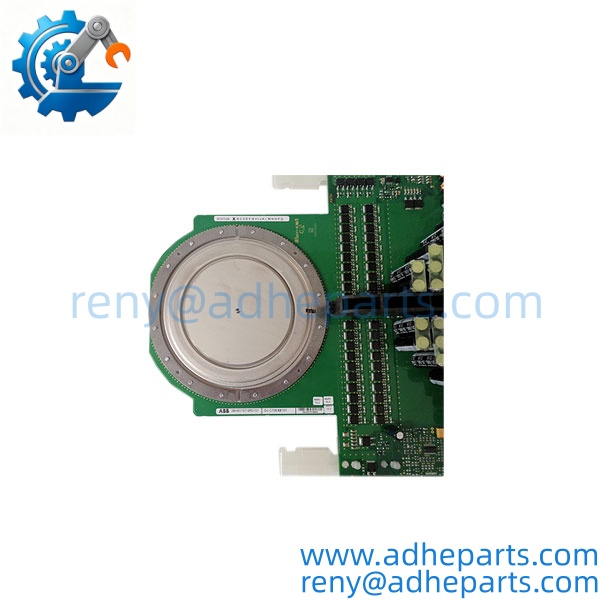
5SHY3545L0016
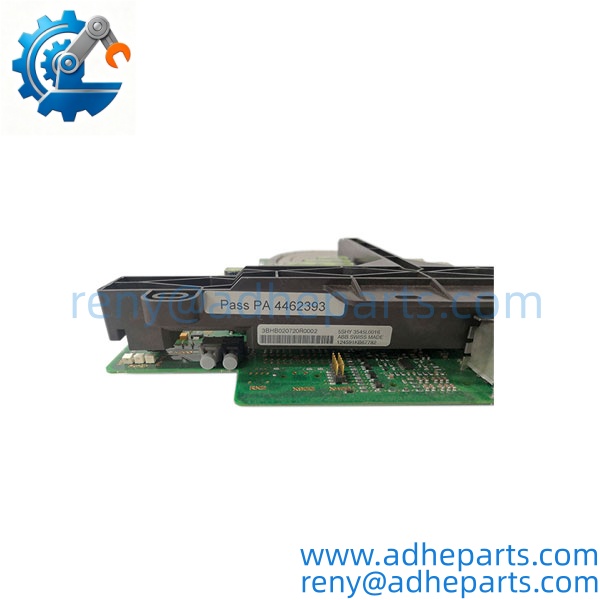
5SHY3545L0016
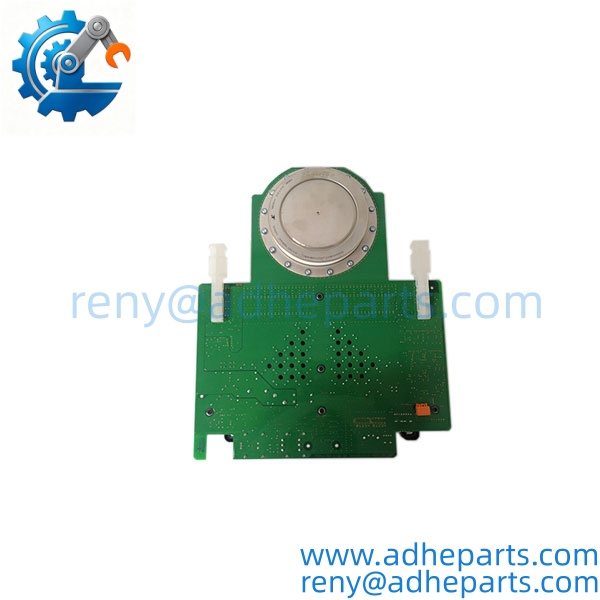
5SHY3545L0016
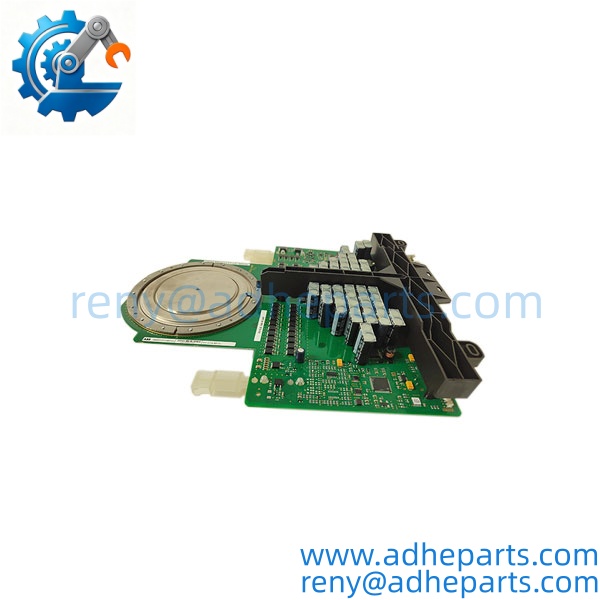
5SHY3545L0016
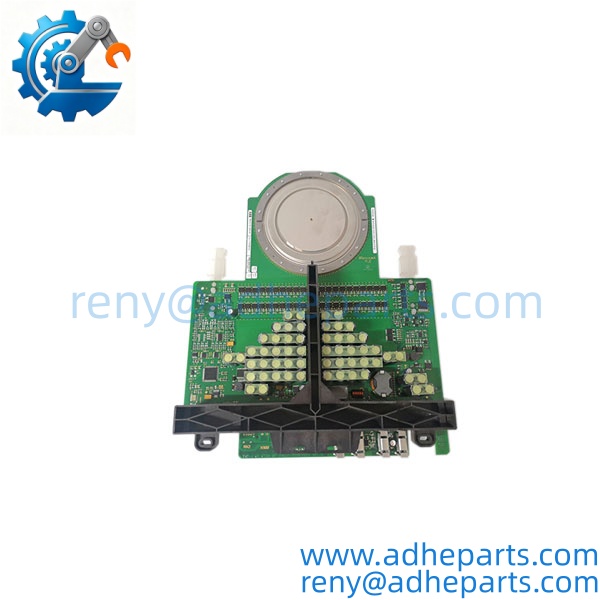
5SHY3545L0016
5. Application Scenarios & Field Experience
Part 1 – Narrative Paragraph
The failure that burns these modules is not age — it is a gate-drive fault that turns the device on late, or a heatsink that has lost its thermal path. I have seen a drive run for 15 years and then eat three thyristor modules in a month because the cooling fan was replaced with a lower-CFM unit. The module was never the root cause. Before you order a replacement, check the fan, check the thermal compound, and check the gate firing card. If the gate pulse is missing or malformed, the new module will die the same way the old one did. That is the rule that saves you from a repeat failure.
Part 2 – Numbered List (Application Scenarios)
- Metals – Rolling Mill Drive Stacks – The module sits in the rectifier or inverter bridge of a mill drive. It handles the high current needed to accelerate the mill stand, and it must be matched to the drive’s voltage class.
- Pulp & Paper – Winder and Rewinder Drives – Used in the drive power stage that controls tension on the winder. A mismatched voltage class will fail under the drive’s DC bus voltage.
- Cement – Kiln and Mill Drive Converters – High-power drives use these modules in the rectifier front end. The thermal path is critical because the module runs at high current for long periods.
- Traction – Railway and Transit Converters – ABB traction converters use 5SHY modules in the rectifier and inverter sections. The devices must meet the vibration and thermal requirements of the application.
Part 3 – Short Field Story
A paper mill in the Southeast had an ABB drive on a winder that tripped on overcurrent every time the operator tried to accelerate above 60% speed. The drive had been “repaired” twice by a contractor who replaced one module in the bridge. We pulled the stack and found the replacement was a different voltage class than the others — same base part number, different suffix. The mismatched device was firing late and causing a phase imbalance. We supplied a matched set, and the winder ran back to full speed without a trip.
6. Standard Operating Procedure (SOP) for Quality Control
- Visual & Origin Inspection – We verify the ABB marking, the full part number including suffix, and the date code. We inspect the ceramic insulator for cracks, the gate lead for mechanical damage, and the mounting surface for pitting or arc marks. Any module with a cracked insulator is scrapped, not sold.
- Electrical Parameter Verification – We measure forward voltage drop, reverse leakage, and gate trigger characteristics against the OEM datasheet for the specific suffix. A module that does not match its own marking is rejected.
- Thermal Interface Check – We inspect the mounting base for flatness and clean any old thermal compound. A base that is warped or pitted will not transfer heat and will fail in service.
- Matched Set Selection – When multiple modules are ordered for a stack, we match them by measured forward voltage drop so the current shares evenly across the bridge.
- ESD-Safe Packaging – The modules are wrapped in anti-static foam, placed in a rigid box with the terminals protected, and shipped with a torque specification card.
7. Frequently Asked Questions (FAQ)
Q1: What is the voltage and current rating of this module?
A: I cannot tell you without the marking on the specific device. ABB built the 5SHY family in multiple voltage classes and current ratings, and the suffix distinguishes them. Read the VDRM and ITAV off the ceramic or side plate and send it to us. We will confirm the match before shipping.
Q2: Can I replace just one module in a stack?
A: Technically yes, but you should not. A new module paired with an aged module will carry more current because its forward drop is lower. The aged module then carries less, the bridge becomes unbalanced, and you get a repeat failure. Replace the whole matched set or at least the devices in the same parallel group.
Q3: What is the warranty on this module?
A: We offer a 12-month warranty against manufacturing defects — forward voltage drift, gate failure, and insulation breakdown under normal operating conditions. The warranty does not cover damage from overtorque on the mounting stud, missing thermal compound, a failed cooling fan, or a gate-drive fault that caused the original failure. If you install these without fixing the root cause, the warranty will not save you.
Q4: Do you actually have this in stock?
A: ABB power semiconductor inventory is legacy and varies by voltage class. Confirm availability before you plan an outage. If we do not have the exact variant you need, we will tell you what we actually have rather than quote a date we cannot hold.
Q5: Any installation pitfalls I should watch for?
A: Four. First, use the correct torque — overtorque cracks the ceramic and you will not see the damage until the module fails. Second, always use fresh thermal compound and verify the heatsink is flat. Third, verify the gate firing card is producing the correct pulse before you power the new module. A missing gate pulse will destroy a new thyristor in seconds. Fourth, check the cooling fan and the airflow path — a module that runs hot will fail prematurely regardless of how well it is rated.