Description
Note: Many products are not yet listed. Please contact us for more product information. Our supply channels are constantly expanding, and we currently have 20 stable shared supply channels. Please confirm the model, product, price, and all other necessary information with customer service before placing an order. We offer new, refurbished, and used products, and prices are adjusted according to the year of the item you require.
3. Key Technical Specifications
| Parameter | Value |
|---|---|
| Processor | 64 MHz 80486DX2 |
| Floating Point | 32-bit support |
| User Memory | 1 Mbyte battery-backed CMOS RAM (up to 512 Kbytes for ladder application) |
| Boolean Execution | 0.4 µs per boolean function |
| Discrete I/O (Simplex) | Up to 12K points (any mix) |
| Voted Discrete I/O (TMR) | 2048 inputs / 2048 outputs |
| Analog I/O (Simplex) | Up to 8K inputs / 8K outputs |
| Voted Analog Inputs (TMR) | 1024 |
| Current Draw (5 V bus) | 3.3 A nominal |
| Serial Port | 1 × RS-422/485 compatible (15-pin D-sub) |
| Operating Temperature | 0–60 °C (70 CFM forced air required); 0–40 °C without forced air |
| Battery | Lithium; 10-year shelf life at 20 °C; 6-month memory retention without power |
4. Product Introduction
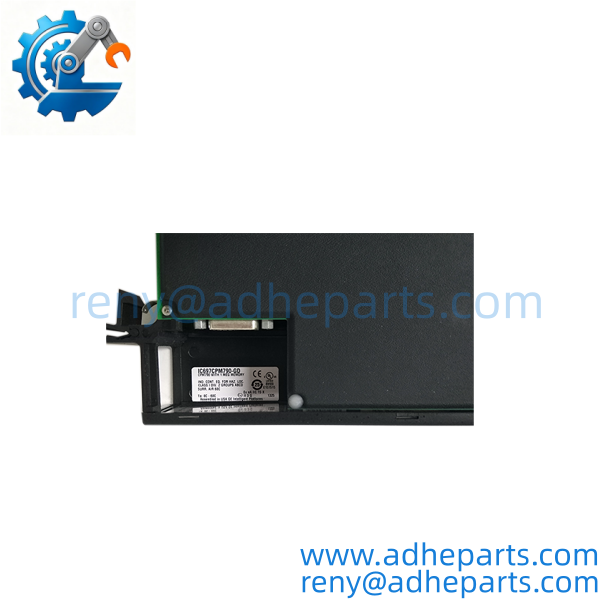
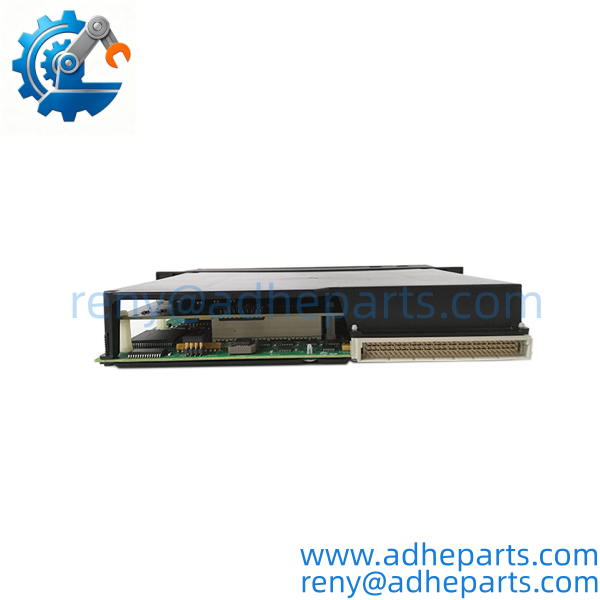
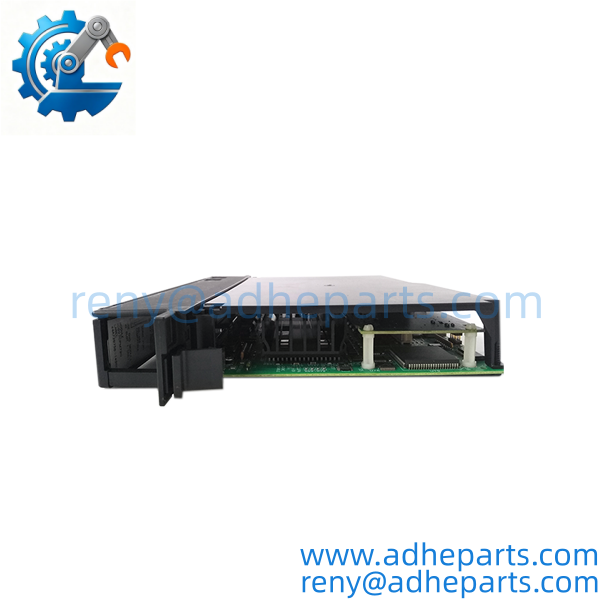
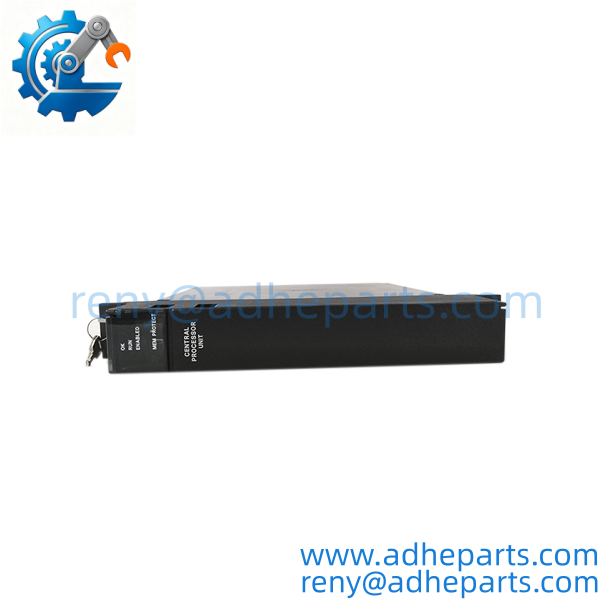
The GE Fanuc IC697CPM790-GD is a single-slot central processing unit built for the Series 90-70 platform. It runs a 64 MHz 80486DX2 processor with native 32-bit floating-point capability and delivers 0.4 µs boolean execution.
Its primary engineering value is Triple Modular Redundancy (TMR) support when loaded with the required Standalone C program. This makes it suitable for safety-critical loops that cannot tolerate single-point processor failure. Battery-backed memory keeps both the ladder application and the calendar clock intact through power loss.
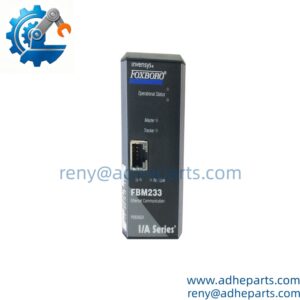
IC697CPM790-GD
IC697CPM790-GD
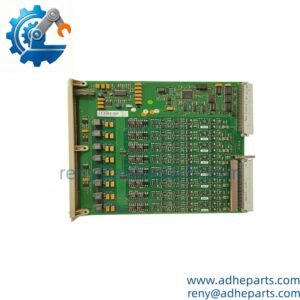
IC697CPM790-GD
IC697CPM790-GD
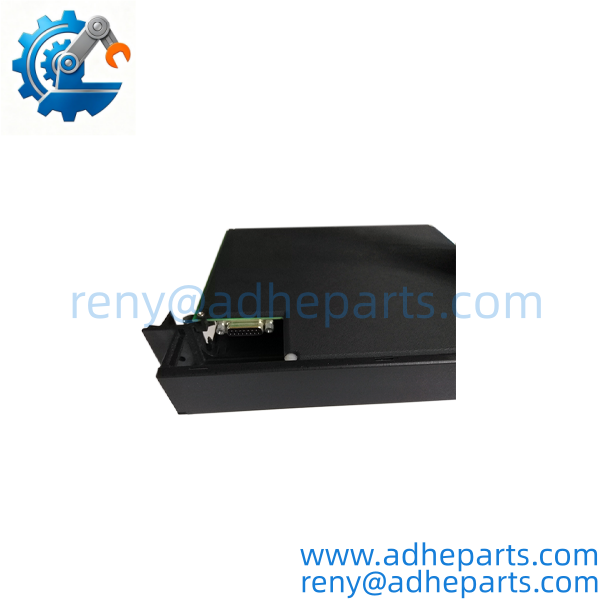
IC697CPM790-GD
5. Application Scenarios & Field Experience
In continuous-process plants, a single CPU failure on a safety system can force a full unit trip or extended downtime while the process is brought to a safe state. The IC697CPM790-GD addresses that risk by enabling true three-channel voting of both discrete and analog points.
- Oil & Gas – Emergency Shutdown (ESD) systems on offshore platforms or compressor stations where voted digital outputs must remain available even if one channel faults.
- Petrochemical – Fire & Gas detection panels that require deterministic boolean speed and TMR analog input voting for gas detectors.
- Power Generation – Turbine trip and burner management systems that demand floating-point calculations for pressure/temperature compensation inside the same scan.
- Chemical Processing – Critical interlock panels using Genius bus I/O where the CPU must support both simplex expansion and voted TMR channels on the same rack.
Field note: On a midstream gas facility the primary TMR CPU failed during a planned outage window. The spare IC697CPM790-GD was installed, the Standalone C routines verified, and the system returned to full triple-voted operation before the next production shift. No process trip occurred.
6. Standard Operating Procedure (SOP) for Quality Control
- Visual & Origin Inspection: Confirm OEM labeling, revision marking (-GD), anti-counterfeit holograms or date codes, and absence of rework marks or non-OEM seals.
- Live Rig Testing: Install in a Series 90-70 test rack, apply 5 V backplane power, verify power-on self-test, four status LEDs, and successful SNP serial handshake with programming software.
- Firmware Verification: Read and document the exact firmware revision stored in flash; confirm it matches the required revision for the target application.
- ESD-Safe Packaging: Handle only at grounded workstations, place the module in anti-static bag with desiccant, and ship in foam-lined conductive packaging.
7. Frequently Asked Questions (FAQ)
Q1: Is the IC697CPM790-GD compatible with existing Series 90-70 racks and can it replace earlier CPM or CPU modules?
A: It fits any standard Series 90-70 VME rack and works with IC660/IC661 Genius I/O plus IC697 discrete/analog modules in simplex mode. It is not a direct drop-in for non-TMR CPUs; the application must include the Standalone C program or the module will not run.
Q2: What warranty do you provide?
A: We offer a full 12-month warranty covering manufacturing defects and functional failure under normal operating conditions.
Q3: Is this revision actually in stock and how fast can it ship?
A: Current inventory is New Original (New Surplus) stock. Most orders ship the same business day when received before cutoff; confirm real-time availability before placing the order.
Q4: What happens if the firmware revision does not match the plant’s existing CPUs?
A: Mismatched firmware can prevent proper TMR synchronization or cause configuration errors. Always verify the exact firmware level on the installed modules and update via the serial port loader if required before placing the new unit into service.
Q5: Are there any installation pitfalls I should watch for?
A: Do not hot-swap the module in a live TMR system without following the proper isolation procedure—doing so risks a channel discrepancy or full system trip. Forced-air cooling (70 CFM) is mandatory above 40 °C; without it the module will thermal-limit. Always confirm the lithium battery is within its service life before relying on memory retention.