Description
Note: Many products are not yet listed. Please contact us for more product information. Our supply channels are constantly expanding, and we currently have 20 stable shared supply channels. Please confirm the model, product, price, and all other necessary information with customer service before placing an order. We offer new, refurbished, and used products, and prices are adjusted according to the year of the item you require.
Product Introduction
Extractive gas analysis introduces additional equipment, sample lines, and conditioning requirements. In demanding process environments, those components can become a source of measurement delay and maintenance work.
The ABB AO2000-LS25 takes a different approach. As an external laser analyzer within the Advance Optima AO2000 platform, it measures selected gas components directly across a process path using TDLAS technology. Its optical measurement method is suited to applications involving high temperatures, dust, pressure, and corrosive process conditions. With no conventional sample extraction required for in-situ installations, the LS25 can reduce the maintenance burden associated with sample handling.
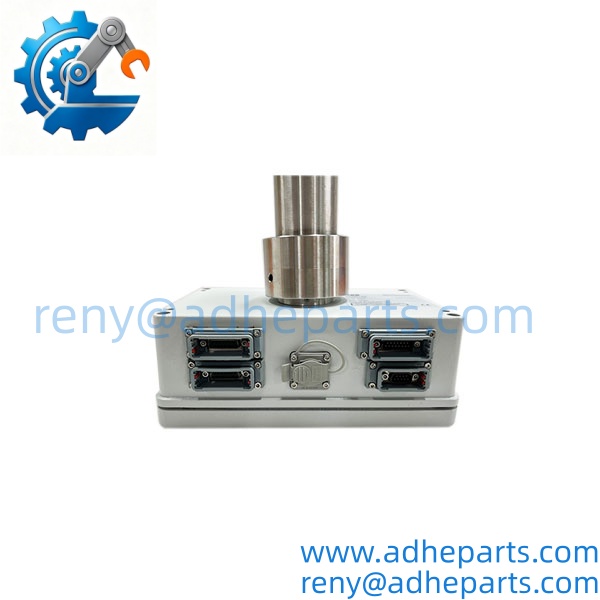
AO2000-LS25
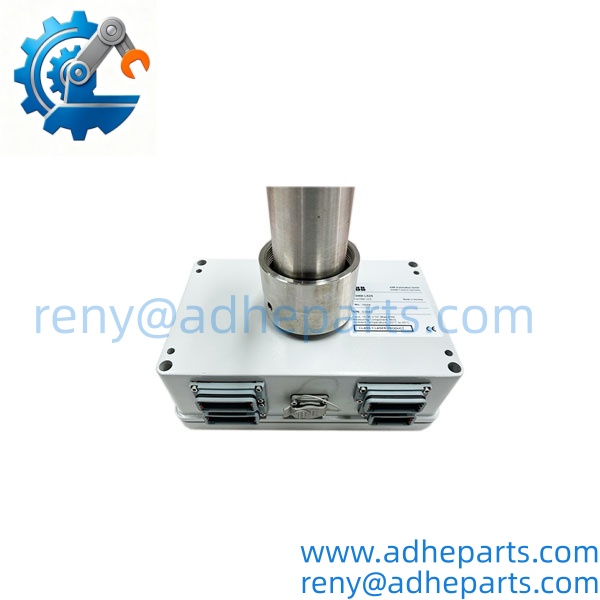
AO2000-LS25
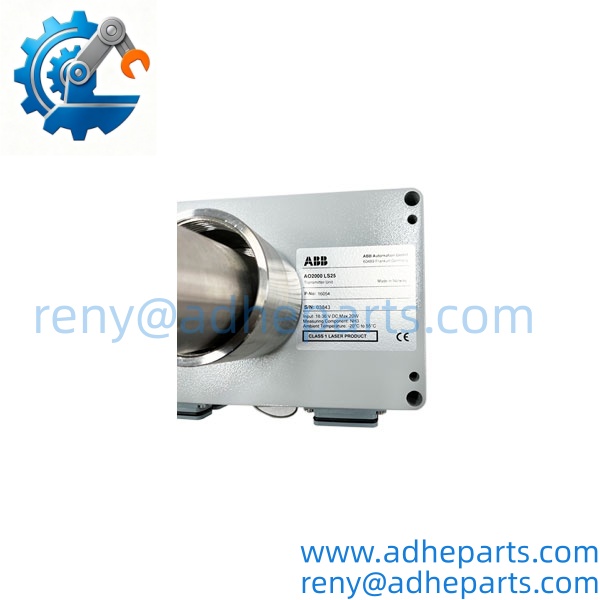
AO2000-LS25
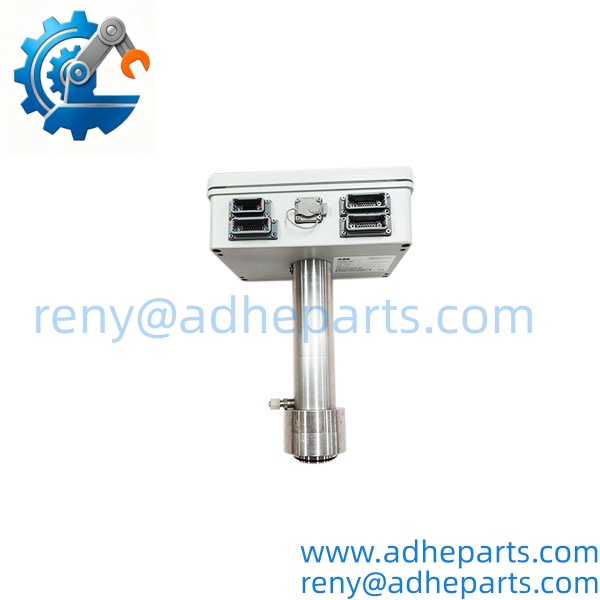
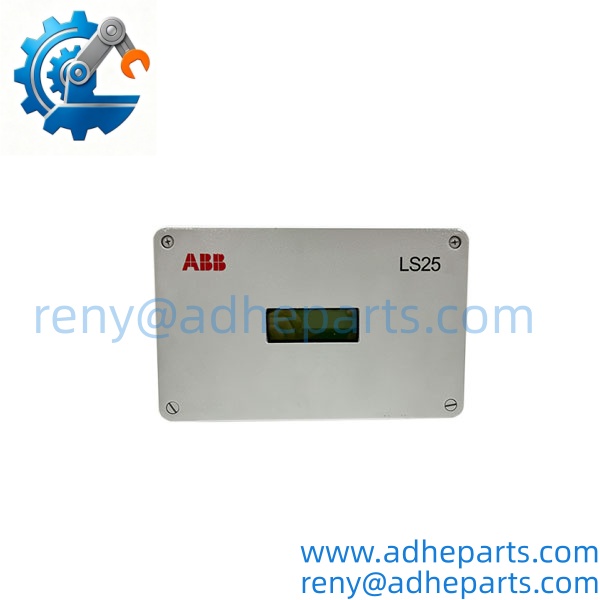
AO2000-LS25
Key Technical Specifications
| Parameter | Specification |
|---|---|
| Manufacturer | ABB |
| Model | AO2000-LS25 |
| Product Family | Advance Optima AO2000 |
| Product Type | External Laser Analyzer Module |
| Measuring Principle | Tunable Diode Laser Absorption Spectroscopy (TDLAS) |
| Measurement Method | Single-line spectroscopy |
| Optical Spectrum | Near-infrared |
| Typical Optical Path | 0.5–15 m |
| Communication | Ethernet to AO2000 central unit |
| Supply Voltage | 24 VDC |
| Installation | In-situ / Cross-stack |
| Purging | Compressed air or nitrogen, depending on application |
| Certification | ATEX, IECEx and CSA variants available |
Supported Gas Components
Depending on the analyzer configuration, the LS25 can measure selected components including:
- Oxygen (O₂)
- Ammonia (NH₃)
- Water vapor (H₂O)
- Carbon monoxide (CO)
- Carbon dioxide (CO₂)
- Hydrogen chloride (HCl)
- Hydrogen fluoride (HF)
- Hydrogen sulfide (H₂S)
- Nitrogen oxides (NO, NO₂, N₂O)
- Selected hydrocarbons and other configured gas combinations
The actual measurement range depends on the selected gas, optical configuration, process conditions, and instrument version. For example, ABB’s published data lists a minimum range of 0–1 vol.% for O₂, 0–15 ppm for NH₃, and 0–5 ppm for HCl in specified configurations.
These are configuration-dependent measurement ranges, not universal specifications for every AO2000-LS25 unit.
Field Applications & Technical Pitfalls
Typical Applications
1. Power Generation and Combustion Monitoring
The LS25 can monitor selected gas concentrations in combustion and flue-gas processes. Fast optical measurement helps operators assess process conditions and support combustion control.
2. Chemical and Petrochemical Processing
Industrial processes involving corrosive gases or demanding operating conditions can benefit from direct optical measurement, provided the selected analyzer configuration is suitable for the target gas.
3. Cement, Metal, and Waste Incineration Plants
Dust exposure and elevated process temperatures can complicate conventional sampling systems. The ‘s in-situ measurement arrangement can reduce dependence on sample extraction and conditioning equipment.
Three Replacement Checks Engineers Should Not Skip
1. Confirm the target gas and measurement range.
The is configured for specific gas components and measurement ranges. A unit designed for NH₃ measurement, for example, should not be assumed suitable for HCl or CO measurement without checking the optical and software configuration.
2. Verify the complete system interface.
The is an external analyzer module connected to the central unit through Ethernet. It is not a standalone analyzer that can simply be connected to an arbitrary PLC or DCS. Check the central-unit configuration, communication settings, power supply, and associated system components.
3. Check installation geometry and purge arrangements.
Optical path length, transmitter-receiver alignment, flange arrangement, and purge-gas supply all influence measurement performance. Dust or contamination on the optical windows can reduce transmission and trigger measurement errors.
Field note: A replacement may pass a basic power-up check yet still fail to deliver valid process measurements if its target-gas configuration or optical arrangement differs from the original installation. Before purchasing, compare the instrument label, measurement component, range, and existing system configuration.
Important: Explosion-protection approval depends on the exact instrument version and associated approved purge and monitoring equipment. Do not assume every configuration is approved for every hazardous-area installation.
Quality Control (QC) SOP & Transparency
Our inspection process for the ABB – focuses on identification, optical condition, electrical interfaces, and configuration documentation.
- Model Verification: Check the – designation, serial number, nameplate, and available configuration information.
- Visual Inspection: Examine the transmitter and receiver housings, optical windows, connectors, cable entries, and mounting interfaces.
- Optical Assembly Inspection: Check for visible contamination, scratches, cracks, or damage that could affect optical transmission.
- Electrical Inspection: Where suitable equipment is available, inspect the power and communication interfaces and perform applicable electrical checks.
- Functional Verification: Where an appropriate system and test arrangement are available, verify startup, communication, laser status, and relevant measurement functions.
- Final Inspection: Record the inspection findings and prepare the equipment for protective export packaging.
Live video inspection can be arranged after the goods arrive at our headquarters. A 12-month warranty is available, subject to order confirmation and the agreed product condition.
Frequently Asked Questions (FAQ)
Q1: What is the ABB – used for?
It is an external laser analyzer module used for continuous measurement of selected gas concentrations in industrial processes. It belongs to the ABB Advance Optima analyzer platform.
Q2: What measuring principle does the use?
It uses tunable diode laser absorption spectroscopy (TDLAS). A laser scans a selected gas absorption line, and the receiver measures the absorption to determine the target-gas concentration.
Q operate independently?
No. The is designed as part of the integrated analyzer system and cannot operate as a complete standalone device. It communicates with the central unit through Ethernet.
Q4: Which gases can the measure?
Depending on the selected configuration, supported components include O₂, NH₃, H₂O, CO, CO₂, HCl, HF, H₂S, and selected nitrogen oxides and hydrocarbons. The exact gas configuration must be confirmed before ordering.
Q5: Is the suitable for high-temperature or dusty processes?
It is designed for demanding in-situ applications, including processes with elevated temperatures and dust exposure. However, the permissible process conditions depend on the target gas, instrument version, pressure, temperature, and installation arrangement.
Q6: Does the require regular calibration?
ABB recommends checking calibration data periodically, with the interval depending on the application. The published documentation gives a typical calibration interval of once or twice per year. Online validation may also be possible with an optional validation cell.
Q7: What warranty and inspection support do you provide?
We offer a 12-month warranty, subject to order confirmation and product condition. Model verification, visual inspection, and applicable functional checks can be arranged. Live video inspection is available after the equipment arrives at our headquarters.