Description
Note: Many products are not yet listed. Please contact us for more product information. Our supply channels are constantly expanding, and we currently have 20 stable shared supply channels. Please confirm the model, product, price, and all other necessary information with customer service before placing an order. We offer new, refurbished, and used products, and prices are adjusted according to the year of the item you require.
3. Key Technical Specifications
Confirm each line against the OEM datasheet and the label on your existing drive before ordering. The S200 family was built in several voltage and current ratings, and the suffix defines the feedback and option configuration.
| Parameter | Value |
|---|---|
| Model | S20260-SRS |
| Brand | Kollmorgen (Danaher Motion) |
| Product Family | S200 series |
| Drive Type | Three-phase servo drive / amplifier |
| Input Voltage | 230–480 V AC three-phase — verify range on the unit label |
| Input Frequency | 50/60 Hz — verify |
| Continuous Output Current | 20 A (verify on the unit label) |
| Peak Output Current | 60 A (verify on the unit label) |
| Continuous Output Power | Verify with OEM datasheet |
| Feedback Type | Resolver (SRS suffix) — verify on the unit label |
| Communication / Command Interface | Verify — S200 series supports analog command, CANopen, or other options depending on build |
| Digital I/O | Verify count and function on your build |
| Analog I/O | Verify — command input and monitor outputs |
| Cooling | Forced air or convection — verify fan type and airflow clearance |
| Mounting | Panel mount, vertical orientation — verify clearances |
| Operating Temperature | 0 °C to +45 °C (typical — verify with derating above 40 °C) |
| Storage Temperature | –25 °C to +70 °C (typical — verify) |
| Humidity | 5% – 95% RH, non-condensing |
| Weight | Verify with OEM datasheet |
| Certifications | CE, UL, cUL — verify on the specific unit’s label |
4. Product Introduction
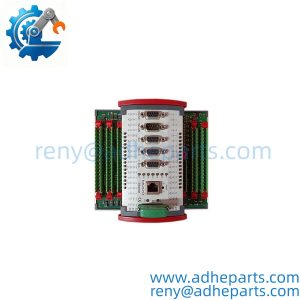
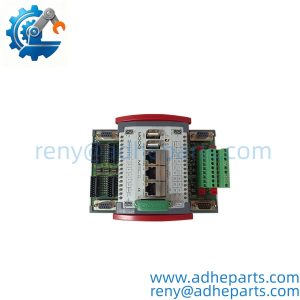
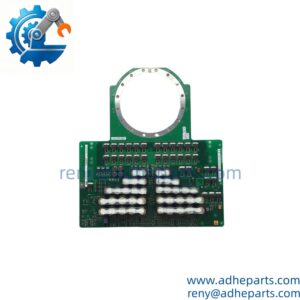
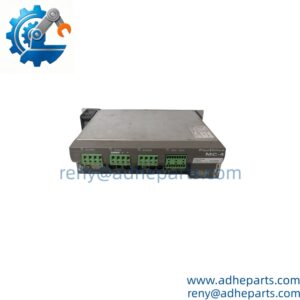
The Kollmorgen S20260-SRS is a three-phase servo drive from the S200 series, built by Kollmorgen under the Danaher Motion brand. It takes a command from a motion controller or PLC and drives a brushless servo motor with closed-loop control of position, velocity, or torque. The SRS suffix indicates a resolver feedback configuration; the S20260 block indicates a 20 A continuous / 60 A peak current rating.
The engineering value is the power density and the resolver feedback. A resolver is a rugged feedback device that tolerates heat, vibration, and contamination better than an optical encoder, which makes the SRS build a good fit for harsh industrial environments. The drive delivers 60 A peak for acceleration and shock loads while holding 20 A continuous, so it can size a motor for a high-inertia load without oversizing the continuous rating. In my experience, the most common cause of a drive fault on this family is not a dead power stage—it is a motor feedback cable that has lost a resolver signal or a DC bus that is undersized for the deceleration energy.
Two things decide whether a swap works. First, the feedback configuration. The SRS build expects a resolver; a drive built for an encoder will not read the same motor. Second, the firmware and the configuration. The drive parameters—motor pole count, resolver resolution, current limits, and tuning—live in the drive, and they must match the motor and the application. Pull the parameter file from the old drive before you remove it.
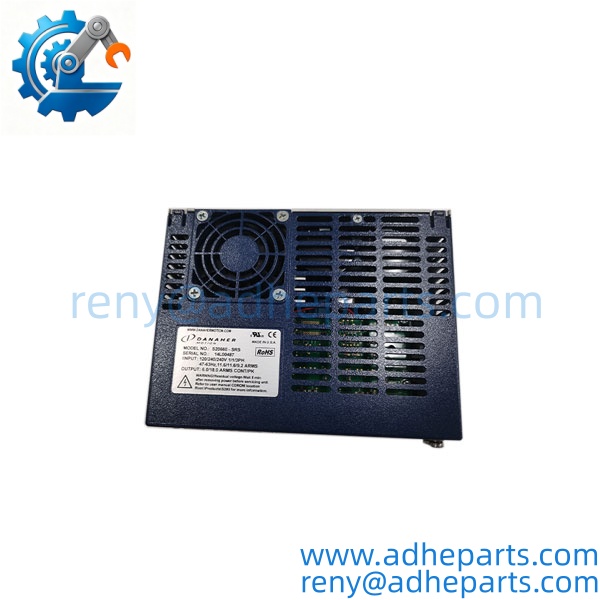
S20260-SRS
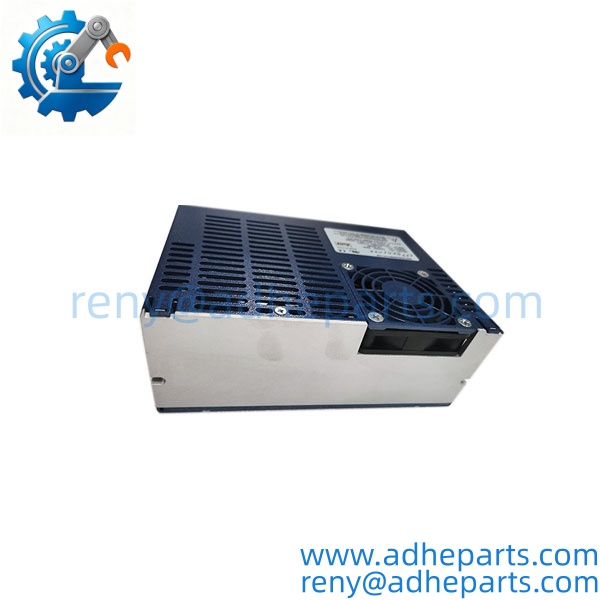
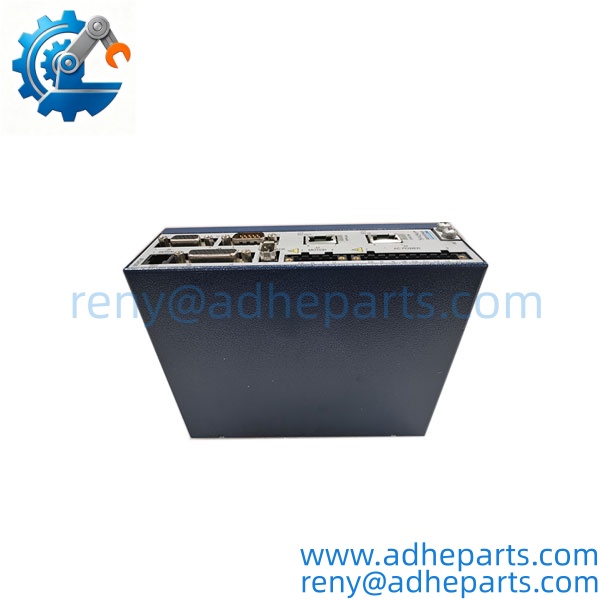
S20260-SRS
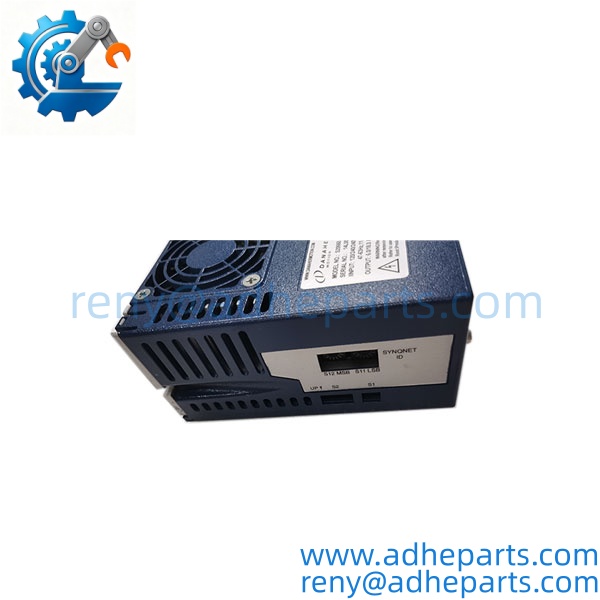
S20260-SRS
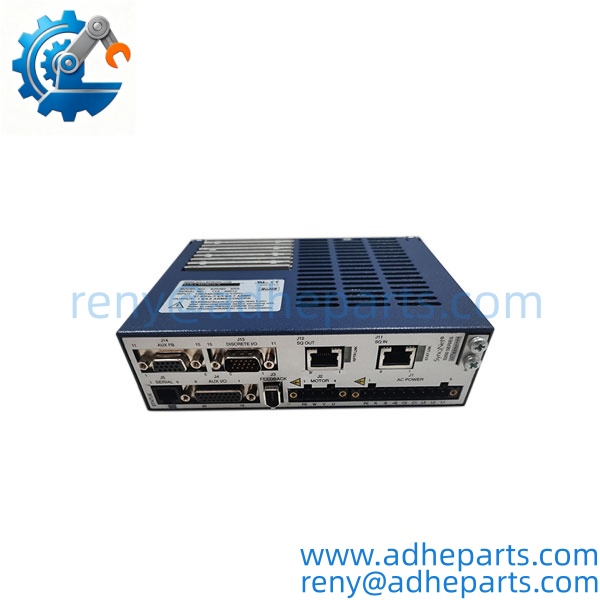
S20260-SRS
5. Application Scenarios & Field Experience
Part 1 – Narrative Paragraph
The failure that costs the most downtime on a servo drive is not a dead power stage—it is a drive that faults on feedback loss. The motor is fine, the cables look intact, and the drive trips on a resolver fault every few hours. I have seen that on a machine where the resolver cable had a shield that was grounded at both ends, and the ground loop injected noise into the feedback signal. The drive was doing its job—it saw a bad signal and faulted to protect the motor. Before you replace the drive, check the feedback cable, the shield grounding, and the resolver connector. A new drive with the same wiring will fault the same way.
Part 2 – Numbered List (Application Scenarios)
- Packaging Machinery – High-Speed Axis Control – The drive controls a servo axis on a form-fill-seal or labeling machine. The 60 A peak handles the acceleration of the axis, and the resolver feedback survives the washdown and vibration of the machine frame.
- Material Handling – Conveyor and Gantry Drives – Used on gantry robots and automated storage systems where the axis must hold position under load. The resolver feedback provides reliable position data in a dusty environment where an optical encoder would fail.
- Machine Tools – Feed and Spindle Drives – The drive powers a feed axis or a spindle on a machining center. The 20 A continuous rating matches a medium-frame servo motor, and the resolver feedback tolerates the coolant and chip environment.
- Metals – Roll Feed and Cut-to-Length Lines – Used on a roll feed axis where the drive must accelerate and decelerate a heavy roll. The 60 A peak provides the torque for the acceleration, and the resolver feedback holds position through the cut.
Part 3 – Short Field Story
A packaging plant in the Midwest had a servo-driven labeler that would fault on “resolver loss” every few hours. The maintenance team had replaced the motor and the drive, and the fault kept coming back. We asked them to check the resolver cable and the shield grounding. The cable shield was grounded at both the drive end and the motor end, and the ground loop was injecting noise into the feedback signal. The plant removed the ground at the motor end, re-terminated the shield at the drive end only, and the faults stopped. The original drive had been fine—the wiring was the problem.
6. Standard Operating Procedure (SOP) for Quality Control
- Visual & Origin Inspection – We verify the Kollmorgen marking, the S20260-SRS model string, and the date code. We inspect the power terminals, the feedback connector, and the housing for cracks or moisture ingress. A drive with a damaged connector or evidence of rework is rejected.
- Revision and Configuration Documentation – We read and photograph the full model string, the firmware revision, and the parameter configuration where accessible. That record ships with the drive so you can compare it against the unit you are replacing.
- Power-Up Self-Test – The drive is powered on a bench fixture at rated voltage. We verify it completes its boot sequence and that the status LEDs indicate normal operation.
- Feedback Input Verification – We connect a resolver simulator and verify the drive reads the position and velocity correctly. We test at several simulated positions and speeds.
- Power Stage Verification – We connect the drive to a test motor or a load bank and verify the output current in both directions. We check the continuous and peak current limits against the OEM specification.
- Communication and I/O Test – We verify the command interface and the digital and analog I/O against a test controller. We record the protocol settings so you can compare them against your system.
- Parameter Backup – Where the drive carries an existing parameter set, we extract and archive it before shipping. That file ships with the drive so you can compare it against your system.
- ESD-Safe Packaging – The drive is wrapped in anti-static film, seated in a foam insert with the connectors protected, and packed in a double-wall carton with handling labels.
7. Frequently Asked Questions (FAQ)
Q1: What does the SRS suffix mean on this drive?
A: The SRS suffix denotes the feedback and option configuration of the drive. On the S200 series, this typically indicates resolver feedback. I cannot confirm the exact option set from the model number alone—verify the suffix against the OEM datasheet and the label on your existing drive. A drive with a different suffix may expect a different feedback device and will not run your motor correctly.
Q2: Can I replace an S20260-SRS with a different S200 drive model?
A: Not without checking the current rating, the input voltage, and the feedback configuration. The family includes drives with different continuous and peak current ratings, different input voltage ranges, and different feedback options. A drive with a lower current rating will trip on acceleration; a drive with a different feedback option will not read your motor. Match the full model string and the label on your existing drive before you order.
Q3: What is the warranty on this drive?
A: We offer a 12-month warranty from the ship date. It covers power stage failure, feedback input failure, communication port failure, and power supply failure under normal operating conditions. It does not cover damage from incorrect input voltage, a shorted motor winding, a feedback cable fault, or operation beyond the rated current. We test every drive on a bench fixture with a resolver simulator and a load before it ships.
Q4: Do you have this exact drive in stock?
A: Kollmorgen inventory moves and varies by build. Confirm availability before you plan an outage. If we are out of the SRS variant, we will tell you what we actually have and whether a different build would suit your motor and application.
Q5: Any installation pitfalls I should watch for?
A: Four. First, verify the input voltage and the motor rating before you connect power—connecting 480 V AC to a 230 V drive will destroy the power stage. Second, check the resolver cable and the shield grounding before you power up; a ground loop on the feedback cable is the most common cause of nuisance faults. Third, back up the drive parameters before you remove the old unit. Fourth, after the swap, run the drive in a low-speed test and verify the feedback direction and the motor phasing before you return the machine to production. A drive that powers up is not necessarily controlling the motor correctly.