Description
Note: Many products are not yet listed. Please contact us for more product information. Our supply channels are constantly expanding, and we currently have 20 stable shared supply channels. Please confirm the model, product, price, and all other necessary information with customer service before placing an order. We offer new, refurbished, and used products, and prices are adjusted according to the year of the item you require.
Key Technical Specifications
| Parameter | Specification |
|---|---|
| Manufacturer | TRICONEX |
| Model | 3101 |
| System | Trident v1.2 / Trident Main Processor architecture |
| Module Type | Main Processor Module |
| Application Processor | Motorola MPC860, 32-bit, 50 MHz |
| IOX Processor | Motorola MPC860, 32-bit, 50 MHz |
| Flash PROM | 6 MB |
| SX DRAM | 16 MB |
| IOX DRAM | 16 MB |
| NVRAM | 8 KB, CRC-protected |
| Shared Memory | 128 KB |
| TriBus | 25 Mbps |
| Nominal Input Voltage | 24 V DC |
| Operating Voltage | 19.2–30 V DC with specified AC ripple tolerance |
| Maximum Logic Power | 8 W |
| Communication Bus | RS-485, 2 Mbps HDLC |
| TriStation Port | 10Base-T Ethernet |
| Modbus Port | RS-232/485 |
| Battery | AA lithium, battery-backed clock |
| Weight | Approximately 1.5 kg |
The 3101’s published architecture includes separate SX and IOX processing functions. Its Flash PROM is used for application/control storage, while DRAM supports control execution, SOE data, and I/O processing.
The Trident planning documentation also identifies the 3101 as the Main Processor Module and specifies that a Trident system can accommodate up to 14 I/O modules under the processor architecture.
Product Introduction (Anti-Template)
The TRICONEX 3101 sits at the center of a Trident safety-control architecture. Rather than serving as an ordinary PLC CPU, it executes the control application while participating in the system’s redundant processing and voting architecture. This makes the exact processor model, firmware, system generation, and configuration important when sourcing a replacement.
The module uses Motorola MPC860 processors and dedicated memory resources for application execution and I/O processing. For maintenance procurement, don’t treat the 3101 as a generic 24 V controller—the correct Trident version and firmware configuration need to match the installed system.
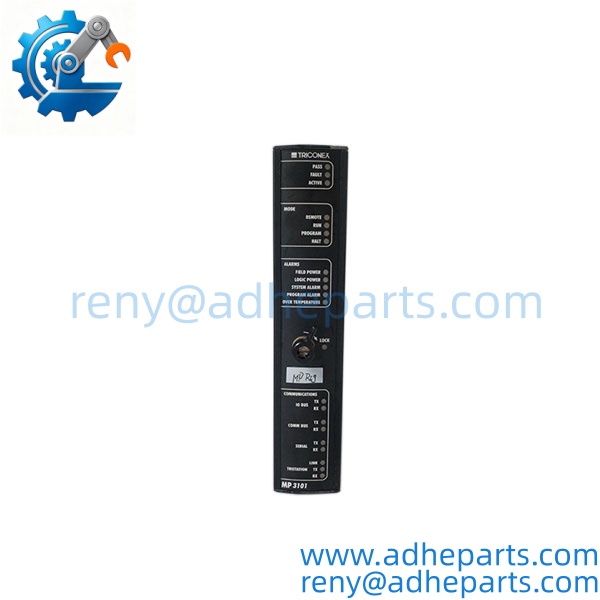
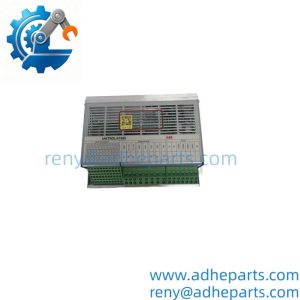
TRICONEX 3101
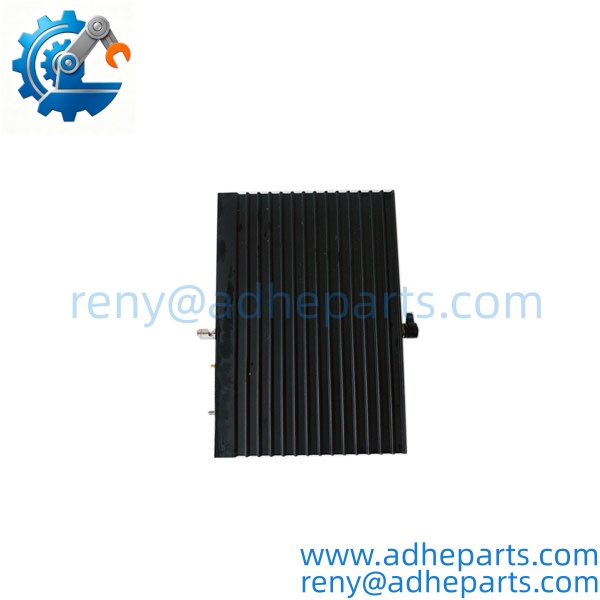
TRICONEX 3101
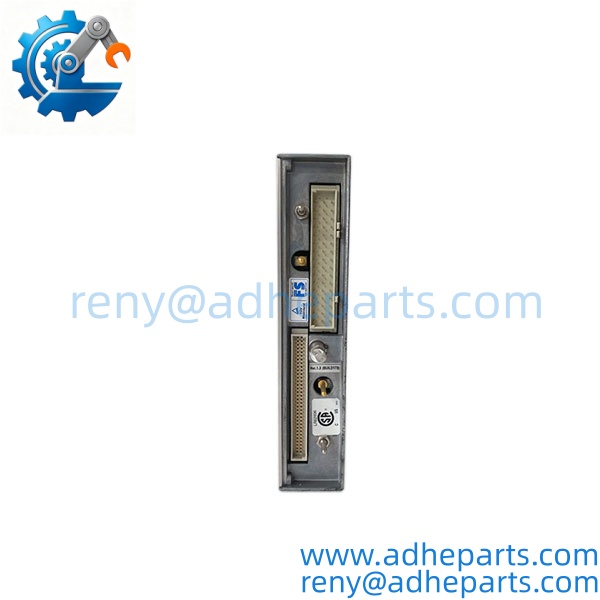
TRICONEX 3101
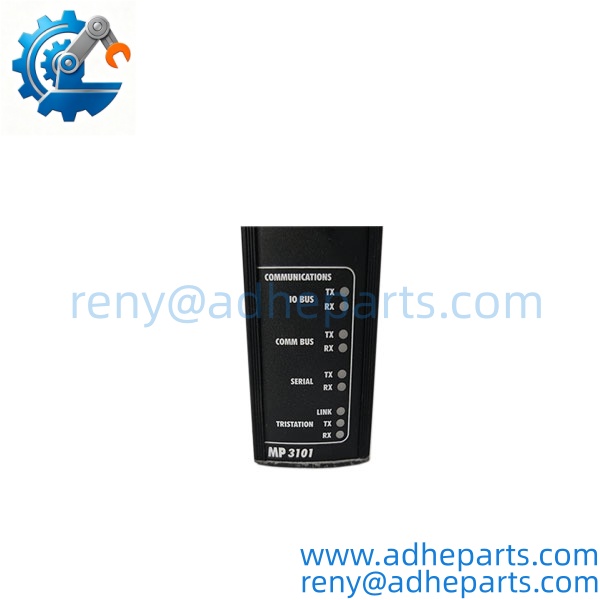
TRICONEX 3101
QC, Procurement & Logistics SOP
1) Inbound Verification
Before accepting a TRICONEX 3101 into inventory, verify:
- TRICONEX identification.
- Complete model number: 3101.
- Hardware revision.
- Firmware/version information where accessible.
- Serial number.
- Processor-module label.
- Connector condition.
- Baseplate interface.
- Battery condition where applicable.
- Evidence of previous repair or component replacement.
Photograph the identification label, connectors, PCB markings, and overall condition.
2) Live Rig Testing
Where a compatible Trident test environment is available, verify:
- Processor initialization.
- System recognition.
- Control-application loading.
- Processor diagnostics.
- Communication interfaces.
- I/O communication.
- Diagnostic bus operation.
- Redundant processor coordination.
A simple power-on test is not sufficient for a safety-system processor. The processor should be evaluated within the appropriate Trident architecture.
3) QA & ESD Packaging
Before shipment:
- Confirm the exact model and revision.
- Record serial number and identifying markings.
- Inspect connectors and PCB condition.
- Use ESD-safe handling.
- Protect exposed connectors.
- Use antistatic packaging.
- Add shock-absorbing material.
- Use a rigid export carton.
For legacy safety-system processors, maintain a clear inspection record for traceability.
4) Global Logistics & Export Compliance
Prepare:
- Commercial invoice.
- Packing list.
- Exact manufacturer and part number.
- Accurate product description.
- HS classification.
- Country-of-origin documentation when applicable.
- Customer-specific import documents.
A suitable commercial description is:
“TRICONEX Trident Main Processor Module, Model 3101.”
Final HS classification should be confirmed according to the actual unit and destination-country customs requirements.
5) Secure Air/Sea Packaging
Recommended packing:
- ESD-safe bag
- Moisture protection
- Connector protection
- Shock-resistant inner packaging
- Rigid export carton
- Shipping documentation
- Tracking information
For urgent SIS maintenance, air shipment is generally more practical than sea freight because processor availability can directly affect maintenance schedules.
Technical Pitfalls & Integration Warnings
1) Trident Version / Firmware Mismatch
The 3101 is associated with the Trident architecture, and replacement compatibility depends on the installed system version and processor configuration.
Scenario:
A physically identical processor is installed, but its firmware does not match the existing processor set.
The replacement may require the appropriate firmware and system reconfiguration before it can operate correctly.
2) TMR Processor Matching
A Trident system uses multiple processor modules as part of its fault-tolerant architecture. The three processor legs should not be treated as unrelated PLC CPUs.
Before replacement, verify:
- Processor model
- Hardware revision
- Firmware
- System version
- Existing processor set
- Application configuration
3) Power Supply Requirements
The 3101 uses a nominal 24 V DC supply, with published operating limits of approximately 19.2–30 V DC under the specified ripple conditions. Maximum logic power is listed as 8 W.
Scenario:
An unstable cabinet power supply causes repeated processor resets, leading the maintenance team to incorrectly suspect the processor.
Check cabinet power quality before condemning the module.
4) Communication-Port Confusion
The 3101 has several system interfaces, including the TriStation Ethernet connection and serial communication functions.
Do not assume that a connector is interchangeable simply because it uses a familiar physical interface. Follow the Trident installation documentation for the specific port and cable arrangement.
5) Battery-Backed Data
The processor includes battery-backed clock/calendar functionality and NVRAM.
Before long-term storage or installation, check the battery condition and follow the applicable maintenance procedure. Do not remove or replace the battery casually while the processor is energized.
6) Hot-Swap Assumption
Do not assume that every 3101 replacement can be performed without taking the system through an approved maintenance procedure.
A safety-system processor replacement should follow the site’s Trident maintenance, isolation, configuration, and commissioning procedures.
Frequently Asked Questions (FAQ)
Q1: What is TRICONEX 3101?
The 3101 is the Main Processor Module for the Trident safety system. It executes the control application and participates in the system’s redundant input/output voting architecture.
Q2: What processor does the TRICONEX 3101 use?
Published technical data identifies Motorola MPC860 32-bit processors running at 50 MHz for the SX and IOX processing functions.
Q3: How much memory does the 3101 have?
The documented configuration includes 6 MB Flash PROM, 16 MB SX DRAM, 16 MB IOX DRAM, and 8 KB NVRAM.
Q4: What power supply does the 3101 require?
The nominal input is 24 V DC, with a published operating range of approximately 19.2–30 V DC under the specified conditions. Maximum logic power is 8 W.
Q5: Is TRICONEX 3101 a communication module?
No. The 3101 is the Main Processor Module. Communication interfaces are part of its processor architecture, but its primary role is executing the control application and managing the Trident control system.
Q6: Can I replace one 3101 with another 3101 directly?
Not automatically. Verify the Trident version, hardware revision, firmware, processor set, application configuration, and installed baseplate before replacement.
Q7: What should I provide for compatibility checking?
Send a clear photo of the existing 3101 label, hardware/firmware information if available, the Trident chassis/baseplate, and the complete processor set. This allows the replacement to be checked against the installed configuration.
Q8: Can you provide actual-stock photos before shipment?
Yes. Photos can include the model label, serial number, revision markings, connectors, processor housing, and overall condition.