Description
Note: Many products are not yet listed. Please contact us for more product information. Our supply channels are constantly expanding, and we currently have 20 stable shared supply channels. Please confirm the model, product, price, and all other necessary information with customer service before placing an order. We offer new, refurbished, and used products, and prices are adjusted according to the year of the item you require.
3. Key Technical Specifications
Do not order against this table alone. I cannot decode the BM222BAAA suffix, and the configuration code defines the CT rating, the function set, and the communication interfaces. Match every line against the OEM documentation and the label on your existing relay.
| Parameter | Value |
|---|---|
| Model | REM545BM222BAAA |
| Brand | ABB |
| Product Family | RAM/REM 500 series machine protection |
| Function | Machine protection, measurement, and control |
| Protection Elements | Verify — the suffix code determines the function set; typical machine protection includes differential, stator ground fault, over/under voltage, over/under frequency, and thermal protection |
| CT Inputs | 1A or 5A — verify on the relay label |
| VT Inputs | Verify rated voltage and connection on the relay label |
| Binary Inputs | Verify count — the suffix code determines the I/O configuration |
| Binary Outputs | Verify count and contact rating |
| Analog Inputs / Outputs | Verify — confirm count and signal range on your build |
| RTD Inputs | Verify — confirm count and supported RTD types |
| Communication Ports | Verify — serial and fieldbus options depend on the suffix; confirm on your build |
| Display | Local display and keypad — verify type on your build |
| Power Supply | Verify voltage range on the relay label |
| Configuration Software | ABB CAP 505 or equivalent — verify the supported tool for your firmware |
| Operating Temperature | 0 °C to +55 °C (typical for this class — verify) |
| Storage Temperature | –40 °C to +85 °C (typical — verify) |
| Humidity | 5% – 95% RH, non-condensing |
| Mounting | Panel or switchgear cubicle — verify cutout and mounting kit |
| Certifications | IEC 60255, CE, UL — verify on the specific unit’s label |
4. Product Introduction
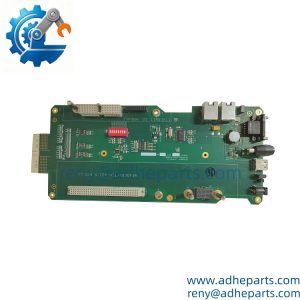
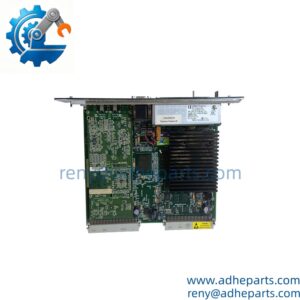
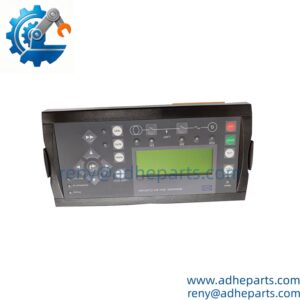
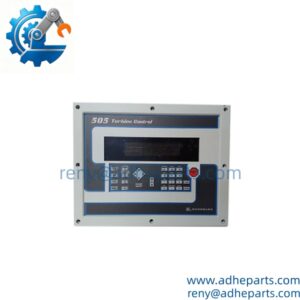
The ABB REM545BM222BAAA is a machine protection terminal from ABB’s RAM/REM 500 series. It provides numerical protection, measurement, and control for generators and large machines, and it integrates with the plant’s protection and control scheme through its binary I/O and communication ports. The BM222BAAA suffix defines the specific build: the CT rating, the protection function set, and the communication configuration.
The engineering value is the integration of the machine protection functions in one terminal. Older installations used separate relays for differential protection, stator ground fault, and voltage/frequency protection. The REM545 consolidates those functions, which reduces the panel space and the wiring between relays. In my experience, the most common integration issue is not the relay itself — it is the CT ratio and the VT configuration, which must match the machine before the protection settings and the measurements are correct.
Two things decide whether a swap works. First, the suffix code. A relay with the same base number and a different suffix may have a different function set or a different I/O configuration. Second, the configuration file. The protection settings and the communication configuration live in the relay, so pull the file from the old unit before you remove it.
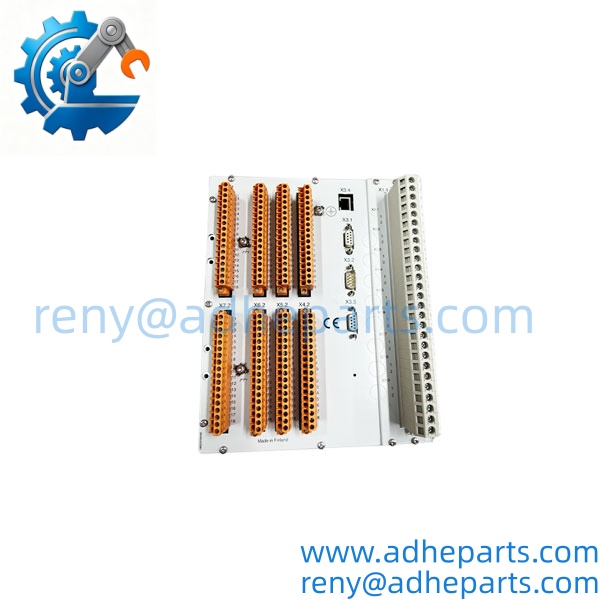
REM545BM222BAAA
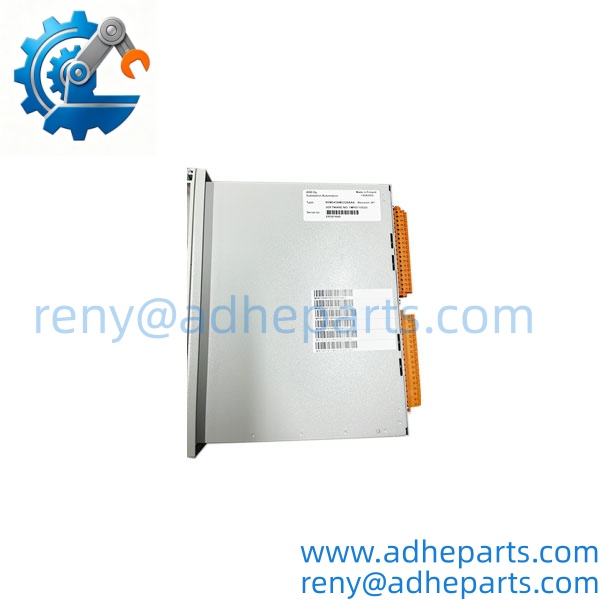
REM545BM222BAAA
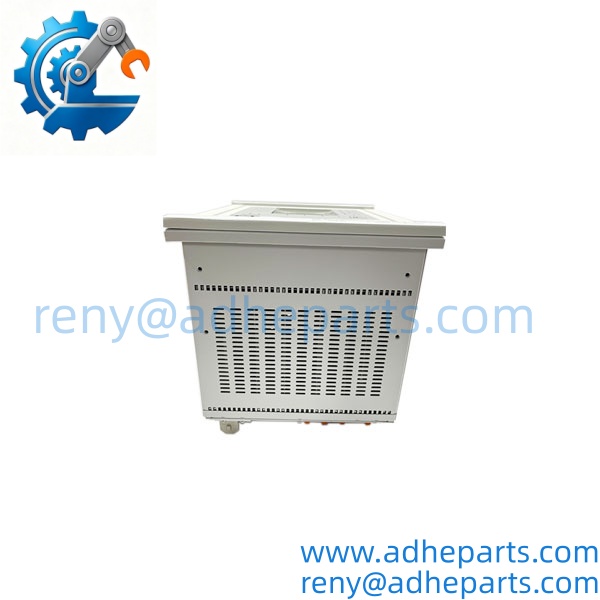
REM545BM222BAAA
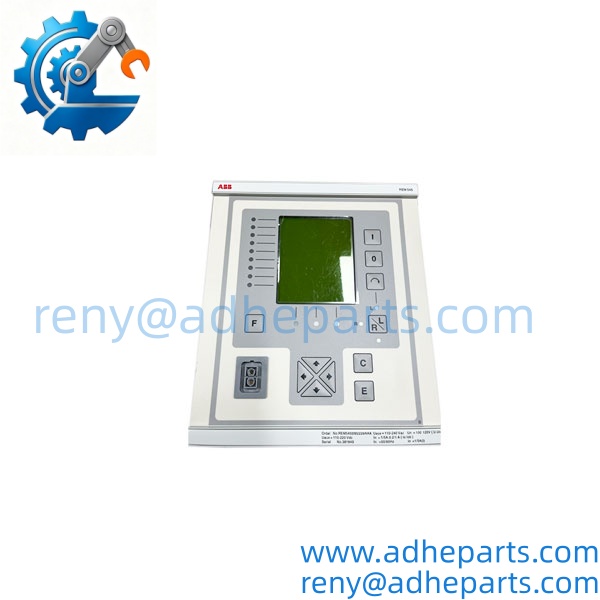
REM545BM222BAAA
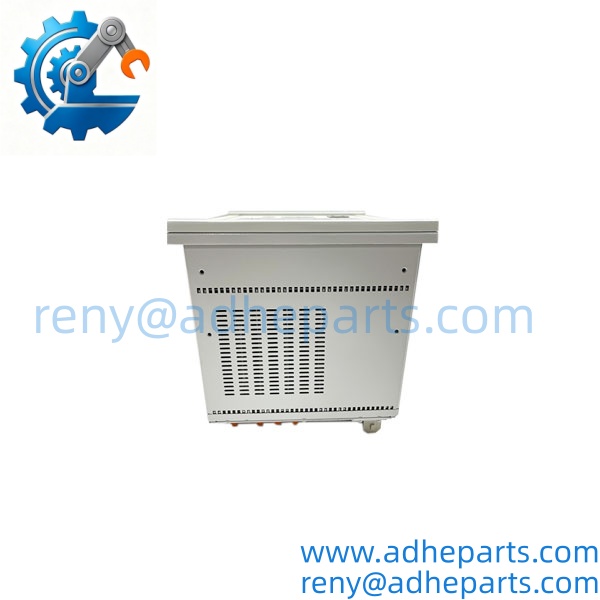
REM545BM222BAAA
5. Application Scenarios & Field Experience
Part 1 – Narrative Paragraph
The failure that hurts most on a generator protection terminal is a relay that trips when it should not, or fails to trip when it should. I have seen a machine relay trip on differential during a through-fault because the CT ratio was set wrong, and I have seen a relay fail to detect a stator ground fault because the residual voltage input was misconfigured. The relay reported what its settings told it to report. On a machine protection terminal, the configuration is the protection. Before you replace a REM545, record the CT ratio, the VT ratio, the protection settings, and the trip circuit configuration. Those four items decide whether the new relay behaves like the old one.
Part 2 – Numbered List (Application Scenarios)
- Power Generation – Generator Unit Protection – The relay provides differential protection, stator ground fault protection, and abnormal operating condition protection for a generator. The binary outputs drive the trip circuit and the alarm annunciator.
- Industrial Cogeneration – Generator Protection on a Plant Bus – Used to protect a cogeneration generator running in parallel with the utility. The voltage and frequency elements protect the machine during islanding and reconnection.
- Hydroelectric – Hydro Generator Protection – The relay protects a hydro generator against stator faults, loss of excitation, and abnormal voltage and frequency. The RTD inputs monitor the stator and bearing temperatures.
- Large Motor Protection – Synchronous Machine Protection – Used on large synchronous motors where differential and ground fault protection are required in addition to the standard overload protection.
Part 3 – Short Field Story
A cogeneration plant had a generator that tripped on differential during a through-fault on the plant bus. The crew had replaced the relay and the trip persisted. We asked for the CT ratio and the relay configuration. The CT ratio in the relay had been set for the generator-side CTs, but the switchgear had a different ratio. The relay was seeing a differential current that did not exist. The plant corrected the CT ratio and re-ran the protection settings. The false trips stopped. The relay had been doing what its settings told it to do.
6. Standard Operating Procedure (SOP) for Quality Control
- Visual & Origin Inspection – We verify the ABB marking, the REM545BM222BAAA model string, and the date code. We inspect the terminals, the display, and the housing for cracks or moisture ingress. A relay with a damaged display or evidence of rework is rejected.
- Suffix Code Documentation – We read and photograph the full model string and record the suffix configuration. That record ships with the relay so you can compare it against the unit you are replacing.
- Power-Up Self-Test – The relay is powered on a test bench at rated voltage. We verify it completes its boot sequence and that the display and the self-test show normal operation.
- Analog Input Verification – We inject calibrated currents and voltages into the CT and VT inputs and verify the relay’s measured values against the reference. Accuracy must stay within the OEM specification.
- Binary I/O Verification – We inject rated voltage into each binary input and confirm the relay reports the correct state. We command each binary output and verify contact closure with a continuity meter.
- Protection Function Test – We verify the protection elements pick up and drop out at the configured thresholds and record the operate times against the OEM specification.
- Communication Test – We verify the serial and fieldbus ports with a test master and record the protocol settings.
- ESD-Safe Packaging – The relay is wrapped in anti-static film, seated in a fitted foam insert with the terminals protected, and packed in a double-wall carton with static warning labels.
7. Frequently Asked Questions (FAQ)
Q1: What does the BM222BAAA suffix mean?
A: On the RAM/REM 500 series, the suffix code defines the hardware build — the CT rating, the protection function set, the binary I/O configuration, and the communication options. I cannot decode every character from the model number alone. Read the full string on your existing relay and compare it to the replacement before you order. A relay with a different suffix may not have the function set or the I/O your scheme requires.
Q2: Will my existing configuration load into this relay?
A: Only if the firmware revision and the hardware configuration match. The protection settings and the communication configuration are tied to the relay’s firmware and its I/O configuration. Pull your existing configuration file before you remove the old relay — that file is your recovery path. If the replacement has a different firmware revision, you may need to convert the file or re-enter the settings.
Q3: What is the warranty on this relay?
A: We offer a 12-month warranty from the ship date. It covers hardware failure — display, CT/VT inputs, binary I/O, RTD inputs, communication ports, and power supply — under normal operating conditions. It does not cover damage from incorrect CT or VT wiring, a trip coil circuit that backfeeds into an output, or ESD damage from handling without a wrist strap. We test every relay on a live bench before it ships.
Q4: Do you have this exact build in stock?
A: RAM/REM 500 series inventory moves and varies by suffix. Confirm availability before you plan an outage. If we do not have the BM222BAAA variant, we will tell you what we actually have and whether a different build would suit your scheme.
Q5: Any installation pitfalls I should watch for?
A: Four. First, verify the CT ratio and the VT ratio against the machine before you power up — incorrect settings cause wrong measurements and wrong protection decisions. Second, check the trip coil circuit and the trip circuit supervision wiring; a shorted or open trip circuit will prevent the relay from tripping or will damage the output. Third, record the protection settings and the communication configuration from the old relay before you remove it. Fourth, after the swap, inject a test current and verify the trip output operates the breaker before you return the generator to service. A relay that powers up is not necessarily protecting the machine correctly.